The old Steak N Egg Kitchen used to occupy the northwestern edge of the Econo Lodge motel parking lot, fronting Douglas Street. The one-story, free-standing restaurant at 2215 Douglas operated as its own business by the time we walked in, however it was well recognized as vaguely connected to the surrounding motel, having been constructed atop the motel’s long-abandoned swimming pool, filled in decades prior. We could see the motel, restaurant and really the whole area were just sad remnants from some forsaken time. By the mid to late 1980s this stretch of blocks had garnered public disgrace, which made it both extremely attractive to us and unpredictable to navigate.
At A Glance: In tonight’s episode we celebrate our 200th investigation together (!) by examining an old haunt. Many of you might remember the little coffee shop-diner Toddle House turned Steak N Egg Kitchen near the Imperial 400 Motel turned Econo Lodge. We will wander briefly into the Park East neighborhood before we delve into the motel history. To skip ahead, look for the chapter entitled–The Distant Past.
The Steak N Egg was not anyone’s idea of fine dining, but rather a seedy downtown cubbyhole, filled with just the right amount of street people, peculiar characters, older neighbors and classic, inexpensive diner fare. Surrounded by many handsome and odd buildings that had been allowed to dilapidate, the Steak N Egg Kitchen building seemed relatively young by comparison, although not altogether spry. Beneath the worn costuming, there was more than an edge of danger to the Mid-century Modern motel and its sister restaurant but I was charmed by its movie-filmed-on-location quality. The punk lot of us would parade down strange Douglas Street, usually coming from our friend’s apartment party at the Hamilton Garden Apartments (210 South Twenty-fourth Street), a show at F. O. E. Hall (201 South Twenty-fourth Street) or from watching friends work out skate tricks in a nearby vacant lot. Alternately it was not uncommon to have been talking through the nearby fence with whichever friend happened to be locked in Richard Young that week.* There was always room to squeeze into a nook at the Steak N Egg Kitchen and observe the latest eccentricities without fear of running into anyone’s parents, the Westside Warrior football team, Central’s cheerleading co-captains or any National Honor Society students. We wanted to be unknown with the out-at-the-elbows, artists, might’ve-beens and lost crowd.
*Richard H. Young Memorial Hospital, located at 415 South Twenty-fifth Avenue (Twenty-fourth Avenue and Harney), was a psychiatric hospital that opened in January 1958, following the renovation of the previous Lutheran General Hospital. By the 1980s, Richard Young was profiting significantly by capitalizing on a nationwide trend that involved confining Gen X adolescents to psych wards for listening to punk and metal music, being gay, donning black attire, sneaking out of the house and creating dark-themed art, all under the pretext of a depression diagnosis. I acknowledge that many teens of my generation experienced depression, suicidal ideation and that some might have needed this extreme intervention. I am of the belief that the majority of these cases that I personally know of could have been managed through outpatient care and improved family communication. Talkshows such as Donahue, reports keying up Satanic Panic, the punk scene and pop psychology exploited the fears of busy, hardworking Midwestern parents. Beyond how one wore their dyed black hair, there were other true concerns and abuses of power. A number of teens involved in the Franklin Credit Union scandal required genuine assistance from the authorities but were instead shuttled away into the quiet zone of Richard Young. During the 1980s, it was not unusual to hear about a plot to infiltrate a local hospital or of actual attempts of kids breaking into Richard Young to liberate their friends. This speaks to the prevalence of the underground music scene as pipeline to the teen psych ward of the 1980s and I will plan to lay this out in the future.
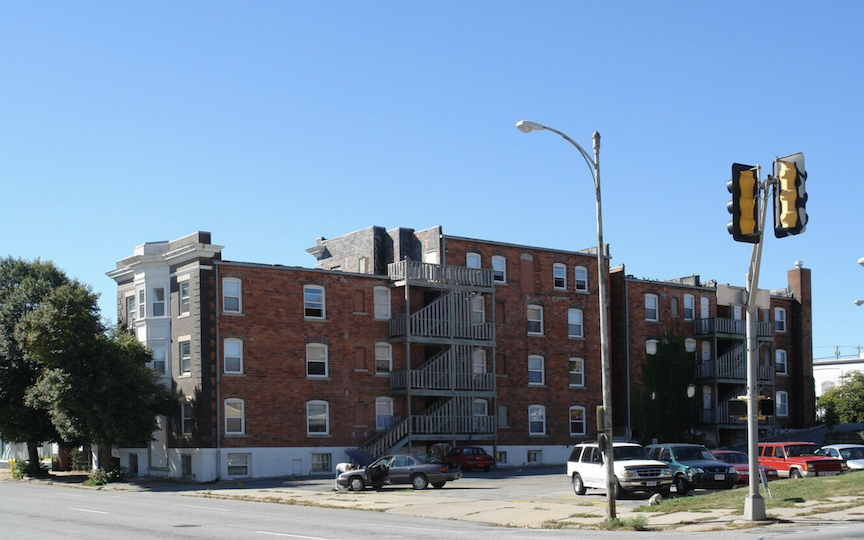
This is the backside of the Hamilton Garden Apartments. 210 South Twenty-fourth Street. Just up the block from the diner. Our friend lived here. He played in several punk bands and soon after became an attorney.
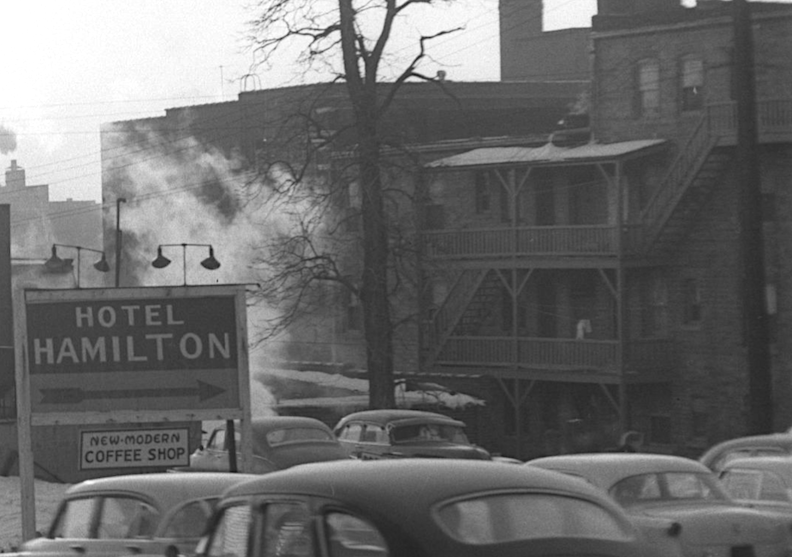
This 1950s photo of the same apartment building is how the railing and stairs looked in the 1980s. Who knows how many of us would lean on that railing talking, some sitting atop it? Not a care in the world. Perilous.
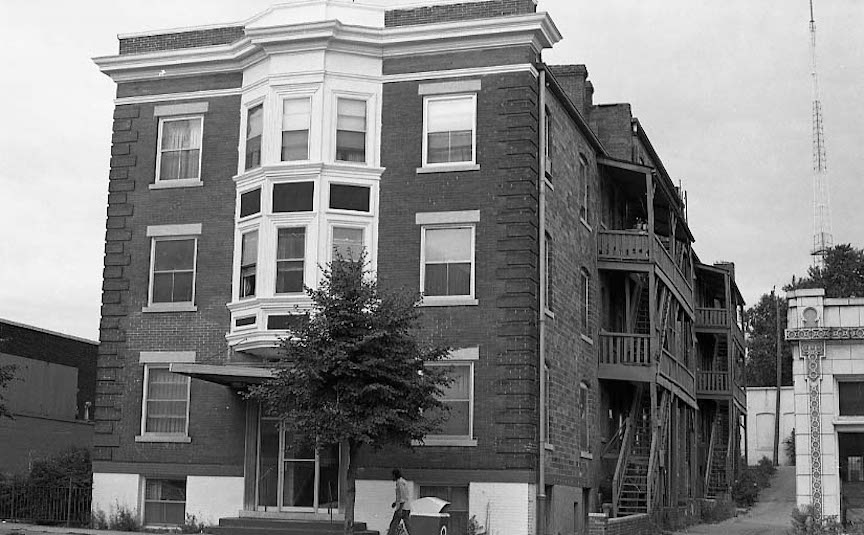
**Addendum August 25, 2025. Oh glory be. I finally found my photographic proof of the stairs. From the 1980 Reconnaissance Survey–The Hamilton Garden Apartments as seen from the eastern elevation.
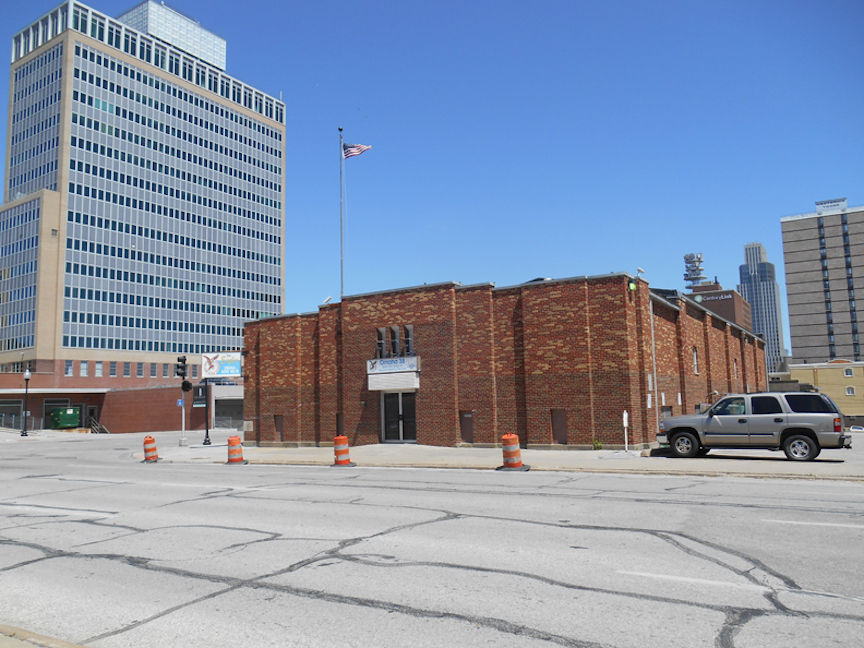
The good, ol’ Fraternal Organization of Eagles 38 was right up the block at 201 South Twenty-fourth Street. An alley ran between the F.O.E. parking lot and the Delmar Hotel directly to the Econo Lodge Motel and the Steak N Egg Kitchen.
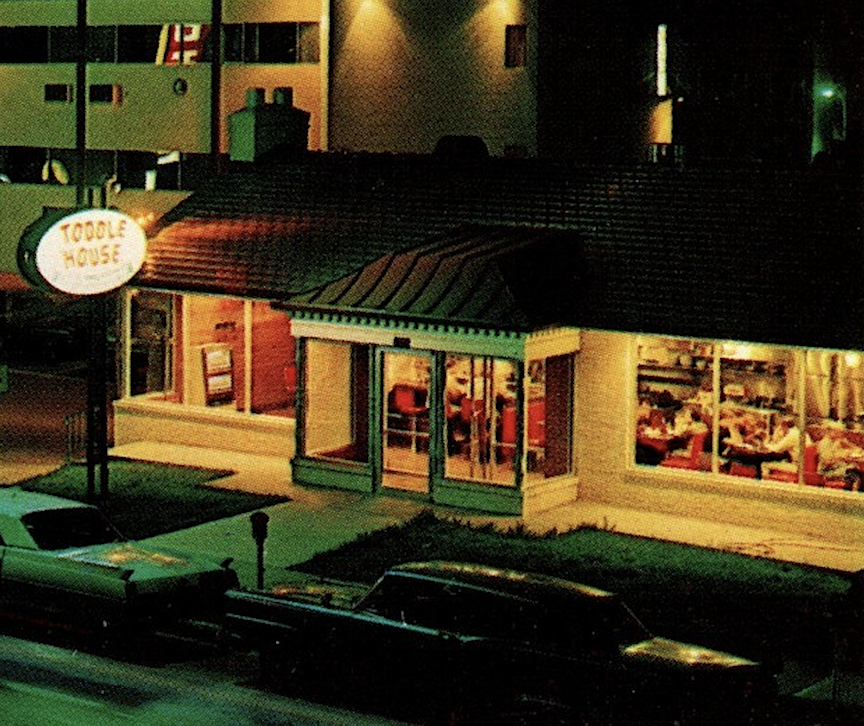
Toddle House restaurant. 1960s. 2215 Douglas Street. Although this a historic photograph of the downtown Omaha Steak N Egg Kitchen’s earliest incarnation, I do not remember this warm, well- lit, inviting presentation. I don’t remember the windows being that large. I do know there were windows, because I always looked over at it in passing to see the happenings. See photos below for further clues.
Steak N Egg Kitchen had dark paneled walls, in memory, cobwebs caught in grease, a grimy tiled floor; there were booths, (perhaps they were tables and chairs), framing a wide center counter, stools pegged around it, with a window to the kitchen. It was a sleepy, dim place overall while occasionally punctuated by bright lights in all the wrong places and sporadic outbursts of shouting or eerie laughing from a solitary diner in the corner. I believe the jukebox was located on the easternmost wall adjacent to the hallway leading to the bathrooms. Our two tables of kids nursed roughly three sodas, a few cups of coffee, many glasses of waters and likely consumed a single plate of French fries or hashbrowns among us. The lucky individual who had the funds for a hamburger or grilled cheese no doubt distributed numerous bites. Gales of laughter. Cigarette smoking, of course. I was captivated by the ancient, no frills jukebox, despite its 45s selection being atrocious to my adolescent sensibilities. (I would love to see those records nows!) Nonetheless, playing “P.Y.T.” by Michael Jackson during each and every visit, (sometimes, obnoxiously twice) seemed an ironic and amusing signature. I would slyly scan my audience to see whether my gift song elicited an appreciative gaze or any acknowledgment–a song that makes me smile to this day.
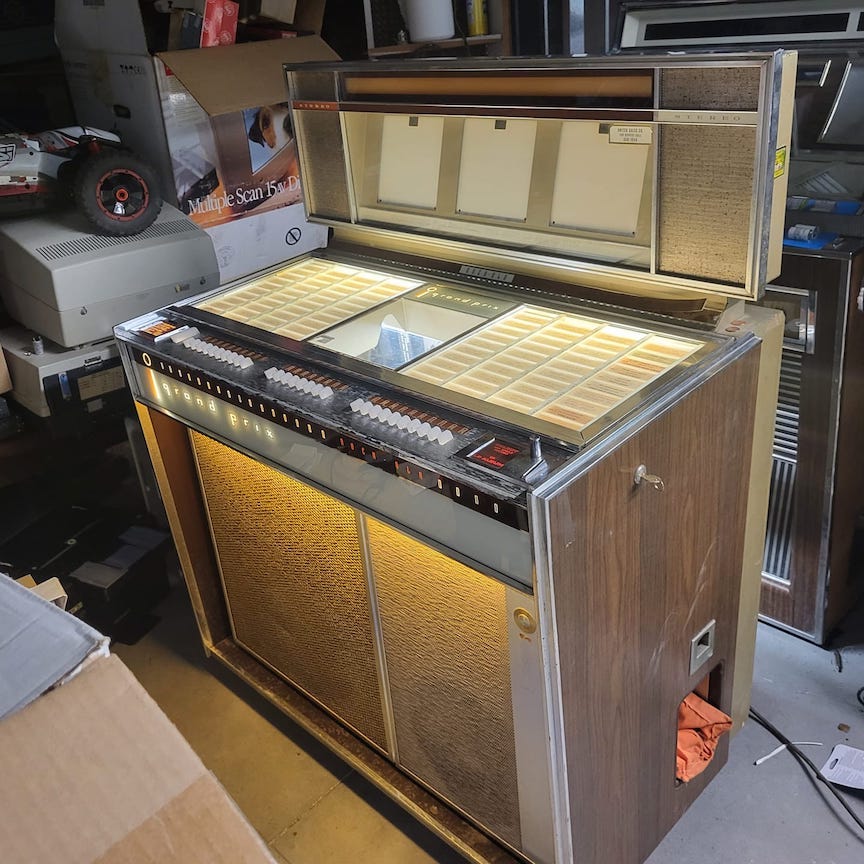
This may be difficult to believe, however this sort of thing happens all the time and is the essence of magic. I envisioned the model of my “P.Y.T” jukebox and worked to recall its appearance the last few nights. I conducted an online search for it to add it to this article as a visual. Coincidentally a young, local man named Breckin Heiser-Blezek recently acquired this great jukebox and asked online if anyone was familiar with an Omaha restaurant called Steak N Egg Kitchen. “I only ask because I bought a juke box that used to be in one of the locations and would love to get more information on the place.” Apparently the jukebox came with antiquated ownership documents that listed the business. There were two locations in Omaha so this may not be the exact Douglas Street one but I do believe it is the exact style that I threw many coins into. This baby, by my research, looks to be the Rock-Ola 425 Grand Prix fresh off the assembly line in 1964. It played 45/33 rpm records. No frills but real cool; smoky gold; (pretty sure that was real smoke); a bit wider with the flat front viewing, sleek and subdued compared to their previous Rock-Ola roster. Three 45 singles would be displayed above. Sadly, only two other style models were produced in 1965 following this one, after which production ceased. If you know Breckin Heiser-Blezek, please help me get this synchronistic penpal letter to him.
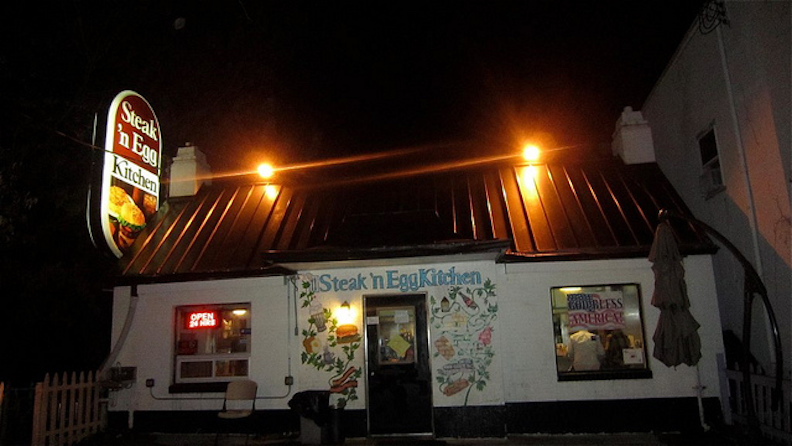
Of reference–this is also a Toddle House turned Steak N Egg Kitchen in Tenleytown, a neighborhood in Northwest, Washington, DC. That lit-up sign looked familiar. I love restaurant signs that show the food being served. It’s so 70s and 80s.
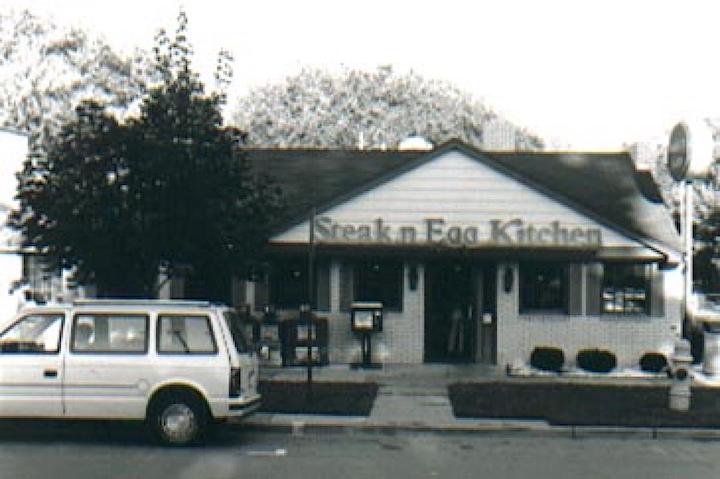
Another Toddle House turned Steak N Egg Kitchen from Gross Pointe Woods, Michigan. 1989. These smaller windows seem more accurate to my mind.
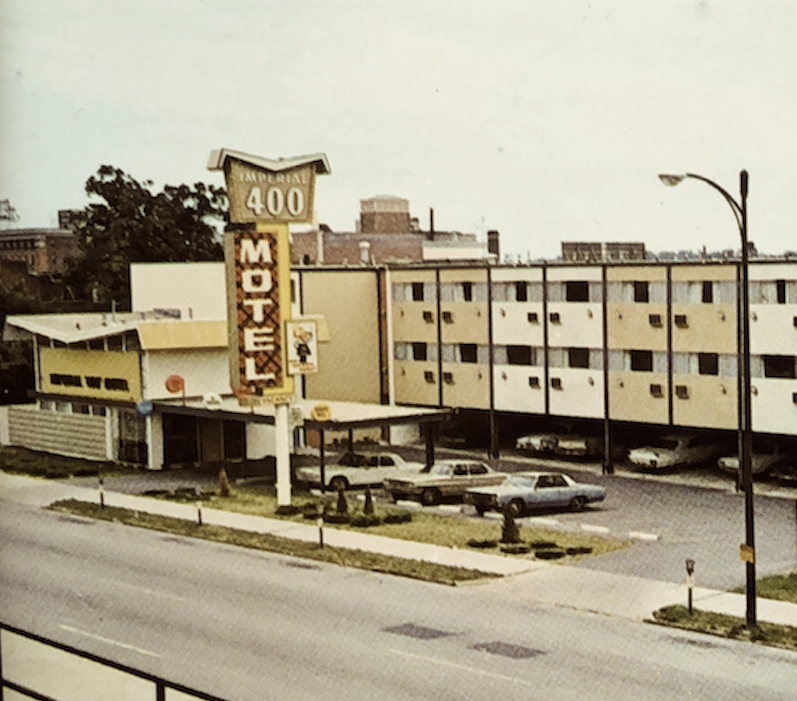
The Econo Lodge at 2211 Douglas Street: decrepit, its waning happy color scheme from its once 1960s Imperial ‘400’ Motel days, served as a cheerless reminder that everything had gone shabby and to the wiles of the streets. Even the restaurant was a long-lost nod to delivering hearty and wholesome nourishment to traveling, conventional, middle-class Americans. By the late 1980s the parking lot between motel and restaurant resembled a vast concrete, magnetic web for any schemer or wanderer or sadly, victim. I was both drawn to but physically avoided the motel and lot because there were rumors of people being kidnapped and killed there and in the back alley. The alley that ran alongside the F.O.E. hall, behind the suspect motel, parallel with Douglas was one to be avoided. I just drove down it for the first time to inspect a few weeks back–maybe to prove something to myself.
The greasy spoon’s clientele comprised a motley assembly— mostly female prostitutes, occasionally transgender prostitutes, the trudging neighborhood pensioners, drifters, perhaps some con artists and addicts, and the unidentified male traveler. Some of the most exceptionally attired individuals were distinctly otherworldly, but I am uncertain whether they identified as transgender or cross-dressers. These subterranean currents, difficult to express in words and therefore unacknowledged, scarcely generated a ripple in the news of Omaha aside from describing their crimes. In the mid 1980s, the Steak N Egg, along with the Smoke Pit, was an ideal spot to surreptitiously watch prostitutes and the eccentrics in their natural environment– a consensual loitering spot for both punks and sex workers. Not everybody was able to interpret it. A businessman or any prudent individual would have given the proceedings one look and exited promptly. The second shift waitress, always different, was a diligent worker, someone’s grandmother or mother, who managed the entire dining area and counter, if my recollection is accurate, with the assistance of a male cook glimpsed just briefly through the window. A downtown diner with no fixed closing hour was bound to be troubled. I have heard there was violence, assaults, threats, shootings, holdups, stabbings, and various forms of solicitation. I never saw anything like that and it makes me sad to think of what those waitresses and patrons went through. One could guess it was a much different place in the wee dark hours.
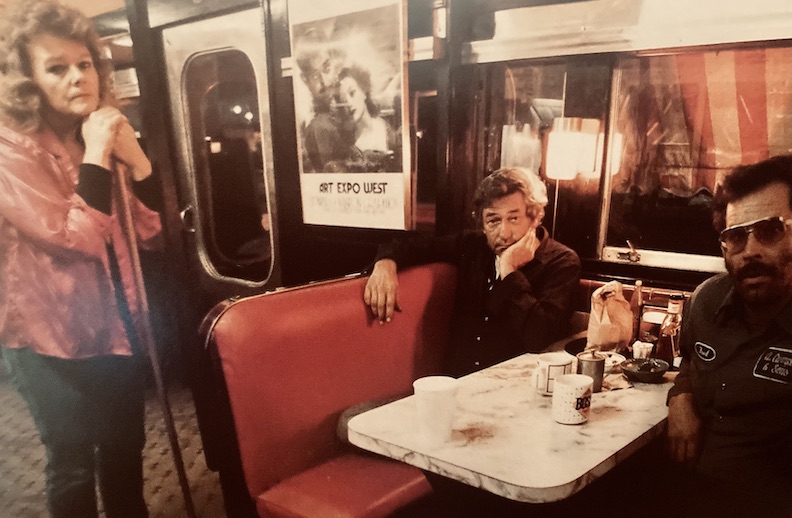
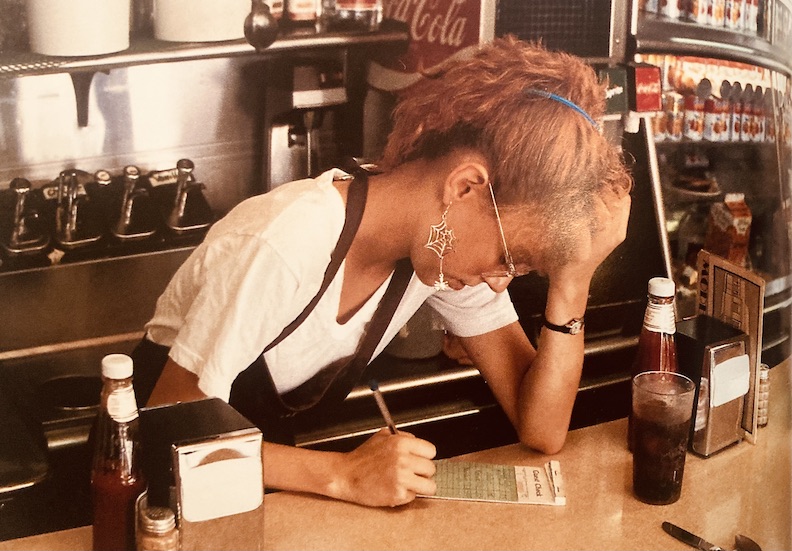
These straight-from-the-1980s photographs by Gerd Kittel from one of my favorite books, Diners, People and Places, gives a slight hint of my Steak N Eggs Kitchen memories, although a bit more upbeat in contrast to the Omaha version.
Honestly, we were never there long enough or with enough consistency to win any regard or even a proprietary sense about the place, although I did lay claim to that dusty ol’ unloved jukebox. It was neither our Old Market Godfather’s nor Old Market Little King’s, where they nearly arranged the table linens for our arrival. All present at the Steak N Egg Kitchen appeared lost at sea, and many had long ago accepted that circumstance. The lone server and handful of patrons barely noticed our hand-sewn style, the vintage 1920s dresses mixed with punk t-shirts, vintage military surplus gear, our dyed rats’ nest hair. Despite our best attempts, we could not out-outsider this crowd. They had years, some of them decades, on the outcast register. I was hungry to understand what I saw as an exotic, gritty, unflinching, self-sufficient city within the city. I knew these densely placed buildings, their neon lights and this beautiful, worldly cast of characters had seen things I could never know. And that’s exactly how we wanted it. It would be a year until I went away to college that Nan Goldin published her remarkable photographic collection, The Ballad of Sexual Dependency, that entirely connected the art and outsider scene that I was hungry for at the Steak N Egg Kitchen and the surrounding neighborhood.
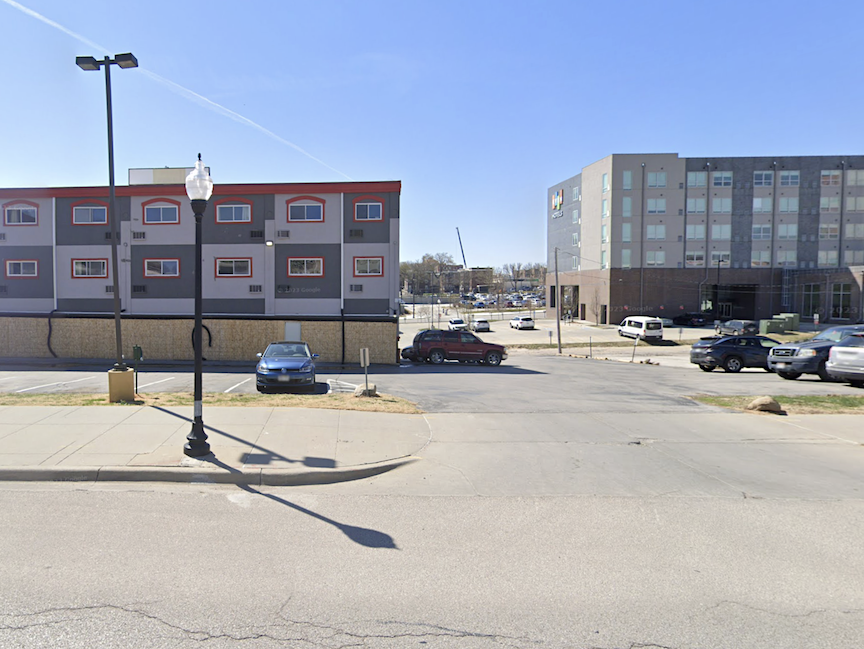
Site of the Steak N Egg Kitchen, 2215 Douglas Street. Boarded up Econo Lodge behind the site at 2211 Douglas Street. Even Hotel seen in the distance at 2220 Farnam Street, once location of the infamous, razed Delmar Hotel.
Park East, My Love
I have written of this area many times, officially designated as the Park East neighborhood, roughly bordered by Dodge, Twentieth, Leavenworth, and Twenty-eighth Streets. No one called it Park East, for the record. This was the topographical high end of Omaha’s downtown but certainly not the high-stepping, upscale end. This part of town always seemed like a drive-thru for those departing Downtown proper and the patinaed and or vacant state of some of these fascinating buildings fostered the notion among criminal opportunists that there was a lack of oversight. Indeed, things got even weirder as you progressed westward from say, the Old Market, because active late night businesses were few and far between in Park East… and there were more shadowy areas without lighting or much traffic. When the employees of All Makes, Barnhart Press, Kountze Memorial, KETV NewsWatch 7 or various other hardworking businesses left for the night, some of the sidewalks came alive. This was also a transient area of high turnover because of access to inexpensive, temporary housing and proximity to the bus depot, train station, local bus lines and the adjacent interstate, located immediately to the west of the Park East boundary.
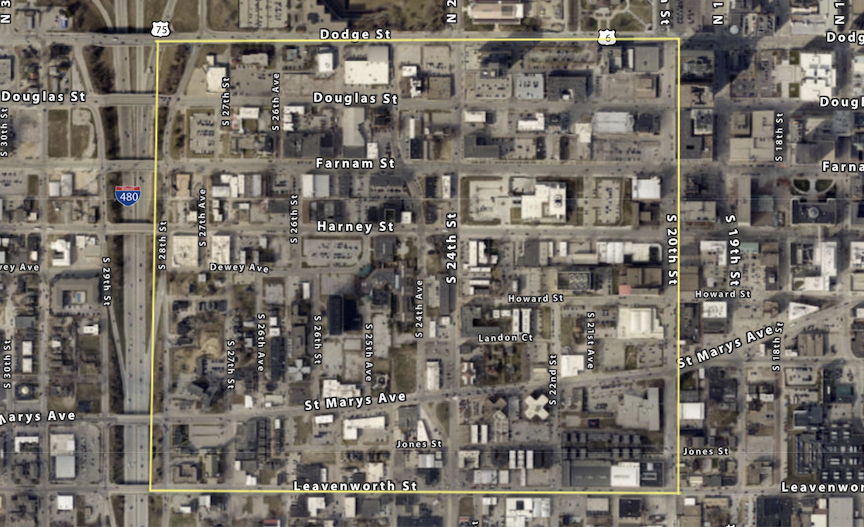
Aerial image borrowed from Google Map. I highlighted the Park East neighborhood in yellow. For the record, no one I knew called it Park East and we wouldn’t have known it even had a name.
Park East was rough by the time I was old enough to go downtown but the beauty and inherently organic layout of this whole neighborhood, before demolition, had grown up over time and we could sense through walking around, that all necessities were but a few paces from home. Everything. There existed tunnels linking some of these structures. What we couldn’t make out through looking in smeary windows and behind boarded up doors, were the story lines we made up and have finally been validated by historical images. And not too long ago, it was all there.
Twentieth Street to Twenty-sixth Street, Farnam to Douglas was the well known prostitution frontier dating back to my childhood. Dressed and dolled up female and transgender streetwalkers were easily observable at night, no coyness about it. Johns circling in vehicles appeared somewhat more discreet, but not much, often halting roadside to engage in conversation with the ladies. Different area of town but during the early to mid-1970s, male prostitutes and those looking for their services frequented a distinct part of the city, around Sixteenth and Howard streets. The Omaha Police Department said at the time, “The gay community tends to stick together and they are harder to arrest.” By my 80’s high school years, Seventeenth and Jackson was the spot for male prostitutes, the area between Jackson and Leavenworth Streets on Seventeenth Street, specifically. Older male clients would arrive by vehicle and drive through, making their selection. In 1984, fifteen men aged 17 to 54 were apprehended. One streetwalker was a twelve-year-old boy. From the 1980s until it was illuminated in the early 1990s, there were significant linkages between certain young male prostitutes, some of those older men who circled the streets in vehicles, and the Franklin Credit Union scandal.
Want to know more about the historic Milk Run and male prostitution areas in Omaha? Check out:
I Wish I Could Have Gone To: 1512 Howard Street
I Wish I Could Have Gone To: The Cave Under the Hill
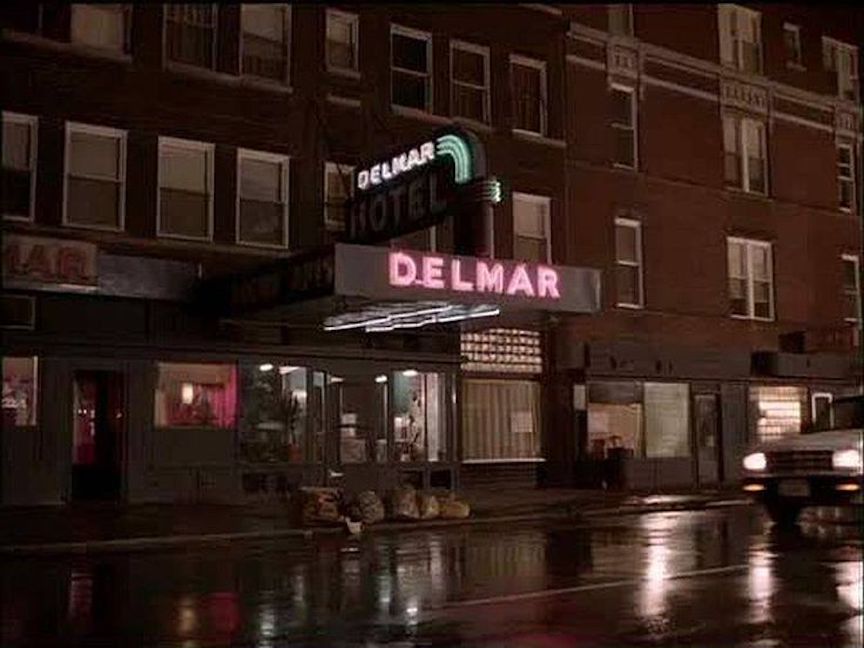
The older people and eccentrics at the Steak N Egg Kitchen all seemed to unfold from the nearby inexpensive apartments and rooming houses of the area. Maybe some were just passing through? The Delmar Hotel, at 219 South Twenty-fourth Street, served as a hotel, apartments or rent-by-the-week lodging. It was actually two buildings combined. Hotel Delmar, in its day, had been a lovely hotel. Not posh by any means, but certainly upstanding.
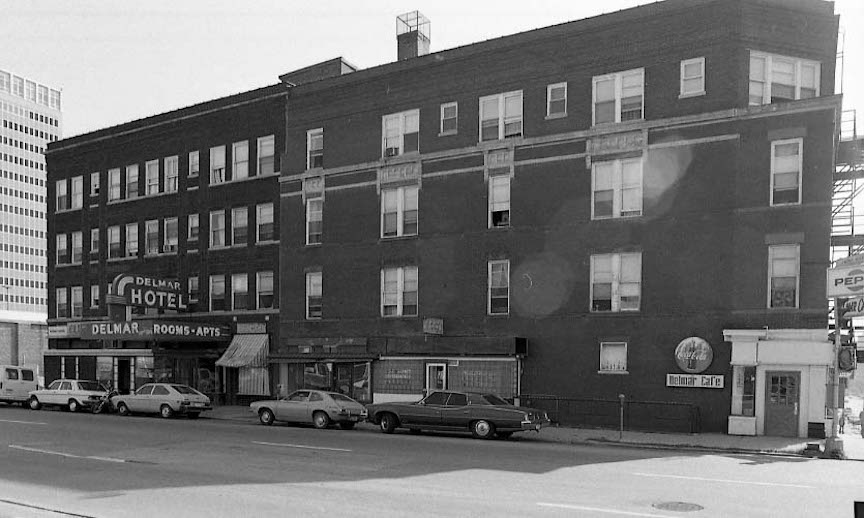
It was the usual–a fire classified as arson occurred in 1996, was condemned by the city in 1998, and subsequently demolished in 2001. Delmar Hotel on the northeast corner of Twenty-fourth and Farnam Street. Camera faces east. This 1980 photograph shows the two buildings combined to one large hotel.
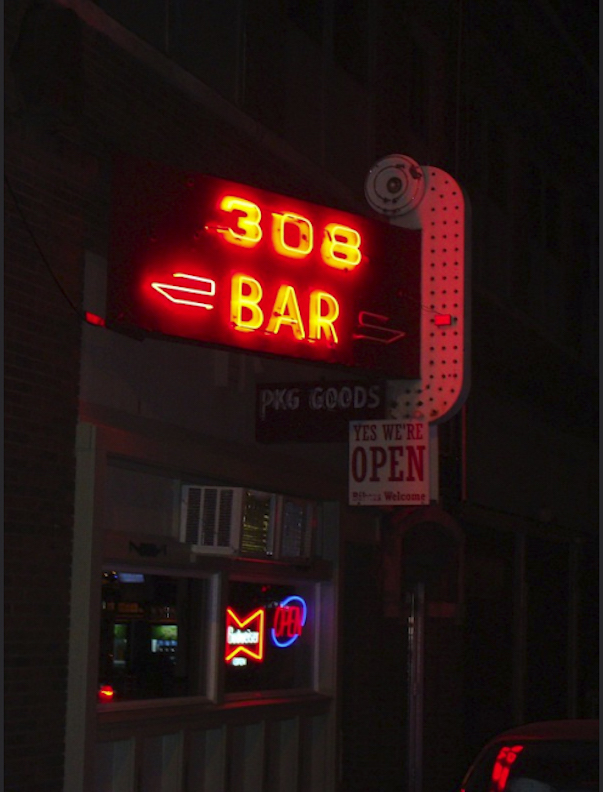
The 308 Bar at 308 South Twenty-fourth Street, next door to the vacant and fascinating Powers Pharmacy and underneath the Downtown Boxing Club. It was all very old school. Barney’s 308 Bar ran their establishment from 1984 to 2012 from the ashes of the 40 year old Ben Simons Bar. I did enjoy the 308’s “Bikers Welcome” sign and bikes were, indeed, what you would find lined up outside. Considered a rough bar, they infamously peddled “The coldest beer on 24th between Harney and Farnam.” Photo by Admiral 58.
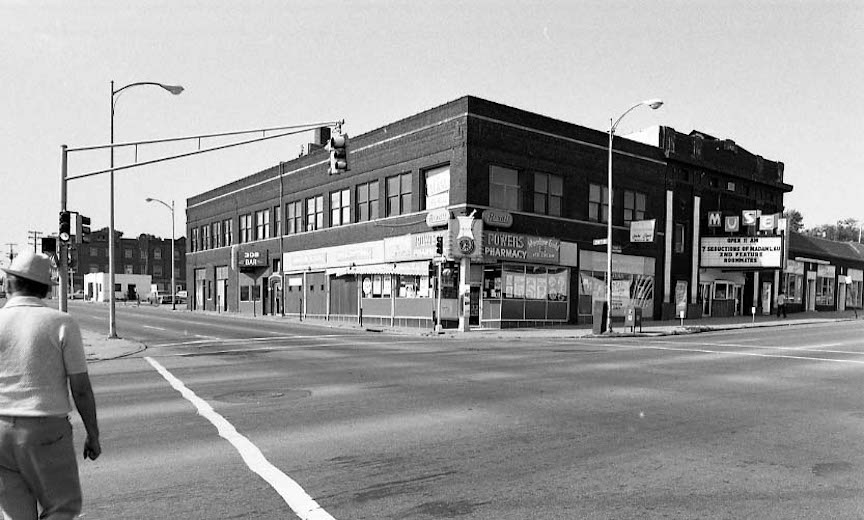
Camera faces southwest. How the whole Powers Pharmacy building came together. 308 Bar is seen on the south wing. The pharmacy was right on the corner of Twenty-fourth and Farnam. The Muse, directly to the west. 1980 Reconnaissance Survey photograph.
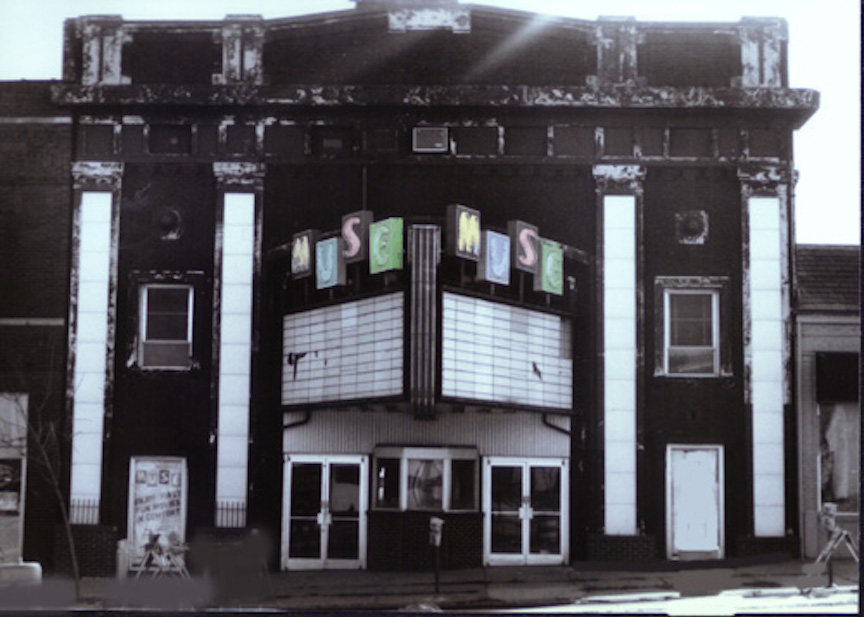
The Muse Theater. 2405 Farnam Street. Closed as a soft-core pornography theater in 1984, it was purchased by a trust in 1988 but continued to sit vacant. A mysterious three alarm fire in 1998, later deemed arson; code violations to condemnation by the City; owner attempted to sue the City in Federal Court; razed in 1999. Late 1980s photo by Rich Jeffreys.
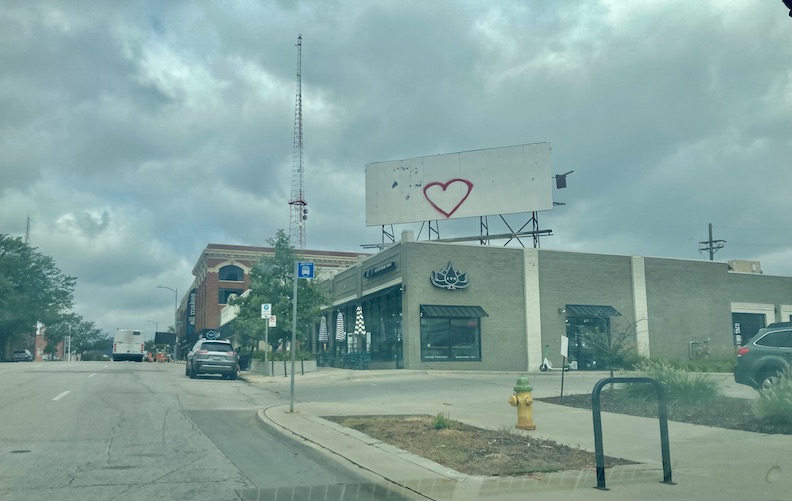
The Smoke Pit at 2504 Farnam Street and the Backdoor Strip club, later Backdoor Lounge at 230 South Twenty-fifth. Now called Zen Coffee Company. The Smoke Pit appeared as a respite, open till 3 am, for all types of late night characters, not just sex workers. As with all important cultural phenomenon in the 70s and 80s, the artists, vice and underground communities coalesced in the same late night bar and restaurant scene, sharing the stories of their nightly trawls. Not a lot of places to hang out in those days.
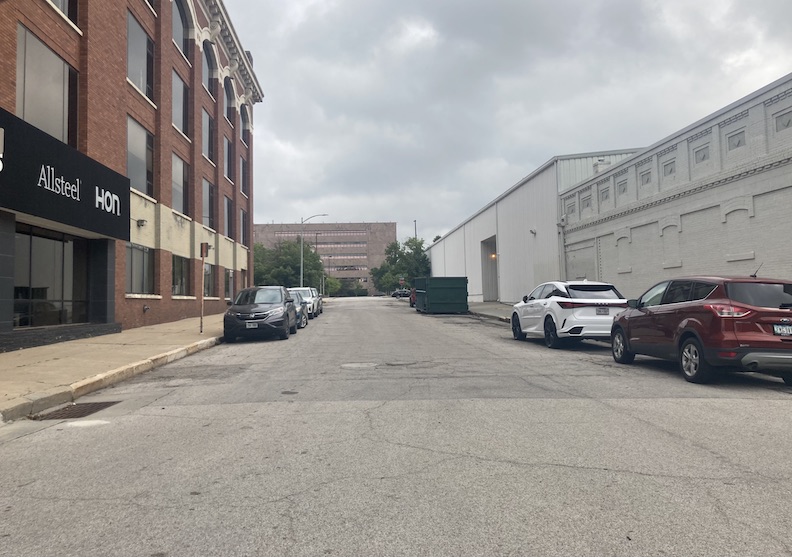
All Makes office furniture store and machine division at 2520-2558 Farnam Street. The intersection of Farnam and South Twenty-fifth Avenue, especially the segment of South Twenty-fifth Avenue extending north to Douglas, was a renowned, dimly lit hub of nocturnal adult activities from the 1970s into the 1990s. The absence of street lamps, building illumination, and the dearth of commercial activity on this street rendered it an ideal location for sex services. In the early 1990s the City put signs up along the sidewalk in front of All Makes that read: “No Parking, Stopping, or Standing Anytime 8 p.m.-4 a.m.”
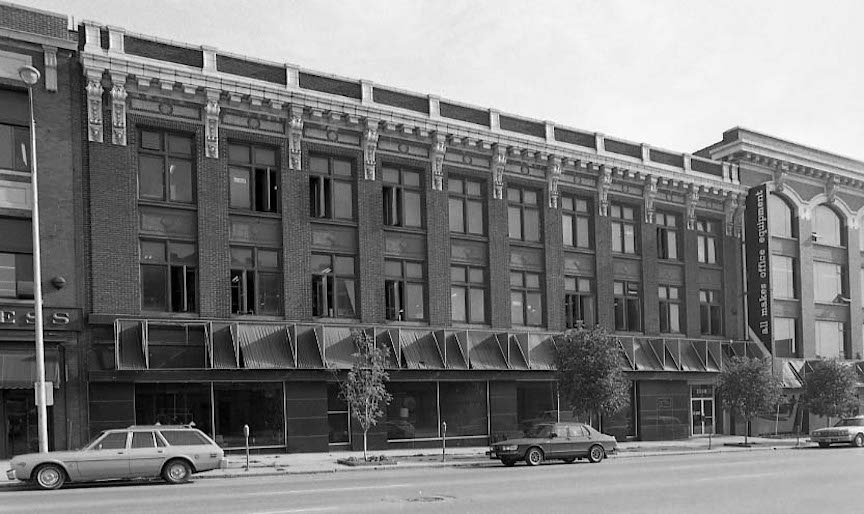
All Makes Office Equipment in the 1980s. 2562 Farnam Street. The original Jones Opera/Van Brunt Automobile Company Building. George L. Fisher designed this structure and it was completed in 1918.
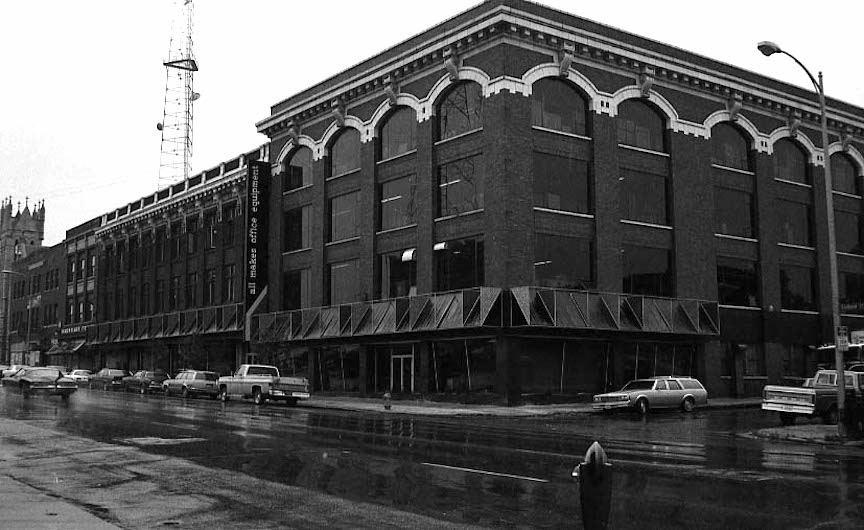
The structure located to its east is 2558 Farnam, likewise belonging to the All Makes company, and was the original Studebaker Building. Designed by John Latenser in 1913, this building is attractive to this day. 1981 photo from the Reconnaissance Survey.
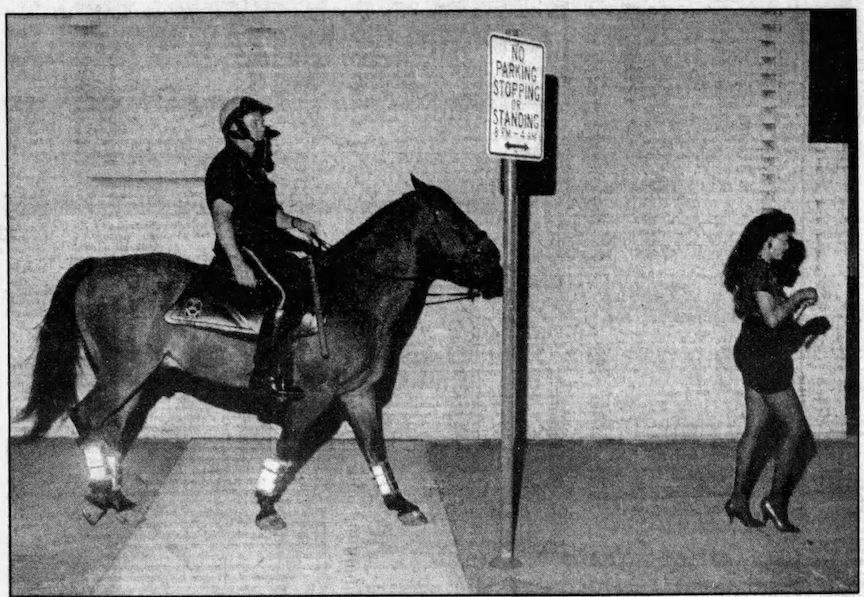
In July of 1990, Lieutenant Charles Benak was observed with his horse, Rocky, near the intersection of Twenty-fifth Avenue and Farnam alongside a local prostitute. The city had recognised the section of Twenty-fifth Avenue between Farnam and Douglas Street as a frequent location for prostitute activities. “The department’s new horse patrol has begun touring the area two or three nights a week.” 1990 OWH.
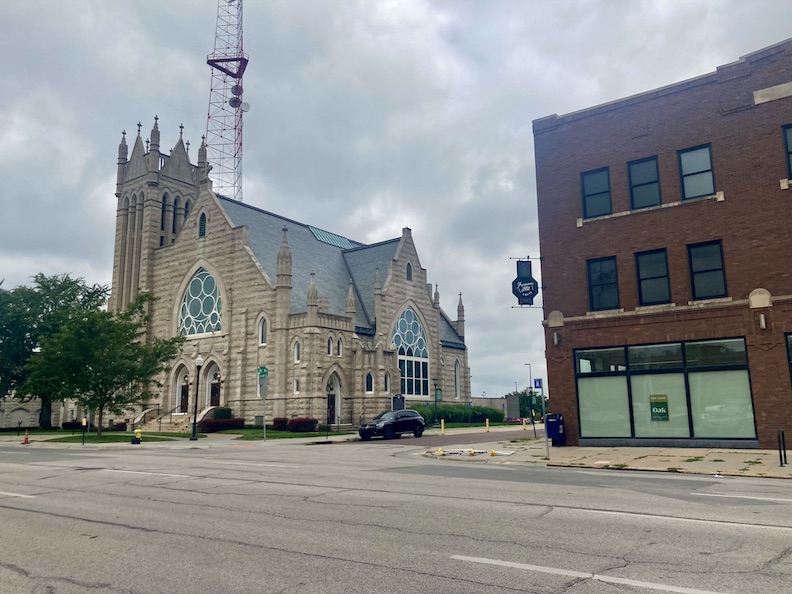
Kountze Memorial Lutheran Church at 2650 Farnam Street. Oddly, directly to the east of the church on this in-plain-view corner of Farnam and South Twenty-sixth Avenue was a hotbed of prostitution in the 1970s and 1980s–also leading north of South Twenty-sixth to Douglas. In 1980, it was reported that women from Kansas City, Minneapolis, and Des Moines arrived in Omaha for the Ak-Sar-Ben racing season in late April. There were so many out-of-town sex workers on the downtown streets in 1981 that “gun battles” broke out among pimps “trying to get the prostitutes into their stables or keep out-of-town prostitutes out of local pimps’ territory.” It was commonplace to observe up to thirty prostitutes operating on the streets during a warm weekend evening.
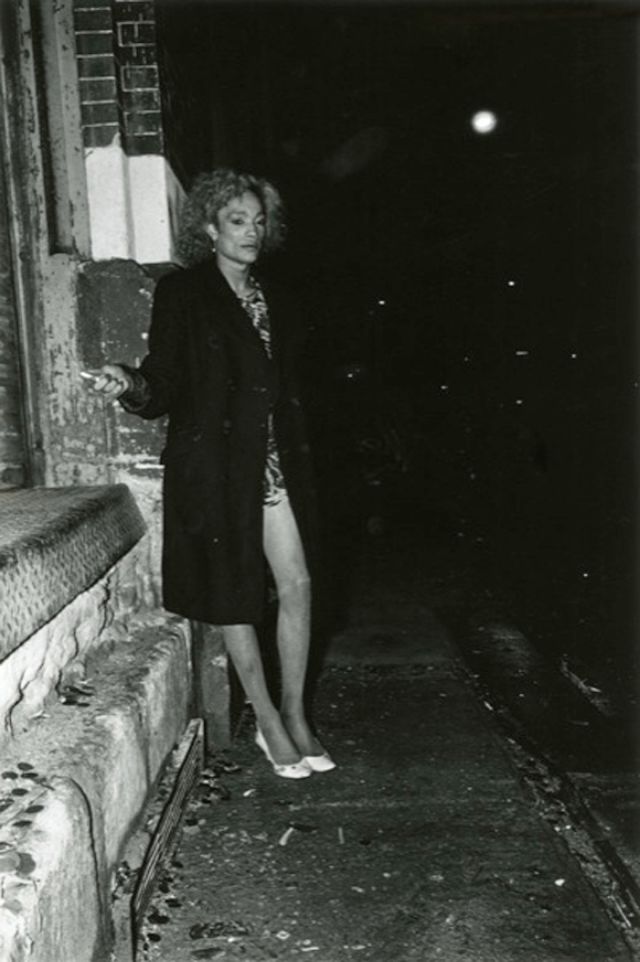
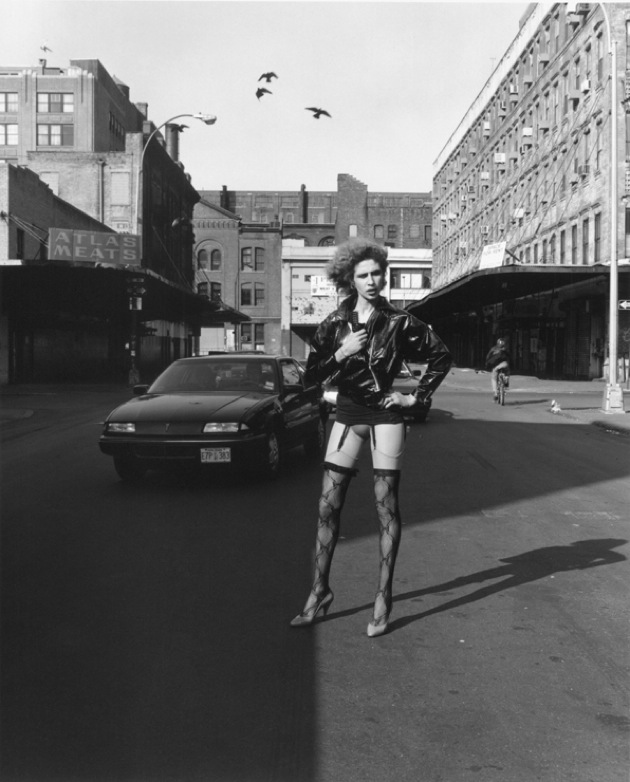
These 1980s working prostitutes, captured in black and white by Stuard M. Derrick, perfectly illuminate how the prostitutes of the late 1970s to mid 1980s dressed in Omaha. Heels, always high heels, eye-catching garments, over the top, almost comical fleshy exposure, provocative twists—like lacey under-attire with a man’s style trench. Individuality and visual interest were important and seemingly rewarded. Tall, sprayed, over-engineered hair. Oh the jewelry! Much of this street look mirrored and exaggerated the club fashions of the time. Evidently I invested excessive time into my study of working girls’ street attire, rather than algebra, yet it seemed that many looks were assemblages from Frederick’s of Hollywood and Berman’s Leather (both found at Westroads Shopping Center), the Wild Pair shoe store (Crossroads Shopping Center) and Cosmos Wigs shop (1517 Farnam Street). Who knew that these shops and the fascinating street walkers would disappear twenty years later.
Interested in more Park East history?
For the Love of 2406 Farnam Street
The Secret of the Muse Theater
Mysteries of Omaha: 2561 Douglas Street
Goodbye to the 26th and Harney Buildings
Even as late as 1995, prostitution along the Twenty-fourth and Farnam area was still going, although reduced in comparison to the zenith of the 1980s, when Ak-Sa-Ben horseracing crowds reached their peaks. In 1988 537 prostitution-related arrests were made. It was long believed that Ak-Sar-Ben race enthusiasts, out-of-town visitors, and out-of-state conference attendees constituted the bulk clientele for prostitution and topless clubs. By the end of 1995 prostitution arrests had reached the highest level in seven years, with 388 prostitution-related arrests. Opponents of Bluffs Run Casino, which had coincidentally opened in March of 1995, predicted this bump up. In my estimation there was far more prostitution associated with drug activity in the mid 1990s down in the Twenty-fourth and Leavenworth area. Long gone were the provocatively dressed ladies of the night. Just observations from walking to the Cog Factory.
By the time I returned to Omaha many of the previously mentioned buildings had already been burned down, torn down, others razed in a few short years. These blocks of movie sets, stylish, with an abandoned quality had vanished. Specifically, some of the most intriguing of the structures had disappeared but there are many more that I can no longer remember. By then it was my generation’s time to rent the incredible crannies, apartments and buildings of Park East that had been deemed castoffs. The affordable rents, solid bones, the appealing, aged architecture and quirky street layouts provided the perfect backdrop for galleries, art spaces, hideaway living, workshops, venues, and band recording and rehearsal studios. The aforementioned Cog Factory at 2224 Leavenworth was a 2,500 sqft industrial building, surrounded by similar, hollowed out buildings. Renting for just $600 a month made it a cinch of an underground music venue until officials caught on. Robb and Scott would spend over $16,000 to get the venue up to city codes. Likewise Mr. Cassette and his associates would rent and later buy great spaces within Park East, along with so many friends.
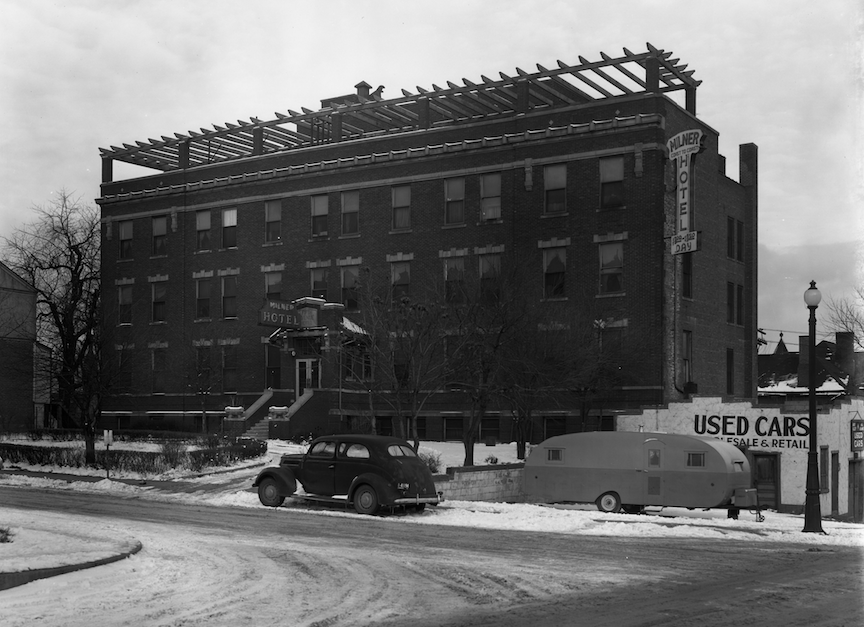
“Milner Hotel.” 121 South Twenty-fifth Street, the northwest corner of Twenty-fifth and Douglas. Bostwick, Louis (1868-1943) and Frohardt, Homer (1885-1972). The Durham Museum. 1945. I have had a handful of friends live in these apartments, although it was called the Fifth Avenue Hotel and later Fifth Avenue Apartments. I remember going on the roof and what a view of Downtown Omaha! We were always convinced this building was a former mental asylum. I think like a lot of these older structures, this one was leased and transformed into a haunted house for Halloween one season. I think they claimed it was a “haunted asylum” and somehow, maybe, that theme stuck as true history. Do you recall this? At any rate, many strange things have occurred in this good, old building which solidified the haunted mental institute storyline in our minds.
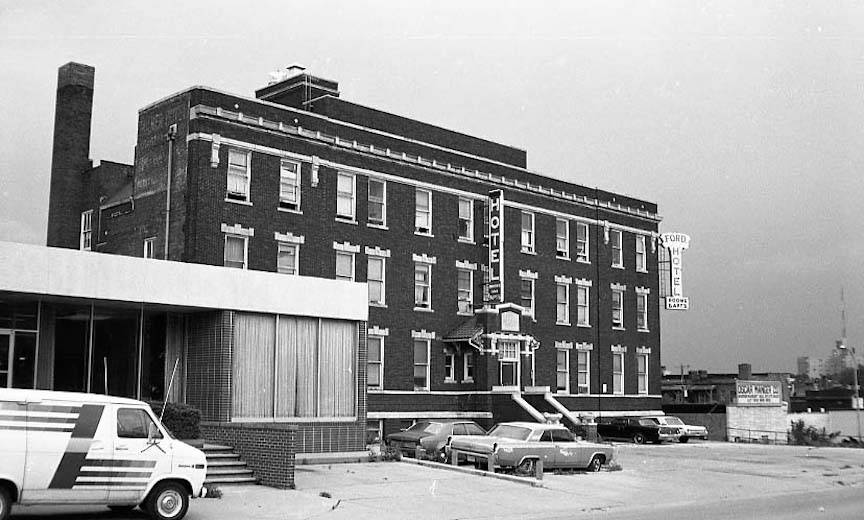
**Addendum of August 2025. Getting closer to the truth. This Milner Hotel ((supposedly)) had been the Ford Hospital and then the Ford Hotel. These clues gave credence to this hospital idea. More digging to follow. 1980 Reconnaissance Survey photograph.
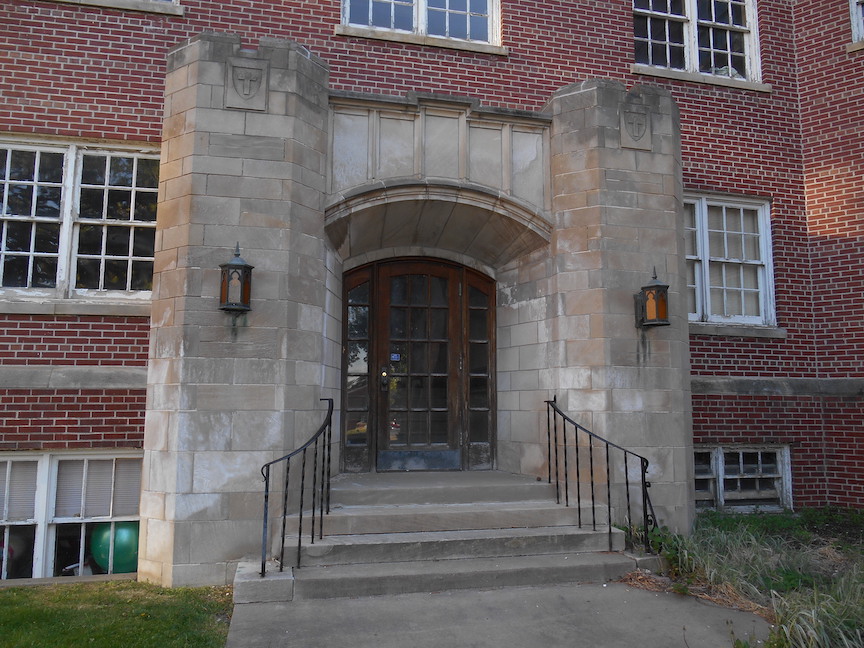
530 South Twenty-sixth Street. The castle entrance. There were and are so many wonderful buildings and streets to wander down. A marvel of city planning weirdness.
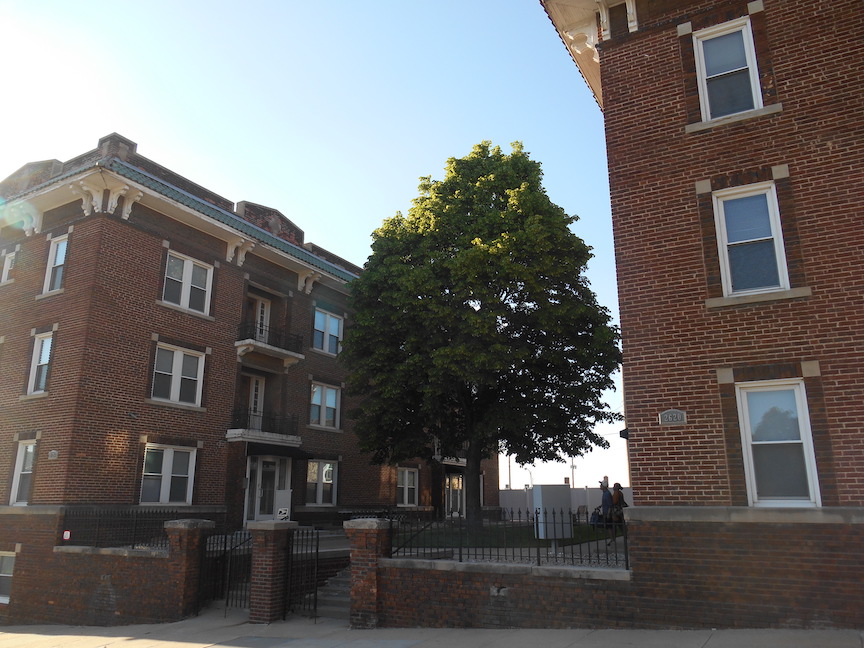
2626 Dewey Avenue. Another classic apartment haunt where we frequently congregated. Twin buildings overlook a courtyard on a deadend street. Dewey Avenue extended from Richard Young Hospital to the previously mentioned interstate to the west. It has always felt like an alley. The homes, apartments and buildings bordering this alley exhibit an odd configuration, suggesting that it wasn’t always this way….or, intriguingly, that it has always been This Way.
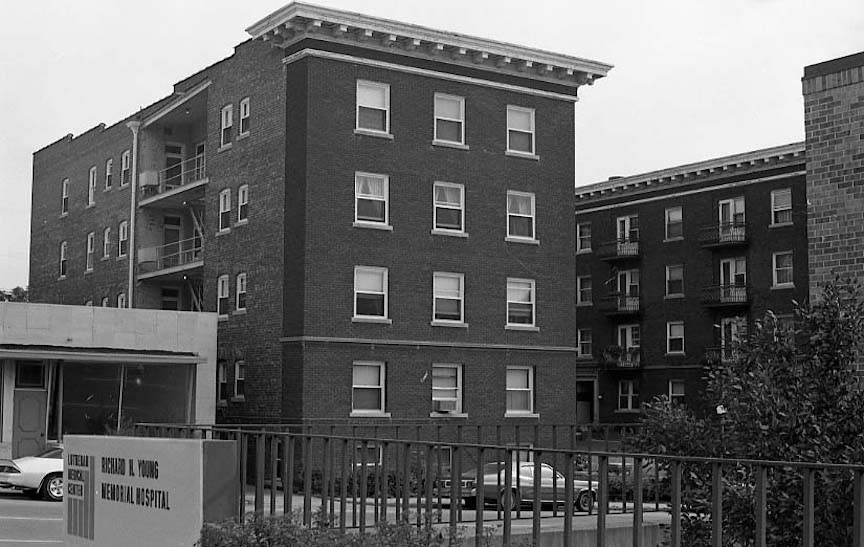
The 2464 Harney Street apartments were a classic U-apartment structure built around a courtyard. They were called Harney Court in the 1990s and were directly north of the Richard Young Hospital grounds. See the hospital sign to the left. I had many friends live here over the years. Built in 1912-1913, these solid brick flats were designed by M. Sorenson and originally called the Helen Apartments. They are still going strong.
In the early 2000s, I rented what I considered a gorgeous apartment on South Twenty-sixth Avenues and St. Mary’s. It had expansive wood floors, beveled glass French doors, a beaut of a fireplace and a balcony–an ideal atmosphere to simulate a 1950s divorcee with a Doris Day hairstyle, who chain-smoked and listened to Jackie Davis At the Hammond day and night. However it was situated Front and Center to notorious drug activity and pest infestations. In trying to park out front, after a late night event, or even in running to the corner store for a soda and cigarettes, I began to understand the implications of Park East with new eyes.
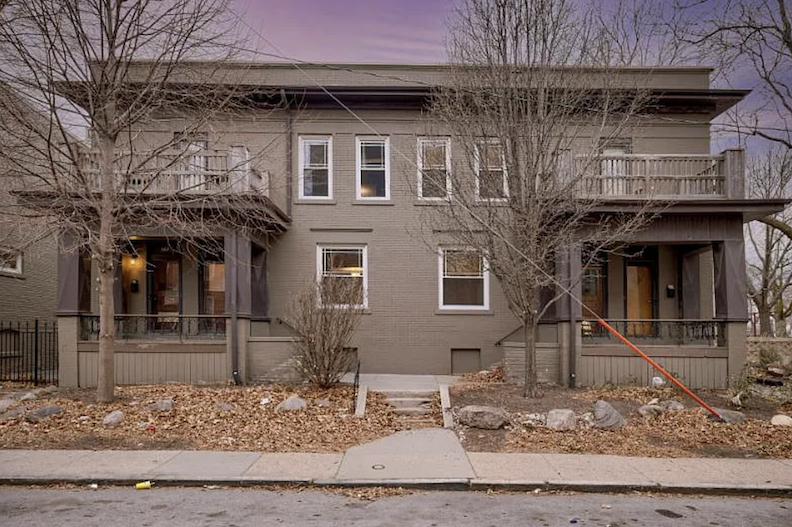
Of interest, my old beloved but roach-filled apartment on South Twenty-sixth Avenue. The four-plex was recently spiffed up and sold as a condos—just my portion sold for $240,600.
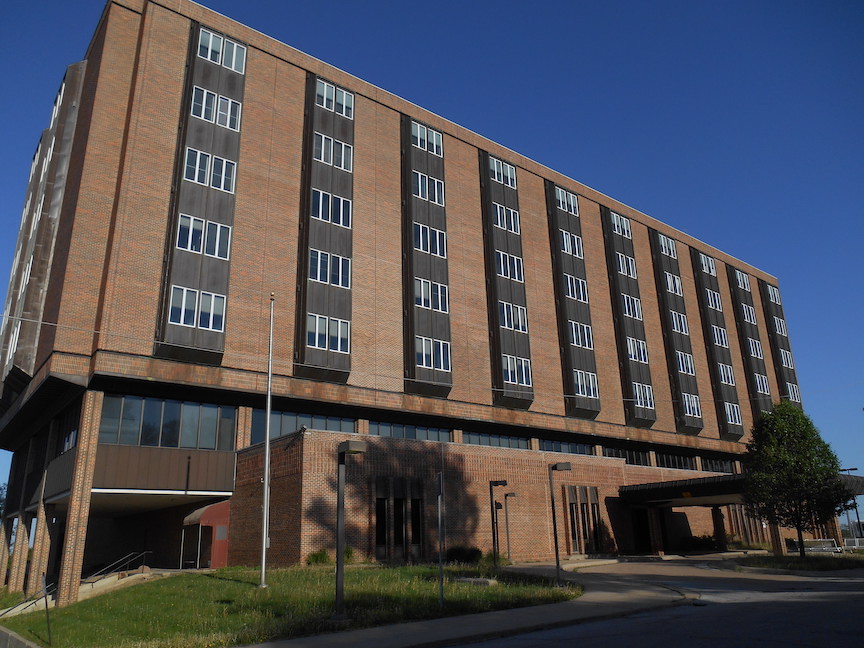
515 South Twenty-sixth Street was a short walk from my favorite roach hotel apartment. What an area to investigate. In my day there were tumbleweeds blowing down the street. This building was once part of Richard Young Hospital and for a time they had outpatient offices housed here. I took this photo long ago and my word, it is not looking good now in 2025. I believe it is inhabited by wandering people residing on different floors or are they spirits that have lanterns?
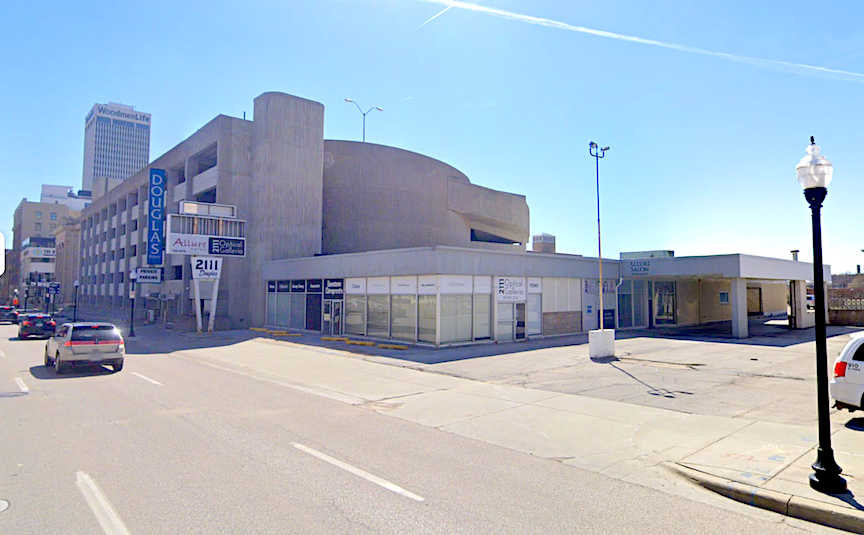
Down a few doors from the old Econo Lodge, we find 2111 Douglas Street where I maintained a gym membership. Curves was a women’s fitness center. The layout was unconventional yet functional. I was unaware that this location once operated as a Rosen-Novak car dealership, focusing on luxury international automobiles. The building arrangement became more coherent once I learned that. Great people. I also belonged to the YMCA at 430 South Twentieth Street, over a few streets. That was also a good community.
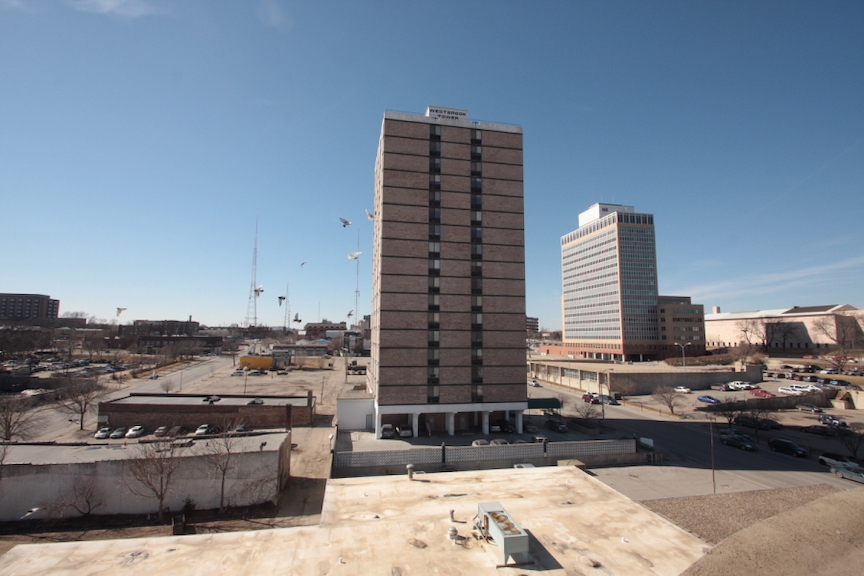
The construction of Interstate-480 North, started in the mid 1960s and lasted years, was thought to be the kiss of death to this area, severing its connection to the residential neighborhoods to the west. (I could not find that this neighborhood was called Park East or any other proper name previous to the early 1970s.) Uncrossable sections of Park East exist around its western edge because of I-480. In the 1960s, numerous businesses began departing from Downtown Omaha and relocating westward, reflecting much of the city’s historical development. Contemporary papers of the time indicated that numerous families and long-term residents of these Park East streets also pulled up stakes and moved out west. Additional barriers, like unoccupied commercial structures, litter-strewn vacant lots in the 1980s, and disreputable streets such as Twenty-fourth and Leavenworth, rendered this an eyesore in the City’s vision. In the 1990s, Marty Shukert, the former Omaha City Planning Director, stated that Park East was a “place of last resort for many individuals,” highlighting it was “home to a mental hospital, two low-income retirement homes and the central offices of Omaha Housing Authority.” While he noted that the neighborhood offered low-cost housing to many in need, he acknowledged the City was obligated to provide this area with “decent housing” and “a basic platform of services.” A mini-park was established in the 1970s for the neighborhood children, actually a few doors away from my South Twenty-sixth Avenue apartment. Humorously called Park East Park, it was not a pleasant place when I lived on the street, filled with adults looking to score and I had to wonder if any children ever played there. Initiatives to rehabilitate this area of Omaha were stop and start inconsistent in the decades following the construction of the interstate. When there was interest in eastern Omaha, the City and developers appear to have concentrated their resources and efforts on Downtown proper.
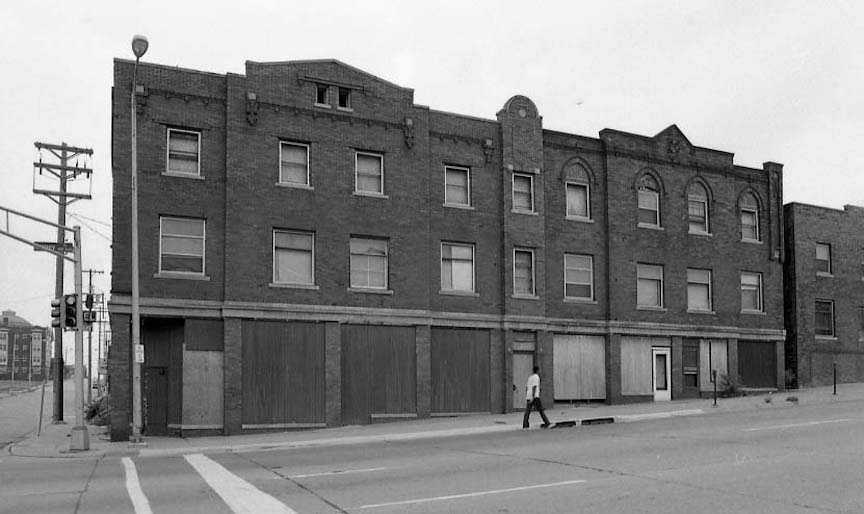
This 1981 photograph of 2401 Harney Street accurately sums up my memories of this whole area. Built in 1926, this amazing Birger J. Kvenild-designed structure is everything new developers hope to achieve. Businesses at sidewalk level with apartments above.
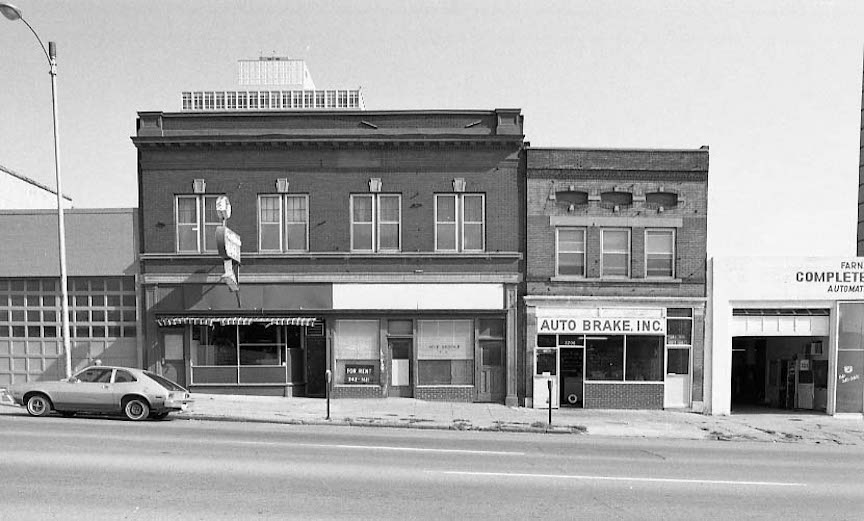
Now gone but so cool in their day. Possibly 2216 Farnam Street. Built in 1909. Would have been to the east of the Delmar Hotel.
Vacant surface parking that no one used served as a Dead Zone. Were these missing buildings examples of Demolition by Neglect, or were these cases motivated by the City’s drive to eliminate undesirable elements? I began to think more about this idea that we have discussed previously: I believe a building, a business or an area can have a Bad Reputation, much like a person can. Is it possible for a structure to possess an excessive amount of tragic history (bad energy), necessitating its demolition? Does tragedy beget tragedy in the built environment because of location? Does this indicate an intrinsic force within the land or structure, or is it a result of poor city planning–a muddled configuration of buildings and quirky streets that attract troubled behavior, leading to tragedy? Did the neglected Park East neighborhood possess a history of building mismanagement and criminals who preyed on victims in permissive environments? The Steak N Eggs Kitchen, Delmar Hotel, and the Muse Theater each had a tarnished reputation which I believe contributed to their closure, among other factors. They were made to go…and possibly to public cheers. The buildings that stand before us today, much like the people who once wandered between them, had clutched and dodged and ducked for a lifetime.
Let’s walk down to the area of 2221 and 2215 Douglas Street, a time before any of us were born, and look for clues.
The Distant Past
During the 1880s, both sides of the Douglas Street strip from Twentieth to almost Twenty-fourth were populated with frame and brick residences; some would later convert to rooming houses, while others were intentionally constructed as flats. Although these residences were not considered the poshest homes in Omaha, their early inhabitants had the means to employ servant girls, if that gives indication. 2215 Douglas Street was a substantial, refined brick residence providing furnished rooms to tenants, with the assurance of access to a lovely furnished parlor by at least 1890. This address was site of the Steak N Egg Kitchen, although certainly not the same building. Interspersed among these early residences were modest enterprises, like Burgess & Co., a firm that manufactured women’s shirtwaists and suits.
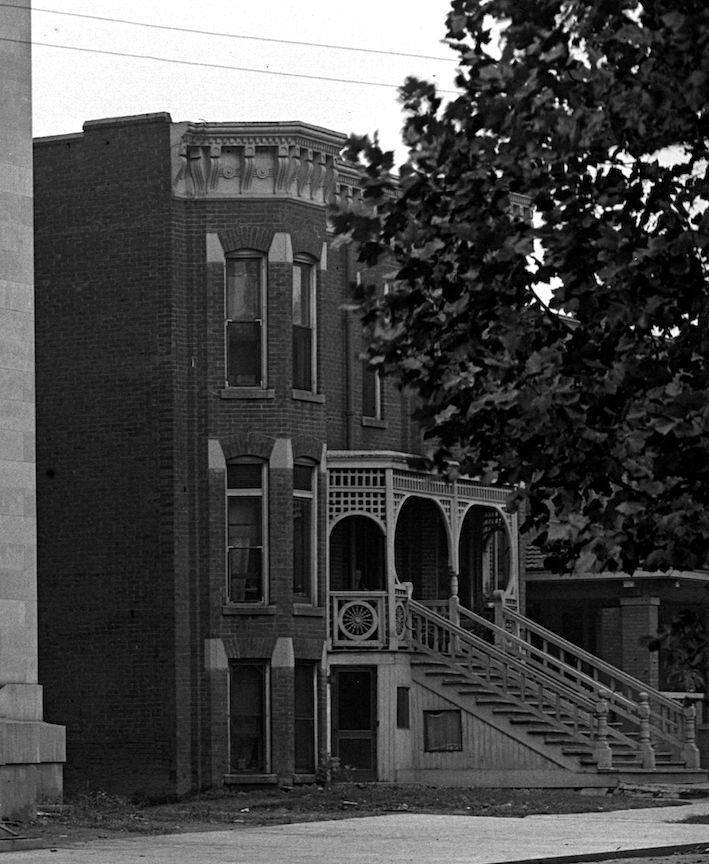
About Twenty-first and Douglas. By 1915, many of these brick structures were already twenty and thirty years old. Although intricate perfection to my eyes, these apartments and rooming houses were nothing fancy, functional, working houses by then. I will show you another photo upcoming so we can observe how they had aged by the 1940s.
Omaha had constructed many impressive buildings just steps from these early Douglas Street homes.
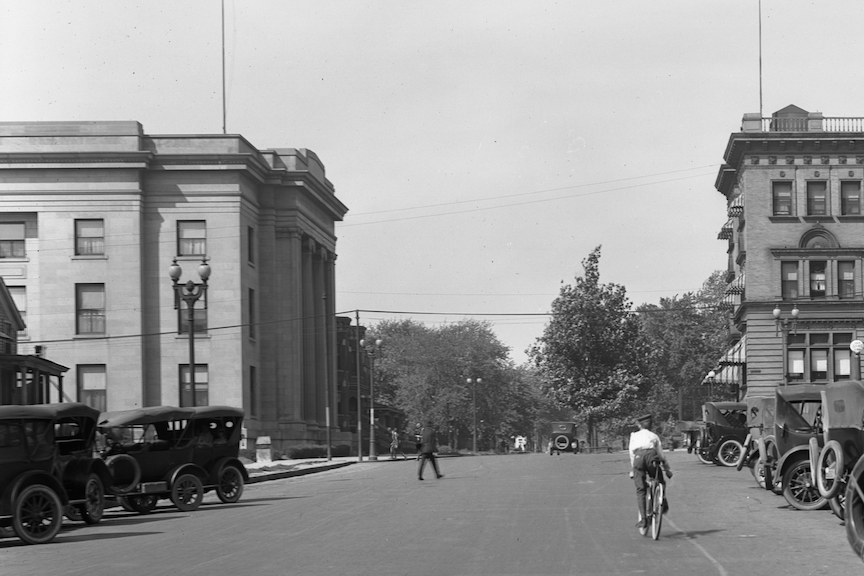
Looking west on Douglas Street at about Nineteenth Street. On the left is the Scottish Rite Temple and the old Omaha Club is on the right. In the distance one can view a tree-lined, residential area, which served as the homes of Douglas Street. Quite beautiful. A boy is riding his bicycle up the street.Bostwick, Louis (1868-1943) and Frohardt, Homer (1885-1972). The Durham Museum. 1919.
To the east on Douglas Street, spanning from Fourteenth Street to Seventeenth Street, was Omaha’s popular Theater Row. The Moon, Rialto, the Empress, the World, the Strand, and the Brandeis (located half a block south) were all magnificent theaters in this vicinity. The former Brandeis Store, Fontenelle Hotel, and Northwestern Bell Building were also located in this area.
Amidst the architectural grandeur and the prominence as a hub of entertainment, let me introduce some color. In his 1986 study titled Preliminary Study of the Homeless in Omaha-Douglas County, Jeff Luke of the University of Nebraska at Omaha examined early homelessness. “Lower Douglas Street remained largely the ‘zone of discard’ in downtown Omaha. (…) Throughout the first half of this century Douglas Street remained Omaha’s principal skid row area. The same fixedness was true of the larger area in which homeless men and their services could be found (including what amounted to a small secondary skid row a few blocks away on North 16th Street).”
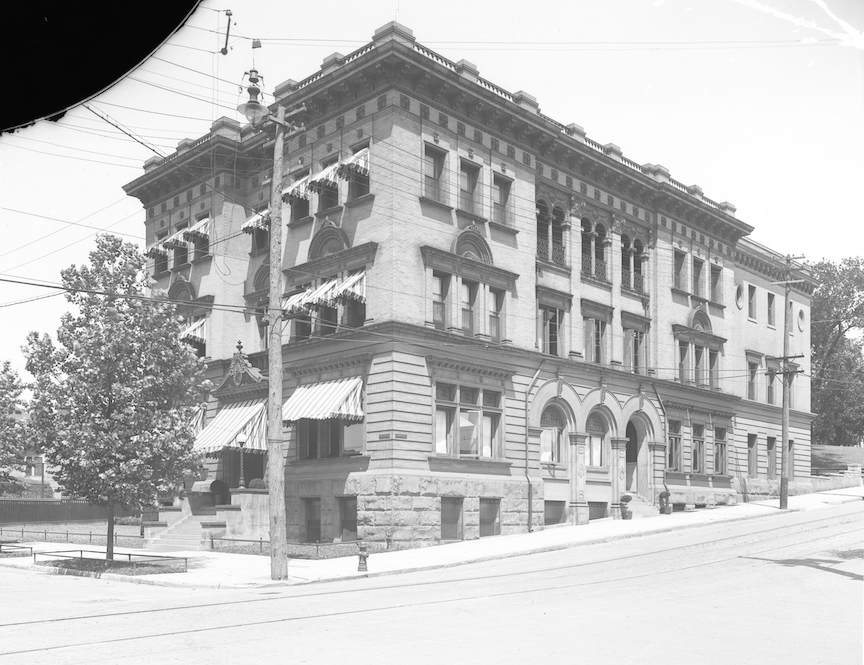
The Omaha Club was founded in 1883 by businessmen and professionals as an exclusive male-only social club. The “old Omaha Club building” on the northwest corner of Twentieth and Douglas Street was designed by architect Thomas Rogers Kimball. Opened in 1895. Bostwick, Louis and Frohardt, Homer. Durham. 1914. Glory Be. Camera faces northwest.
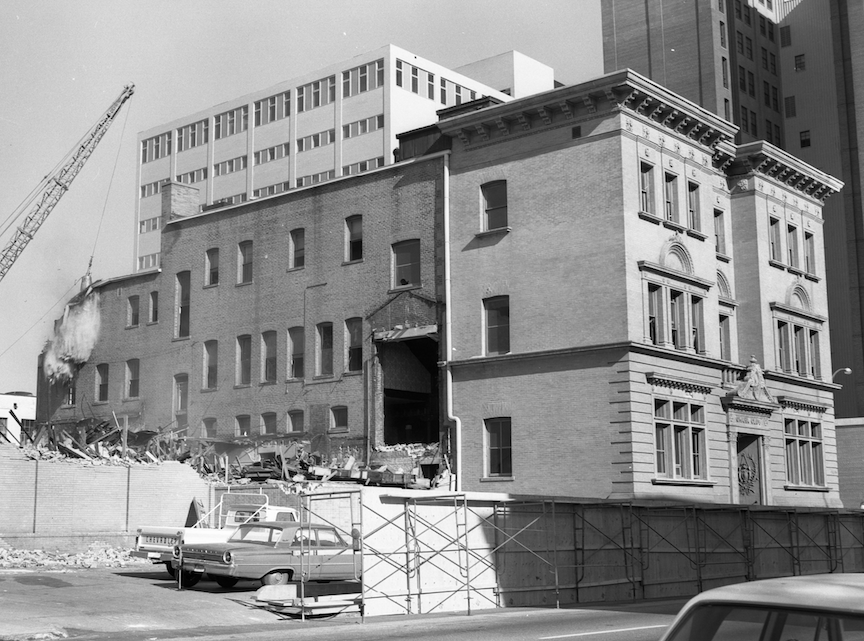
Fast forward to 1960. The old Omaha Club. Located at Twentieth and Douglas. It is in the process of being demolished. This is why we cannot have anything nice. Savage, John. The Durham Museum. Camera faces east. There is a discrepancy in that other records show that this Omaha Club demolition occurred in 1965. It could be that the Durham’s photo is mislabeled.
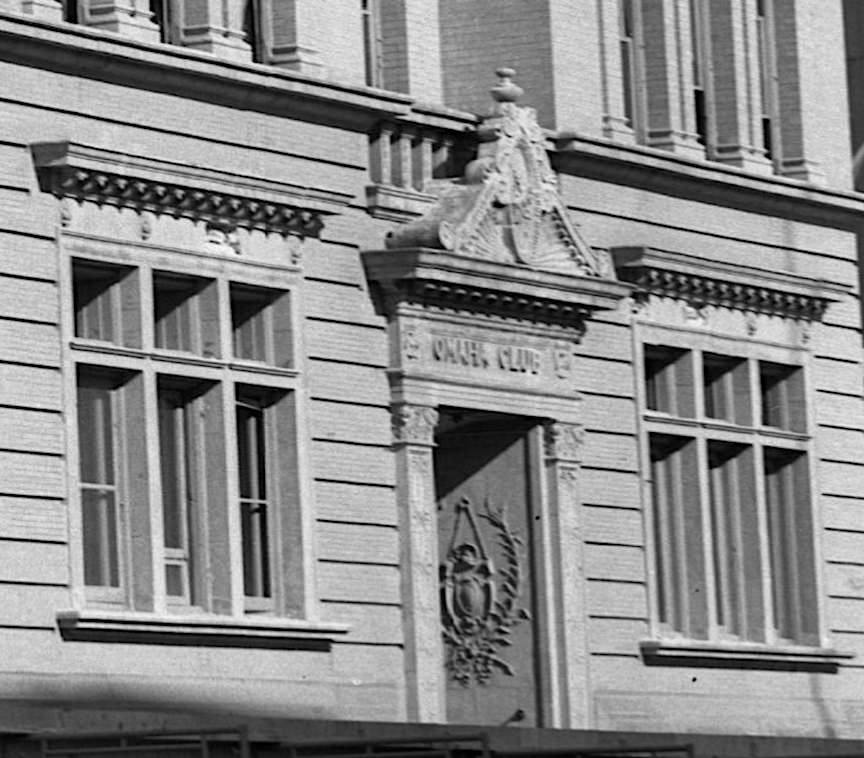
The old Omaha Club entrance detail in carved stone. Just stunning.
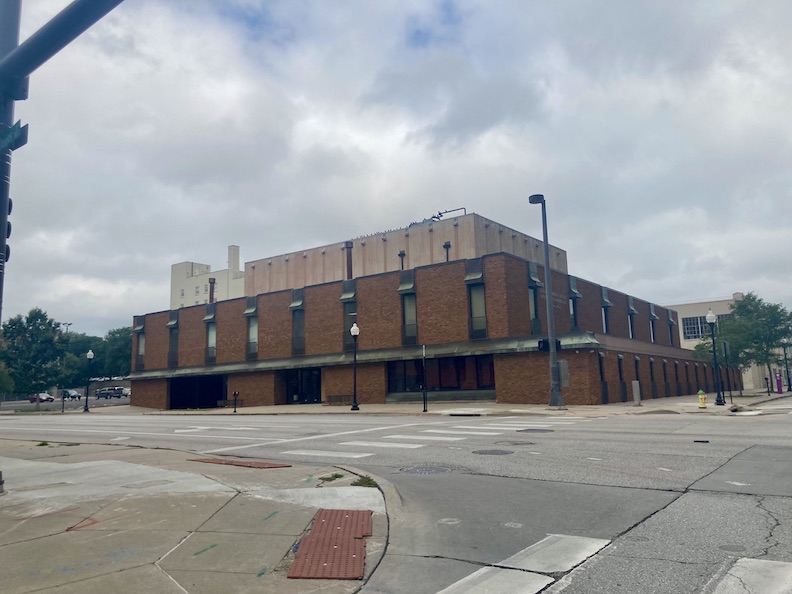
By 1966 the Leo A. Daly firm had designed the new Omaha Club. There is something very mysterious about this “new” Omaha Club at least in my mind. I’ve always had an uncomfortable feelings about this structure. Something about the darkened lower level design and the windows throughout and…oh yes, that recessed top floor that is almost prison-like. Shivers. The formal members-only Omaha Club shuttered in 2000 and they sold this building to a law firm. 2025 photo. My camera faces northwest.
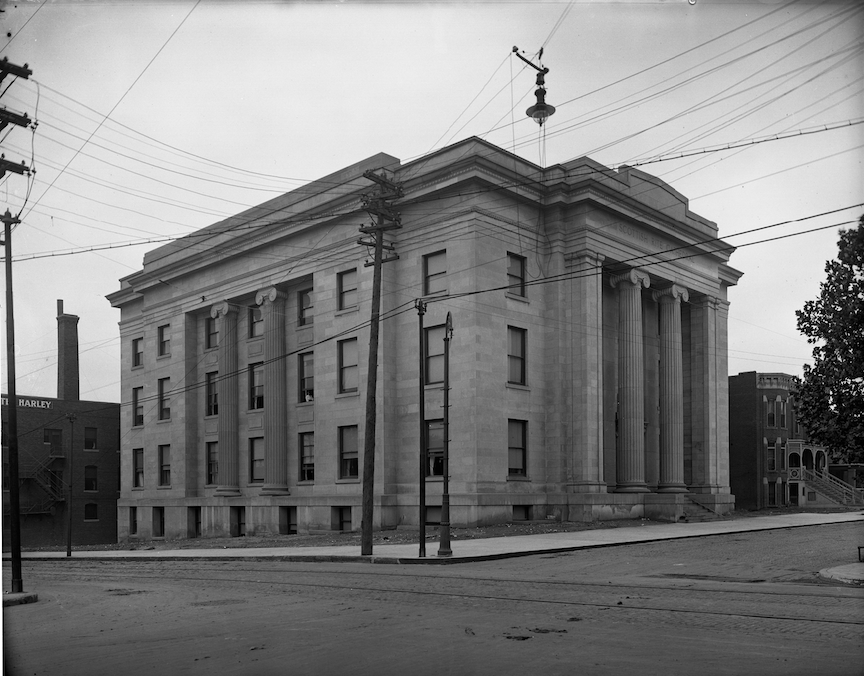
Scottish Rite Cathedral (later called Temple and now Hall) building. ‘Scottish Rite Cathedral’ is carved above the pillars in front. Located on the southwest corner of Twentieth and Douglas Streets. Bostwick, Louis. The Durham. 1915. Camera faces southwest. Still standing! The brick apartments to the west on Douglas Street, magnified version, were shown a bit a go to give an example of the residences on the block.
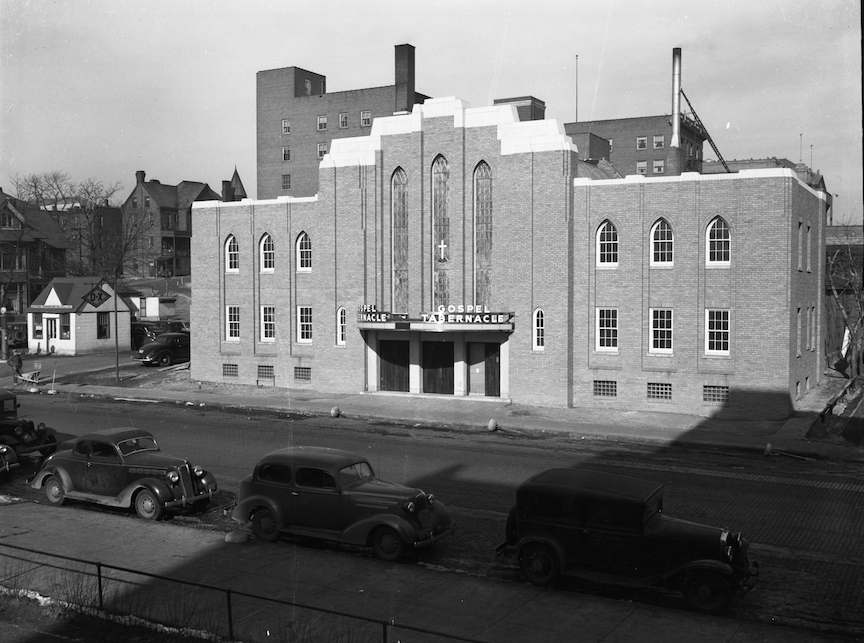
Later still…the Gospel Tabernacle building was built on the north side of Douglas Street at about Twenty-first. One door to the south of the Omaha Club. This would have been diagonal across the street from the current motel site. Savage, John. The Durham Museum. One door to the west was one of those adorable little gas station buildings.
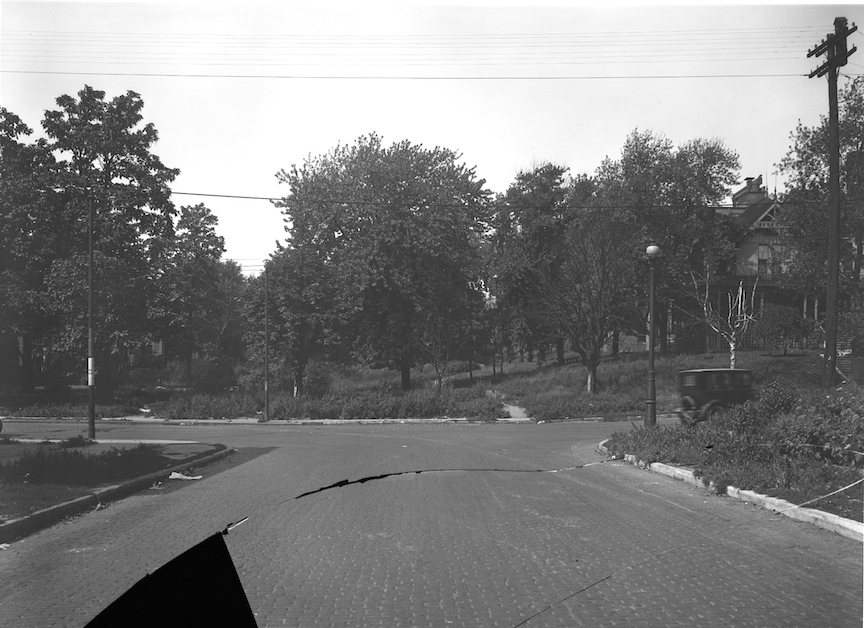
In the early days, Douglas Street terminated at its westernmost point near Twenty-fifth Street. Camera is at Twenty-fourth and Douglas Street facing west. A very large house can be seen through the trees. This a gorgeous, overgrown, parklike environment was very different from the Downtown proper grid. Negative is damaged and broken. (That isn’t a hole in the earth.) Bostwick, Louis (1868-1943) and Frohardt, Homer (1885-1972). The Durham Museum. 1919.
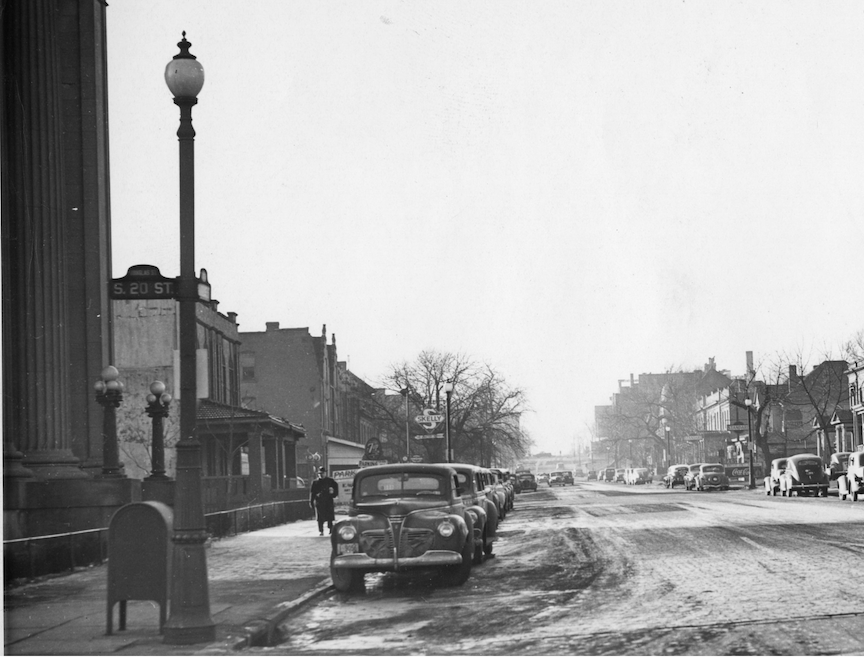
1946. Douglas Street looking west from Twentieth Street. The pillar and lamps of the Scottish Rite is on the left side of the photo. Gospel Tabernacle is on the right side of the street, just out of camera’s view. Durham Museum. 1946
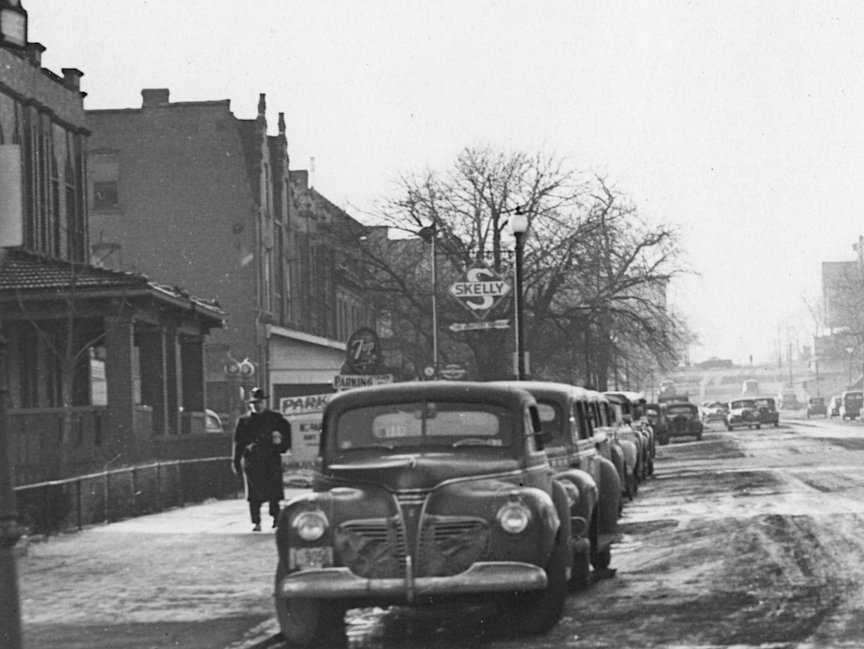
Magnified 1946 photo of apartment buildings and residences. Douglas Street looking west from Twentieth Street. The Durham Museum.
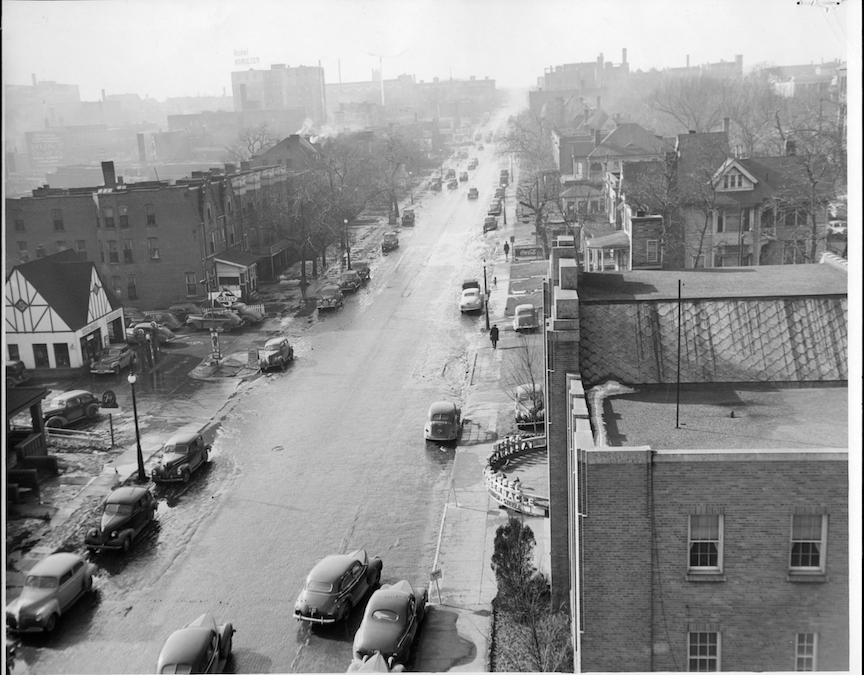
Here’s a good one. View from the roof of Omaha Club of Douglas Street looking West from 20th Street. Gospel Tabernacle is in the lower right corner. Hotel Hamilton is in the distance on the left. The Durham Museum. 1946.
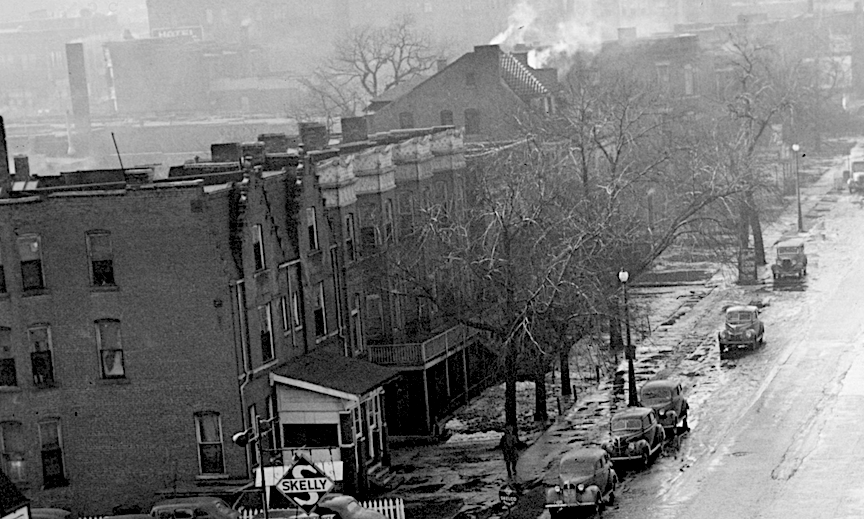
Detail of the above photograph, illuminating the rows of homes all the way up to Twenty-fourth Street. Looking fairly sooty and worn by 1946. I love it.
In 1925, 102-year-old William Everitt resided at 2127 Douglas Street. He also possessed an “old house with a barn” located at 2215 Douglas. Oddly “vandals” had been at work– shattering windows in the house and barn, dismantling stair rails, tearing away planks, and cutting holes in the barn roof. Mr. Everitt surmised, “It’s the work of bad boys.” At the age of 106, Mr. Everitt sold the 2127 Douglas property and relocated to two basement rooms within his 2215 residence. He stated, “Omaha was a better town 60 and 70 years ago (…) There used to be a lot more Christianity around here.” The Everitt name and home continue in the following paragraph.
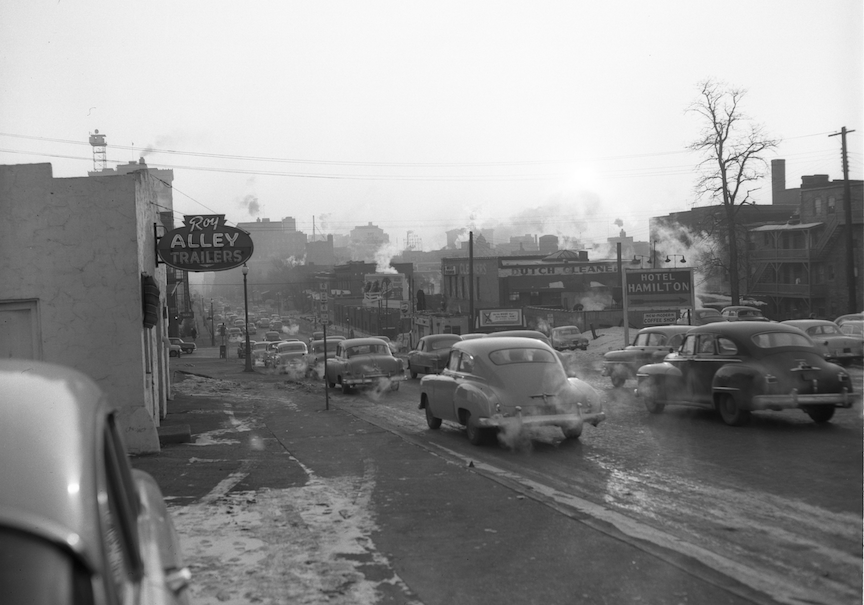
Camera is looking east on Douglas Street from Twenty-fifth Street. Roy Alley Trailers is on the left, with Cork & Bottle Bar further down Douglas Street. The back of Dutch Cleaners is to the right ofDouglas Street. Savage, John. The Durham Museum. 1955.
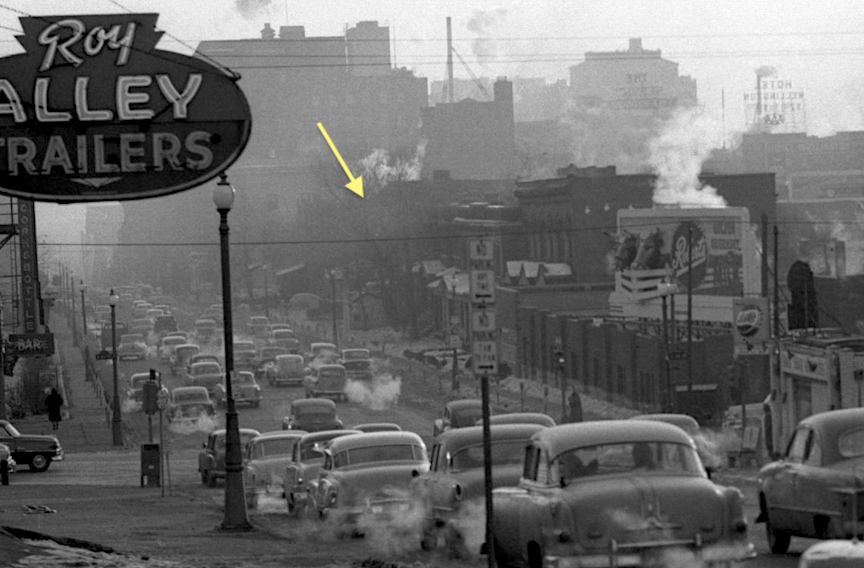
Magnified. Camera is looking east on Douglas Street from Twenty-fifth Street. Arrow points to site of the William Everitt property–soon to be motel. The back of Dutch Cleaners is to the right. The F.O.E. Hall directly to the east of that. Savage, John. The Durham Museum. 1955
In March 1957, an auction was held at William Everitt’s former 2215 Douglas Street residence. Eighteen rooms of furniture were reported to be for sale. “Everything must sell.” In April 1957, one month later, I would learn the truth. William Everitt’s “old house,” perhaps during his lifetime or after, was converted to a two-story brick apartment building of three distinct units located at 2209-2215 Douglas. Multiple fires were discovered in that vacant structure, one month after the auction and its condemnation by the city. After the two-alarm fire occurred, arson investigators suspected that vandals ignited multiple fires in the core area of the three-unit structure. It was assumed that children may have perpetrated this act.
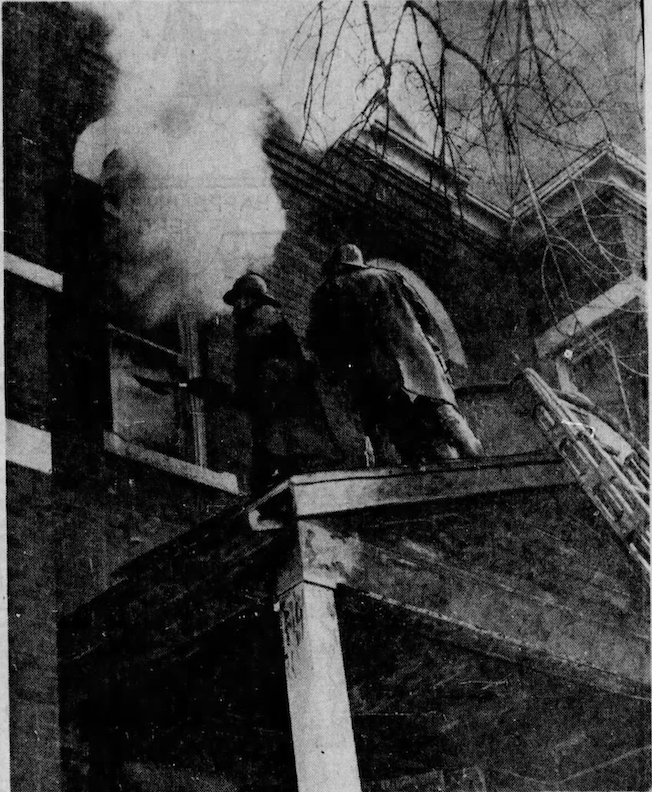
April of 1957. Evening World-Herald. Burned out, condemned home.
It was in this sad manner that the land was cleared and primed for the Imperial 400 Motel and swimming pool.
The Imperial 400 Motel Announcement
The 1962 aerial images of the city indicate that the stretch of buildings between Twentieth and Twenty-fourth Streets predominantly consisted of residential properties and small businesses. The neighborhood was already compact. In January 1963, The Daily Record indicated that Imperial ‘400’ National Inc. had acquired lands in the Capitol Addition from Occidental Building and Loan Association via a sublease.
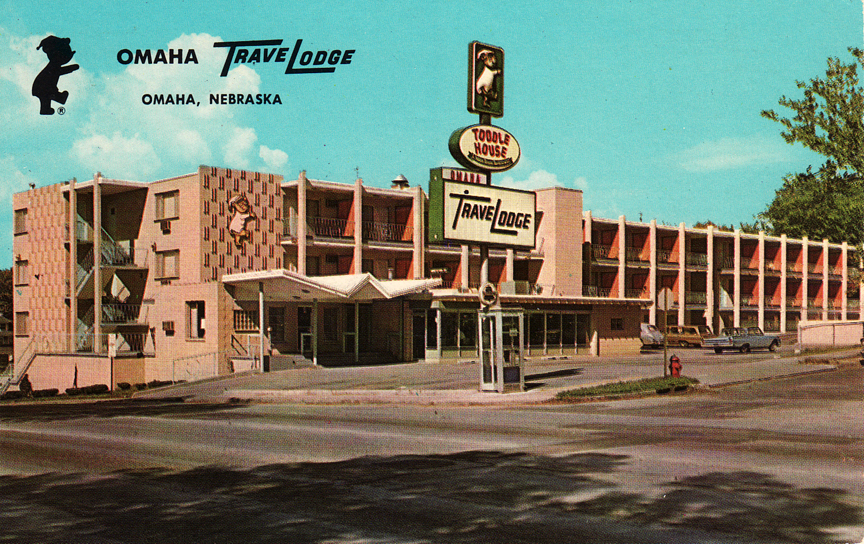
This Omaha announcement came at a time when the Imperial 400 Motel chain was also pushing itself to reach American dominance; its main competitor was the TraveLodge enterprise. For that matter, Omaha’s TraveLodge was already up and running at Thirty-ninth and Dodge. If you are interested in that investigation, check out: A Passing Glimpse: TraveLodge.
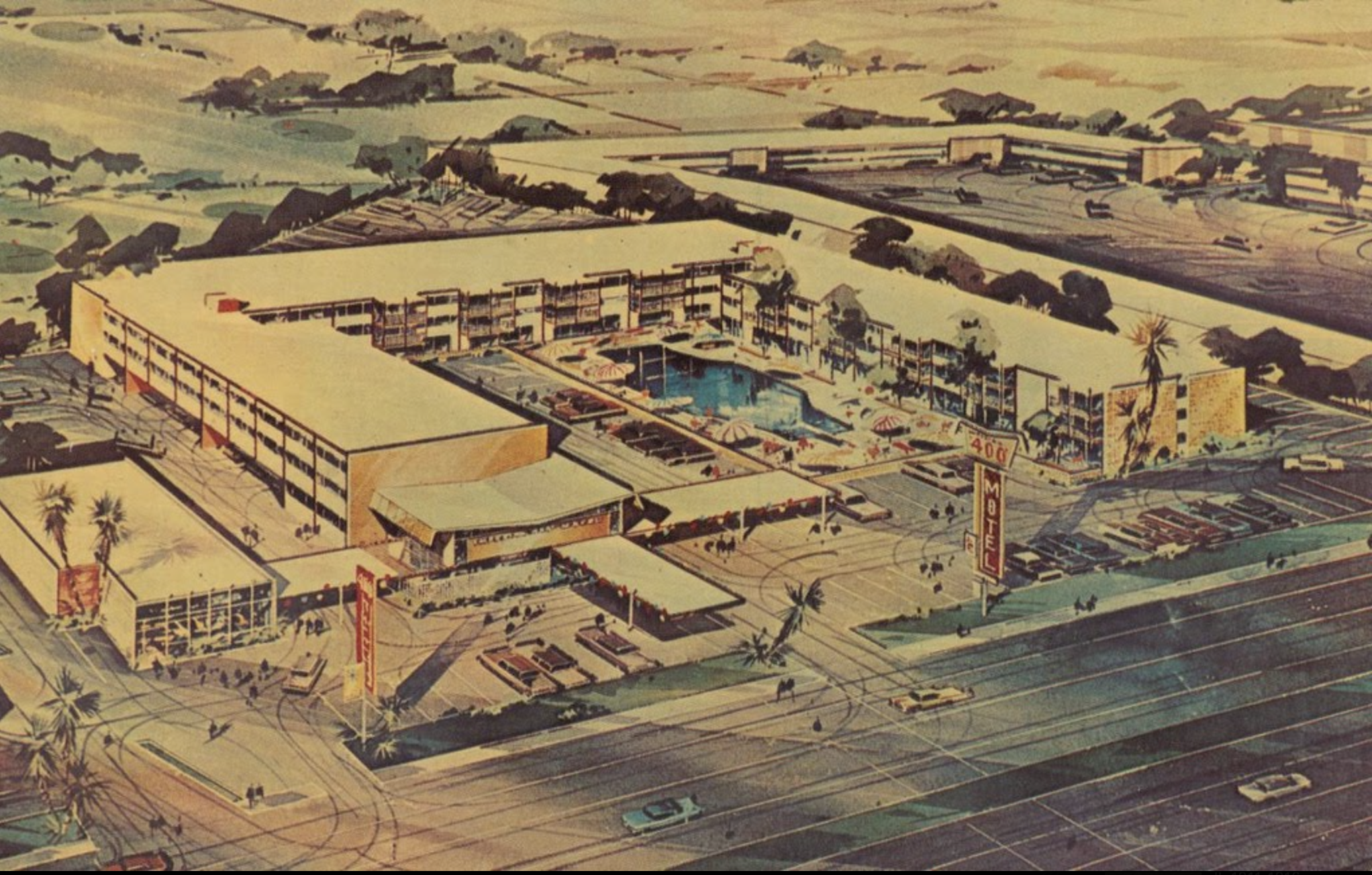
From the Department of Archaeology and Historic Preservation: “Easily spotted with its characteristic butterfly-sun flap roof, the Imperial 400 Motel chain made a significant impact on the built environment. The Los Angeles based Imperial 400 Motel chain had taken note of the award-winning tract housing designed by Southern California architects Dan Palmer & William Krisel (P&K) and in 1959 commissioned them to design a prototype motel in Los Angeles on Sunset Blvd. Three others quickly followed in San Diego, Phoenix, and another in Los Angeles. The design concept proved so wildly successful that Imperial immediately launched a franchise campaign and began building motels with virtually the same design all across the United States.”
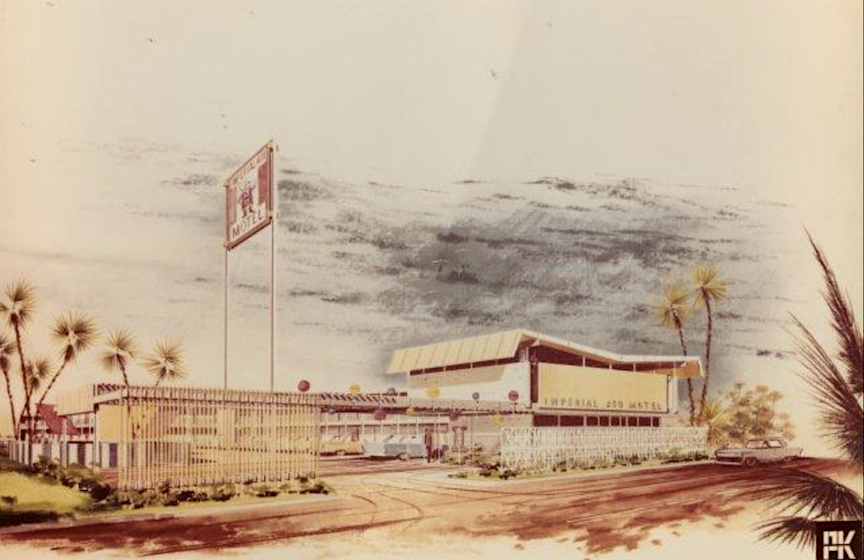
Rendering for the prototype for the Imperial ‘400’ Motel chain, Palmer & Krisel, 1959 (courtesy of the William Krisel Archive, Getty Research Institute).
“While local architects were hired to adapt the design to fit individual site conditions, the essence of the P&K design remained the same, with the trademark butterfly roof found over the registration/manager’s quarters building. The roof form was used on all of their business stationery and ephemera and the franchise adopted a logo featuring a thrifty Scotsman in a kilt with the slogan ‘Aye, royal accommodations at thrifty rates.’“
Another design by Southern California architects Palmer & Krisel.
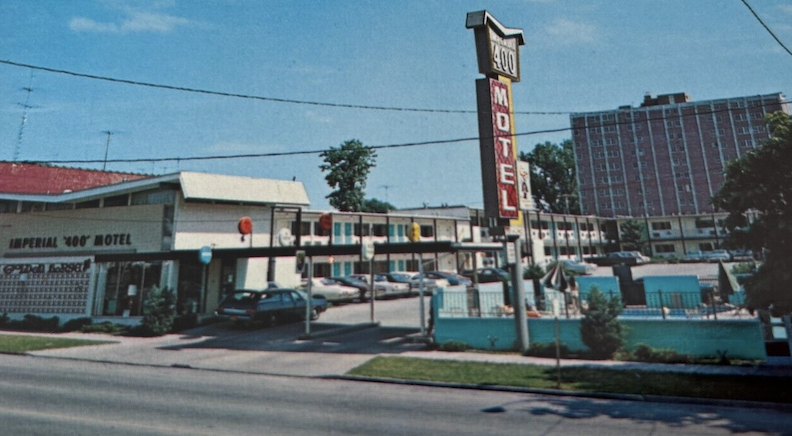
Galesburg, Illinois.
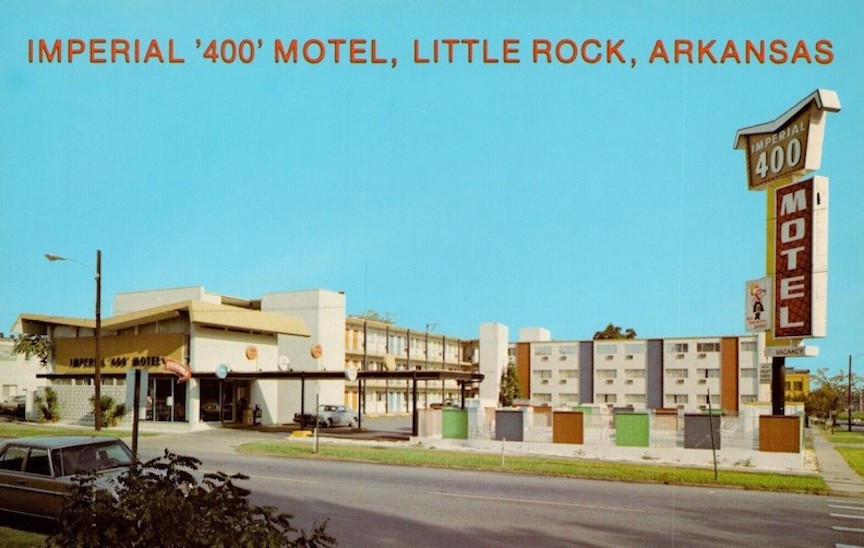
Little Rock, Arkansas.
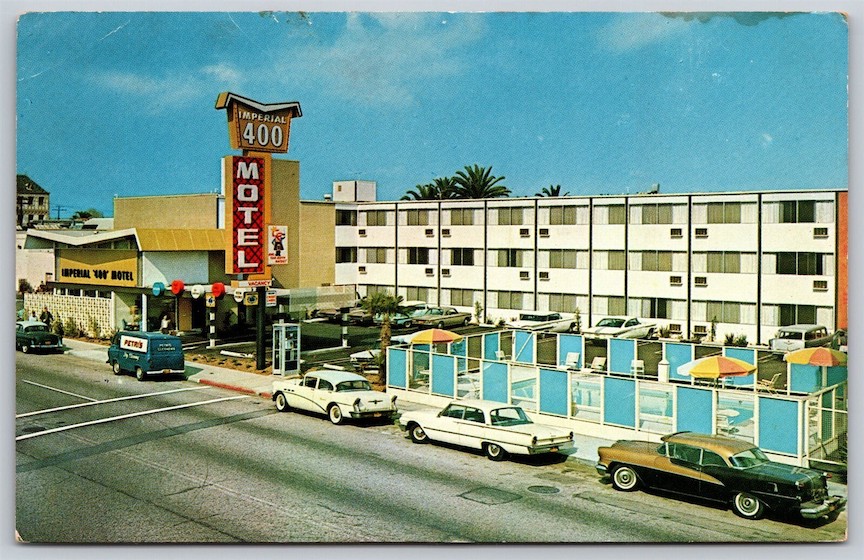
Long Beach, California. Strikingly similar to Omaha’s version.
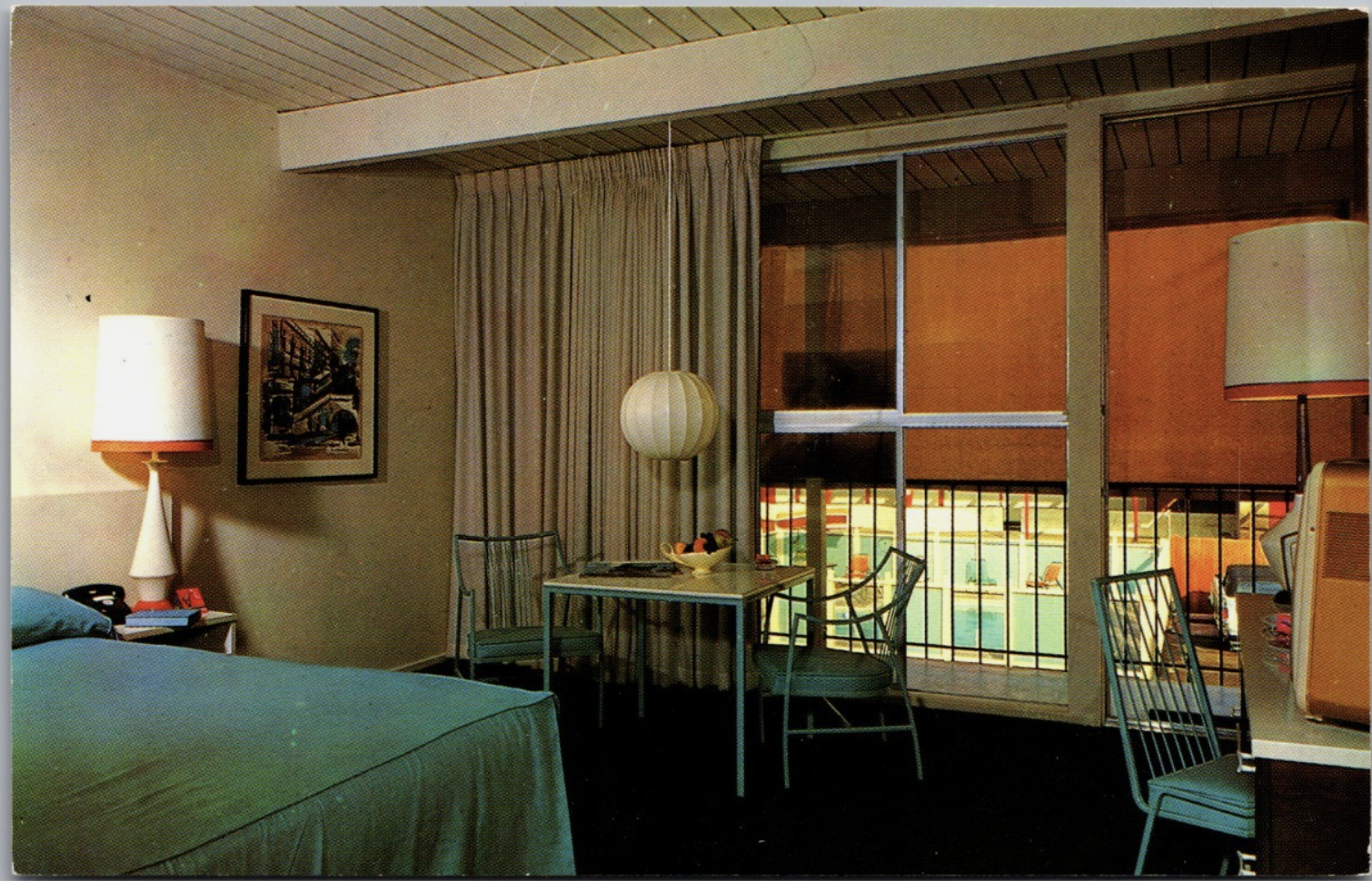
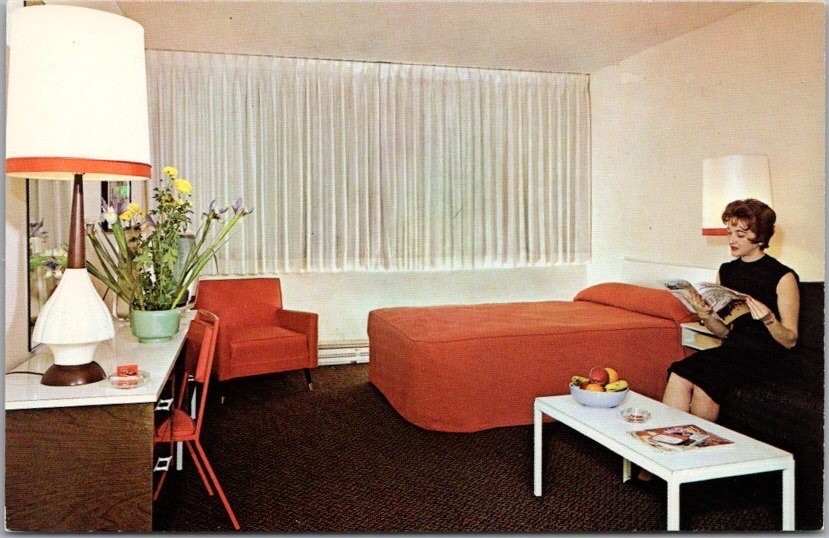
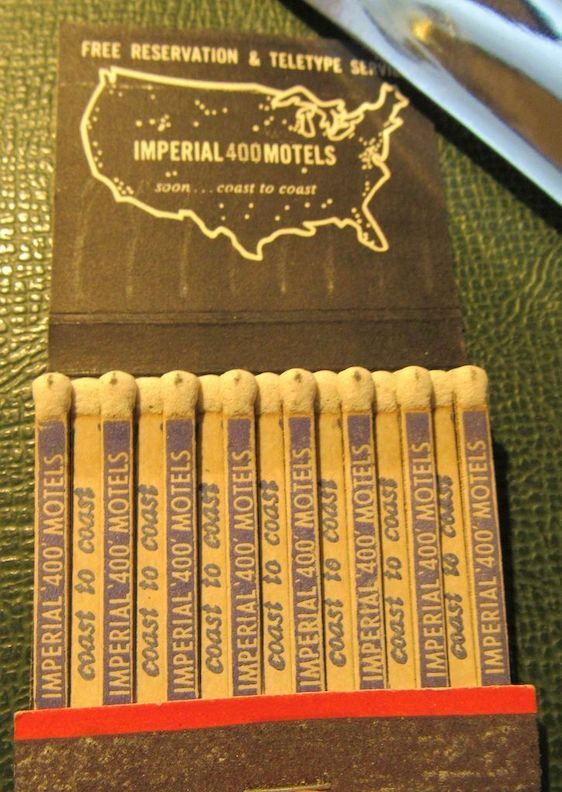
The clean butterfly-sun flap rooflines, the bright exteriors with outdoor pool celebrating California cool, combined with the modern, minimal interiors and yummy extras made the Imperial 400 a new American classic in inexpensive lodging.
A masonry-frame structure, Omaha’s “first motel to be built on the downtown side of the Interstate” was being planned on constructed on a 218 by 132-foot parcel owned by Oscar Manger. A long-term lease was established. Imperial ‘400’ had their General Office in Trentwood, New Jersey, and their Construction Headquarters in Los Angeles. The fervor was building as Omaha Planners began to envision a drive-up motor hotel, well suited to the modern businessmen and the convention center circuit.
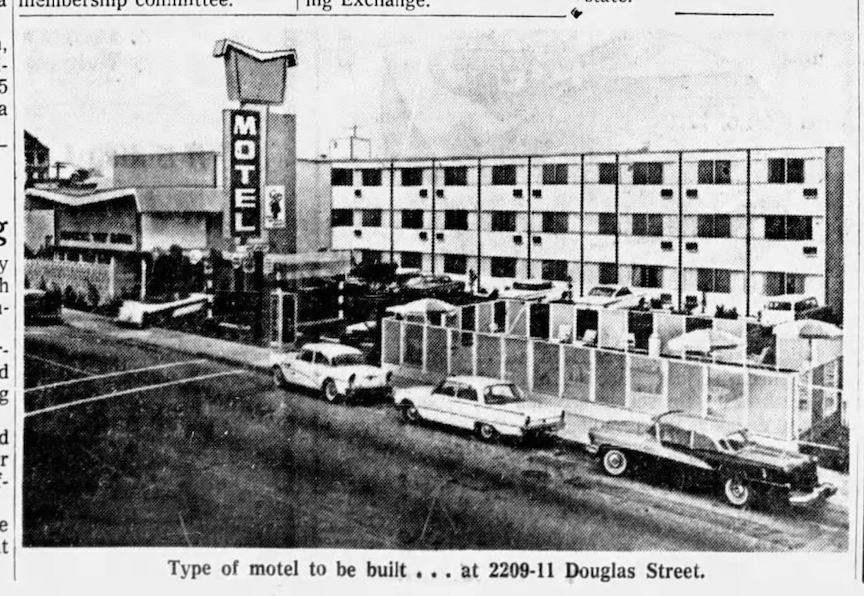
This will be the look, folks! 1963. Omaha World-Herald. Obviously borrowed from the Long Beach Imperial.
The Omaha Opening
By January of 1964 the new motel opened at 2211 Douglas Street, heralded as Imperial 400’s, one hundredth motor hotel in the Los Angeles firm’s chain.
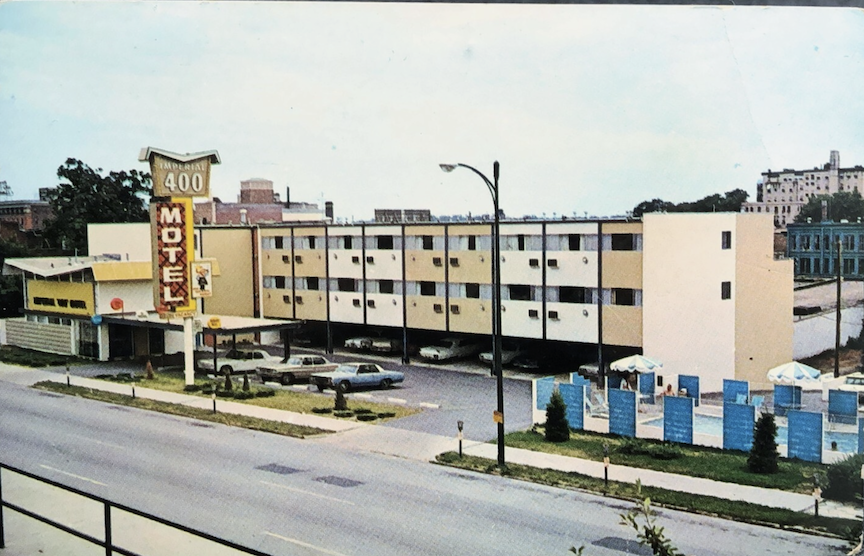
My postcard reads “2209 Douglas Street.” There she is folks, in her original glory. Sixty rooms, sixty parking spaces. No restaurant or cocktail lounge. Some rooms had a small kitchen. There was a heated swimming pool by Flamingo Pools, Inc. Free Coffee! I think that’s the Lord Lister Hospital on the hill in the southern distance. Some expert will have to let me know.
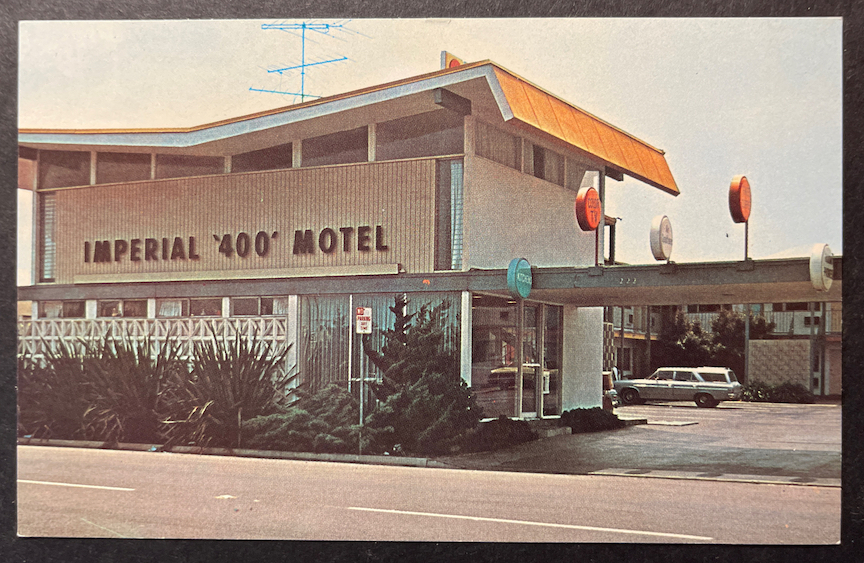
This image is not from our Omaha Imperial ‘400’ Motel but it is an exact representation of what would have been the original check-in office. Compare to the above image. Cute.
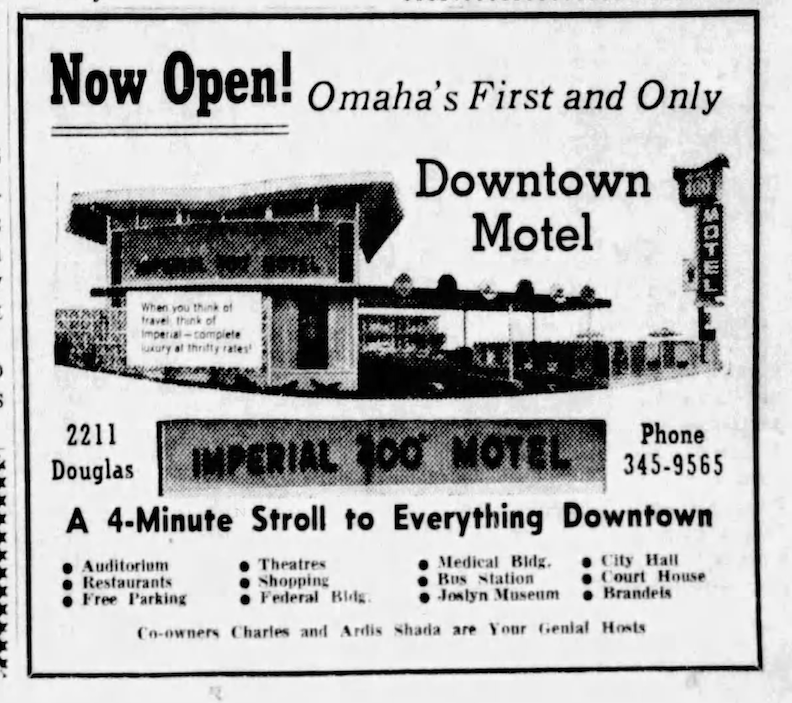
March 1964. Omaha World-Herald.
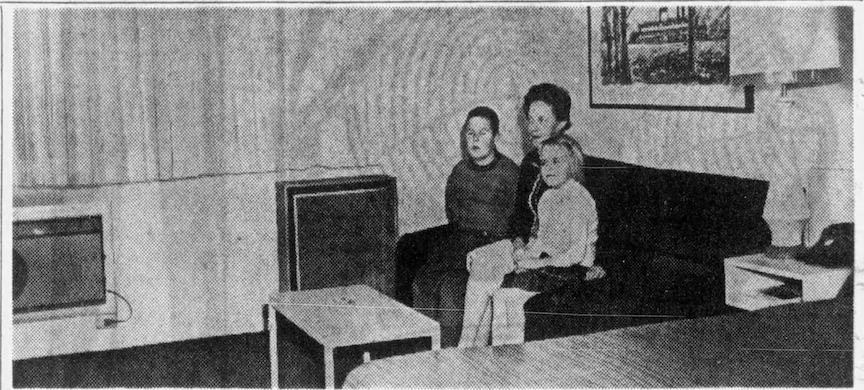
Imperial 400’s strategy was to exclusively employ married couples to manage their motels. Mr. Charles Shada, Jr., his wife Ardis, and their two children, Gregory and Lou Ann, resided at the new motel. Mr. and Mrs. James Smith of the Los Angeles Imperial 400 chain attended the inaugural event. Mrs. Smith is observed in the company of Gregory and Lou Ann Shada. January 1964. Omaha World-Herald.
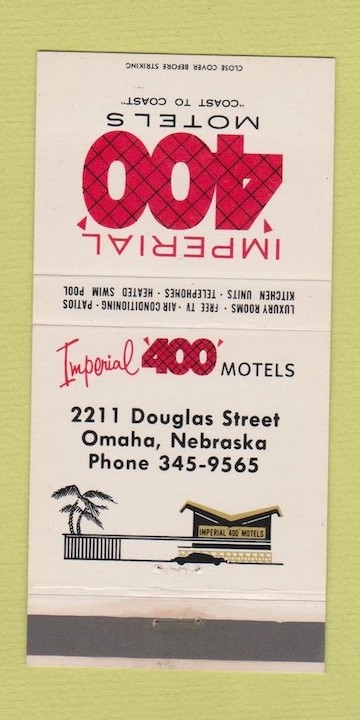
Palm trees in Omaha. I want the dream. Free TV!
The examination of these historic photos and the motel’s dissemination of its California Chill to different states hints at the rationale behind the city planners’ desire to host our own version in Downtown Omaha. This must have been an exciting opportunity for Omaha, during which our forefathers envisioned a modernistic downtown convention network. Full service hotels were so blasé. The sole issue that I could see, from my acknowledged positioning in the year 2025 was that this motel was an idyllic vision perhaps better placed in clean, fresh, open environment. The very concept of a drive-up motor inn, the very thing that distinguishes a motel from a hotel, seems better suited in West Omaha, along the interstate, away from the congested Downtown area. The physical and psychological barriers inherent to Twenty-second and Douglas were another reality. Upon examining my postcard, my simple, initial observation is that the brand new swimming pool was built alarmingly close to Douglas Street, without as much of chainlink fence. We all know how people drive around these parts. Terrifying. Other evidence was the photographic actuality of what this portion of Douglas Street looked like in the mid 1960s. See below.
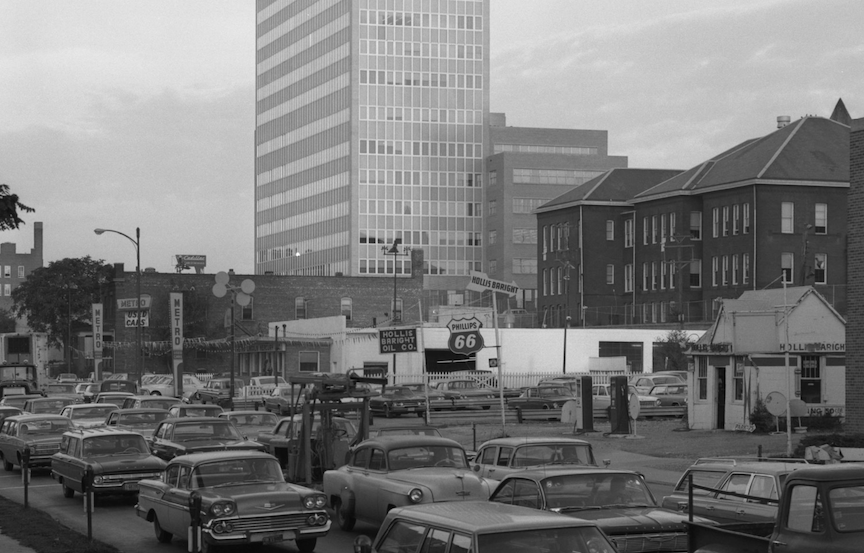
There’s no denying it. We like things a little dumpy in Omaha or we allow for a little dumpiness. Douglas Street looking northwest from about Twentieth or Twenty-first Street. The tall building is the Northern Natural Gas Company. To the right is the backside of the old Central Grade School and part of the Gospel Tabernacle building is on the right edge. Metro Used Car lot and Hollis Baright Oil Company Phillips 66 seen on the north side of the street. The Durham Museum. 1967.
I ask you, would a businessman want to stay in the Imperial 400 if this was the view across the street? I would stay there in a heartbeat when it was new but I don’t think the Imperial’s target audience would have appreciated our hazy environ when they thought they were getting downtown accommodations.
From the Department of Archaeology and Historic Preservation: “Imperial projected that they would build 179 franchised motels across the U.S. by the end of 1964 and boasted that they had ‘opened a new location every ten days.’ However, they expanded too quickly and in 1965, Imperial 400 filed for Chapter 11 bankruptcy. The headquarters were moved to Englewood Cliffs, New Jersey, and again to Arlington, Virginia. In 1987, the chain was sold to Interpart S.A., a Luxembourg-based company, and was later dissolved.”
1966
Two interesting things happened in 1966 which I believe further set the tone for future strangeness at the Imperial 400. A seventeen-story apartment building was being planned by Westport Properties directly east of the Imperial 400 in the winter of 1965. 112 apartment units were being designed with nod from the City Planning Director, who saw the proposal as in-line with the city plan for “walk to work.” The odd, teetering building at 2121 Douglas, one door to the east of the motel opened in 1966 as an apartment building. It too struggled. The Byron Reed Company would transition the building and attempt to operate it as a motel “because there wasn’t enough demand for downtown apartments.” By 1971 about half the rooms functioned as a motel and half were apartments. I believe the construction of this tall building is a primary factor in the disharmonic history of the Imperial 400 Motel.
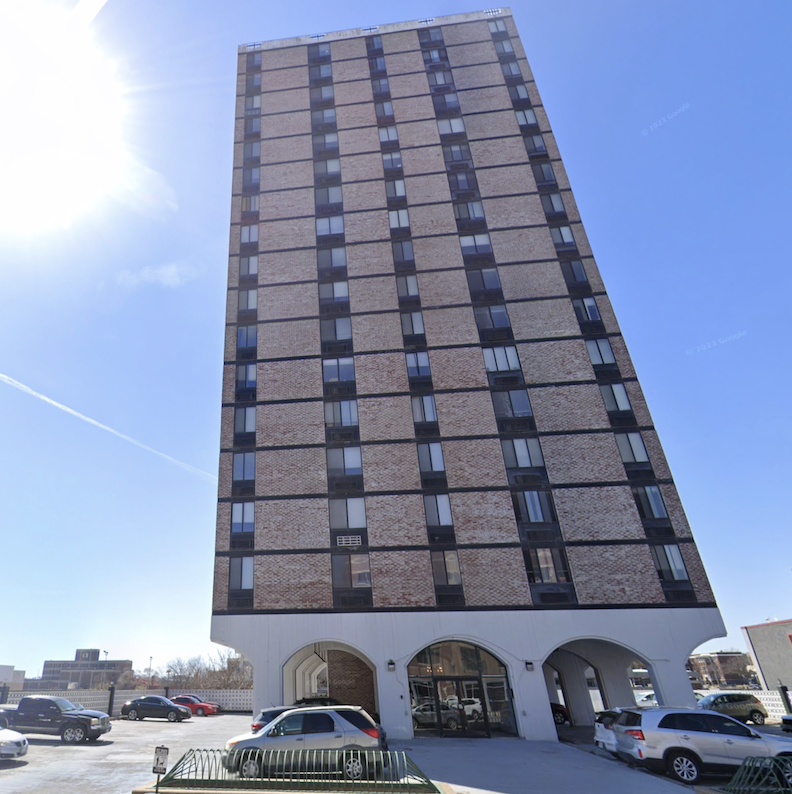
2121 Douglas Street was built as apartments then transitioned to the Continental Tower Hotel. In 1983, California couple Morton and Claire Braiker finalized their refurbishment of the Continental Tower Hotel, transforming it into apartment condominiums and renaming it the Claremont Tower Condominiums. They proclaimed that, due to its “high security features,” it would be one of the premier apartment buildings in Omaha. This couple also purchased and renovated the historic Brandeis Department Store building at Sixteenth and Douglas, renovating it into offices and a shopping mall. Jeff Kaman subsequently acquired the building from Morton Braiker, converting the tower into temporary accommodations for professionals conducting business in Omaha. It never worked out that way. “There didn’t seem to be a demand for corporate clients.” No, sir. Not on Douglas Street. In 1989, Westbrook Tower’s seventeen stories were renovated into 105 residential flats. The restaurant and bar were eliminated, transforming the space into a lobby and recreational area.
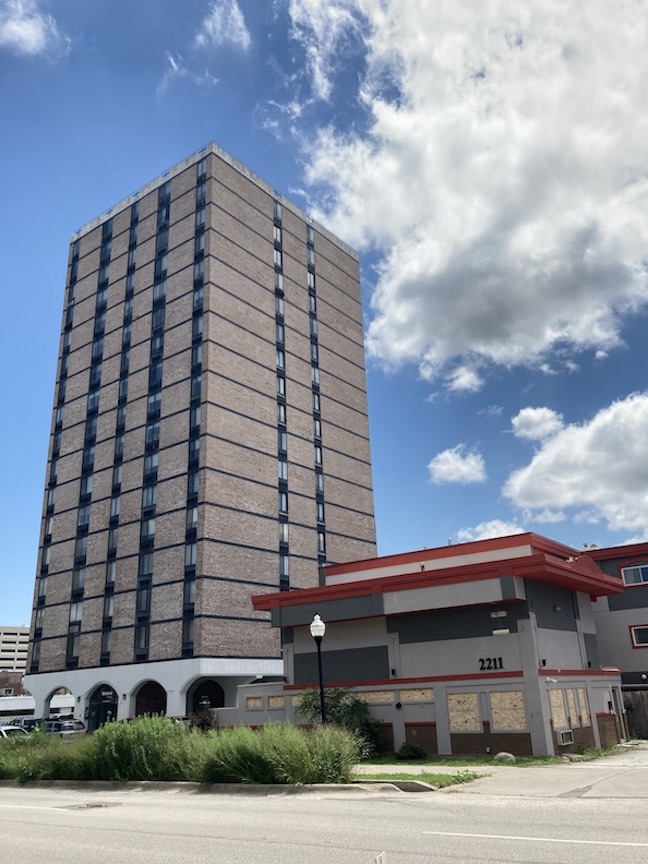
I have been inside the tower; I have dropped friends off here. There is something precarious about this building, not to mention the lack of windows. Is it the perception of an off-kilter foundation? For our purposes today, I see the placement of the 2121 Douglas tower so close to the Imperial 400, architecturally speaking, uncomfortable. Its height served to enclose the motel, making it “feel” penned in and it obstructed the morning sunrise. The motel was perpetually darkened from that moment onward. If you think I am being a silly Miss Cassette, walk the properties or do a drive-by to survey for yourself.
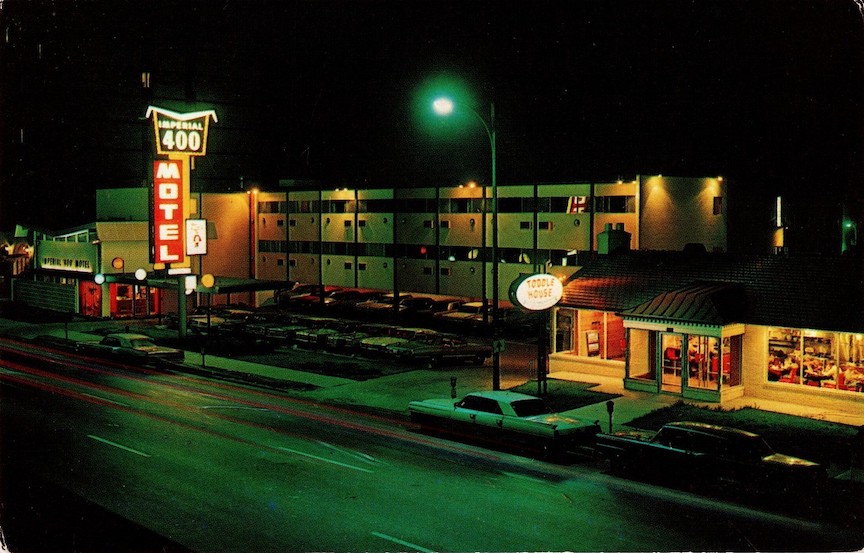
Another significant change to the landscape was the filing of a building permit in September 1966 for the construction of the Dobbs House Inc restaurant at 2211 Douglas Street, with a budget of $10,000. By January 1967, they began recruiting staff for the Toddle House. The inaugural Toddle House was established in Omaha in 1938, located at 4818 Dodge Street in Dundee. I previously documented the reciprocal link between TraveLodge and the Toddle House throughout the late 1950s and 1960s. The Toddle House was later acquired by Dobbs Houses in 1962, a competitor that also operated Steak N Egg Kitchen, which contributed to the decline of the Toddle House franchise.
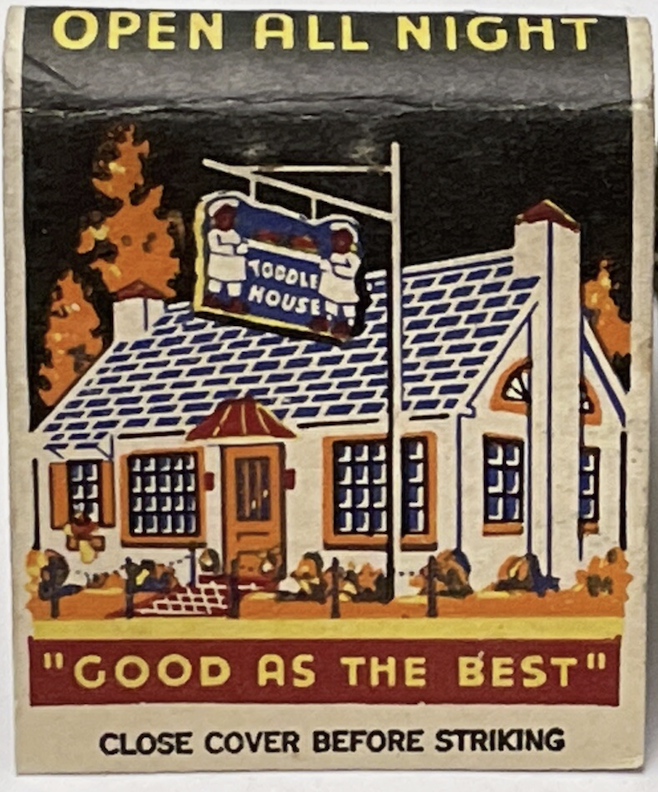
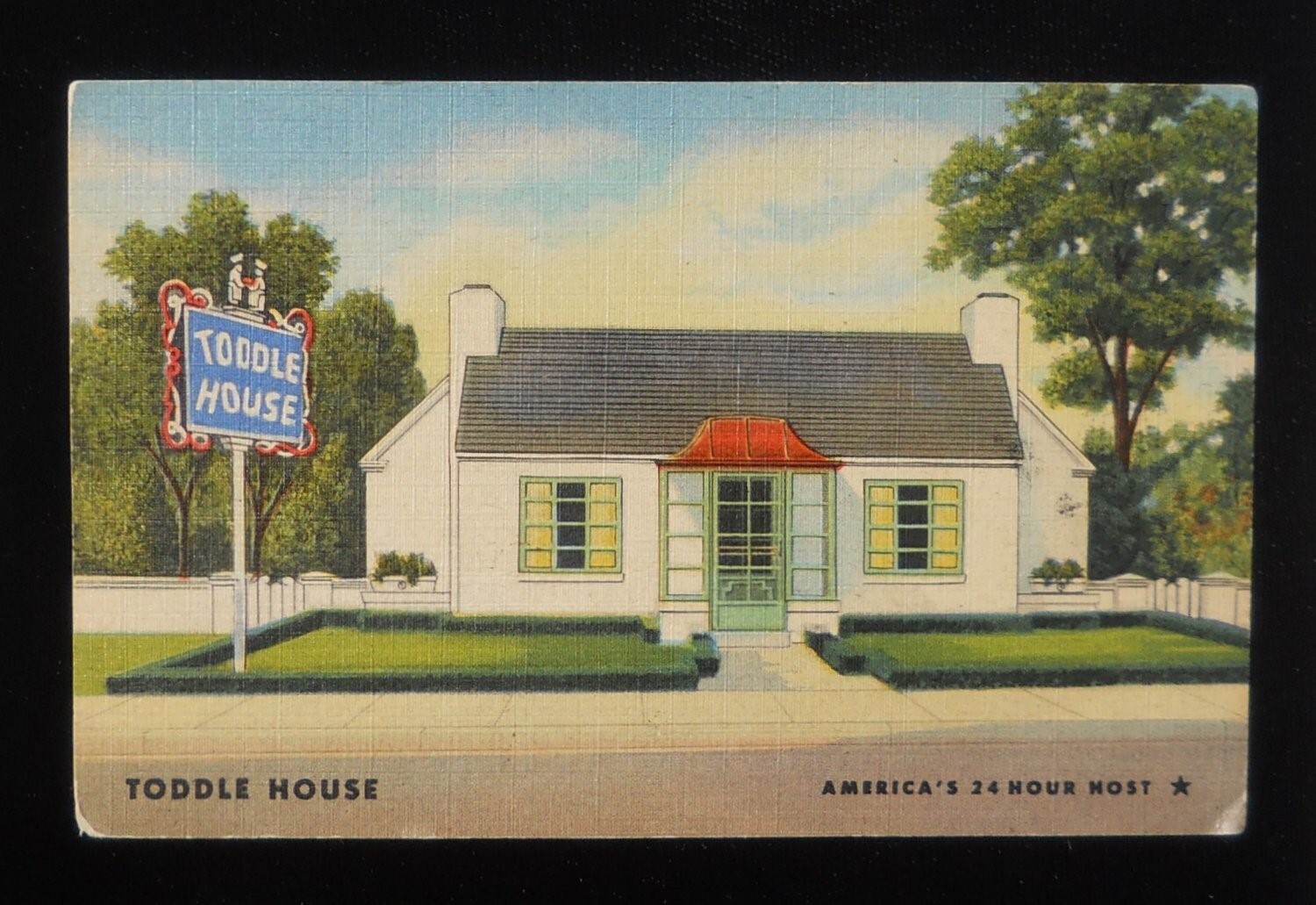
Original Toddle House restaurant matches and 1930s Toddle House linen postcard.
This was the Imperial 400 Motel in Omaha, featuring the new Toddle House for the postcard. However the Toddle House is not mentioned on the card and neither is the once glamorized but quickly filled-in Flamingo heated swimming pool. In 1973, there was a Dobbs House remodel and in January of 1974, they relaunched as the Steak N Egg Kitchen.
I contend that the Toddle House restaurant significantly contributed to the motel’s transformation into a crime locus and subsequently a magnetic site of tragedy, as it attracted a greater number of individuals under the pretense of food and social interaction.
The troubles began soon after. One year later in February 1968, Henry C. Avant Jr. was shot in the chest and leg at the Imperial 400 at 8:00 AM. A 24-year-old female was apprehended. The woman asserted that she shot in self-defense. Later in 1968, two men wielding pistols perpetrated a robbery on the night clerk of the Imperial 400 and a guest who was inadvertently present in the lobby during the incident. The robbers made all individuals in the lobby enter “a basement tunnel” before they ran off. Must know more about this basement tunnel.
The Crimes (please do not read this list if you are sensitive to violence)
-In 1970 Harry Carr, motel desk clerk, robbed at gunpoint;
-A 2:40am fight in the Toddle House. Police showed up to break up the fight and David J. Austin then began fighting all of the police;
-1973– Two men and two women were running a pigeon drop scheme out of the Imperial 400 Motel using phony stock certificates and several packages of play money. Bilked four Omahans out of their money;
-August of 1975–Two girls raped at Imperial 400.
-January of 1977: dozen person arrested by vice squad detectives in early AM hours in crackdown on alleged prostitution in Twenty-second and Douglas Street vicinity (front and center of the motel and restaurant). Six of those arrested were men who offered money for sex to two women detectives posing as prostitutes. Four of the six men were from outstate Nebraska in town for a grain convention. Another was a 36-year-old waitress at an all-night restaurant in the area. Booked on suspicion of obstruction of justice for allegedly pointing out undercover police officers to prostitutes. The remaining fiver arrested were women, age 18 to 21 booked on suspicion of loitering and prowling. Lt. Bernard Venditte of vice and narcotics unit said, “Twenty-second and Douglas streets area has become the favorite for prostitutes in the past few months.”
-People refused to work at the Steak N Egg, 2215 Douglas Street location, because of its reputation as a hangout for prostitutes. In summer of 1979 the manager of the Steak N Egg Kitchen decided that no known prostitutes would be served or allowed to use the restrooms or telephone. “The same went for ‘weirdos,’ women not wearing blouses or women with barebacks.”
-1980 bomb threat called in to Steak N’ Egg Kitchen at 2215 Douglas Street.
-1980 robbery in the motel and restaurant parking lot.
-1981 man and women held up the Steak N’ Egg Kitchen by pistol
-1982 Larry Nielsen, a former Salt Lake City disc jockey charged in a federal warrant with kidnapping Melanie Larson, 10, of Kaysville, Utah disappeared but they found his car in the parking lot of the Steak N Egg;
-1982 man abducted from the First Stop Bar and taken to the Imperial 400 where he was robbed;
-Man lunged at Steak N Egg Kitchen waitress, demanding she get in the register;
-1984: A woman from Riverside California was stranded at the Omaha bus depot during a snowstorm. She reported to being abducted at knifepoint and taken to the Imperial 400 and sexually assaulted, also attempt to force her into prostitution;
-The 1985 slasher—a man picked up a woman at 3:45 am on Twenty-fourth and Farnam and “then freaked out,” slashing her with a utility knife after bringing her to the motel.
-In 1987 Keith L. Johnson and Joseph Wells, both teenagers, rented a motel room with two other teenagers. Johnson was supposedly “twirling” a .38 caliber handgun “on his finger when the weapon discharged,” hitting Wells in the throat.
I have a comprehensive list that extends to 2018.
The February 1987 robbery of Steak N Egg Kitchen at 2:20am appeared to be the final straw for the restaurant. It seemed to have been demolished at some point after that. It was definitely gone by the City’s 1993 aerial photograph.
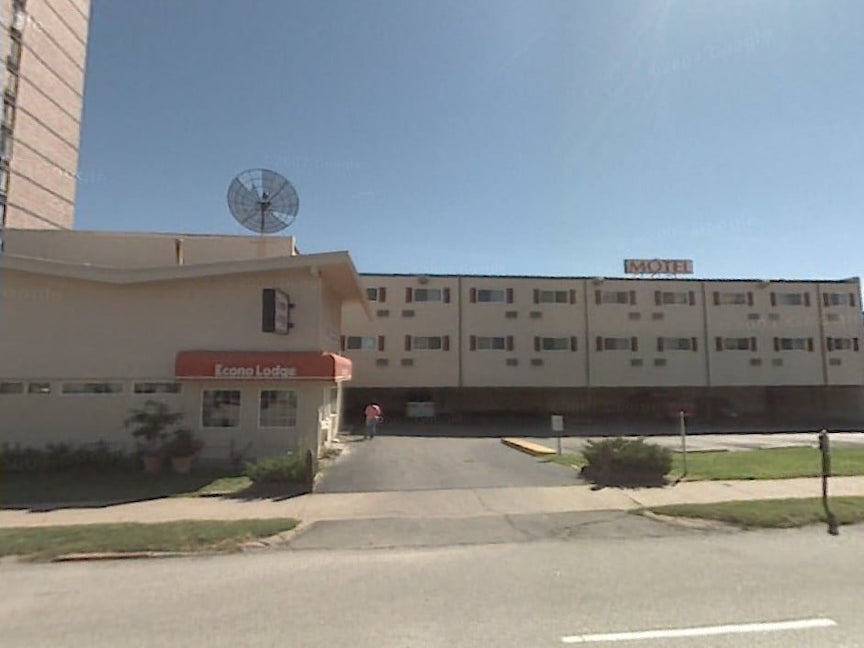
The Econo Lodge of the past. I have tried to track this photo to give credit but I can’t find its owner. Looks like a very old Google Map street photo. If it’s your photo, please let me know.
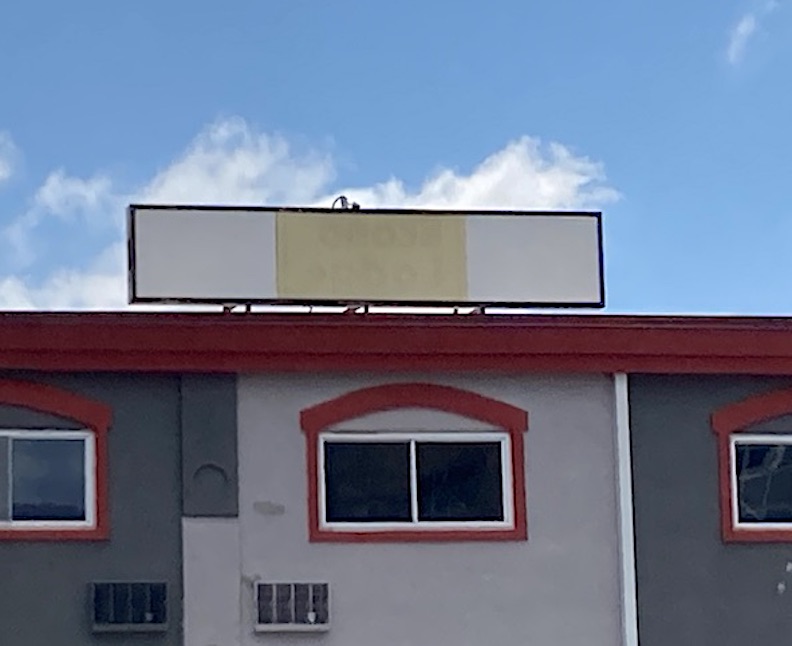
About the only clue I could find that still remained of the Econo Lodge–a sign atop the motel, seen in reverse. Can you make it out? Turning a sign backwards has alway seemed a weird, chintzy way of signaling closure.
The End of the Motel
It went on and on. The motel name would change from Econo Lodge to Economy Inn. In 2016 Doug Gamble and Michael Lawsky purchased the motel for 2.1 million dollars (!!!) calling it a “Diamond in the Rough.” They renamed it the 402 Motel and made upgrades (see below) but they could not stop the crimes or create a safe environment. I won’t include the rest, as it only gets more horrifying through the years. Patterns that I noted: Vehicles belonging to missing individuals were abandoned in the motel’s parking area, people being brought here against their will, “suicide” and sexual crimes against children in the motel or vehicles of suspected perpetrators found in the lot. By 2018 after significant press because of two missing victims, the motel was finally closed. **Surprisingly, it remained open. A reader disclosed they had stayed there after 2020. From this lead I was able to track the 402 Motel’s social media and it appeared they continued to reserve rooms throughout the summer of 2021.
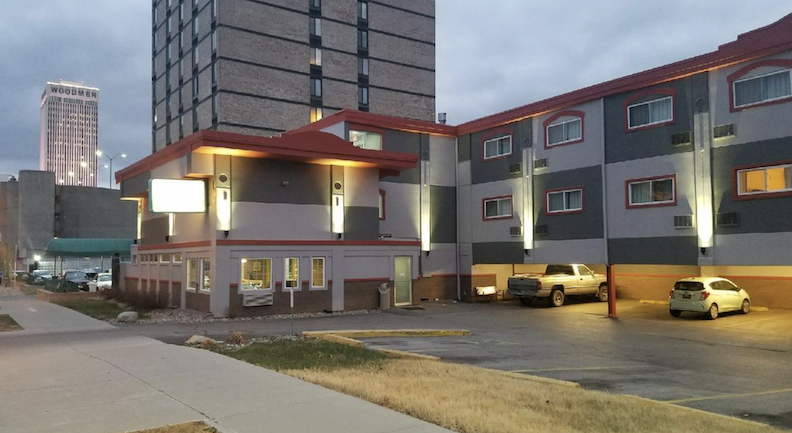
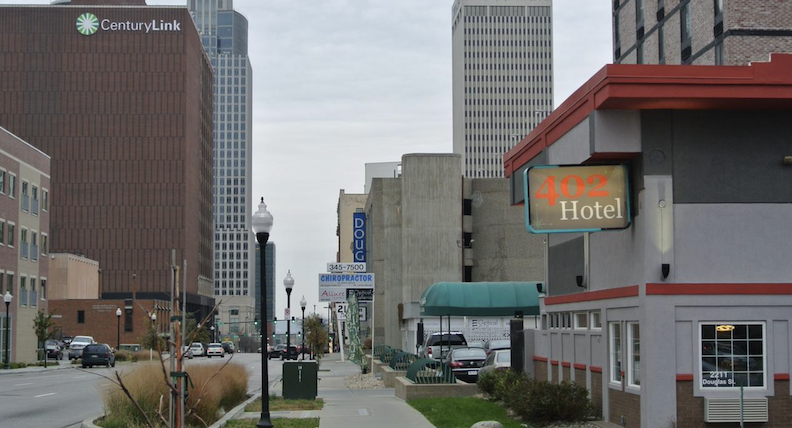
In November 2024, Together Inc. received financing to buy 2211 Douglas for use as a non-congregate shelter but I believe it had been designated as transitional housing since its closing. In April 2025, Douglas Senior living LLC submitted an application to the Nebraska Department of Economic Development for three senior living apartments as part of a larger 45-unit low-income housing tax credit project. They proposed 2211 Douglas would consist of a single structure comprising one- to two-bedroom units. However, the motel is currently registered under Timo Properties LLC. It just clicked. Grantor: Together Inc. of Metropolitan Omaha did a Quit Claim deed to Grantee TIMO LLC. Same company, different LLC. The papers reported “demolition of the existing structure is anticipated to occur this summer, with construction beginning in spring 2026. Pending approvals, the first residents could move in by fall 2027.”
I was aware of the motel’s Bad Reputation, but I was unaware of the extent of its criminal history. It is incomprehensible that this motel was permitted to operate for as long as it did. If these crimes had happened to children in a West Omaha motel, this structure would have been hand-torn apart by the community and then burned to the ground. This structure must be demolished, and I believe that is beneficial for all of Omaha. You will rarely read these words at My Omaha Obsession. Without effective management and much needed security for the proposed senior living complex, I also have significant concerns regarding the potential transformation of this particular lot in Downtown Omaha. I am not casting spells or saying 2211 Douglas Street is a dark vortex, however Mr. William Everitt might tell you differently. There needs to be considerable oversight in the planning of this and surrounding parcels. Park East has some incredible businesses now, and beautiful, rejuvenated housing and this whole area deserves better. I hope the City can get it right.
PS If anyone wants to invite me over to see the basement tunnels under this place, please make contact.
I suppose we had better head home for the night. Stay curious and keep an eye out. I thank you for joining me, friends.
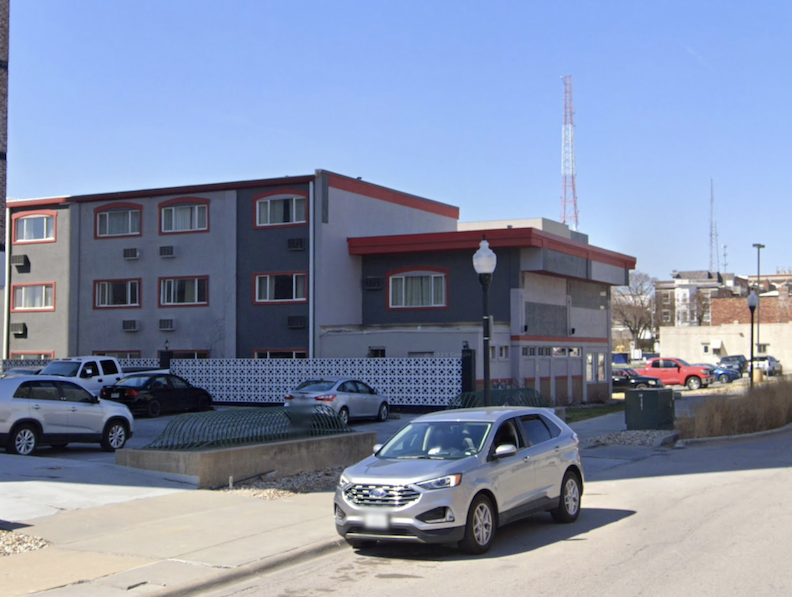
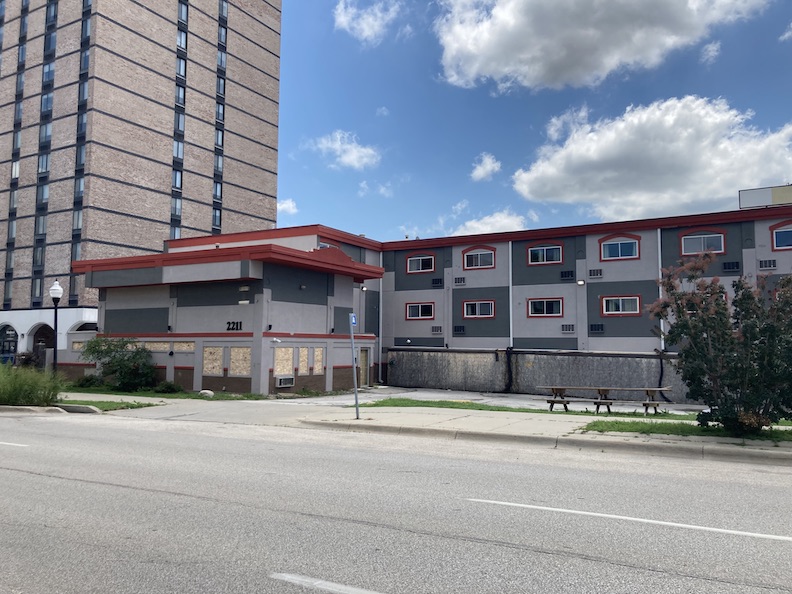
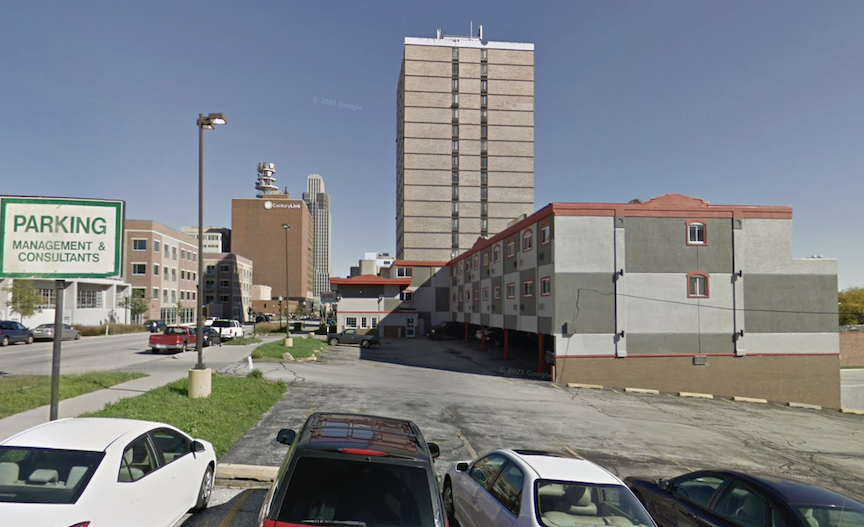
As it looks today–boarded up.
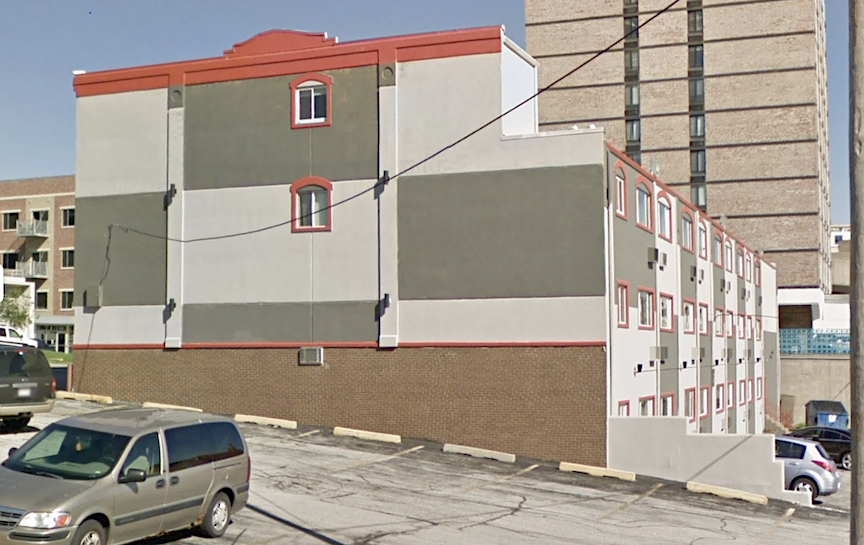
When it was used as transitional living.
Accept no substitutes, hacks, AI or otherwise. Check back often for the real deal. The Real In-depth Deal. You can keep up with my latest investigations by joining my email group. Click on “Contact” then look for “Sign me up for the Newsletter!” Enter your email address. You will get sent email updates every time I have written a new article. Also feel free to join My Omaha Obsession on Facebook.
Thank you, Omaha friends.
Miss Cassette
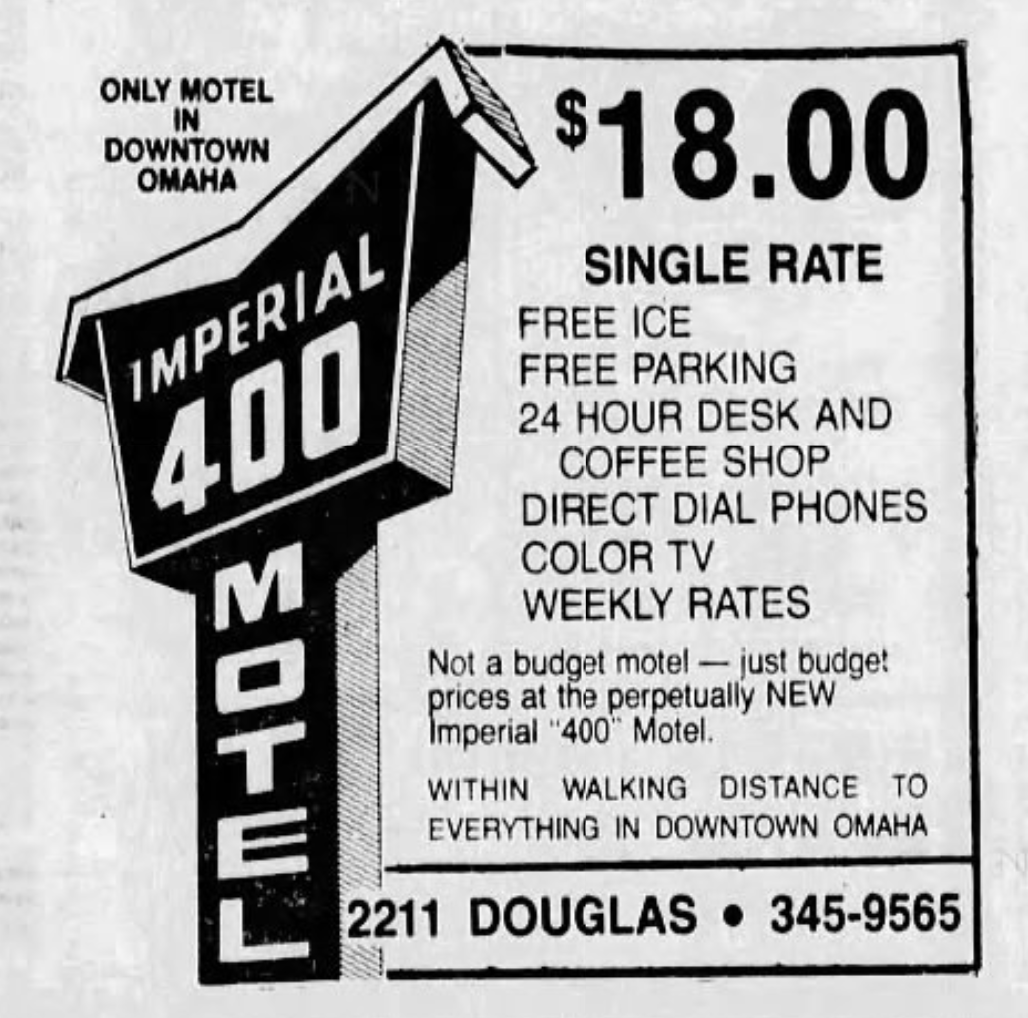
1978. Not a budget motel.
Sidenote–
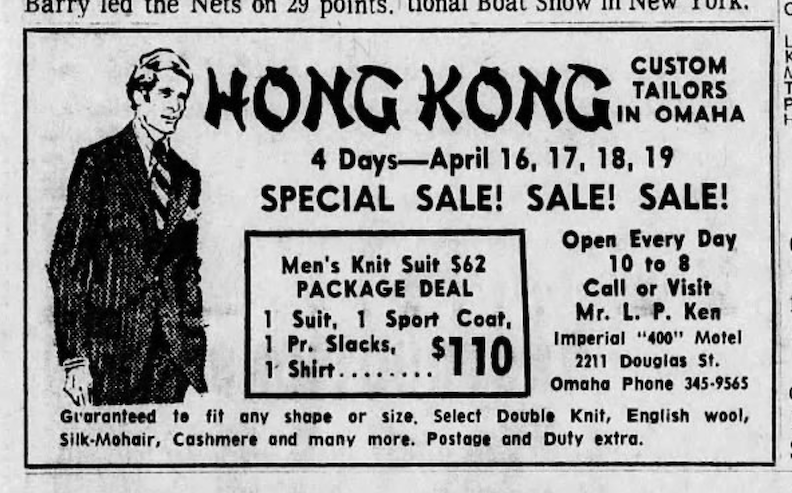
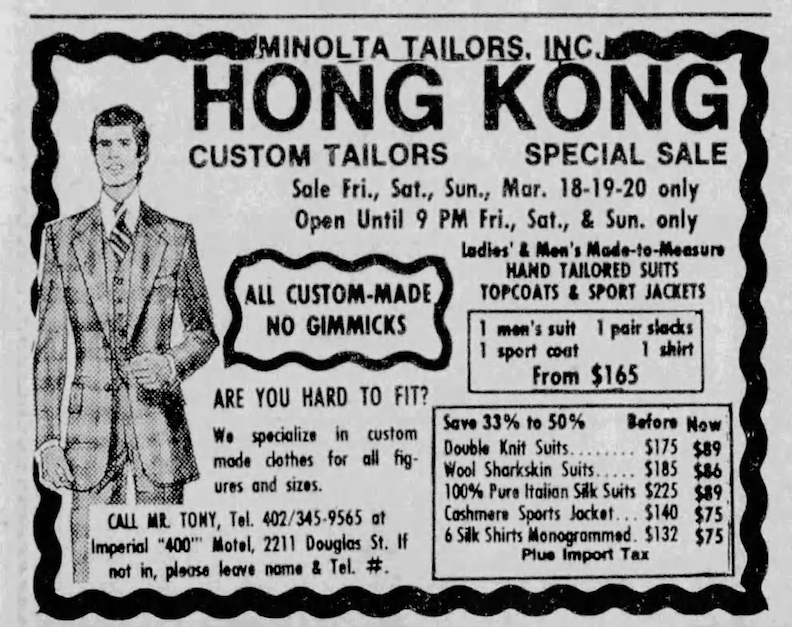
Did you know that some small businesses, such as tailors, opted to establish their operations in atypical locations, including motel rooms, to minimize operational expenses. These arrangements were thought appealing because of reduced rental costs relative to conventional retail. Mr. L. P. Ken and Mr. B. Jim were two such tailors operating out of the Imperial 400 madness in the early 1970s, seen below in their advertisements. Who knows what all they saw and endured? Also I need to take up the name Mr. L. P. Ken as my garage dj name.
I welcome your feedback and comments on the fascinating Park East neighborhood, the Steak N Egg Kitchen and the Imperial 400 Motel. Please share your additional clues to the story in the “Comments.” Everyone would love to read what you have to say, and it makes the sharing of Omaha history more fun. You can use an anonymous smokescreen name if need be. We want to hear from you.
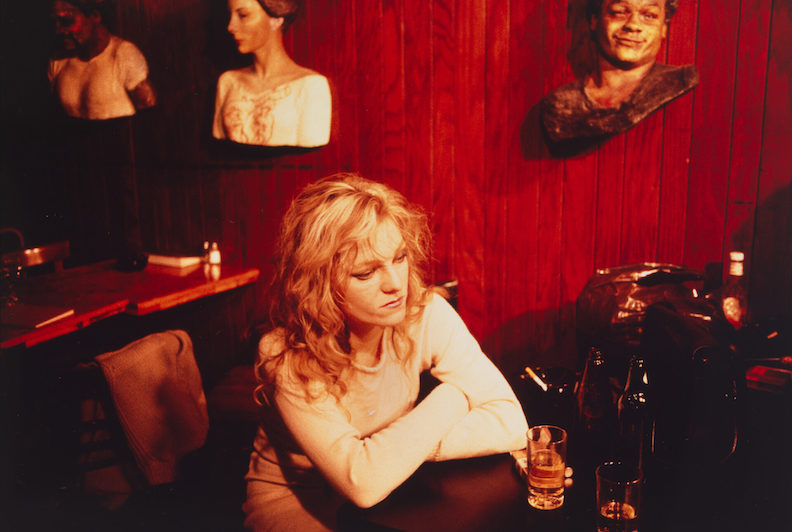
Cookie at Tin Pan Alley NYC 1983 by Nan Goldin reminds me of the Smoke Pit late night.
© Miss Cassette and myomahaobsession, 2025. Unauthorized use and/or duplication of this material without express and written permission from this site’s author and/or owner is strictly prohibited. Excerpts and links may be used, provided that full and clear credit is given to Miss Cassette and myomahaobsession with appropriate and specific direction to the original content.
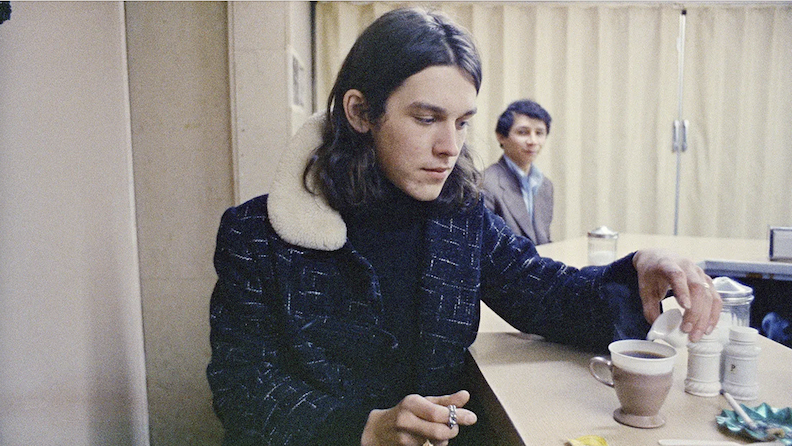
David Armstrong by Allen Frame reminds me of hanging at the Steak N Egg Kitchen.
If you are looking for more architectural and Omaha history sleuthing fun, ask your local or bigbox bookseller for my book: My Omaha Obsession: Searching for the City. Also available everywhere online. Thank you.
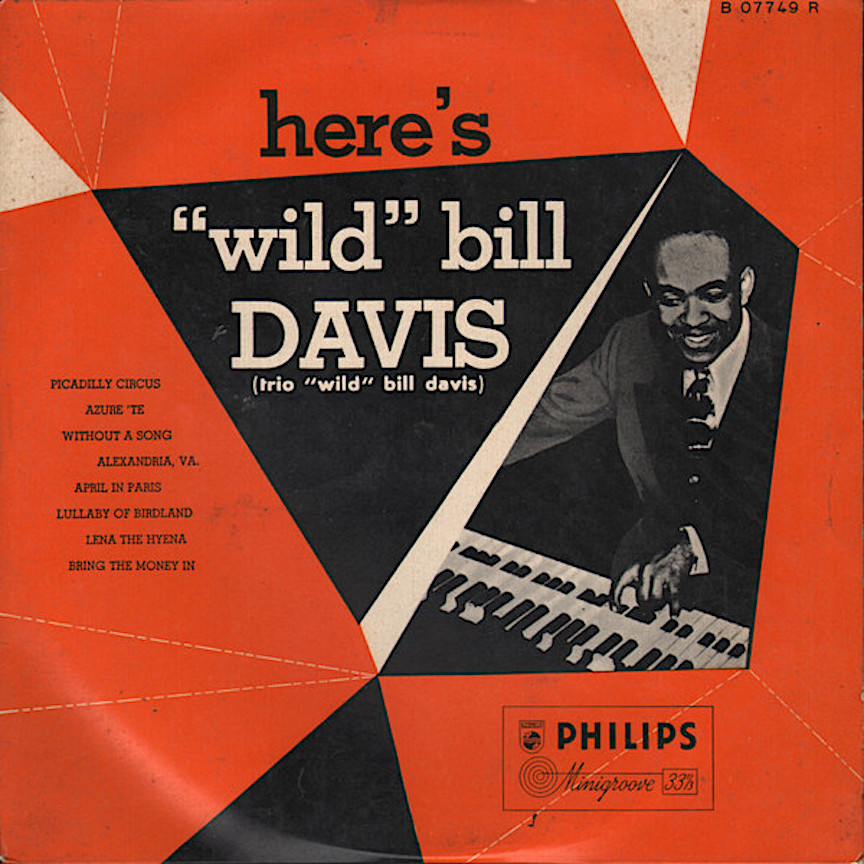
Tonight’s investigation was backed by Wild Bill Davis.
I was once invited to an apartment at the 2121 Douglas building. It was an exclusive Saturday Morning Smoker’s Club held every weekend in one of the upper-story apartments. They let you sample and buy only the best smoke available. I only went the one time. Saturday morning was the only time that tenant was available for transactions. There was a couple of people there that I believe are known to you, but, of course, the first rule of the Saturday Morning Smoker’s Club is….. Well, that was 25 years ago, so I’m sure it no longer exists.
Oh my! Fascinating!!
so i stayed at the 402 hotel in 2021 or 2022 and it was still open and l;isted on hotels. com as the 402 hotel.
Oh that is helpful. Thank you so much, Jay, and I will adjust this tonight. Thanks for the information!
Incredible research!!
I was in bands that played occasionally at FOE hall and was creeped out by the area.
Later, I worked for a Church that would occasionally help out people who stayed at the hotel with their bill. Sketchy dive.
That area of town is so haunted.
I’ve been trying for years to feature the Franklin story on my podcast. No one wants to talk about it.
Thanks, Brian! I love the inside of F.O.E although it’s been about ten years since I’ve been inside. It was some kind of old-timers’ dance night, complete with music and it was wonderful. The bar and everything still looked the way I remembered it. I wonder if I saw one of your bands. I have no proof of the area being haunted, except that many things do not feel right to my senses. Yes, I understand the Franklin situation and I would imagine that it is hard to get people to discuss what happened.
Nothing in this story really surprises me. It’s what happens when civic leaders have no clue about urban planning and design. It can also be said that urban planners failed to do their job. Omaha is, putting it mildly, a failure of an urban planning. It has been cited as such by scholars.
Didn’t a visiting comedian joke that Omaha seems like a nice town, then ask, “when will it be finished?”
It’s truly mind boggling that leadership gave so little thought to the park east area for decades, yet in 1988 jumped at the opportunity and enthusiastically relished the act of undertaking the largest demolition of a National Register Historic District in the history of the United States—the Jobbers Canyon.
Cities change physically—no argument. But how they change is a different subject. Locating that roadside motor lodge at that location was as nonsensical as the locations chosen for several of today’s major buildings. The fact is—the mindset hasn’t changed, and in Omaha, history repeats itself because as the comedian said, “when will it be finished?”
Hi Howard and thanks for writing in. Sorry to get to this so late. I have continued to think back on what you wrote and laugh to myself about “when will it be finished?” I was doing some reading the other day and bumped into a couple of articles, quite by accident, where other cities in other states were saying “Let us learn from Omaha’s BIG mistakes.” I felt the sting of shame to read their very public description of our city’s take down of Jobbers Canyon–“STILL the largest demo of a National Register Historic District” in the country. UGH. Of course living here is a whole other shaming meets constant resentment thing. I guess I just didn’t know that everyone knew this about us. I thought outsiders just thought we were slovenly and inattentive to details. My word…the secret’s out.
Great article. This brought back a lot of memories. I attended Central High and remember the Imperial well. Prom night 1979! Oh do behave!
Hi Bob, Thanks for writing in. I had fun with this one and I’m glad to hear it jostled some memories for you. I hope some good ones. I was always jealous of my Central friends and their easy access to Downtown. Lots to do after school! Take care.
Fabulous article. Impeccable research. I couldn’t stop reading till the end. I lived my first 48 years in the Hanscom Park area and never knew what lurked just a few miles away. Thank you for sharing.
Hello Rita, I am so glad you grew up in the Hanscom Park neighborhood. I was just driving around there last week. It is so wonderful. Yes, I understand about Park East and it didn’t really get much of a chance to remain a neighborhood. Such a medley of businesses, housing and entertainment. It was all very unusual by the time I first remember seeing it but it must have been something else altogether….or maybe it was always a mixed bag. Thanks for writing in.
Love your investigations, they bring back many fond memories of my “old stomping grounds”. I moved out of Omaha years ago. I remember reading once that Omaha was known as, “the city with beautiful homes”.
Omaha always reminded me of wanting to be cool and edgy, alas, “always a bridesmaid and never a bride”. The city planning never made sense to me; closing two-way streets to make them one way, roundabouts, back in parking on busy streets. It is almost like someone,( looking at you Shukert) , saw how cool and progressive/futuristic other cities were and needed to disrupt everything to emulate them.
I was always amazed how everything was a “done deal”, when the decision was made to have Public hearings in regard to the razing of Ak-SAR-Ben, Peony Park, Jobbers Canyon, Crossroads, Rosenblatt, or the ultimate money grab, spending millions of dollars to renovate the Civic Auditorium, only to tear it down a few years later. Yes, ‘when will it be finished’?
Omaha was a great place to have grown up and I will always reflect nostalgically on my youth and the people and haunts of my (misspent?) youth.
There is definately a lot to find out about this subject. I like all the points you made