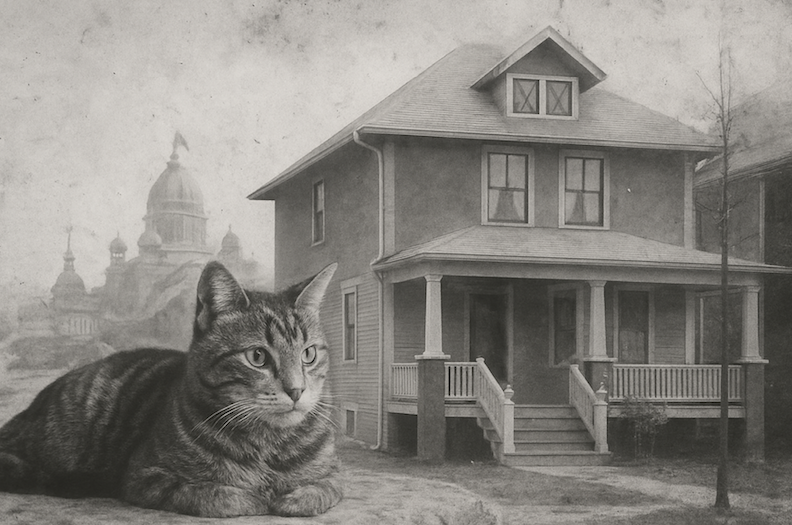
There once was a cat named Midgie who in 1953 inherited a large Omaha house at 1624 Pinkney Street, together with its lovely human furnishings. I stumbled upon the mystery when casing feline Midgie’s equally as cryptic attorney while working a prior investigation– the Magic Abbott house case. Midgie stayed on my mind–the mysterious runaway transformed to affluent beneficiary storyline was right up my alley. The entire notion of this silent, silky-haired infiltrator with kohl-lined, almond eyes becoming an inheritor of property, along with the house’s historical background, warranted further investigation. I returned eagerly to the archives and walked the neighborhood gathering more and more clues, filing them away as The Case of the Cat Who Inherited a House. This is one strange cat tale that could not be more peculiar.
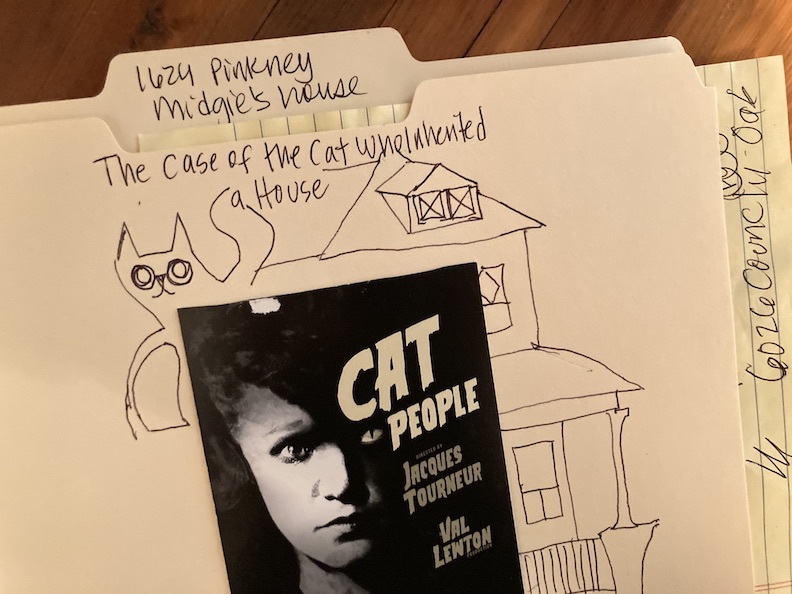
Midgie the cat inherited 1624 Pinkney Street in 1953. Built in 1910 on Lot 9, Block 37 of the Kountze Place addition, unfortunately, the once renowned house was razed long ago. So convincing and mysterious were Midgie’s skills that he was able to talk the homeowner into letting him inside and it was in the following years, records reveal, he convinced the owner to leave the house, chock full of antiques and finery in his name. Strangely, the press referred to Midgie as an alleycat, a designation I contest. He was some kind of smooth operator. Not one to slink off in the night, Midgie knew exactly which side his bread was buttered on. I cannot speak to Midgie’s exact tactics of manipulation as I was not there and have never known a feline Midgie of this caliber. However, I have known and loved many cats over my lifetime and I find all of this entirely possible. Midge made his choice of humans and chose well. Let us presume that Midgie’s beauty, loyalty, cleverness, and cuddliness were rewarded.
We’ll work the case in chronological order with some off-ramp-through-the-brambles excursions. The Case of the Cat Who Inherited a House will begin with a brief history of the surrounding area, the property’s background and early owners. If you are disinterested in the house’s history and wish to proceed directly to Midgie and his humans’ glory years, navigate to the header: The Putnams of Pinkney.
Kountze Place is Drawn Up
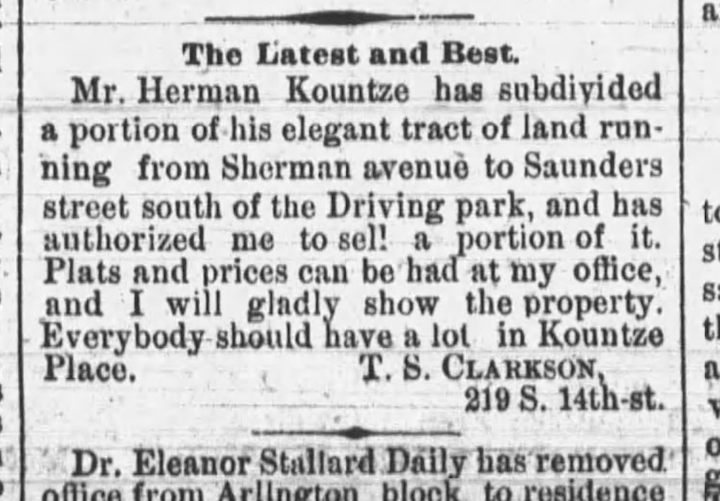
The Kountze Place addition, established by Herman Kountze in 1886, was said to be an appealing subdivision in North Omaha. Early on, the addition was situated between Sherman Avenue and Saunders Street, south of the future 1898 Trans-Mississippi and International Exposition fairgrounds. Kountze Place represented a lucrative real estate venture for banker Herman Kountze. The 1981 application for the historic recognition of Trans-Mississippi and International Exposition Site, submitted by the Landmarks Heritage Preservation Commission, indicated that this area was “originally part of the village of Saratoga, an early competitor of Omaha in the 1850s,” and that Herman Kountze acquired it in the 1860s. The area was known as host to the Douglas County fairgrounds and driving track prior to the platting of Kountze Place. Mr. Kountze would subsequently contribute a substantial tract of land for the aforementioned exposition. Sherman Avenue was regarded as a major thoroughfare before the Kountze Place development, a renowned route well known to city folks. For a deeper dig on Herman Kountze and the Kountze family, please check out my previous investigation: Mysteries of Omaha: 1503 Park Wild Avenue.
**The neighborhood designated as Kountze Place was renamed “E. R. Danner” by local residents in 1970 in honor of the esteemed Omaha native and nationally recognized African-American Nebraska State Senator who devoted his life to social reform. Most current real estate and city map listings include both Kountze Place and E. R. Danner. As tonight’s investigation primarily focuses on the years preceding this transition, all archives utilized the name Kountze Place.
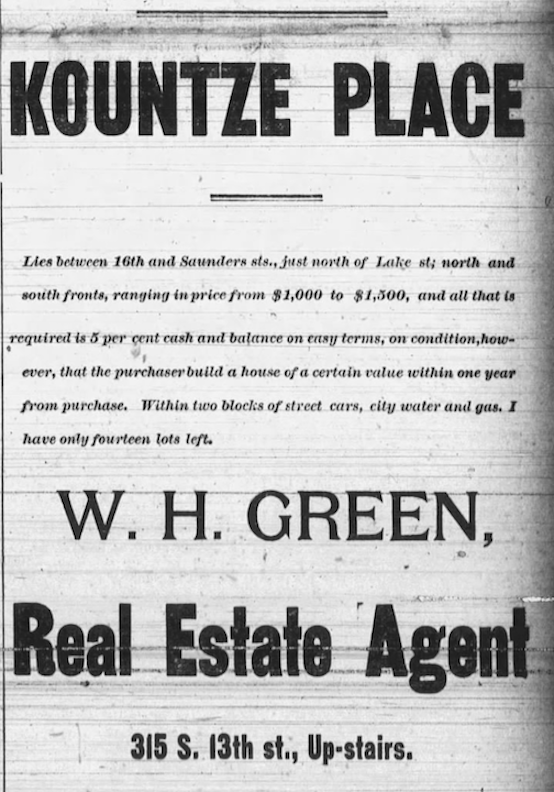
July 27, 1886. The Omaha Evening Bee.
July 1886. The Omaha Evening Bee.
Kountze Place addition’s perimeter changed over time and was later bounded by Sixteenth to Twenty-fourth, Pratt Street on the north, North Sixteenth on the east, Locust Street on the south, extended to North Twenty-fourth on the west side—North Omaha’s first major housing development. Kountze Place became home to many of Omaha’s prominent business and professional people. It was considered an elite neighborhood, attracting upper middle-class attorneys, doctors, architects, and real estate businessmen. By 1925 Kountze Place was filled with single family homes, churches, and a few multifamily buildings.
For all of Mr. Kountze’s extensive promotion, it wasn’t until February of 1887 that the City Council approved the public plat of Kountze Place, the forthcoming upscale residential suburb of North Omaha. I tracked Mr. and Mrs. Kountze’s first sale to a Clementine Brown. Mrs. Brown acquired lots 1, 7, and 8 of block 1; lots 1 and 2 of block 7; and lots 10 and 11 of block 9. By March 1887, Kountze had sold more than seventy residential lots in Kountze Place, stipulating that the residences must not cost less than $2,500 apiece and must be completed within eighteen months.
Of interest Mrs. Clementine Brown’s husband was Samuel Ritter Brown and their children were Samuel A. Brown and Almira Brown Millard. Their family home was at 2501 Farnam. I quite enjoyed observing the expansion of Mrs. Brown’s real estate empire over time. She bought up lots left and right throughout Omaha and sat on them. She appeared in no hurry. The 1890s depression significantly hindered construction in Omaha, with the exception of wealthier residents. The resurgence of construction in the early 1900s, especially the Neo-Classical Revival, was profoundly shaped by the architectural designs showcased at the Expositions of Chicago and Omaha. It was then that Mrs. Brown began selling her lots for a pretty penny. Astute in her financial investments, weeks later I would find indication that Clementine Brown’s maiden name was Kountze. Herman Kountze was her dear brother.
The Trans-Mississippi Clues
In tracking Midgie the cat’s residence (yet constructed) at 1624 Pinkney Street at Lot 9, Block 37 of the Kountze Place addition, I found it was situated within a uniquely defined historical district.
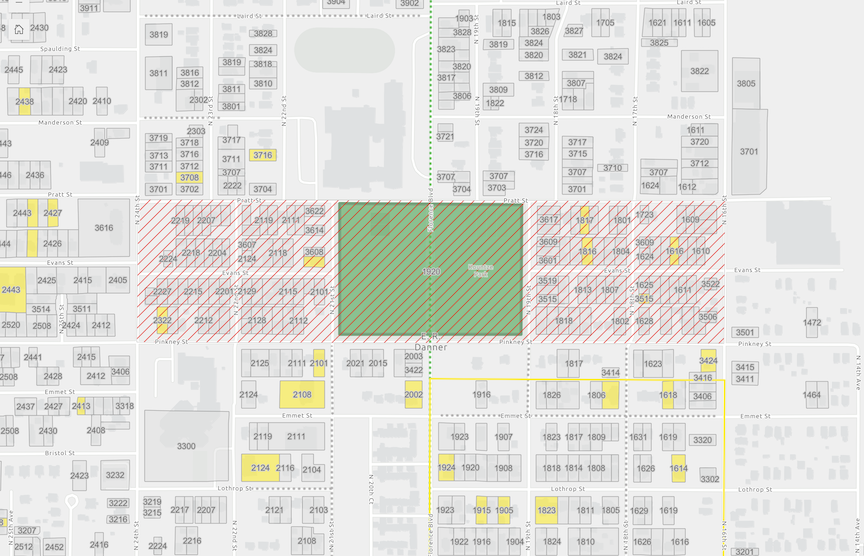
Image borrowed from the DGIS.
The above map illustrates (a portion of) the historical location of the Trans-Mississippi and International Exposition of 1898. The exposition grounds are indicated by red diagonal markings. Pratt Street borders the north, North Sixteenth Street the east, Pinkey Street the south, and North Twenty-fourth Street the west. In the middle of this section of Kountze Place sits Kountze Park, blocked out in green. The terms Place and Park are frequently confused while examining the history of this area. The postal addresses of some of the existing houses constructed after the dismantling of the expo site are also displayed.
A prominent Nebraska Historical Marker is situated within Kountze Park, indicated in green on the county map above. The history provided on the marker was contributed by the Nebraska State Historical Society. I include it here because the borders of the Exposition grounds described on the marker are more extensive than those on the prior map: Ames Avenue to Binney Street, North Thirteen to North Twenty-fourth.
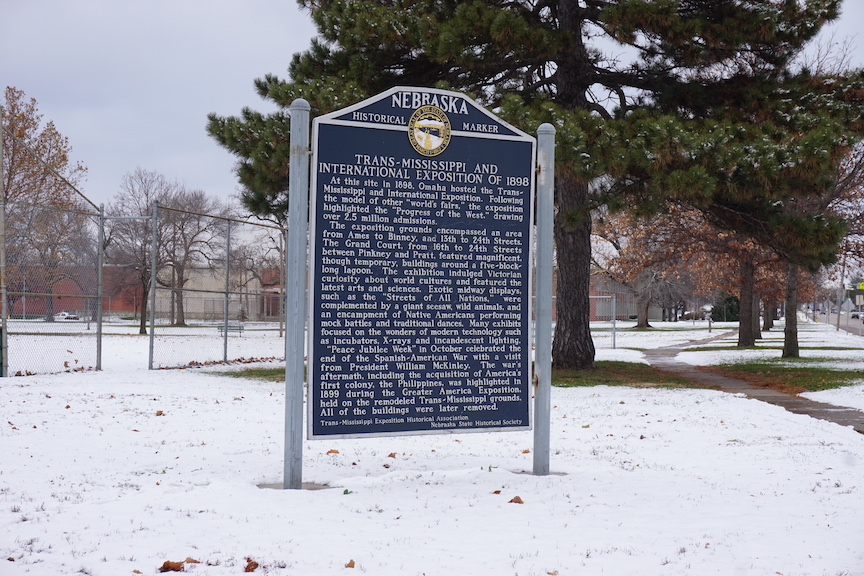
Historical marker within Kountze Park. According to the 1981 Landmarks Heritage Preservation Commission application for the Trans-Mississippi and International Exposition Site, “Reflecting the predominantly black community surrounding it, Kountze Park is now unofficially known in the city as Malcolm X Park, in tribute to the black activist leader born in Omaha.”
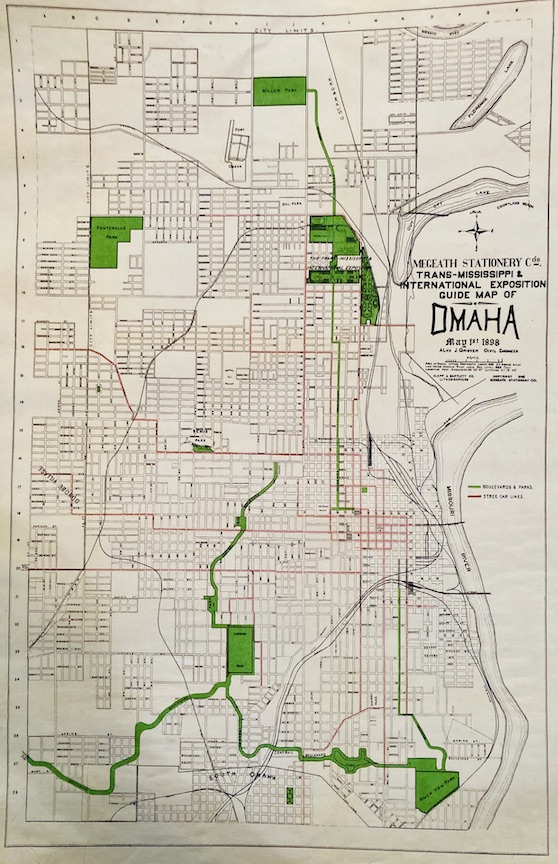
As you can imagine, the accumulation here at the detective office is getting a bit thick and any more I risk losing track of my personal collection, as I am buried under in treasures. I wouldn’t mind this. I recalled purchasing a map some time ago. The Megeath Stationery Company commissioned civil engineer Alva J. Grover to draw up a map of Omaha for expo visitors. The Trans-Mississippi and International Exposition Guide Map of Omaha, May 1, 1898. Boulevards and parks were marked in green; street car lines shown in red.
Copyright The Megeath Stationery Company 1898. Klopp & Bartlett Co. Lithographers.
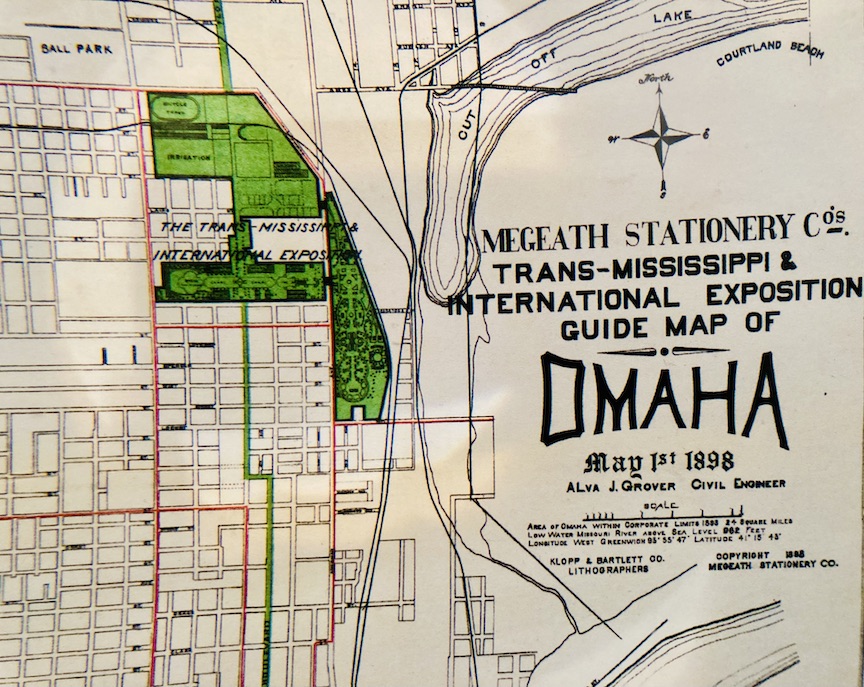
Detail of the above map that I (lamely) attempted to enlarge using a magnifying glass. I hope it can give some hint of an idea. The green areas show the breadth of the Exposition grounds, adjacent the Cut Off Lake to the east. Copyright The Megeath Stationery Company 1898. Klopp & Bartlett Co. Lithographers.
The Kountze Park historical marker also indicated that the Grand Court of Omaha’s Trans-Mississippi Exposition encompassed the area from North Sixteenth to North Twenty-fourth, blocked in red on the preceding Douglas County map.
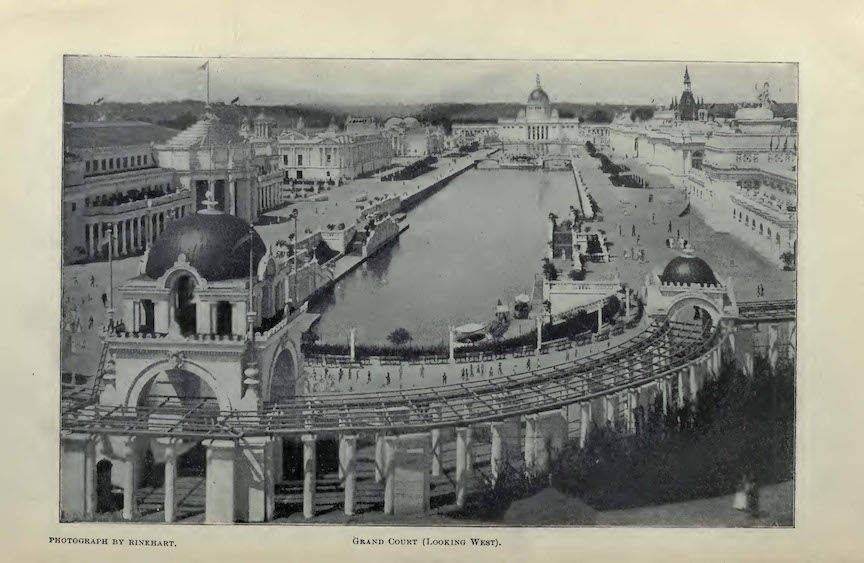
Grand Court (Looking West). Official photo booklet from the Trans-Mississippi and International Exposition held at Omaha, Nebraska. June 1st – November 1st, 1898. Published by F. A. Rinehart, official photographer.
This categorization was intriguing to me. We have all drooled over the dreamy Trans-Mississippi photographs of the Grand Court throughout our lives. The glorious but temporary structures were constructed around a lagoon spanning five blocks. Originally “the Boulevard” crossed the lagoon on two bridges that were supported by an island situated in the center of the lagoon. These bridges were subsequently relocated to Miller Park. The water was encircled by exhibition structures and broad walks. The buildings were, in order starting on the southeast corner: Auditorium, Fine Arts, Arch of States, Liberal Arts, United States Life Saving Station, Agriculture, Mines and Mining and the Government Building at the west end. These handsome “marble” buildings were designed in the Grecian style. The stone appearance was, in fact, wood, lath, and plaster, expertly painted. The buildings were dismantled over time at the end of the event–some demolished, with certain materials packaged and transported in train cars. An article published on September 15, 1899, in the Chicago Daily News reported that the Chicago House Wrecking Company intended to utilize 2,000 freight cars to transport salvaged materials from Omaha’s Expo to Chicago.
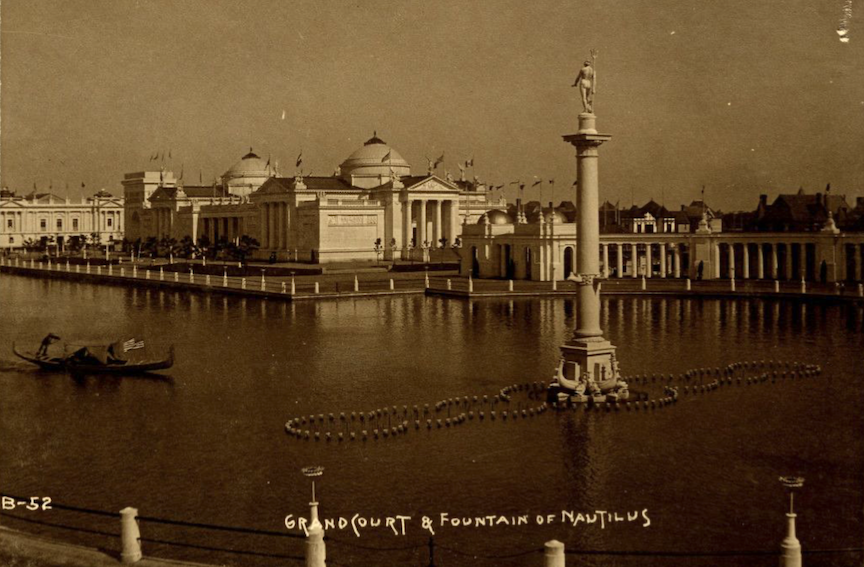
Grand Court and Fountains of Nautilus. This lagoon was said to have stretched east to west between the Sixteenth and Twenty-fourth Streets. Photograph by Frank A. Rinehart of the Rinehart Collection. View of the lagoon with the Fountain of Neptune, looking southeast. A gondola with passengers is in the lagoon. Liberal Arts Building, Arch of States, Fine Arts Building and southwest colonnade are visible in the background. Publisher: Omaha Public Library. 1898.
Once drained, what was used to backfill the large lagoon? In the summer of 1980, a construction foreman excavating a sewer tunnel in Kountze Park discovered what were questionable remnants from the 1898 Trans-Mississippi Exposition. The State Historical Society sent an archeologist and an architect to Omaha. Omaha World-Herald journalist, Mike Kelly wrote about the potentially historic discovery. Kelly interviewed two Omaha Trans-Mississippi enthusiasts, Leonard Owen and Gene Mueller, who agreed the majority of the demolished expo materials were transported to Chicago. However Owen and Mueller had a disagreement on the findings at Kountze Park. Owen asserted that none of the materials from the expo were used as landfill. His argument was that a portion of the exposition’s lagoon remained in use and was filled with water in the Kountze Park until the 1920s. The inference one could derive from his argument is that artifacts could not feasibly have been buried beneath or around the lagoon. Mueller, on the other hand, believed the artifacts discovered at Kountze Park were undeniably from the expo. One discovery, he believed, was the plaster capital of an Ionic column. Mueller stated that it corresponded with the tops of columns depicted in historical photographs from the Trans-Mississippi event. Mueller emphasized that draining and backfilling the lagoon was the final phase of the exposition’s deconstruction, and a significant portion of the plaster debris likely became part of the fill.
While this was all new to me and I had not examined the specific materials used to backfill the expo lagoon, I can state that my previous investigations indicate the early archives shamelessly reveal that many of the uneven creeks and waterways, in bumpy, lumpy uninhabitable, undeveloped Omaha were indeed leveled with landfill, consisting in part, of refuse. This came up most recently in my Little Italy investigation, one of, if not the earliest Omaha neighborhood. Another inquiry revealed that the city of Omaha disposed of substantial refuse from its fireworks display and street floats into the Missouri River. Endless materials, to include vehicles, were dumped for decades into the Missouri River. I found it highly plausible that Omahans of the 1890s would have attempted to fill a lagoon with debris among other things.
It was a missing piece of the puzzle to, perhaps, acknowledge and move beyond. However, I could not leave it alone, as the candle burned down through the night.
Expo Lagoon Obsession Sidenote
It intrigued me that prior to the Trans-Mississippi Exposition, Herman Kountze suggested his namesake park to the city. Omaha World-Herald, March of 1897: “The park commissioners refuse to accept Herman Kountze’s park propositions in connection with the exposition site. Ground within the exposition fence may be condemned for park purposes.” Their view changed within the year. The Kountze Park positioned within the once large Exposition site holds a strange residuum.
In other matters, I discovered the Kountze Park lagoon remained filled with water past 1920, its draining previously taken for fact. Indeed, the lagoon functioned as a modest body of water into the 1950s. The lagoon was notoriously a location for newsworthy fish captures, including 17-pound carp and buffalo during local fishing excursions, occasionally leaping from the water into the grasp of unsuspecting park visitors. The once Trans-Mississipi Expo lagoon was also site of numerous “near” drowning victims, including toddlers and children for decades to follow. Fortunately, all the narratives I found featured a child hero to the rescue.
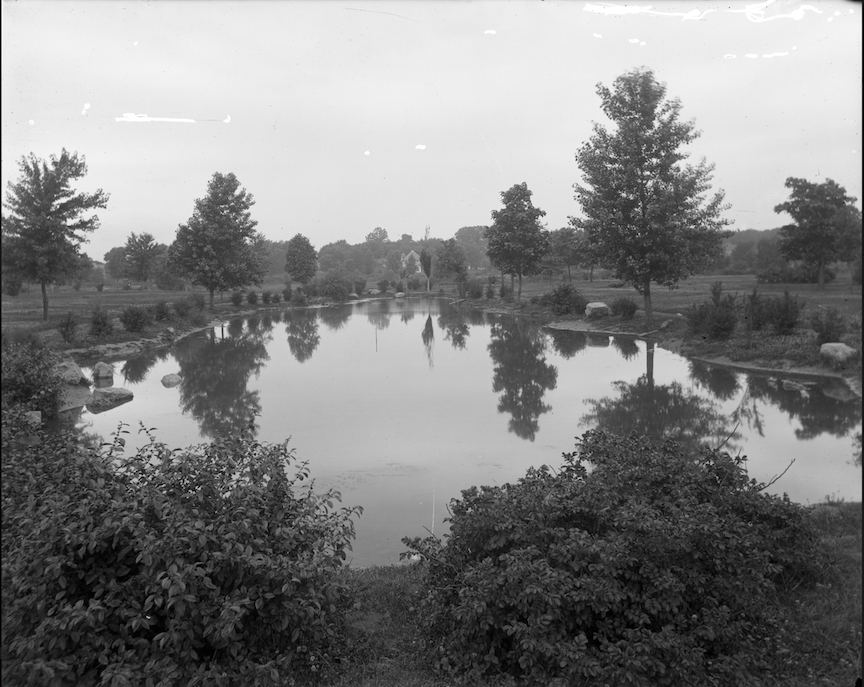
This photograph is dated between 1900 and 1910. Photographer: Bostwick, Louis (1868-1943) and Frohardt, Homer (1885-1972). Publisher: The Durham Museum. 1900-1910.
Following the Trans-Mississippi Exposition’s close, shortly after in 1899, this smaller, organic shaped section of the lagoon remained within Kountze Park. Plantings included trees and shrubs, stone placements and later concrete steps were arranged. Omaha Evening Bee, February 1899. The city lamented that without the originally planned follow-up exposition, they would incur a cost of $5,000 to clear the debris from Kountze Park. Reinforcing the lagoon’s wall was paramount. That autumn, the city declared that the only souvenir of the great Trans-Mississippi Exposition would be Kountze Park, encompassing eleven acres and lying on either side of the iron bridge across the lagoon. “Half of this was donated by Herman Kountze and half was purchased from him by the park commission.”
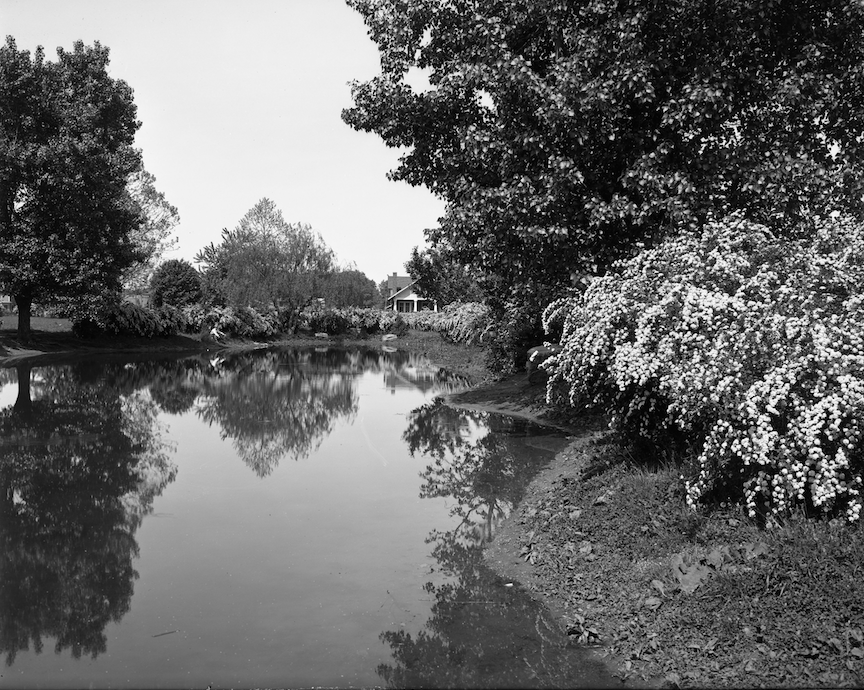
By 1913, this contemplative photograph captured a concealed jewel, as the trees and Bridal Wreath Spirea had matured and flourished. Magnify the man, water’s edge, in the distance. Photographer: Bostwick, Louis (1868-1943) and Frohardt, Homer (1885-1972). Publisher: The Durham Museum. 1913.
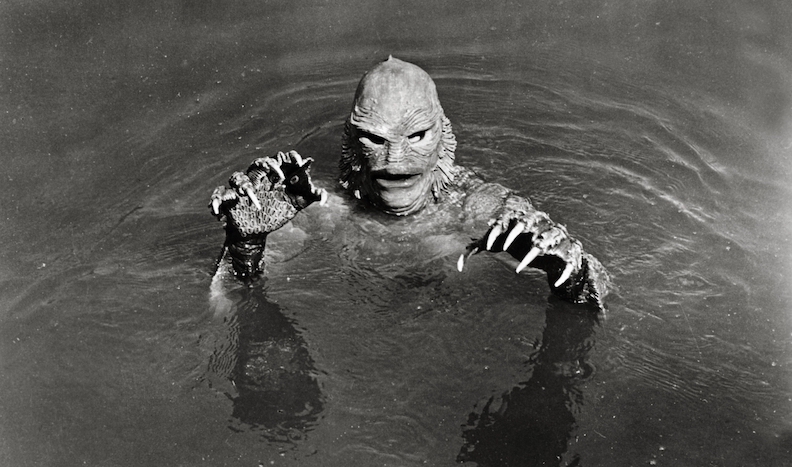
Beautiful but a bit foreboding. What was this like at night? Is anyone thinking of The Creature from the Kountze Lagoon? Not I.
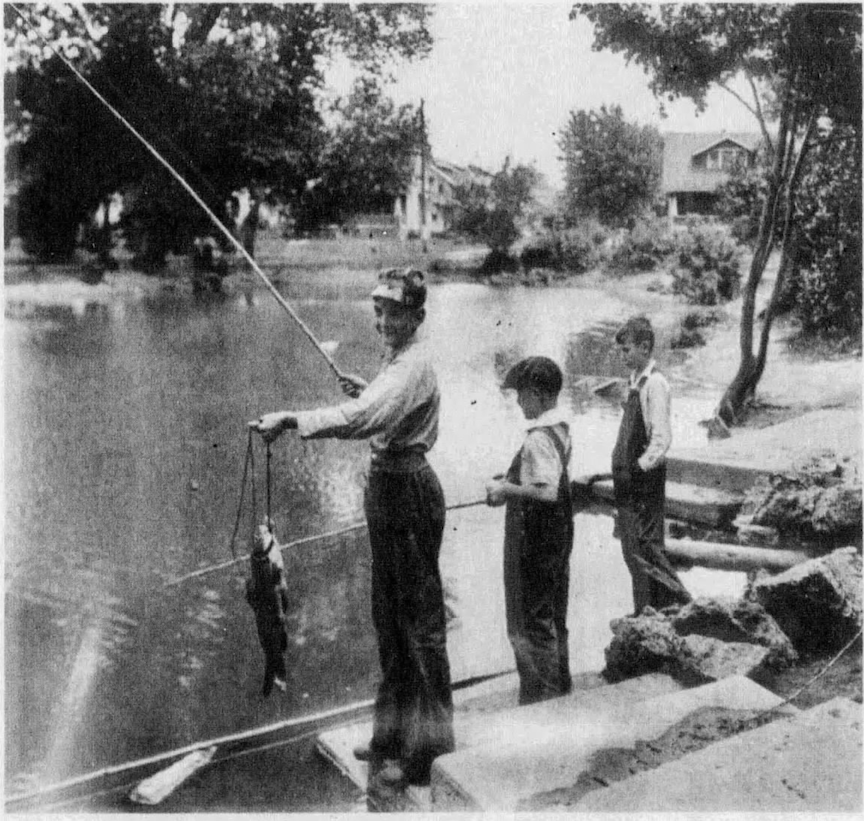
1930. Omaha World-Herald. The Kountze Park Lagoon, historical site of the Expo, much loved and used by the neighborhood.
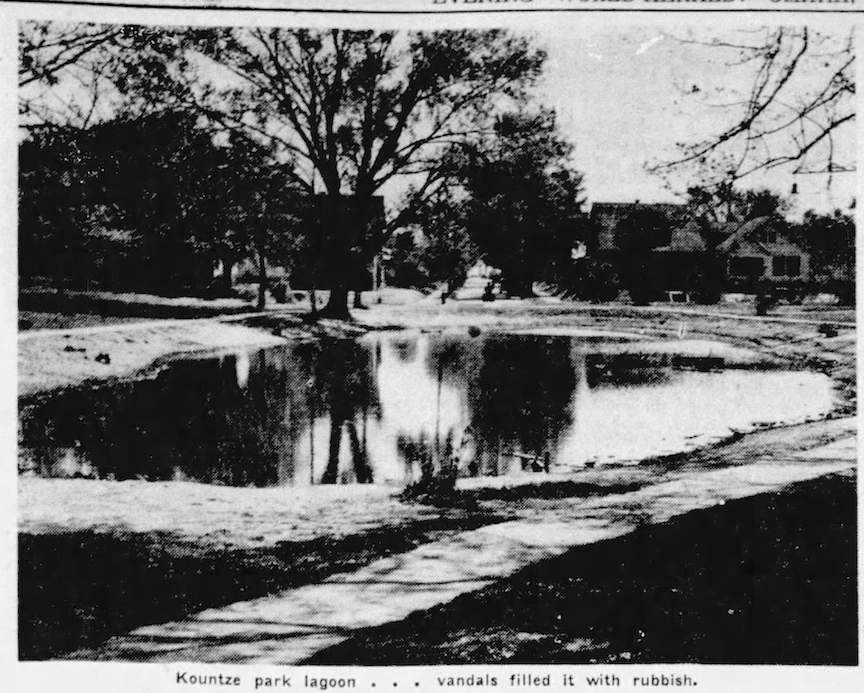
Dismal and shrinking.
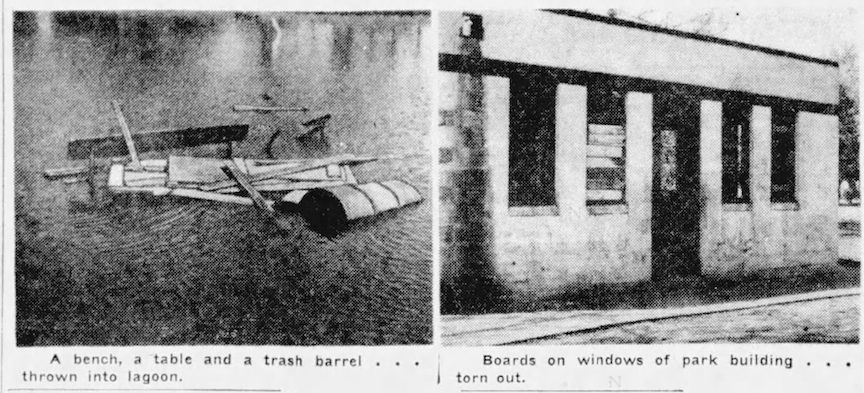
May 9, 1940. Evening World-Herald.
Ten years later told a different tale. The Evening World-Herald in May 1940 reported a recent history of vandalism that had been an issue at Kountze Park, especially concerning the lagoon. The city’s parks department was reportedly contemplating a plan for converting “the artificial mud-bottom lagoon into a rustic, hard-bottom pool next fall.” The entire lagoon, covering about an acre of ground, was to be dredged and cleaned, with a sand and gravel substrate installed in sections to facilitate its transformation into a wading pool. Newspapers were inundated with complaints of older kids throwing objects into the pool, lighting fires in the public restrooms.
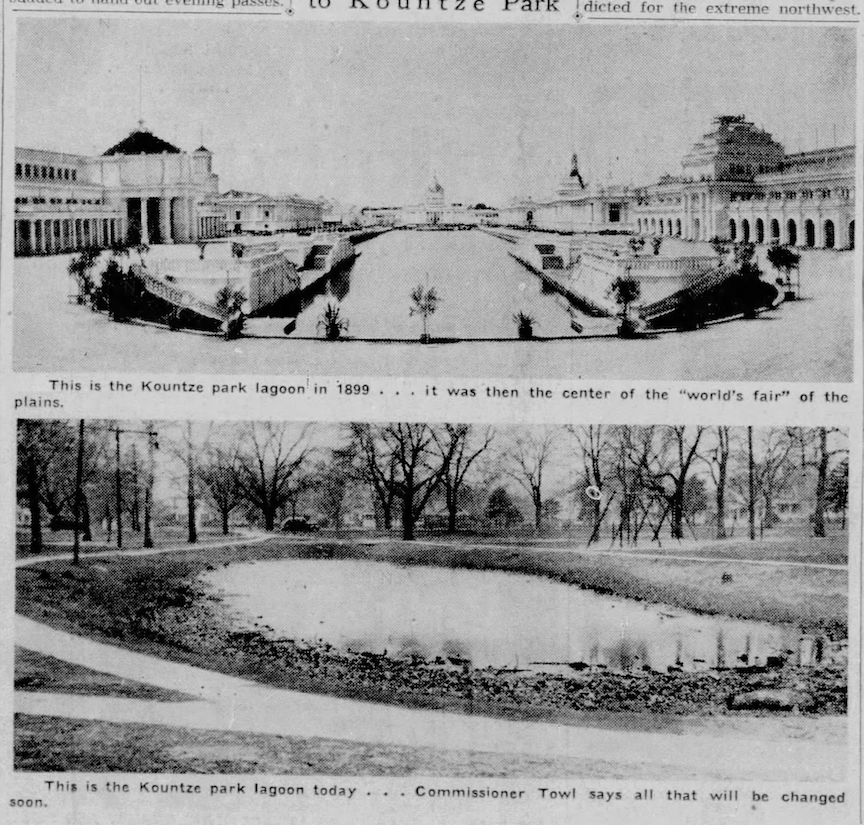
April 1, 1941. Evening World-Herald. The plantings and organic quality long gone.
In the summer of 1942, the city did drain the pool, citing health concerns and announced their intention to clean and refill it, which they executed. It was curbed with stone and a drain installed.
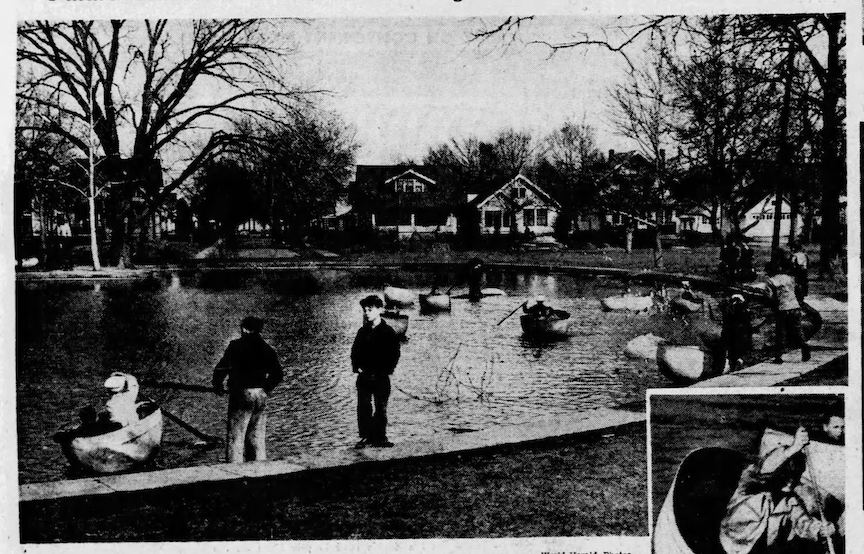
April 3, 1949. Omaha World-Herald. Local children used small military boats for paddling and fishing fun. The stone lip installed was quite attractive although an altogether different look than the once “natural” site.
By 1953, the Omaha Park Department officials began draining the lagoon for good and backfilling it for grading. “Since the late days of World War II, it has been filled only in the winter for ice skating.” I am uncertain why the city would issue this truncated and inaccurate statement given prior photographs indicate that the lagoon was filled with water and utilized during the warmer months for many years past the war.
Between 1953 and the sewer excavation in 1980, numerous artifacts and the smallest of clues likely remained/remain buried, particularly when one contemplates the extensive dimensions of the original Exposition lagoon, which was significantly larger and required more backfill in 1899 than the diminutive pool of 1953.
The Trans-Mississippi Expo is a fascinating aspect of Omaha’s history. It has certainly impacted my life, with anecdotes and lovely souvenirs handed down through my grandmother’s family. However this history is extensively documented in books, archives and historians’ websites. There is nothing I could hope to contribute to their work but I deemed it worthy of inclusion in Midgie’s mysterious storyline.
The Lot 9 Block 37 Parcel
At the Trans-Mississippi Expo’s close, it would take years for Herman Kountze’s parcels to be sold and permanent residences in these Kountze Place blocks to be developed. It is fascinating to envision some of them erected on the once Grand buildings, the promenades and massive lagoon.
In 1908, years after the Trans-Mississippi Expo, I would find the United R. E. & Trust Co. name attached to many if not all of the lots in Kountze Place surrounding the Lot 9 Block 37. Retracing, incorporation documents for the United Real Estate & Trust Company were submitted in 1893, establishing a capital stock of $2,500,000 under the names of Herman Kountze, Luther Kountze, Charles B. Kountze, Charles T. Kountze, and Fred H. Davis. Curiously, Herman Kountze, in describing the objective of establishing the company, stated that it was merely a private business venture and “had no connection with any ditch or canal scheme.”
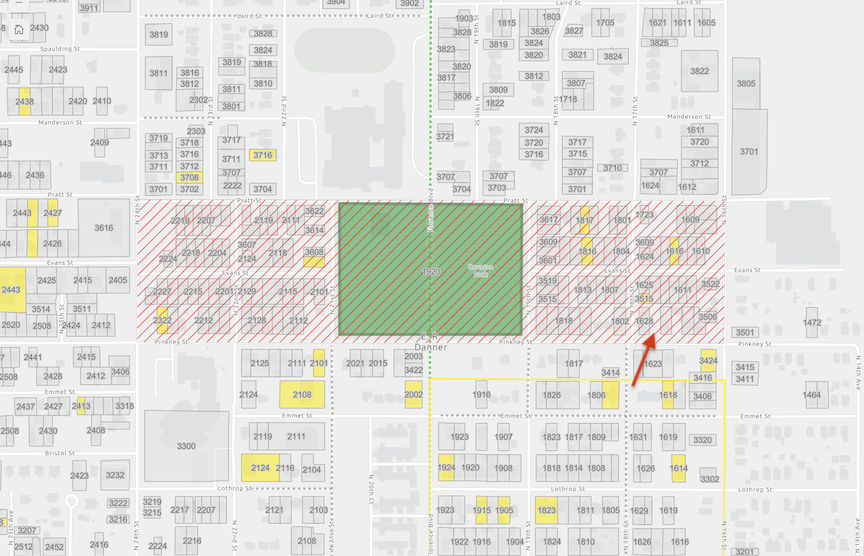
The red arrow indicates Lot 9, Block 37—the property assigned the postal address: 1624 Pinkney Street.
It was 1910 that the United Real Estate sold the empty Lot 9 Block 37 of Kountze Place to a J. O. Sterner.
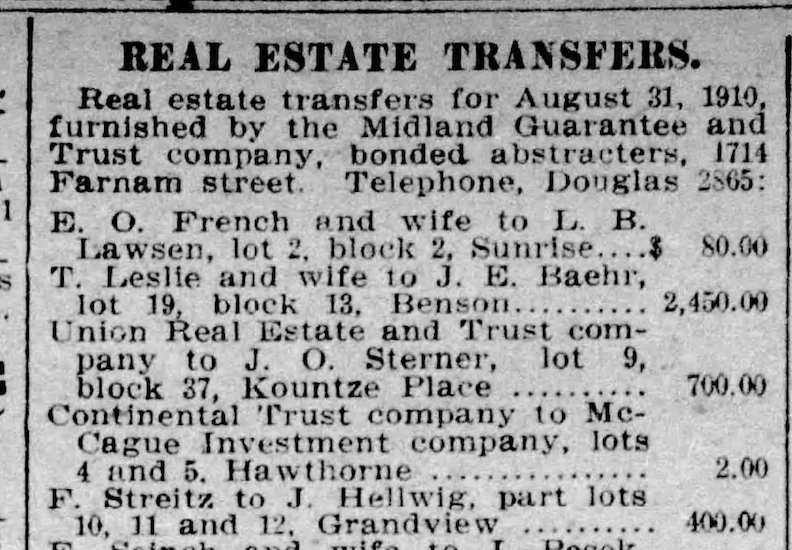
September 1910. Omaha World-Herald.
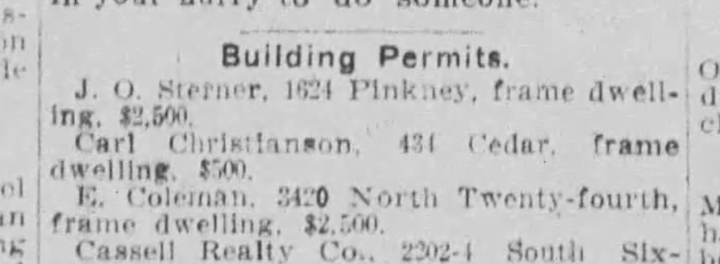
September 1910. The Omaha Daily News. John O. Sterner entered a building permit for the 1624 Pinkney house. “Frame dwelling, $2,500.”
Mr. John O. Sterner was a carpenter and home builder whose houses in the Kountze Place and Minne Lusa neighborhoods often made the paper every day of the week. Son of William Sterner and Susanna Freed, John O. Sterner was born in 1876 in Orwigsburg, Pennsylvania. The Sterner family relocated to a farm close to Dedham, Iowa, when he was still a boy. He later served in the Spanish-American war in Cuba in the years 1898-9. In Omaha, John and his brother established a painting company. John Sterner married Miss Honor Edith Rogers in Carroll, Iowa, in 1903. The couple’s residence at 2121 Emmet Street in Omaha’s Kountze Place served as both their residence and place of business.
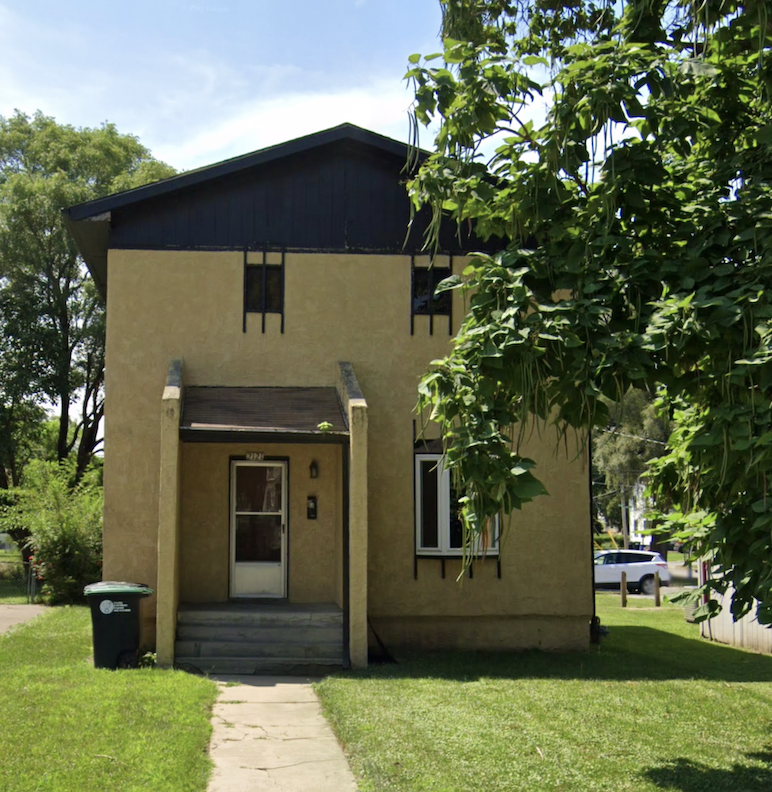
2121 Emmet Street was built in 1905, according to the Douglas County Assessor site.
Slight Diversion with Miss 2121 Emmet Street
The Sterner house is fascinating. Still standing…something told me that under all this stucco and intriguing windows there was possibly a hidden house of the past.
Join me, if you will, on this minor detour.
The October 1890 newspaper indicated that Augustus Kountze possessed Kountze Place, Lot 7, Block 29, the legal designation for 2121 Emmet Street. In the same year, 1890, the William A. Redicks resided at 2121 Emmet Street in Kountze Place. William Armstrong Redick wed Miss Mary Wood in 1883. By 1885, they had welcomed their son, John Wood Redick. The name Redick intrigued me due of its historical significance in Omaha, as numerous local establishments, streets, blocks etc bear their name and we’ve discussed them in our past wanderings. Charles and William were siblings and partners in Redick & Redick Attorneys at Law, located in the “Redick Block” in downtown Omaha. Brother Charles was the first to attain his Attorney at Law degree, while the younger William served as the Deputy Clerk at the U.S. Revenue Office. Eventually, Judge William Armstrong Redick would gain widespread recognition throughout the community.
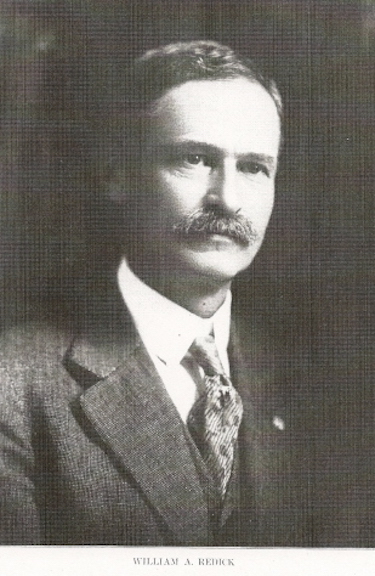
Photograph from one of my favs: Omaha: the Gate City, and Douglas County, Nebraska, 1917.
To deliciously complicate matters, the two brothers were the initial offspring of John Irvin Redick from his first marriage. John Irvin Redick practiced law for Union Pacific during his whole career and was considered one of our Posh Pioneers. The Senior Redick contributed significantly to the development of early Omaha, including railroads, buildings, and the hotel business, before transitioning into banking after moving to another state. The University of Nebraska Alumni Association Newsletter states that John Irvin Redick obtained the former Henry and Mary Meyers’ “wooden farmhouse,” which was transformed into a jaw dropping 20-room mansion by real estate developer Clifton E. Mayne in 1885, located along rural North 24th Street. This magnificent mansion, featuring a five-story tower, was conveniently located in the newly developed suburb of Kountze Place. Characterized by a broad veranda encompassing the whole first floor, the residence featured a substantial parlor, a dining room, and an expansive entry hall, complemented by “tall chimneys, exotic woodwork and elegant fixtures throughout the house.” After Mayne’s expensive additions and thorough upgrades, John Irvin Redick acquired the mansion in 1889, undoubtedly enjoying its closeness to the Trans-Mississippi Expo, which was directly across the street about ten years later. This residence, in turn, presented an appealing display of Omaha’s residential possibilities to the 2,613,508 attendees of the Expo over its five-month duration. Oak C. Redick, son of John Irvin Redick’s second marriage, sold the family residence to the newly established Municipal University of Omaha in 1907, which later evolved into UNO.
I share these details because they give a thrill and to demonstrate that the Redicks were firmly established in North Omaha. Let us return to the address 2121 Emmet Street. It seems that if the William Armstrong Redicks possessed a residence there in 1890, it was, plausibly, demolished. (Other theories are that the Redicks were renting the 2121 house or that the press got the address wrong and there really was no 2121 Emmet.) By 1897, this parcel was transferred to the United Real Estate & Trust, which we discovered to be the real estate arm of the Kountze family enterprise. The United Real Estate & Trust Co sold to John O. Sterner in June of 1909. Of course I wondered if John O. Sterner might have built 2121 Emmet, given his profession; however the Douglas County Assessor lists it as being constructed in 1905. Could the house standing before us possibly be a remuddlement of the earlier Judge William Armstrong Redick house?
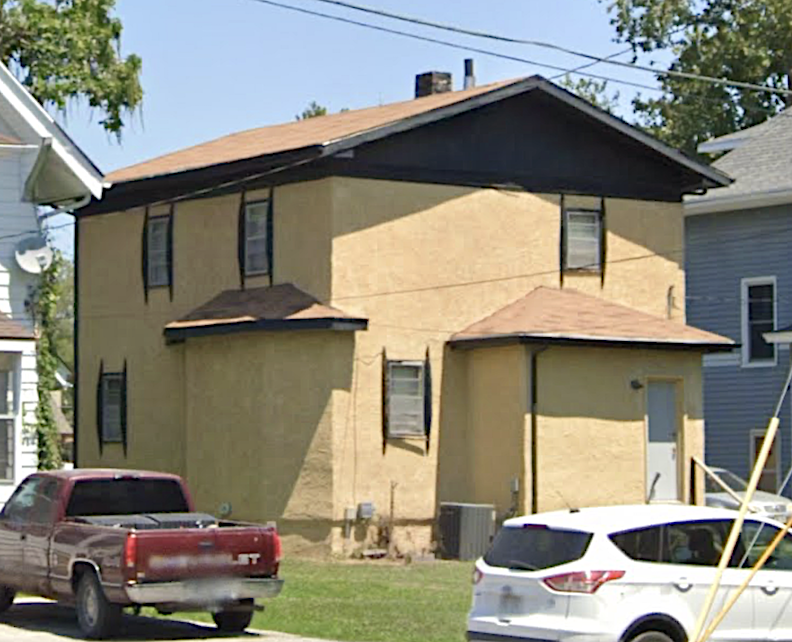
Rear elevation.
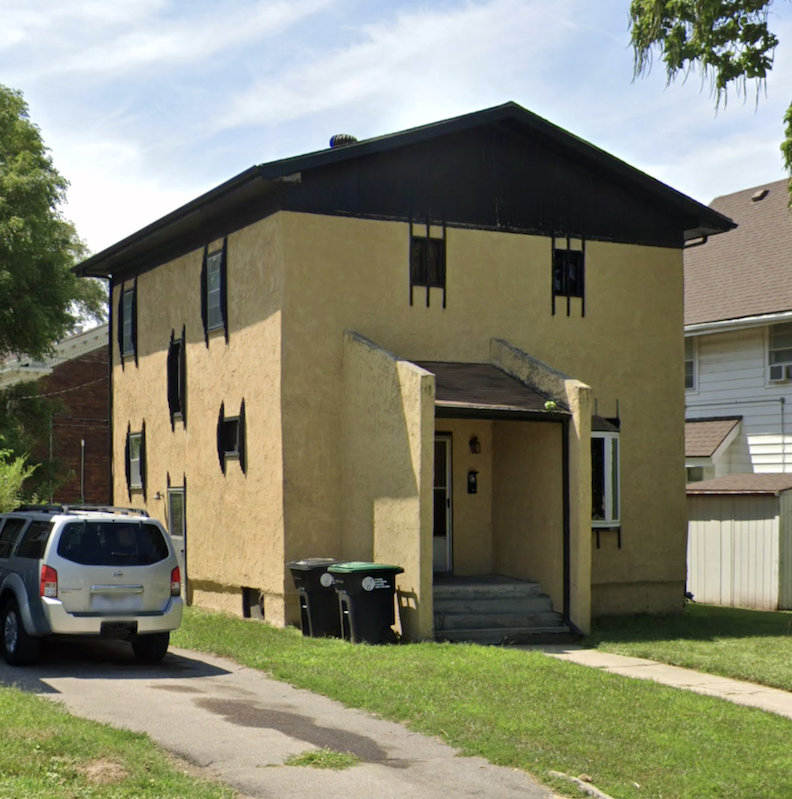
I believe there is a wooden frame house under there. The back and side elevation reveal signs of a bay window and back porch, now sealed up. The stucco cladding, modernist entryway, and window embellishments might have been a 1950s or 1960s external makeover aimed at achieving a contemporary aesthetic. I am sure someone out there has more information on this house of my obsession.
Another Late Night with 2121 Emmet
These breakthrough 1983 Douglas County survey photographs of 2121 Emmet uncover the inherent beauty of a Foursquare beneath its existing stucco surface. I could not believe it myself until I compared with the two neighbors’ houses…
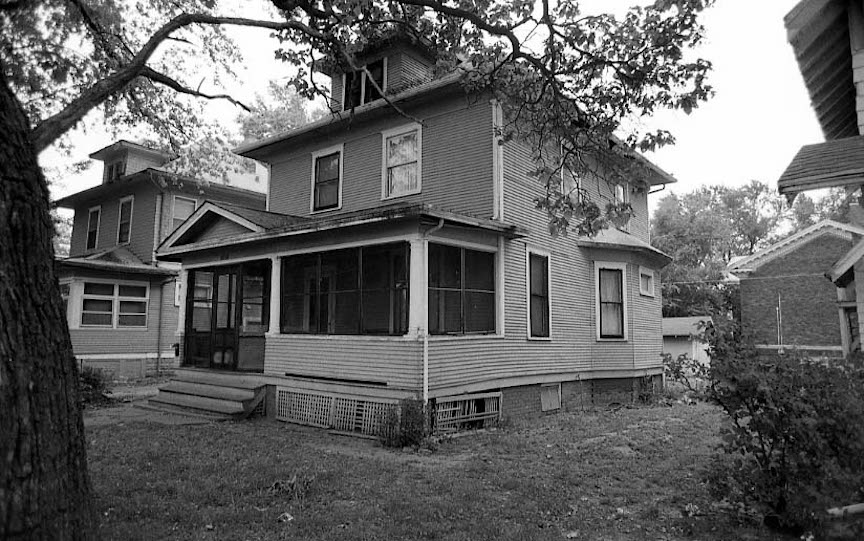
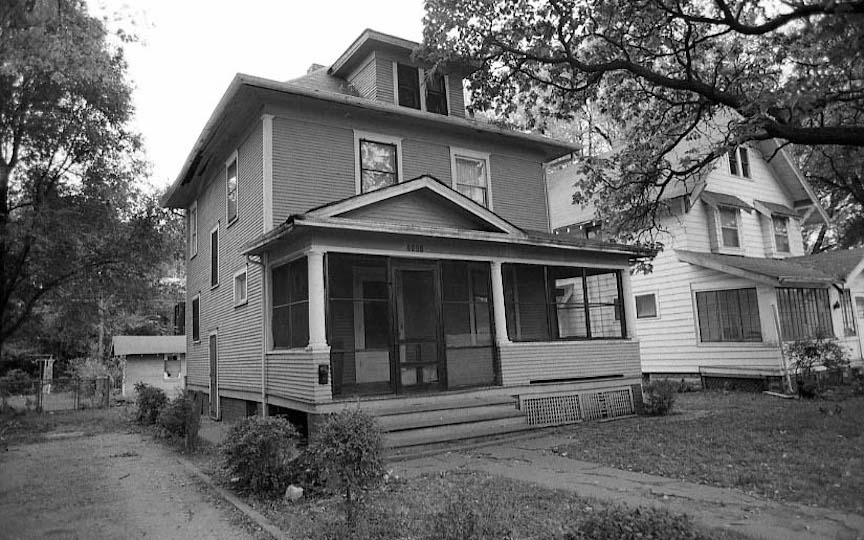
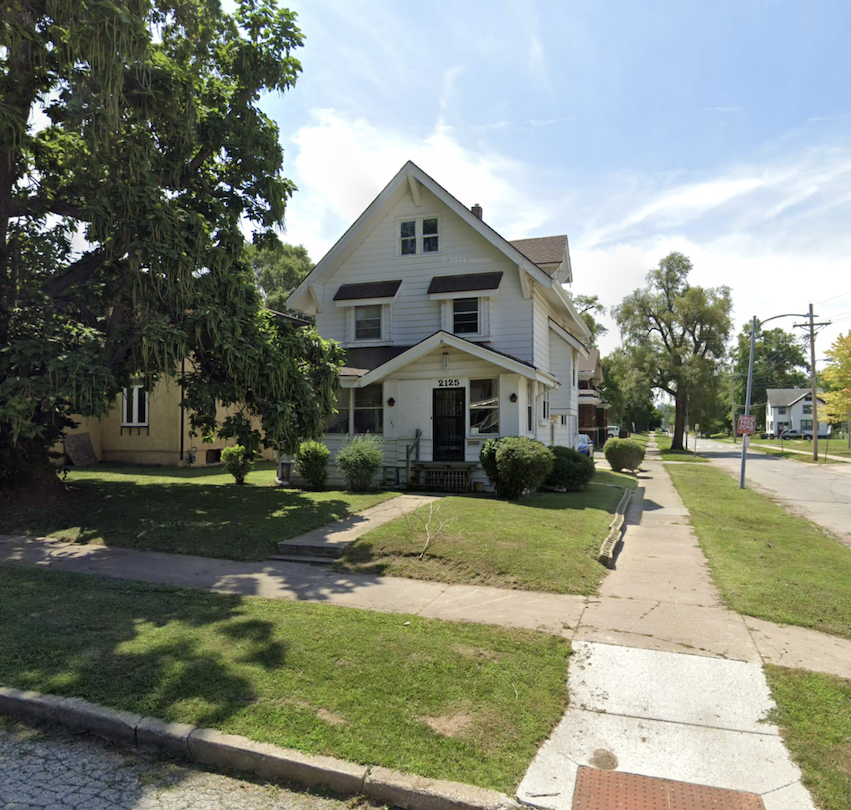
I included the home to the west. For your review 2125 Emmet Street seen to the side in the second historic image and the current Google image displayed above. Outstanding.
I quarreled with the historic photos of 2121 Emmet, thinking they were surely mislabeled. Alas…it was all true. The 1983 Douglas County Reconnaissance Survey noted: “2121 Emmet Street. Date 1905. Alternative date 1909. Architect: Sterner, J. Builder: Sterner, J.” If these notes are accurate, it indicates that this was not the 1800s residence of Judge Redick. John O. Sterner designed and constructed his very own home. But more interesting to me was that this stucco makeover was finalized after 1983, which shot down my Mid Century Modern California Dreaming suspicion.
It is evident that John O. Sterner and his family held a strong affection for this 2121 Emmet Street residence, as indicated by their prolonged occupancy. Consequently, this very house served the family as a transitional space toward The Great Unknown. The Sterners’ two-year-old boy, Robert, died suddenly in 1913 in this home. Wife and mother Honor Edith Rogers Sterner died in 1920 at 39 years of age after long illness, (not in the home). At the time of her death, the Sterners had two children, John Edward and Edith Agnes Sterner. Sadly, builder John O. Sterner died in the 2121 Emmet Street home in 1928 at the age of 52.
Introducing 1624 Pinkney Street
From what I could make out, John O. Sterner’s building permit was issued in September 1910, and construction was either completed or the property was listed for sale by December 1910. In its day, 1624 Pinkney Street was a large, desirable American Foursquare. Three bedrooms, large formal dining room, a full kitchen with a pantry. Expansive front porch, later screened in. Two car garage.
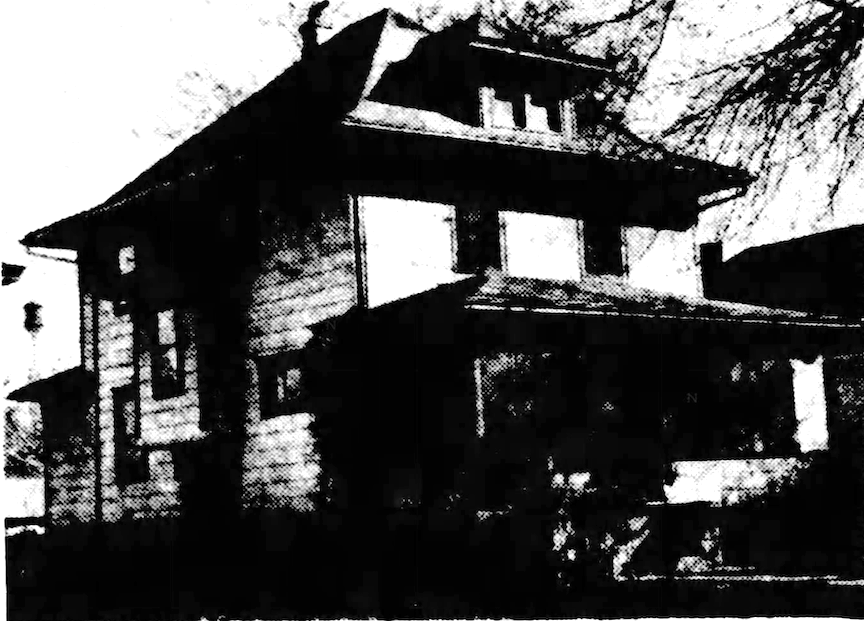
This is our one and only historic photograph of 1624 Pinkney Street. If anyone out there has access to photos of this home, please make contact. “This is a very good district. Near school. One block from the car line. Beautiful park nearby. By the railroad. Modern. Fine lawn.”
Most homes in Omaha constructed post-1900 were mandated to fit on sites with 50-foot frontages. These lots were ideally suited for traditional box homes, two or two-and-a-half story squares, or commonly called Foursquares for their interior layout. Immensely popular across the country, the Foursquare allowed large families to construct equally large homes on postage stamp lots. As to its style, the Foursquare looked exceptionally clean, strong lines, very modern and spacious in contrast to the often convoluted Victorian layout, characterized by smaller rooms and intricate adornment. To many, this represented the American Dream–the Foursquare is often considered The Classic American house, previous to the Bungalow. (I found great examples of the Victorian, Foursquare and Bungalow all on Pinkney Street.)
The Foursquare remains among my preferred architectural styles due to its large, formal but functional aesthetic, generous windows, great porches, crafted woodwork built-ins, and my obsession with the top of the staircase: an open hallway revealing many wood stained doors with brass knobs. I can still hear the wooden stairs leading to the central landing. Caring so much is perhaps my burden to carry regarding the rapidly emerging structures surrounding me. Why are the historical, proven home plans not being utilized, adapted for contemporary application? What motivates developers and new homeowners to favor cardboard houses with silly windows and large front garages? I am going to place this here because it gives me goosebumps and just may enlighten someone to new possibilities. Scroll for the To Die For Photos: https://dcstructures.com/projects/foursquare-custom-home
North Omaha is filled with these wonderful, practical Foursquares. They can be found in all varieties. Some are downright massive.
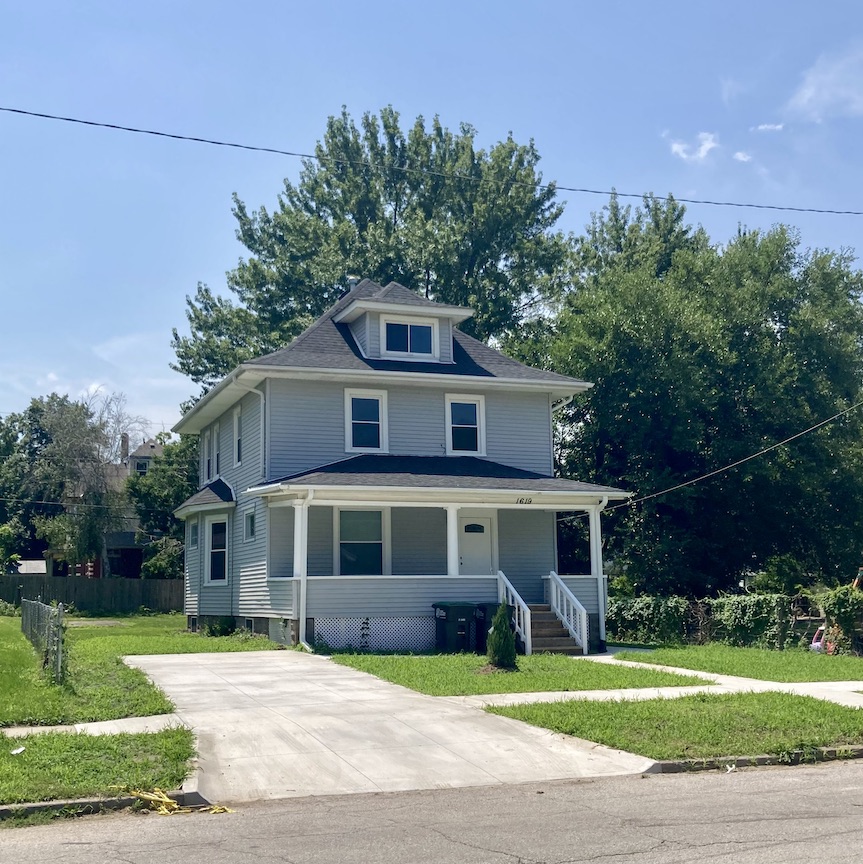
1619 Pinkney Street, right across the street, is a classic Foursquare. Gorgeous. A contemporary of 1624 Pinkney, this house gives a good idea of what John Sterner’s house, now razed, once looked like.
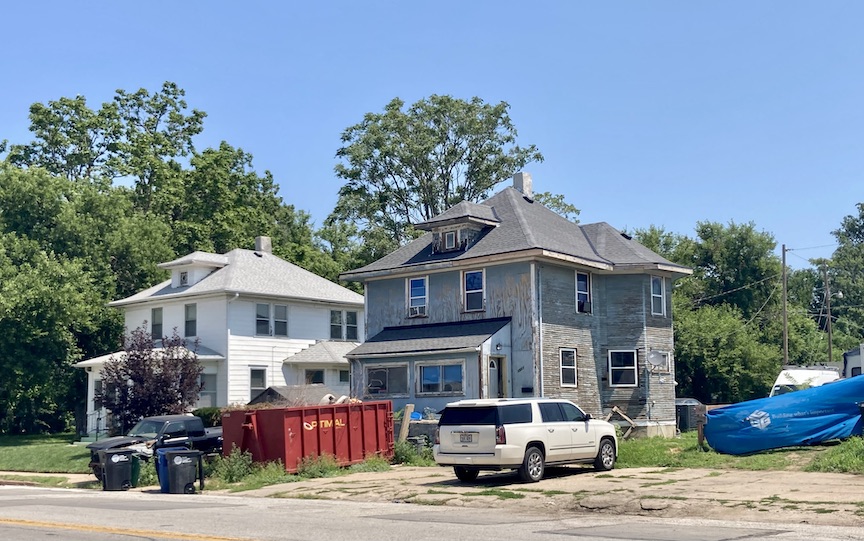
The two substantial American Foursquares around the way from Midgie’s Pinkney residence serve as exemplary models. 3515 and 3513 North Sixteenth Street. Yum.
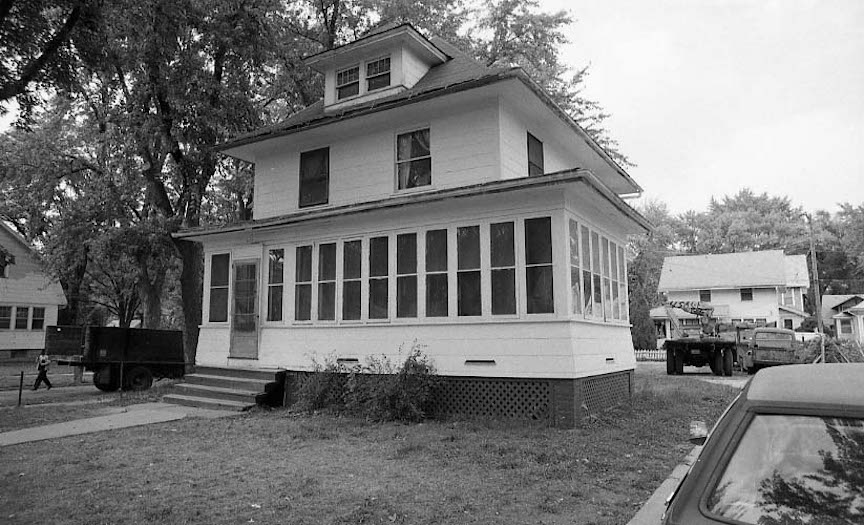
Miss 1628 Pinkney Street is one door to the west of the empty 1624 Pinkney parcel. Here she is back in 1980, featuring a wonderful wrap-around porch with many long, glorious windows. We will come back around to her, as she has an interesting past.
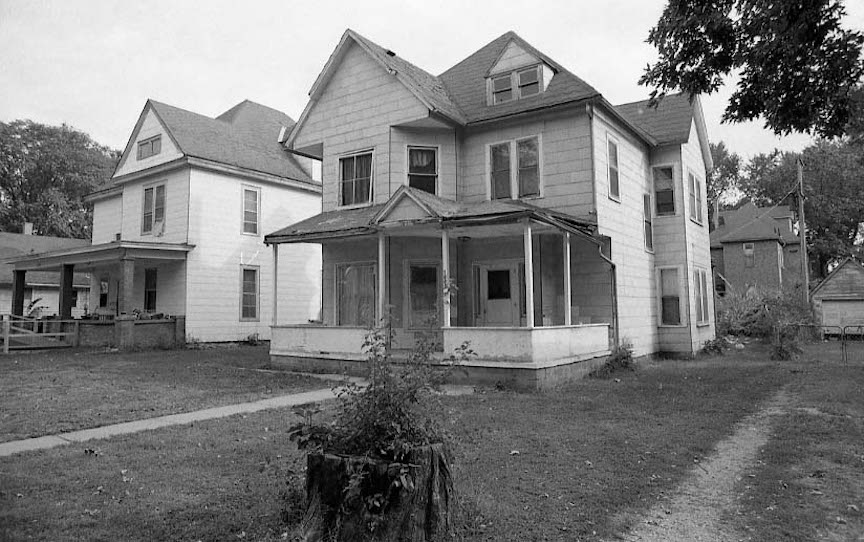
Further to the west, up the way, were homes that appeared to be Victorian architecture, stripped down and cladded over at some stage. May I introduce 1807 and 1809 Pinkney, back in 1980. Photographs borrowed from Douglas County survey. Similar to the 2121 Emmet Street residence, these two properties appeared to have possessed greater ornamentation in the past. These shapes resemble Queen Annes, and most likely would have featured intricate trim, woodwork, and additional decoration originally. By 1980, these homes exhibited a more simplistic, streamlined exterior. Both of these Victorian homes were demolished and replaced with new constructions by 2005.
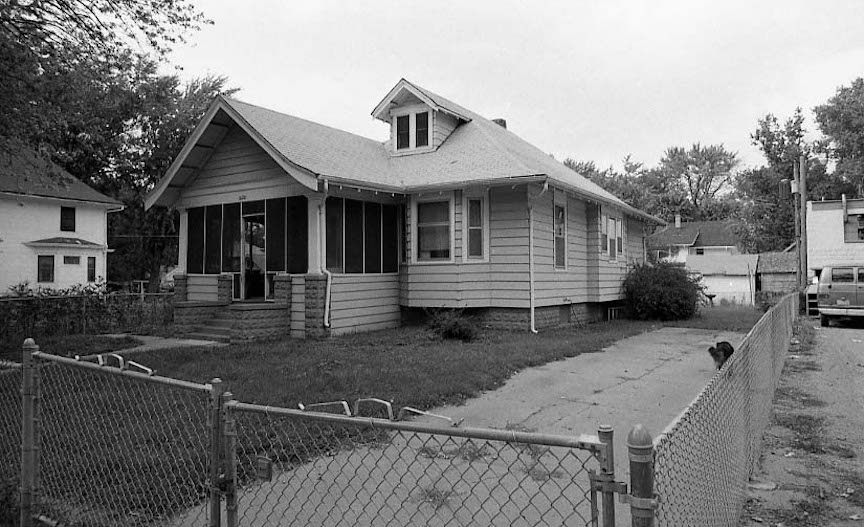
Miss 1620 Pinkney Street is a close neighbor. This is a Bungalow Craftsman style with some interesting features. Was the front porch added later? I covet all these porches of this time period. Photo from 1980, borrowed from Douglas County survey.
Mr. Sterner, along with numerous other builders and architects, contributed to the proliferation of Foursquares in Kountze Place and other neighborhoods in North Omaha. But we cannot ignore the Foursquare mail order and kit homes marketed by Sears, Aladdin, Montgomery Ward and Gordon Van Tine among others because they offered lot owners with a bit of building experience, the chance to afford these large homes and make design decisions to their specifications. (I believe I have told you before about my Sears kit house obsession–due to Father and Stepmother of Miss Cassette’s charming home. I say, bring this back!) Of course they didn’t just sell Foursquare designs but here are a few beautiful advertisements with plans to give an idea.
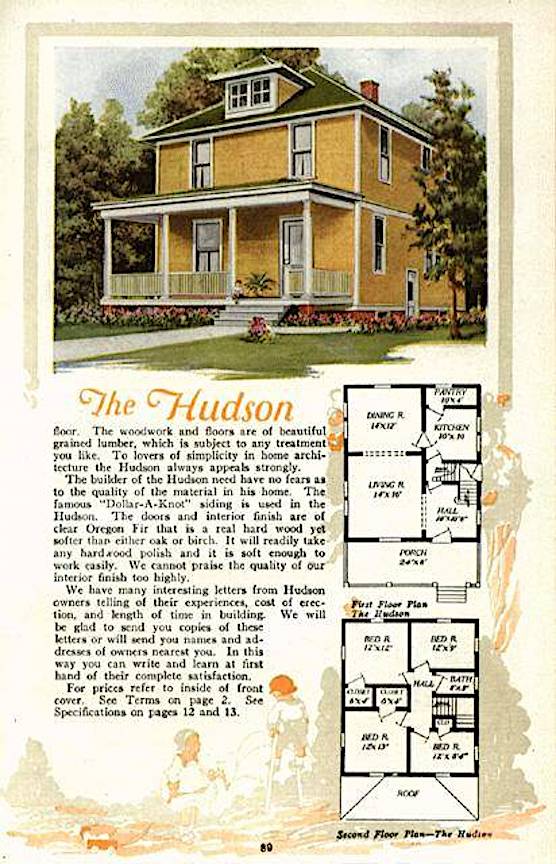
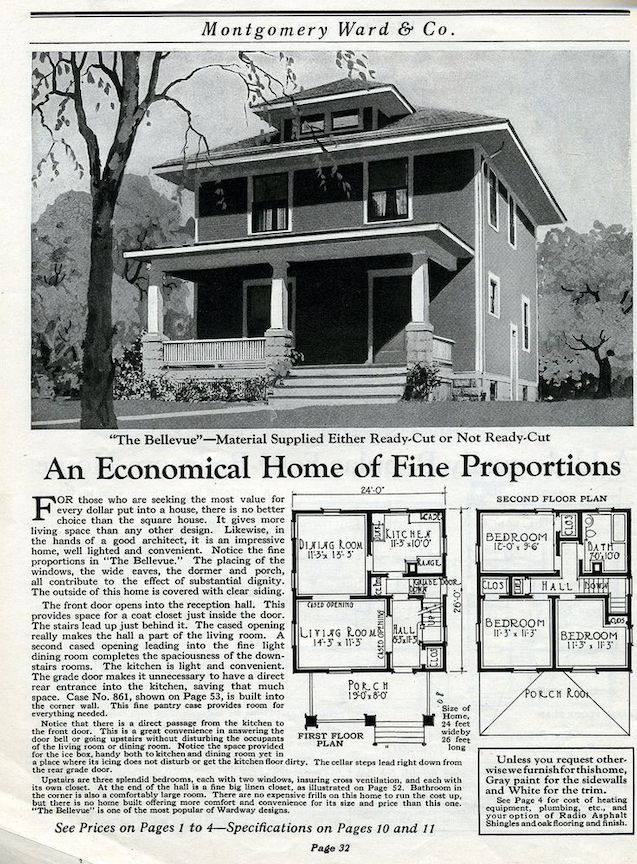
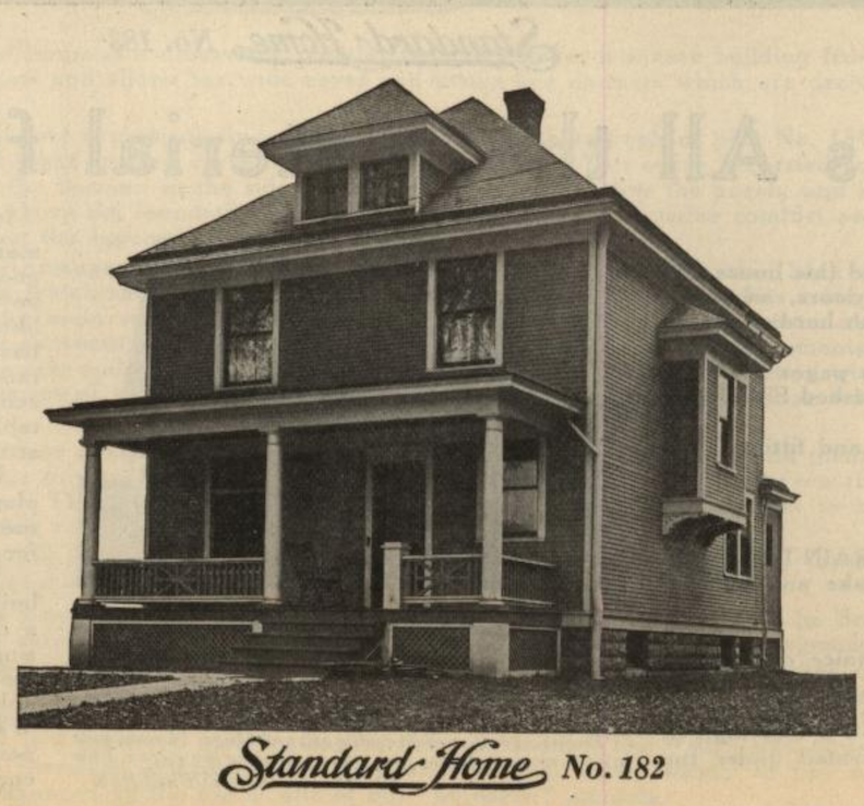
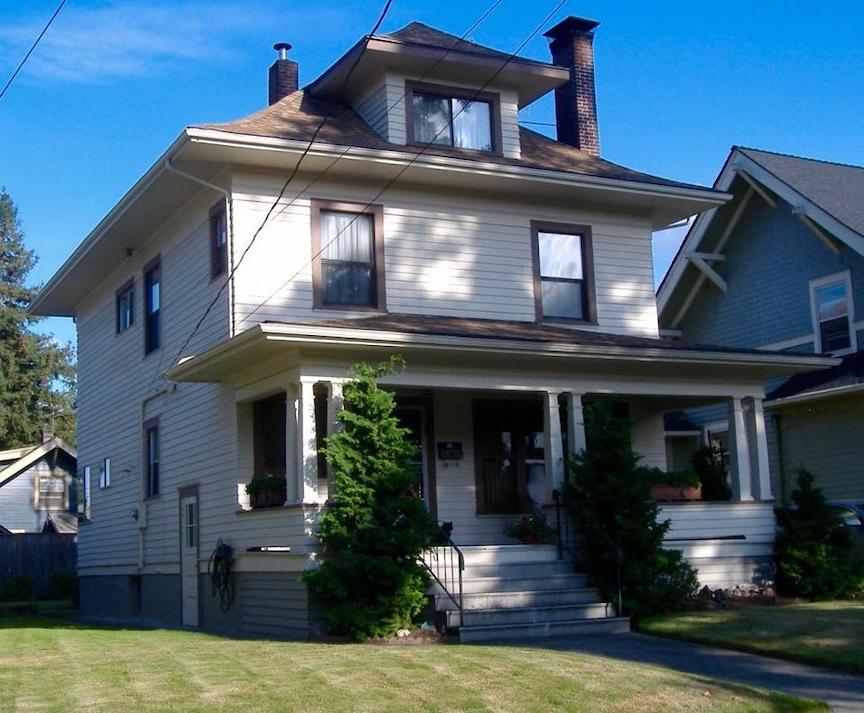
This last one is just a fanatical favorite of mine.
According to the 1981 Landmarks Heritage Preservation Commission application for the Trans-Mississippi and International Exposition Site, “The lots surrounding the park were built up with single family residences between 1905 and 1920. While the housing was not as grand as the Queen Anne and Colonial Revival structures erected on the southern edge of Kountze Place, the homes on the Trans-Mississippi tract were middle class dwellings built in the Classical Revival and Bungalow styles more in keeping with twentieth century architectural trends.”
The Widow’s House
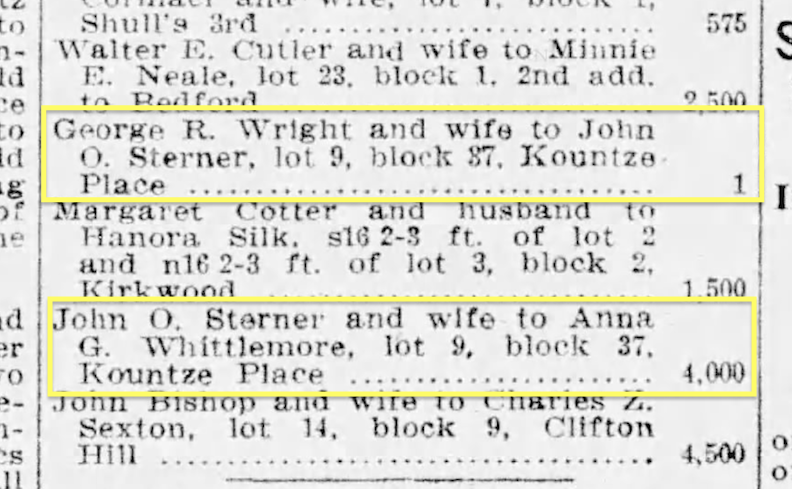
December of 1910. Omaha World-Herald.
December 7, 1910. Omaha World-Herald. George R. Wright and his spouse transferred ownership of lot 9, block 37, Kountze Place to John O. Sterner. This was peculiar, particularly given I believed the Sterners had previously acquired the lot from the Kountze family. George Ridgeley Wright and his wife Georgia “Georgie” Tennery Wright were successfully tracked and it was revealed that Mr. Wright was a realtor. Somehow this fact contributed to the drama and I hope someone smarter than I rings in on why this happens so much in these real estate listings.. On the same day, the identical list in the newspaper indicates that John O. Sterner and his spouse sold the property to Anna G. Whittlemore.
Whittlemore; Whittemore; Whitmore. Turns out, it was Whittemore.
Anna G. Foster Whittemore was married to Plymon J. Whittemore. The couple had three offspring: Frederick Whittemore, Beulah Whittemore, and Mrs. E. J. Wead. (Other archives suggest the couple had two children and that Mrs. E. J. Wead was actually the paternal grandmother.) During the 1910 U.S. Census, the Whittemores resided at 1511 Binney Street. At that time, Beulah was a 19-year-old educator in the Omaha Public Schools, with some sources indicating Dupont School and others Leavenworth, while her brother Fred served as a cashier at the Bryant-Ford-McLaughlin Company. They rented to two lodgers: Max E. Weber, a 24-year-old from Germany, and Florence Westerman. Husband Plymon died unexpectedly in October 1910 due to a tragic accident. At 60 years of age, (one article reported he was 53) Mr. Whittemore was the yard superintendent for the Bryant-Ford-McLaughlin Asphalt Paving Company when he was thrown from a work wagon near Tenth and Davenport. After falling between the wagon wheels and breaking his spine, he died days later at St. Joseph’s.
A few months later, Anna and her daughter, Beulah, purchased and relocated to 1624 Pinkney Street, becoming the home’s inaugural owners. This was, perhaps, the plan even when Plymon was alive. Daughter Beulah was an attractive young woman who was employed at the Franklin School during her residence in the Kountze Place house. Following the death of Anna Whittemore’s father, Alexander R. Foster, in February 1911, and the marriage of her daughter Beulah to Leroy Moore in 1915, Anna relocated to Spokane, Washington, with the newlyweds.
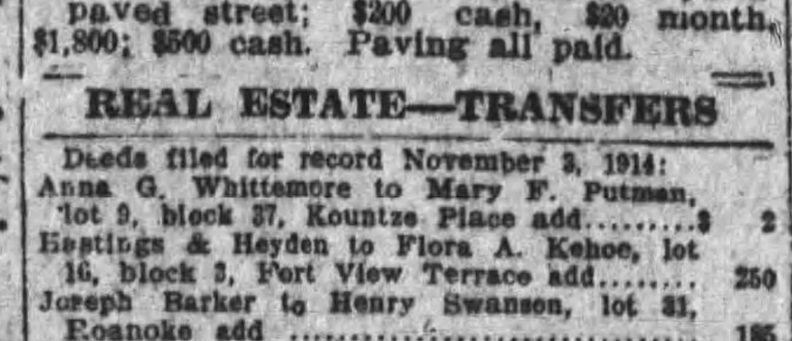
It was in 1914 that the Whittemores sold the Foursquare to Mary F. Putnam. November 1914. Omaha Daily Bee.
The Putnams of Pinkney
Francis Arthur “Frank” Putnam and Miss Mary Frances “Mayme” Mulhall married in 1899. The F. A. Putnams moved to 1624 Pinkney in Kountze Place from 1727 Georgia Avenue (later renamed South Twenty-Ninth Street). Frank and Mayme appeared to have shared their living quarters, including both homes with Mayme’s large Irish family. I endeavored to maintain my focus; but, numerous properties owned by the Senior Mulhalls were owned, shared and ultimately exchanged hands within the family over time. There were some spitspats along the way, which I chalked up to being Irish. Perhaps you know a thing or two about these emotional bursts.
The William Mulhalls moved to Omaha between 1867 and 1870. Father William was born in Tipperary, Ireland, in 1842. Emigrated to the United States with his family at the age of 12. Mrs. Mulhall was identified as Miss Mary Farrell, born in Dublin, Ireland, in 1842, who came to America with her parents during her childhood. William and Mary Mulhall had two sons and three daughters. The Mulhalls were such newcomers to Omaha that their initial post address upon arrival was the newly established post office. The family dwelling of William and Mary Mulhall was located at 2524 Poppleton Avenue. William Mulhall had been employed at the Union Pacific shops and later worked under Andrew Rosewater in the city engineering department.
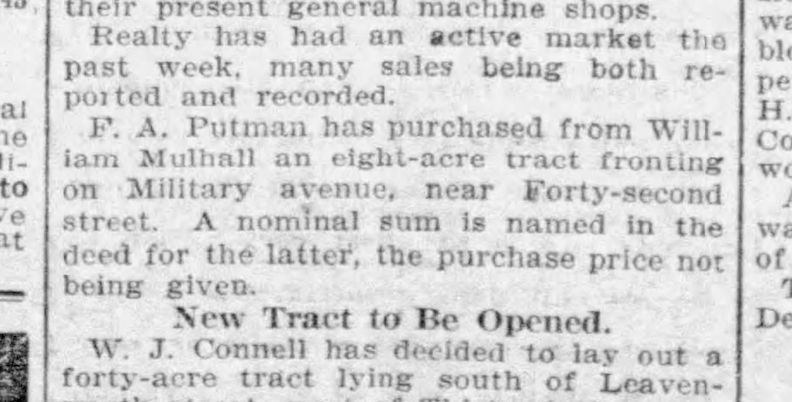
October of 1906. Omaha World-Herald.
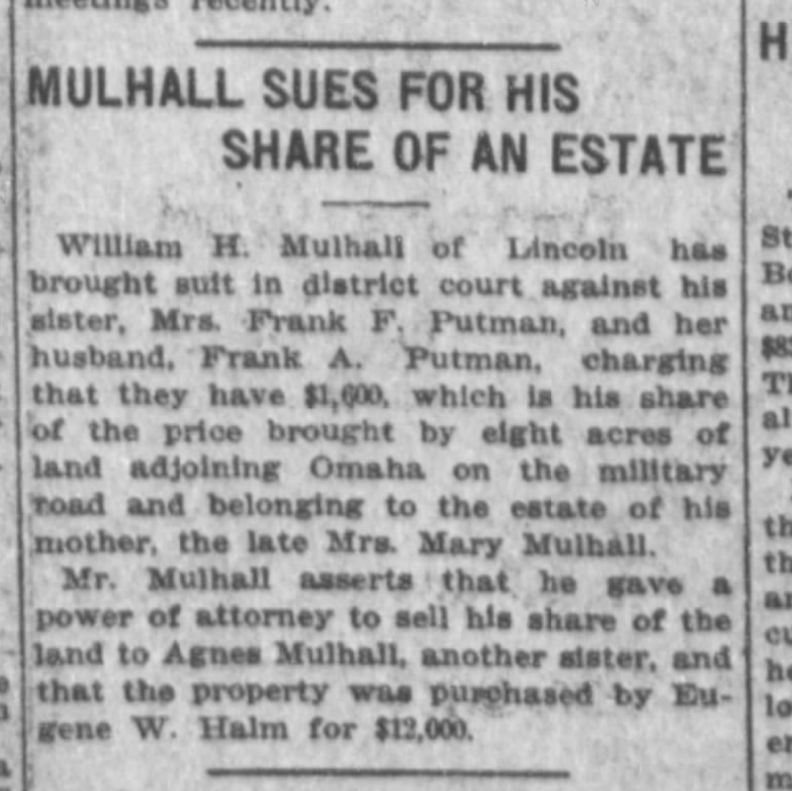
June 1913. Omaha Daily Bee.
Prior to their move to the Pinkney house, Frank Putnam served as the manager of the wholesale office of the Postal Telegraph Company and established his own Auto Delivery and Messenger Company at 1715 Douglas Street. By 1911, Mr. Putnam reportedly expanded into a new enterprise by utilizing several Brush delivery vehicles for light delivery services. He appeared to work for both himself and the national company, bringing up questions of conflicts of interest. Who am I to question 1911?
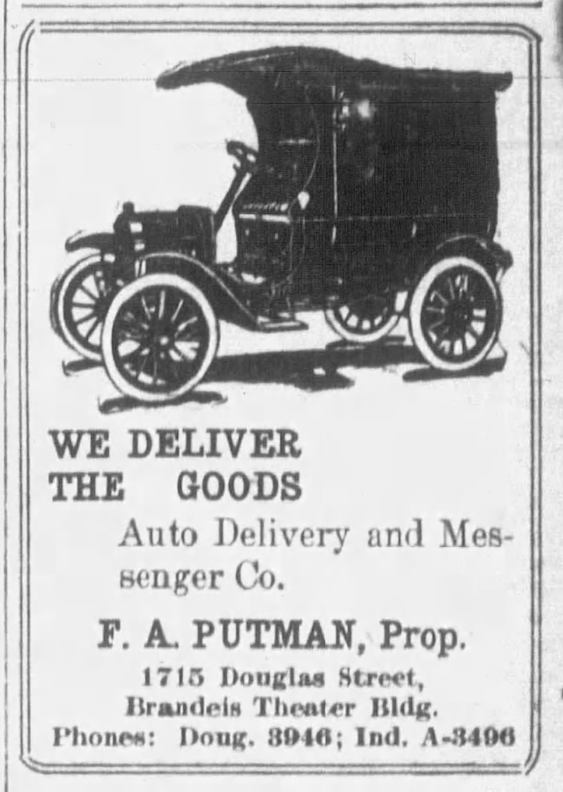
April 1911. The Omaha Evening Bee.
Acquiring additional delivery cars with increased capacity when the courier service gained popularity, by 1923, the Postal Telegraph Cable Company achieved considerable success. Every telegraph office in the United States, headquartered in New York City, maintained local branches. Frank Putnam was appointed as the permanent secretary of the local organization and as the assistant manager.
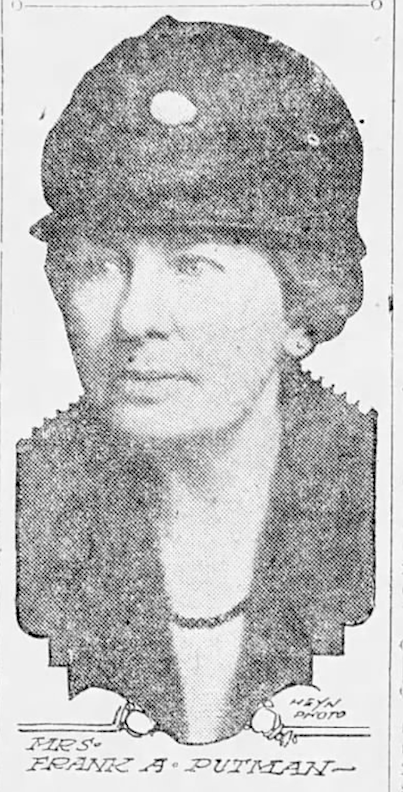
Pretty Mayme Mulhall Putnam in 1923. Omaha Bee News. Mrs. Putnam was president of the Benevolent Patriotic Order of Does.
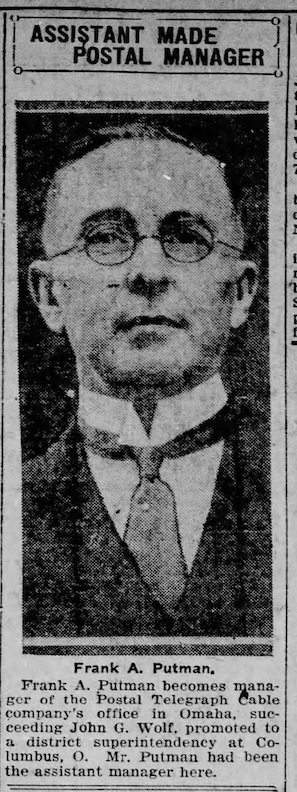
December of 1925. Evening World-Herald. Frank rose to manager of the Postal Telegraph Cable company. It was also noted that he had been manager of the Omaha wholesale fruit district branch of the company. In 1927, the Postal Telegraph Company secured a 15-year lease for the whole Smith Building located at 1320 Farnam Street, having previously occupied only the ground level. Of interest local telegraph service were expanded in 1930 to service stations of the Standard Oil Company of Nebraska so that travelers can keep in touch with home or office while on the road.
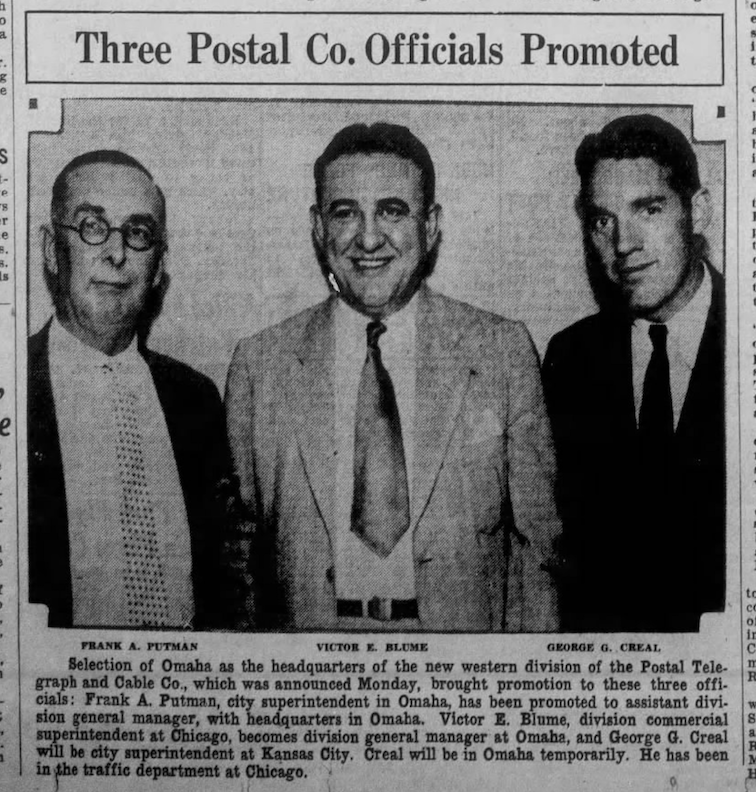
September of 1931. The Omaha Evening Bee. Frank was again elevated with the Postal Telegraph and Cable Company from city superintendent of Omaha to assistant division general manager with headquarters in Omaha. In November of 1938 Frank Putnam threw his hat in the ring and ran as Republican candidate for County Treasurer. I do not believe he won this election.
There are four important matters that we must discuss at this juncture. 1. By all accounts, Frank Putnam was respected and a success as he continued to rise through the ranks within his field. 2. I found Mayme involved in social and service clubs in town; she was a leader within these groups. 3. Frank and Mayme Putnam did not have children. 4. Mayme’s family, including her siblings, resided in her Pinkney Street residence, passed away in her home, and had their funerals conducted there; also, the Putnams graciously hosted other funerals in their home. Let us put a pin in this list of four.
I want to introduce the house next door, before I bring on Mr. Midgie.
1628 Pinkney Street
I had introduced 1628 Pinkney Street earlier. She was and is one door to the west of our 1624 Pinkney lot. I am pretty obsessed with this home and there is a special feeling around here. This large house was built in 1910. The United Real Estate & Trust Co owned Lot 8, Block 37 of Kountze Place by Nov 1908. The company sold to Mr. Emil Seume in May of 1909. Emil Seume was married to wife Emilie (magnetic names), a native of Austria. Since arriving in Omaha at age 17, Mrs. Seume had been “prominent in various German societies.” Mr. Seume was a well-known bookkeeper for the Metz Brewing company. The Seume couple had son Herman and daughter Alma. Due to a childhood illness, Alma Seume became blind at the age of 10. She had a mezzo-soprano voice, played piano, crocheted and the girl was known to clean the entirety of 1628 Pinkney. She was the marvel of the block. The family lived next door to the Putnams. At age 55 Mr. Seume passed away in August 1915, and his funeral took place at his residence on Pinkney Street. His wife Emilie and Alma continued living in their home but were compelled to rent rooms to boarders to sustain the property. But it was a very large house…
1980.
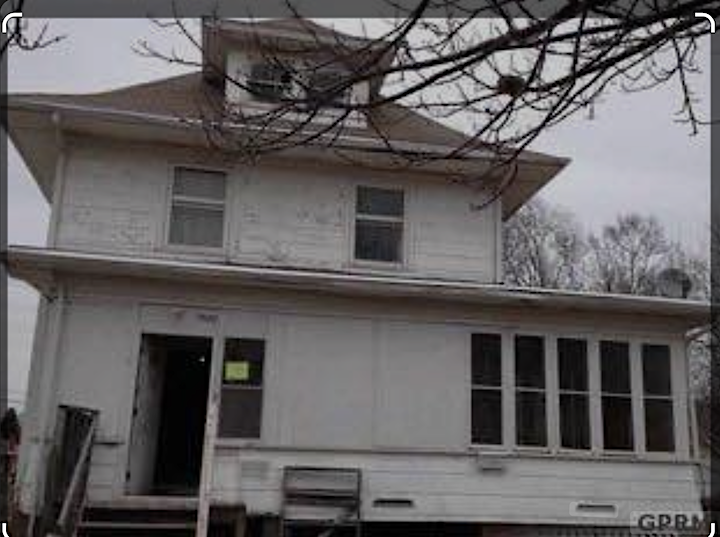
Is that you?
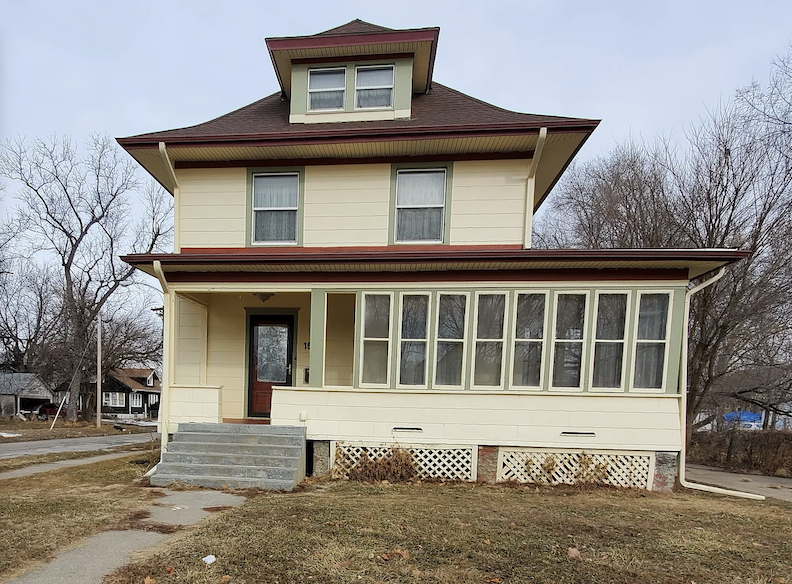
Current.
In April 1919, the Seumes secured a buyer in one Mr. Adolph R. Wiens. Mr. Wiens was either in the oil business or was selling interests in the land leases of Pawnee County, Oklahoma “with full oil rights.” During the 1920 U.S. Census, Wiens, his wife Sarah, and their 30-year-old unmarried daughter Emy resided in the 1628 Pinkney house. In that year, Wiens was listed as “a manufacturer of brushes.” Mr. Wiens passed away at the age of 65 in this residence in August 1921.
Interestingly Mrs. Emilie Seume then was tasked with locating another owner. Frank Putnam, residing next door, acquired the house in September 1921. The Putnams would rent the whole house or rooms for decades.
Have a looksee…
https://www.zillow.com/homedetails/1628-Pinkney-St-Omaha-NE-68110/75820090_zpid/?
Introducing Midgie
The story goes that in 1943 Midgie, then but a small kitten, came calling to 1624 Pinkney Street. Whether it was day after day flirtation that he returned or perhaps he was scooped up and brought in right away, Frank Putnam adopted the little boy rather quickly. Midgie, no doubt became the Prince of Pinkney. His comfortable, secluded life meant full range of the Putnam house. “He never was allowed outside the house but he watched the world pass by on Pinkney Street from a ledge on the screened in front porch.” By the early 1950s, Midgie had a private bedroom, meals of salmon, Braunschweiger, milk, fish from Carter Lake, melted ice cream and the care of a veterinarian. He didn’t have to deal with other animals as it jarred his nerves, as was the case with a neighbor’s dog’s yapping. Mayme and Frank Putnam, unfortunately were in “failing health” when Mrs. Gertrude Ritner, a widow and a practical nurse, was called in to care for the Putnams. Mayme Mulhall Putnam died in January 1951.
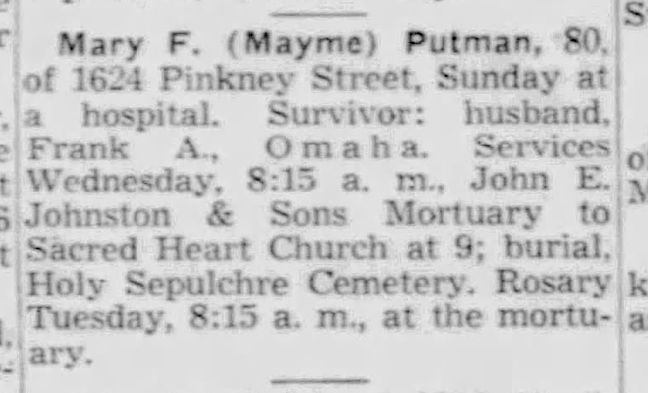
January 1951. Evening World-Herald. An Irish lass, Mary Mulhall Putnam was born in Ohio, first generation American.
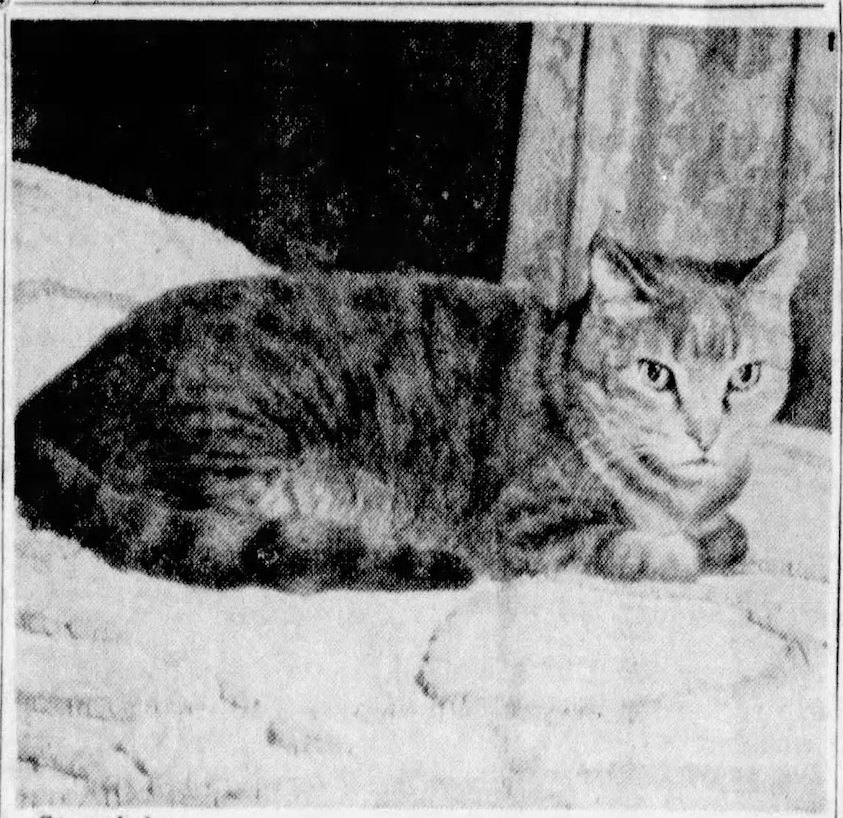
Beautiful Midgie, the apple of his human father’s eye.
It was after his wife’s death that Frank Putnam began to hatch his Cinderella Cat plan, if not before. “The elderly man became engrossed in a work by Mr. Smith entitled, Rhubarb. I investigated this 1946 novel by H. Allen Smith, which tells the tale of an affluent magnate who bequeaths his wealth and his professional baseball franchise, the New York Loons, to his large yellow adopted feline, Rhubarb.
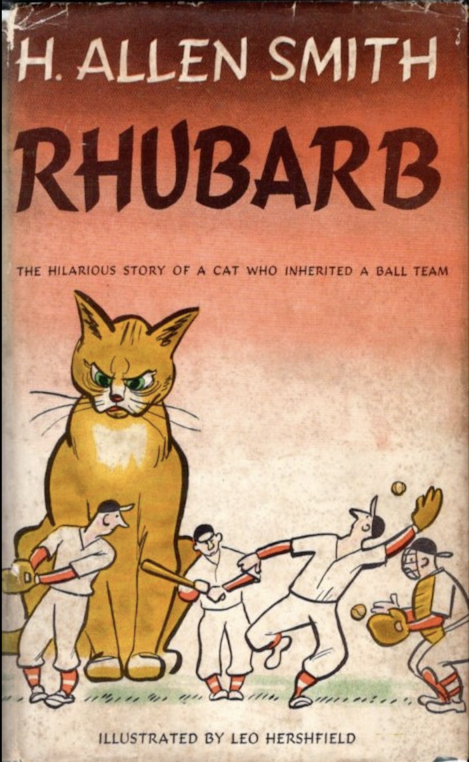
Rhubarb by H. Allen Smith. Published by Doubleday & Co., Inc, 1946.
Frank Putnam subsequently drafted a paper identifying Mrs. Ritner, his nurse, along with her daughter and son-in-law, Mr. and Mrs. Harold Weidman of East Omaha, as trustees. “To all intents and purposes, this property will belong to Midgie so long as he lives and will be handled for his comfort and convenience,” Mr. Putnam wrote. Then upon the natural death of Midgie, the house, valued at about $7,500 will become the property of the trustees, he directed. “There were safeguards. ‘If Midgie gets out and lost or if he dies from other than natural causes, this contract is null and void and this property will revert to Mrs. C. A. Lemley, my niece.’ Cause of the cat’s death must be certified by Dr. J. N. McIlnay, according to the document.”
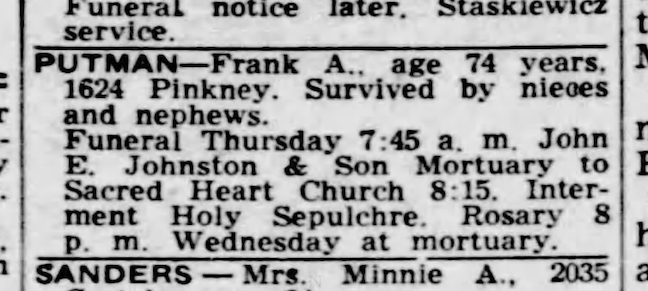
Midgie’s beloved master, Francis A. “Frank” Putnam died at age 74, a retired official of the old Postal Telegraph Company, on February 23, 1953.
February 1953. Evening World-Herald.
“A warranty deed conveying title to the trustees was filed Tuesday afternoon by Miss Edith Beckman, attorney for the estate. Said Register of Deeds Thomas J. O’Connor: ‘I’ve heard about this happening in other towns but never in Omaha.’” (Attorney Edith Beckman was a true character in my earlier David Abbott house case. If you might recall, Miss Edith was known for her tenacity. I have no doubt she pushed the cat case through with a smirk.) For more details about Miss Edith: Mysteries of Omaha: 3316 Center Street. Of note Mr. and Mrs. Putnam had left a joint will that gave their property on death of the survivor to two nieces, Mrs. Ethel Raber Ruby of Dayton, Ohio and Mrs. C. A. Lemley of St. Louis. “Whether the document drawn up by Mr. Putnam supersedes the will on disposition of the house may be up to the courts to decide. Mrs. Lemley is expected to arrive in Omaha next week.” I couldn’t help but wonder what the nieces thought of this new arrangement.
The two human heirs did not contest the will and in fact said very kind things about their Uncle and Auntie Putnam in the press. If I interpreted the will correctly, the nieces, who were also sisters, did inherit money from the Putnam estate. The assurance came from County Judge Robert R. Troyer that the 1624 Pinkney Street house would go directly to Mrs. Gertrude Ritter and Mr. and Mrs. Harold Weidman upon Midgie’s natural death.
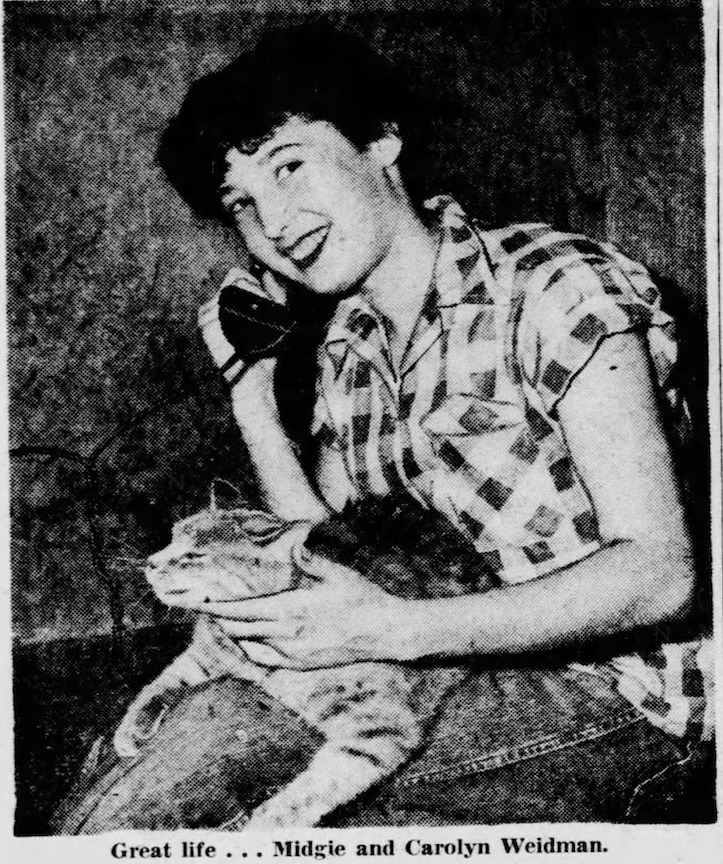
July 1953. Omaha World-Herald. Midgie, as seen with Carolyn Weidman, Mr. and Mrs. Harold Weidman’s darling daughter.
“Meanwhile Mrs. Ritner, Mr. and Mrs. Weidman and a teenage daughter are living happily together on Pinkey Street in compliance with Mr. Putnam’s wishes.”
The Silent Inheritor
So how did Mr. Putnam’s will work and what legal action did Edith Beckman undertake to implement this plan?
Animals are classified as personal property under the law in most jurisdictions, certainly in the United States. Pets and animals are prohibited from owning real estate or other assets. This represents a distinctive domain of estate planning and legal considerations for those pet parents looking for loopholes. Although animals cannot directly inherit property such as buildings as humans can, there are mechanisms to guarantee that a cherished pet is well cared for, including residing in a designated house, following the owner’s demise. By appointing a guardian who provides care, a person can designate an individual in the will to serve as the pet’s guardian following one’s death—a caregiver by today’s terms but in the 1950s, Midgie’s new humans were called trustees. Funds and other assets can be left to the pet guardian, stipulating that they must utilize those resources for the pet’s care. Unless a trust is created, which Frank Putnam and Edith Beckman did, I have found there’s no legal obligation for a guardian to spend the funds on the animal. The Midgie trust with named trustees to include his estate attorney was Frank Putnam’s assurance money was set aside for Midgie’s care, stipulated that Midgie resided in 1624 Pinkney, maintenance of the home, Midgie’s day to day needs, diet, veterinary visits and the lifestyle that Midgie had become accustomed.
Certain individuals indeed bequeath their assets to their pets. Occasionally we hear wonderfully curious stories of wealthy people leaving generous gifts to their pets. Designer Karl Lagerfeld died in June 2019. A portion of his wealth, accumulated over decades of leading the fashion brand Chanel, was famously left to his cat, Choupette. It is a complicated financial issue, however. Pet bequests have been subject to legal challenges, occasionally with success, by disinherited heirs. As pets are classified as property in all United States, it is not permissible to bequeath them money. However, there are alternatives available, and pet owner-parents find them with the aid of their attorneys.
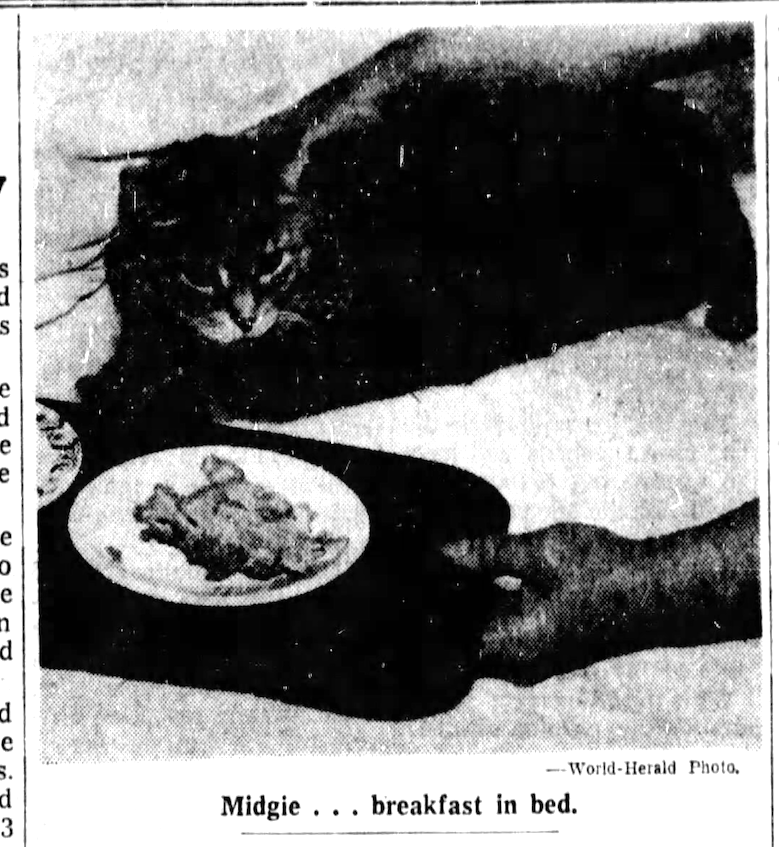
Midgie. Omaha World-Herald. 1957. His bedroom was said to be decorated in blue. “It is called the blue room.” His bed had an “extra soft mattress.”
The Mystery of Nurse Ritner
Midgie was apparently fairly cool to the Ritner-Weidmans when they first moved in. I enjoyed their description that Midgie would become frisky, running and sliding on the rugs. He had taken to sleeping on a stair landing and preferring the basement during the daytime hours. “Evenings, he settles down to watch television with the family, dozing during the commercials.” In March of 1954, Midgie pulled a disappearing act–a serious situation as that would have meant the Ritner-Weidmans would have “lost the place here after we had kept our end of the bargain.” Ultimately it is believed Midgie was hiding in the basement, “offended.”
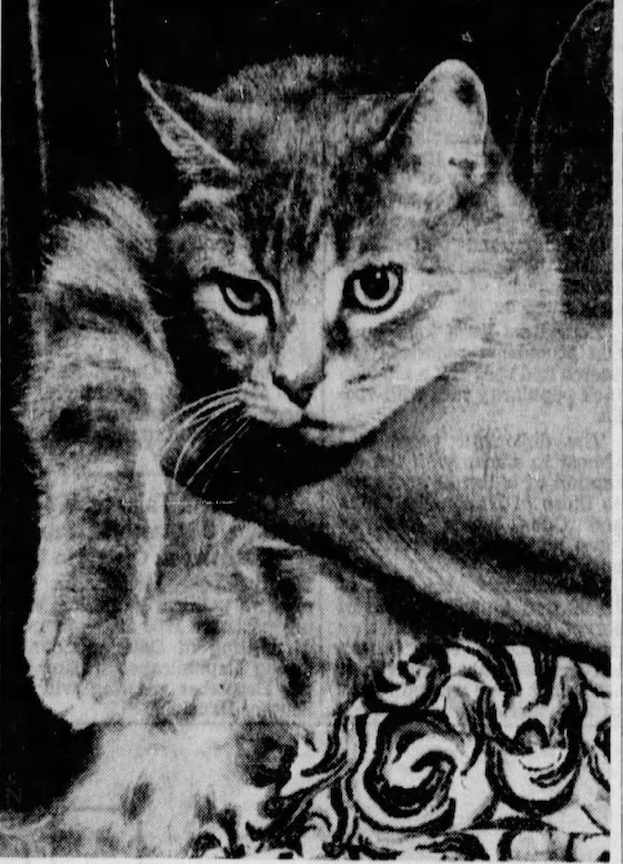
Midgie was very handsome, I think we can all agree. Reportedly “massive and gray.” Midgie was said to sometimes nip at Nurse Ritner’s ankles when he was ready for salmon. He also liked the occasional bits of steak, a saucer of milk at bedtime, which was said to be “just about all the time.” Smile.
Midgie’s Nurse Ritner was born in Iowa. Robert Henry “Harry” Ritner, (passed away in 1928 at the age of 40), married Gertrude Violet Adams Ritner in 1907 in Shenandoah, Iowa. The Ritners had six children, three males and three females. Little Robert Dean Ritner died at birth. The children were raised in Waterloo, Iowa. Mrs. Ritner worked as a practical nurse. At the 1950 United States Census, Mrs. Ritner was 61 years old, residing with her daughter, Garnet, her son-in-law, Harold “Boots” Weidman, and their children. Daughter Garnet served as a crane operator at Gate City Steel. She was prominently featured in media for her expertise as a crane operator; few women were trained in this field, certainly in the 1950s. Husband Boots was employed by Fairmonts Chimney Company.
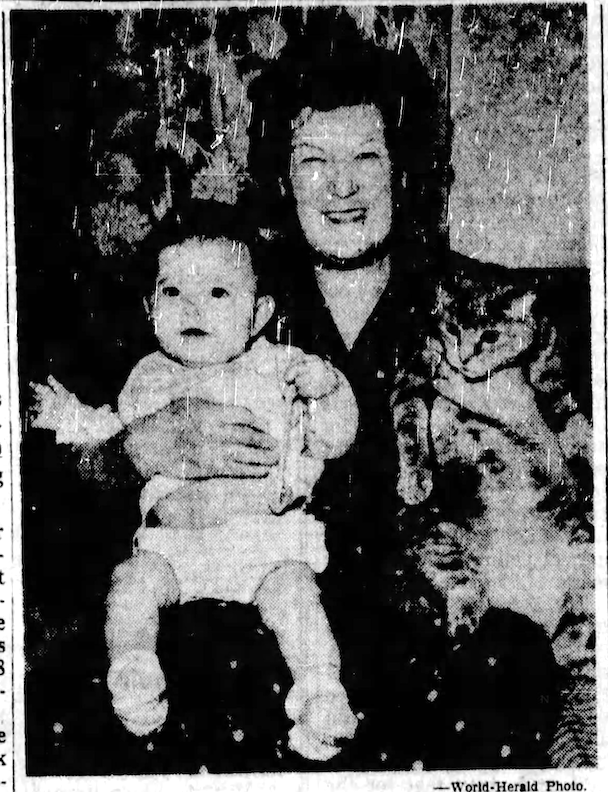
Garnet Ritner Weidman as seen with Midgie the cat heir and Garnet’s grandson, Rickey. 1957. Omaha World-Herald.
Mrs. Ritner had no doubt nurtured strong, intelligent, remarkable children. I present these clues to humanize Midgie’s caretaker and to imply that Frank Putnam may have recognized that bequeathing his home to Midgie by way of the Ritner-Weidmans would be mutually beneficial to his beloved, trusted nurse.
Of heartache, I disclose that in June 1954, Mrs. Ritner’s eldest son, Leslie G. Ritner, tragically committed suicide in Upton, New York, where he worked as a nuclear laboratory aide at Brookhaven National Laboratory. In June 1956, her son, James “Jim” Ritner, died in a catastrophic plane crash in Arizona, where he served as the copilot. Although nothing can soothe the death of a child, let alone having lost three sons, I found comfort that Mrs. Ritner could live her days with her daughter’s family in such a nice house.
Mrs. Ritner died the next May in 1957.
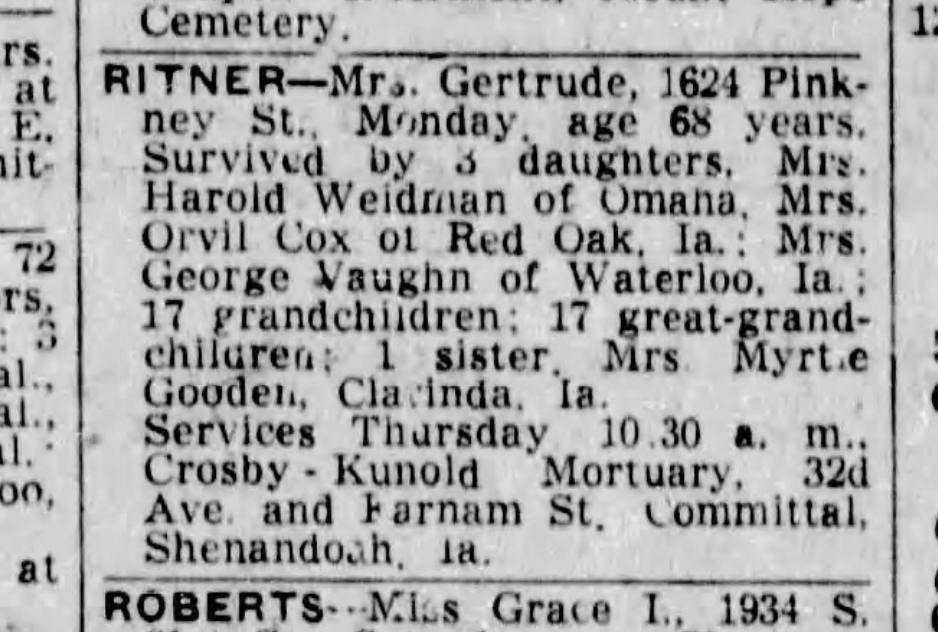
May of 1957. Omaha World-Herald.
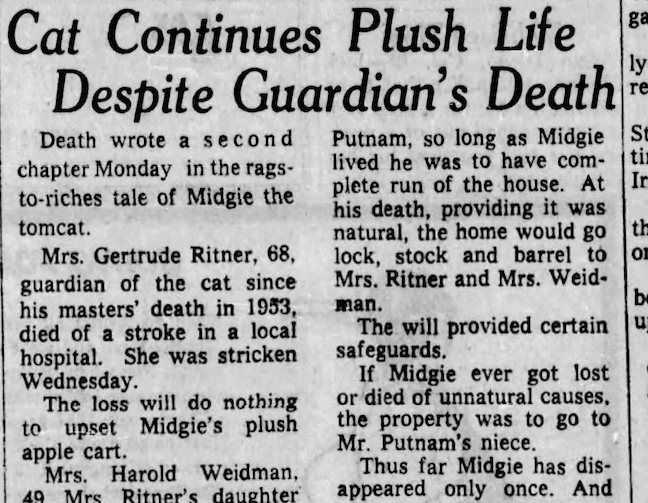
The newspapers continued on about Midgie’s incredible life, even in the death of Mrs. Ritner. Garnet Weidman would begin her duty as caretaker.
Death Comes to Midgie
In March of 1958, Midgie, Omaha’s wealthiest cat died at the age of 17. He had lost interest in food and was taken to the veterinarian. He died at home. Under the terms of the will, Garnet Weidman and to get a death certificate showing that Midgie’s death was due to natural causes. Attorney for the estate, Edith Beckman, said Midgie’s death as due to uremic poisoning.
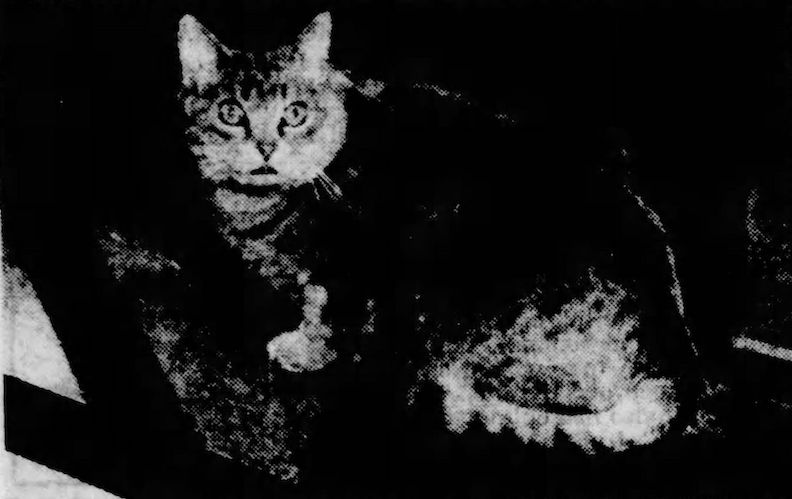
Not Midgie’s best angle.
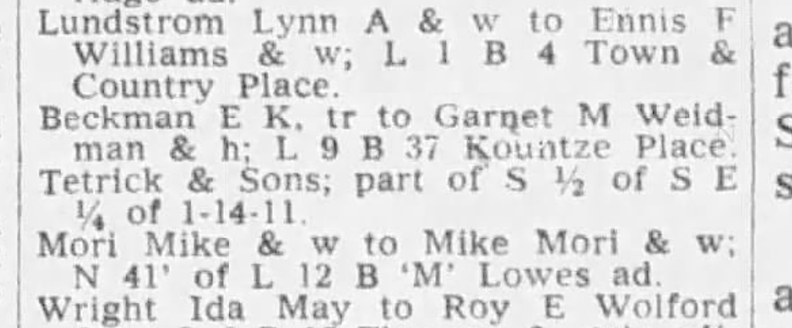
April 1958. Evening World-Herald. According to the will, the deed for our 1624 Pinkney Street transferred to Garnet M. Ritner Weidman and her husband.
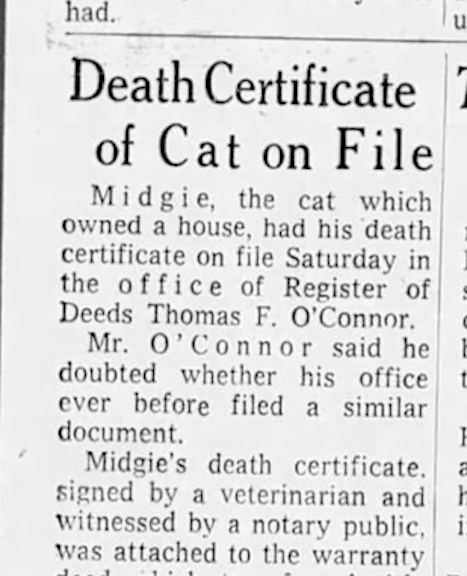
But first it meant Midgie’s death certificate was logged on the house’s deed.
Garnet Weidman buried Midgie on the 1624 Pinkney Street property, in a three foot deep grave under the Catalpa tree that Frank Putnam particularly loved, noted for its pretty rose-colored blooms. Garnet had not decided whether to put up a marker. She let the Midgie’s public know that Midgie had changed personalities in the five years that Garnet knew him. He had softened to the Weidmans. The little heir storyline was over and I was pretty sad about it all.
Next in Line
By 1957, Harold “Boots” Weidman owned his own gas station. As for Garnet Ritner Weidman, among the 56,550 working women in Omaha in 1960, Garnet was one of six women operating cranes in the area. She estimated that women made better crane operators than men because women are more careful and more patient. “We’re left over from the war. There were women in all the jobs usually done by men then and we’ve stayed on.” Garnet began working for Gate City Steel in 1945.
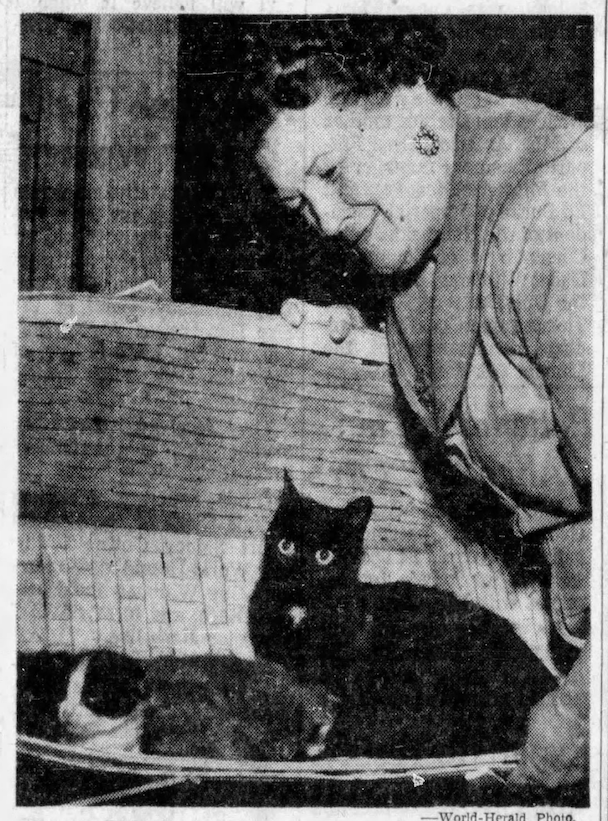
April 1958. Omaha World-Herald.
Garnet would move a mother cat and her five kittens into the home, along with a baby squirrel and a two-month old cocker spaniel. Apparently two stray cats were practically knocking at door after Midgie passed. “Even now I don’t allow any animals in the blue room because that was Midgie’s private apartment.” Stating that the family found it hard to accept that Midgie had died, the other new animals were helping to fill the void.
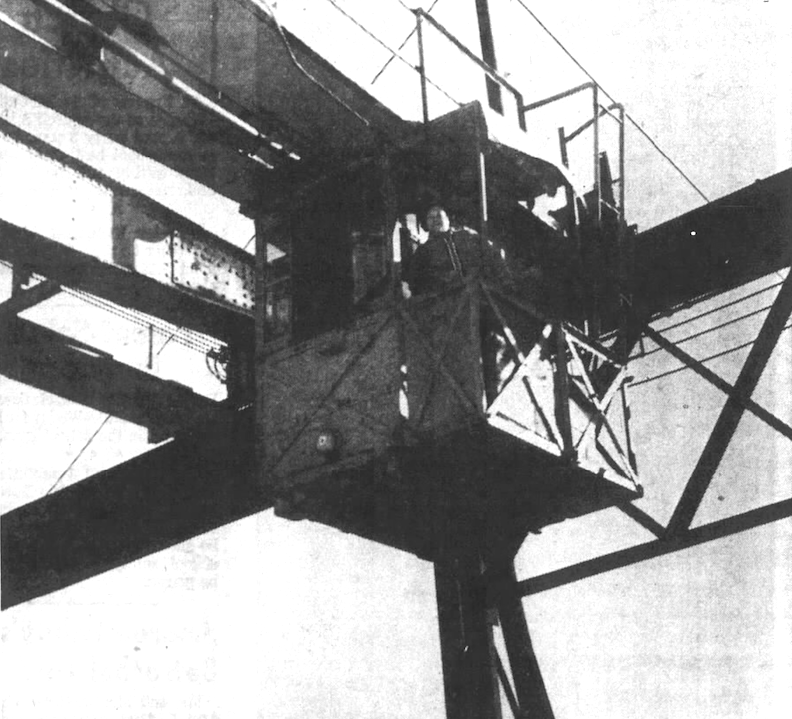
1964. The South Omaha Sun. The incredible Garnet at work.
In 1964, the Weidmans had seven children, 22 grandkids, and the Foursquare at 1624 Pinkney Street remained the family’s heart center. Boots and Garnet continued to share their home with their adult children and grandchildren and I would find different ones moving in and out occasionally.
The Mysterious End of 1624 Pinkney Street
Husband Harold “Boots” Weidman passed away at the age of 62 in 1968. This would, undoubtedly, have been a shock to the family given his young age. Furthermore, 1624 Pinkney would have been a large residence for Garnet to manage independently. I was interested to find that in January 1970, The Daily Nonpareil reported on an antiques auction “out of a large home in Omaha.” The auction took place in Council Bluffs, on behalf of Mrs. Garnet Weidman, owner. I am sharing the announcement as it enumerates goods from Midgie’s inheritance and was perhaps, the writing on the wall.
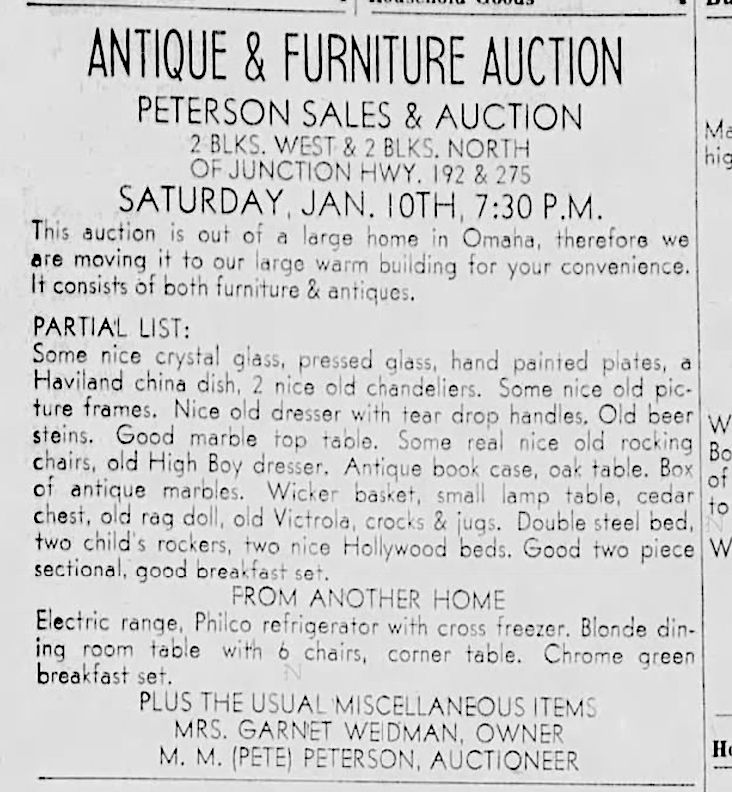
January 1970. The Daily Nonpareil. The estate sale.
Based on my assessment of several tenants residing in the 1624 Pinkney house, it seemed logical that the Weidmans were renting it out. Subsequent to Boots’ death, I believe Garnet moved in with family in Iowa.
The next clues did not come together for me in a way that made sense. In May 22 of 1973 the 1624 Pinkney Street house, sadly, was condemned. The garage was also condemned. Of note the property was still in the Weidman name, which was even more mysterious. What happened? The two buildings were razed Tuesday, June 12, 1973. If anyone has any information about this situation, please comment or make contact. I would discover many houses and buildings were torn down in this area in the 1970s.
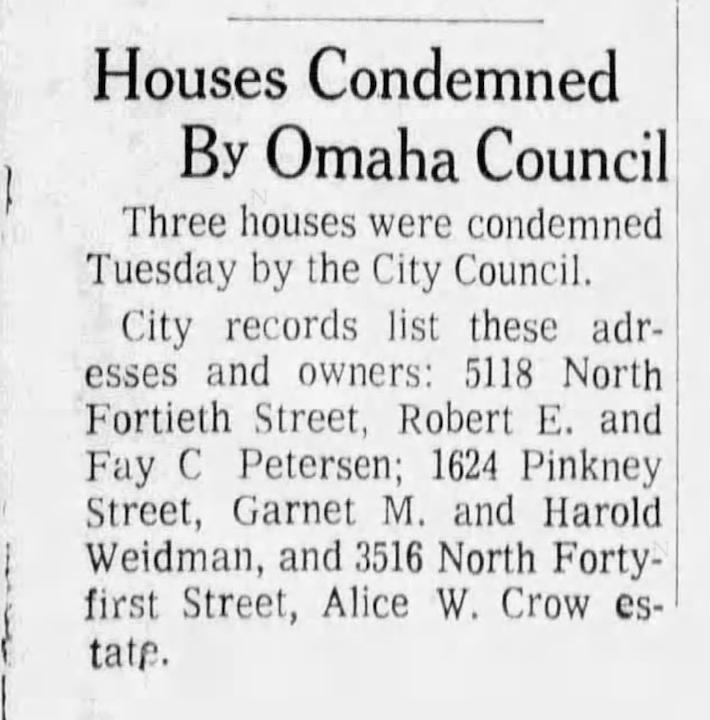
Omaha World-Herald.
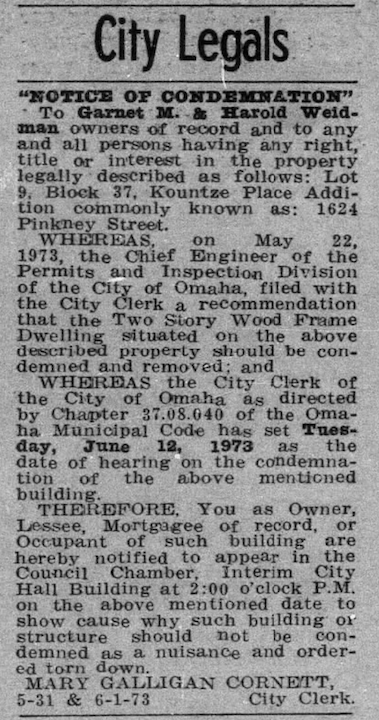
June 1, 1973. The Daily Record.
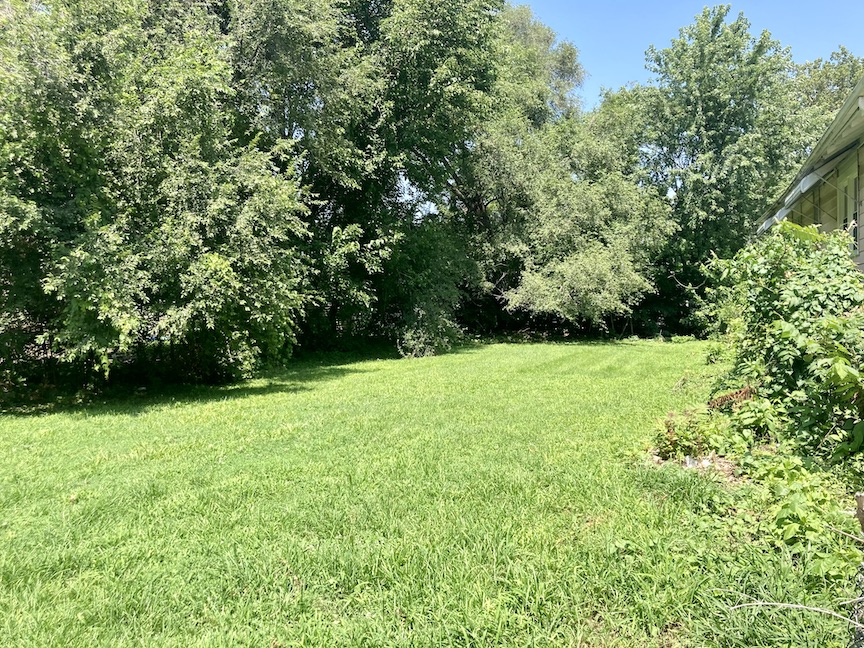
This is what I found at 1624 Pinkney Street. Interesting that the lot has remained empty since the 1973 demolition. It is owned and maintained by a couple who do not live in the immediate area. It is all very odd. Without crossing the property line, I really thought I would peek some marker or clue of Midgie or the house. No Catalpa tree either.
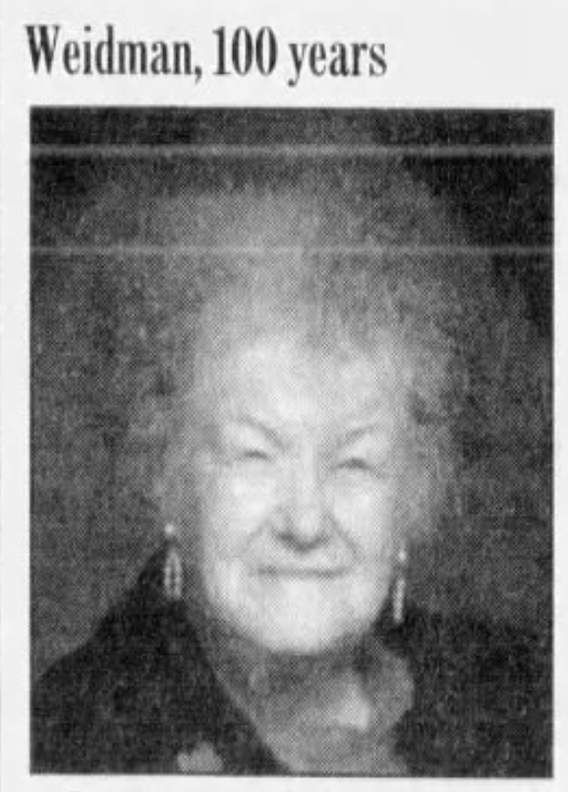
Garnet, the infamous crane operator, who inherited a house from a cat, later moved to California in the 1980s. In 2008 Garnet Ritner Weidman reached her 100th birthday. She passed away in March of 2009.
And so, as the clock on the wall reads half-past eight, we bring another broadcast day to a close. The My Omaha Obsession players, your hostess, and all of us here in the studio wish to thank you for inviting us into your homes and for being such a loyal and wonderful audience. Until our next broadcast, we hope you’ll remember the words of our show’s sponsor… “Have you tried Wheaties?”
Good Night, Omaha!
“Or the doubt while the jury is out, or the thrill when they’re reading the will.” That’s Entertainment.
If you like what you see, you can keep up with my latest investigations by joining my email group. Click on “Contact” then look for “Sign me up for the Newsletter!” Enter your email address. It will then display “Thank you, your sign-up request was successful!” Make sure to check your email address to confirm. You will get sent email updates every time I have written a new article. Also feel free to join My Omaha Obsession on Facebook.
Thank you, Omaha friends.
Miss Cassette
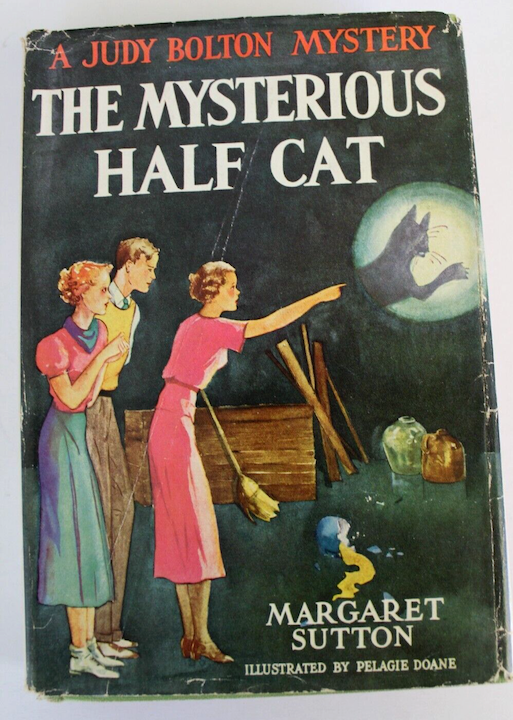
Thoughts? Secret tips? Photos? Let’s hear it, friends. I welcome your feedback and comments on the fascinating Kountze Place neighborhood, 1624 Pinkney Street, Midgie, and John E. Sterner. Please share your additional clues to the story in the “Comments.” Everyone would love to read what you have to say, and it makes the sharing of Omaha history more fun. You can use an anonymous smokescreen name if need be. We want to hear from you.
© Miss Cassette and myomahaobsession, 2025. Unauthorized use and/or duplication of this material without express and written permission from this site’s author and/or owner is strictly prohibited. Excerpts and links may be used, provided that full and clear credit is given to Miss Cassette and myomahaobsession with appropriate and specific direction to the original content.
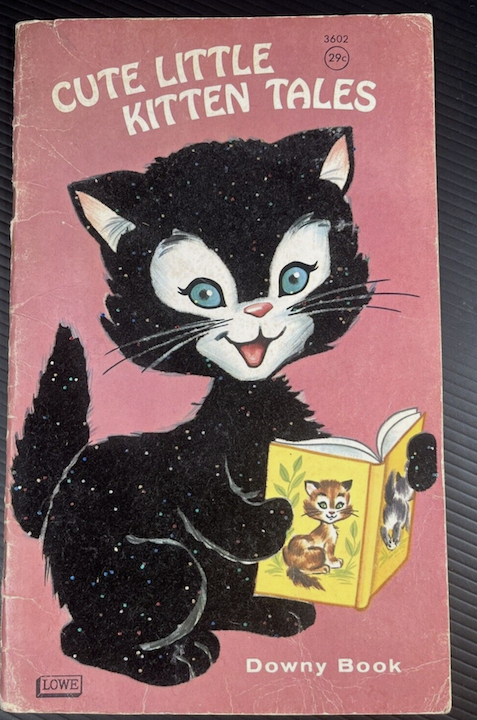
If you are looking for more architectural and Omaha history sleuthing fun, ask your local or bigbox bookseller for my book: My Omaha Obsession: Searching for the City. Also available everywhere online. Thank you.
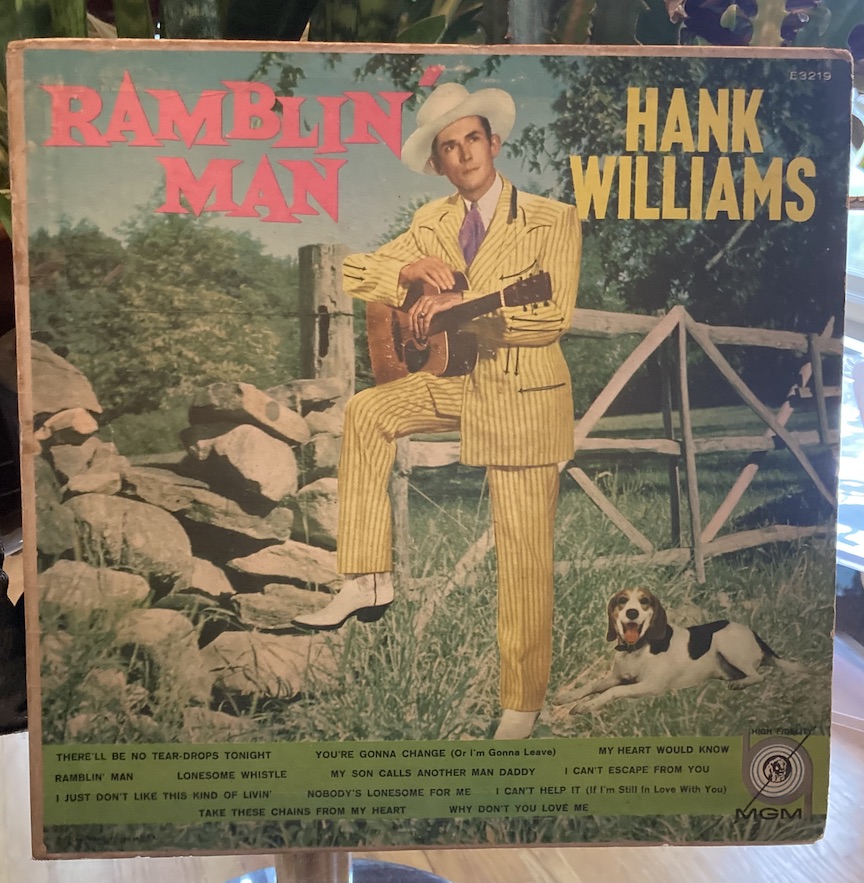
Tonight’s investigation was backed by Ramblin Man by Hank Williams.

The late 1960’s and early 1970’s were the high points of “Urban Renewal”, where anything old was demolished and replaced with something new. There was a whole lot of demolishing going on, but rarely any rebuilding. Beyond that, as an avid restorationist, I need to bite my tongue. This was a nationwide phenomena that fortunately ended in the mid 1970’s, but the destruction left tons of vacant lots.
Sincerely,
John Sullivan
I thank you so much, John. Good to hear from you again. Even though the event was dreary, I do appreciate your insight.
Thank you for another very interesting post. I really appreciate anything and everything you find to share with your readers. I am a faithful fan and I always learn so much! Your hard work is very impressive , Miss Cassette.
I am anxious for the next one!
Thank you, Victoria. I really appreciate you taking the time to write in. It means a lot. Please take care and I’ll see you next time.
I’ve just found my very favorite place in the world for escape!! I’m a slow reader so it’s taken me hours and hours of time to read and click on all the links in this story. I LOVE this! I’m so happy I found it. Now I want to open the archives and read/research everything!! Please let me join your newsletter and follow you and your friends.
You are my favorite kind of person–a slow reading escapist!! Me too. Please hang out often. I just got you signed up for the email. You will get a kickback email asking you to confirm. Thanks, Jacki!