
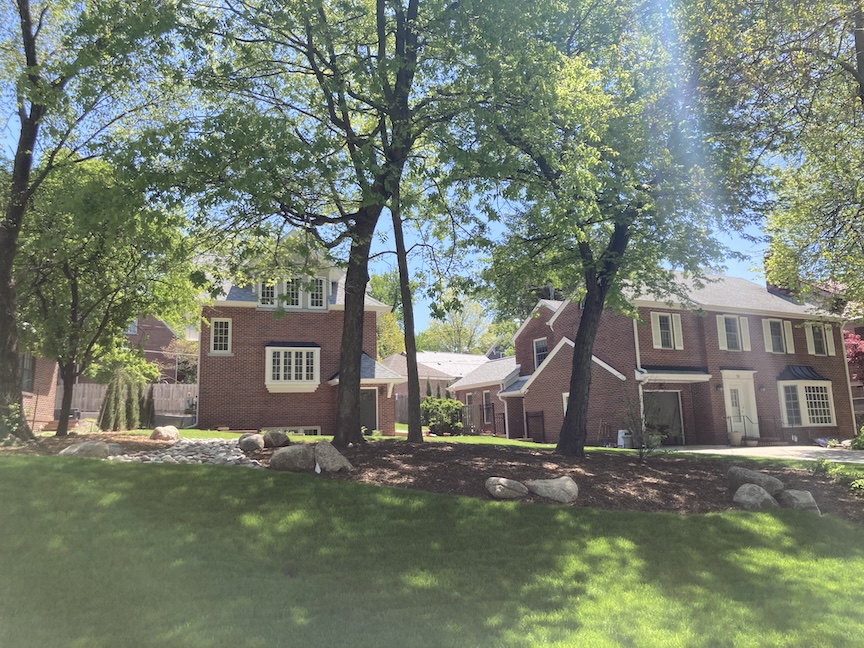
Today we have a small but interesting case study: 311 South Happy Hollow Boulevard, situated upon Lots 22 and 23, Block 6 of Evanston Addition (those tidy numerals so beloved of municipal order). Lot 23 is to the north, and has always been undeveloped–a tucked-in green scape, concealed by foliage. A lilac bush, trees. We loved the secrecy. Had there been a 309 South Happy Hollow Boulevard at some point? No, not that I could find. The absence of a 309 South Happy Hollow Boulevard is precisely the sort of small civic mystery that invites more speculation than it strictly deserves—and yet, one cannot resist! The principal structure on Lot 22, attributed to George Heidkamp and dated, with a certain postwar optimism, to 1947, stands as a contributing structure within the Dundee / Happy Hollow Historic District. It is, in short, the sort of house that does not shout, but is noticed nonetheless. She is said to be of the Prairie School but I see a MCM brick Colonial with an addition above the garage and many lovely additions in the rear.
Enter, then, the recent architectural intervention: a carriage house erected following a building permit secured in October 2024, to the not inconsiderable sum of $66,240. The property has since undergone a transformation that is as much narrative as it is architectural.
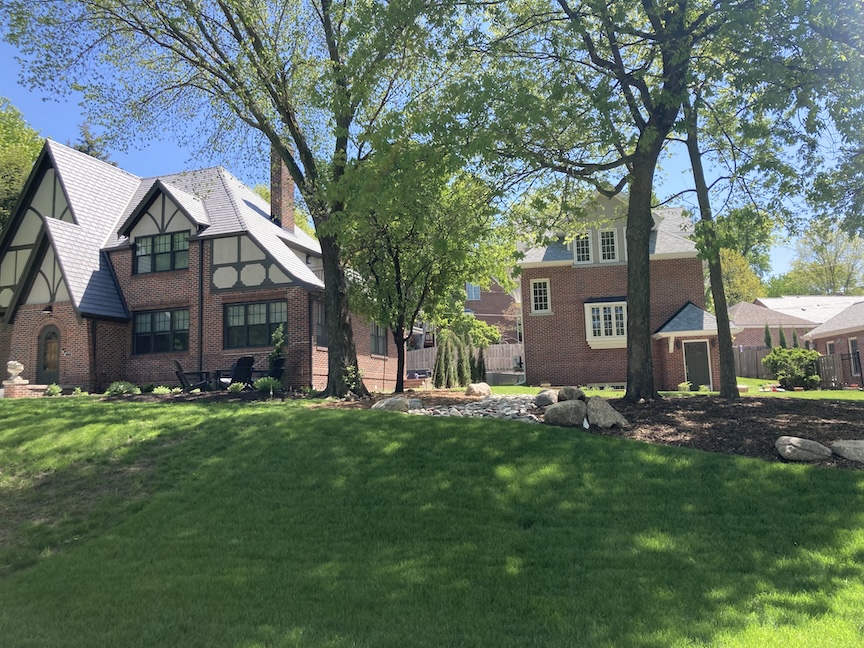
307 South Happy Hollow Boulevard, the lovely home to the north, allegedly built in 1927. Carriage house of 311 South Happy Hollow Boulevard set back on the lot.
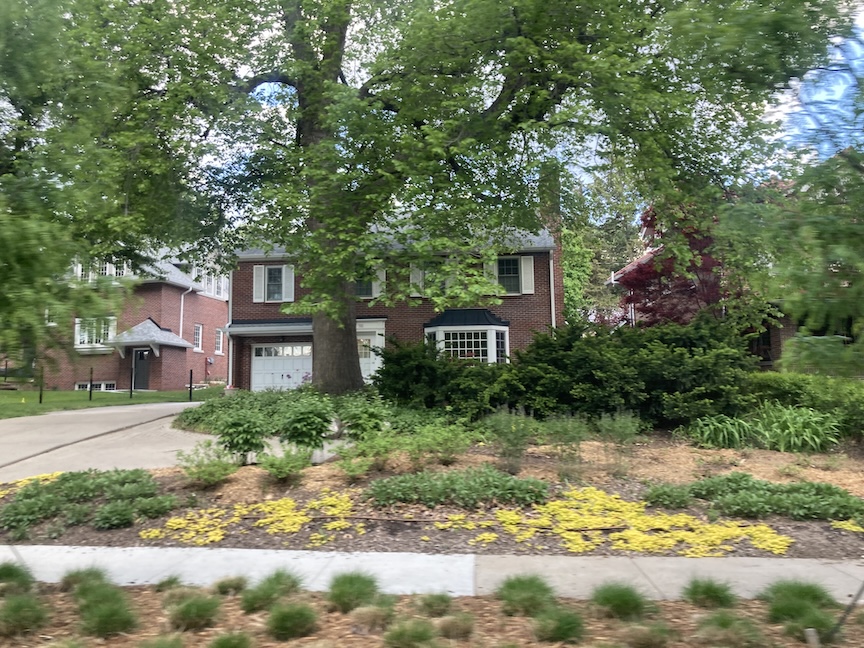
The carriage house—ah, that most romantic of secondary structures—has been executed with a commendable discretion and insinuates itself into the inviting speculation of all passersby: was it always there? The answer, delightfully, is no. But it behaves as though it might have been, which is infinitely more important in this case. The new carriage house looks to be from the 1920s. My goodness, is this carriage house possibly older than the actual house? The structure accommodates a two-car garage, only reached by the alley (we live for alleys) and yet hints at loftier ambitions: an office, perhaps; an art studio for the temperamentally inclined; a guest room for the occasional houseguest who must be both welcomed and contained; even the faint whiff of rental possibilities. Or, if one prefers, a secret retreat—every proper house, after all, ought to harbor at least one. I call ours my pouting room.
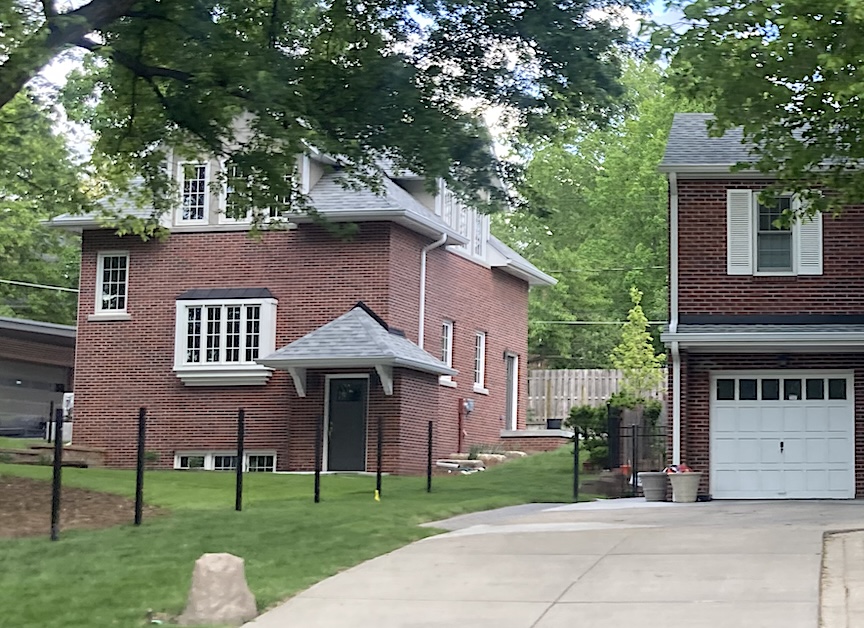
May 8th, 2026 update:new fences posts.
What distinguishes this carriage house is not novelty but manners. It is cohesive with its surroundings and possessed of that elusive quality so rarely achieved in contemporary building: historical plausibility. It is the windows. It is the gables. The clean brick and mortar matches up nicely with 307 South Happy Hollow Boulevard, the lovely home to the north, allegedly built in 1927. It is the height of the structure. It is the set back. It is the nonchalance–almost with its back turned. One cannot help but observe that the new carriage house, for all its admirable discretion, exhibits a faintly ambivalent posture toward the public realm. It has, as it were, turned its back—an architectural gesture of studied indifference that is deeply appealing. There is something wonderfully self-possessed about a structure that declines to perform for the street.
(One small obsessive criticism–How shall one put it without sounding ungrateful?—the presence of a front-facing door introduces a note of hesitation. One rather wishes it had committed fully to its aloofness. To turn one’s back is a statement; to half-turn, a compromise. Had it been omitted, the structure might have achieved a purer, more Delicious Defiance: a building entirely uninterested in being approached, admired, or even understood. As it stands, it remains charming and approachable. I know I am being a Miss Cassette on this point.)
**May 4, 2026**This just in from someone who grew up in the neighborhood. The lot the carriage house was built on was the side yard to the house to the north at 307 South Happy Hollow Boulevard. He sold it to the neighbor to the south at 311 and he built the carriage house.
**May 9, 2026**This just in from Alissa Manvitz Arbeiter: “This home was built by my great-grandparents, David and Eva Manvitz shortly after WWII. Thank you featuring the home and the carriage house addition.”
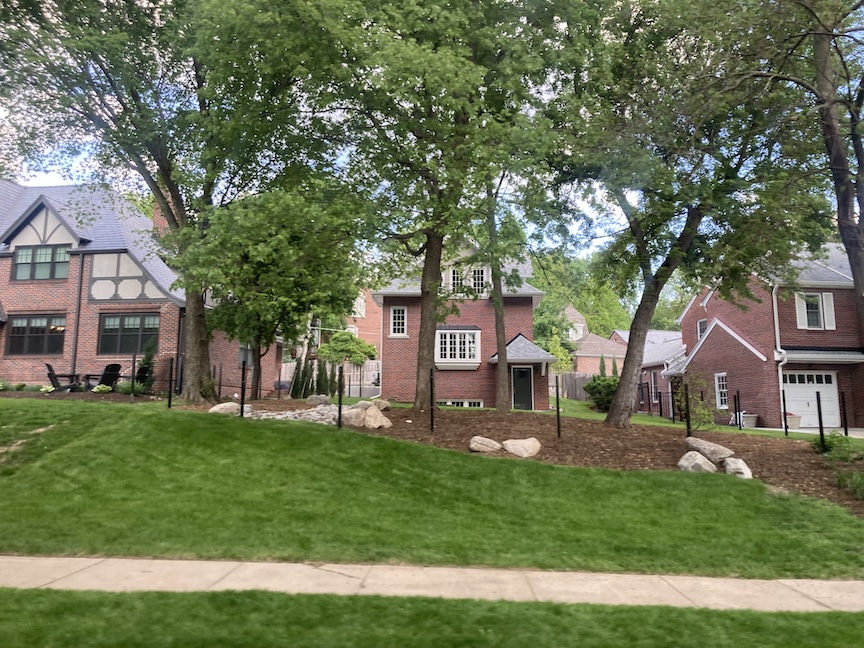
Who was the architect of this carriage house? Was this builder designed? Was it owner designed? The garden, too, has been coaxed into collaboration, softening edges and blurring timelines until the ensemble reads as a single, if slightly enigmatic, composition. It is growing as we speak. It will only become more lovely over time. One is tempted to conclude—though not without a raised eyebrow—that the success of 311 South Happy Hollow Boulevard lies precisely in its refusal to declare itself new. It improves, it even amuses. And in a neighborhood where history is both currency and performance, such restraint is not merely admirable; it is, quite possibly, the most stylish gesture of all.
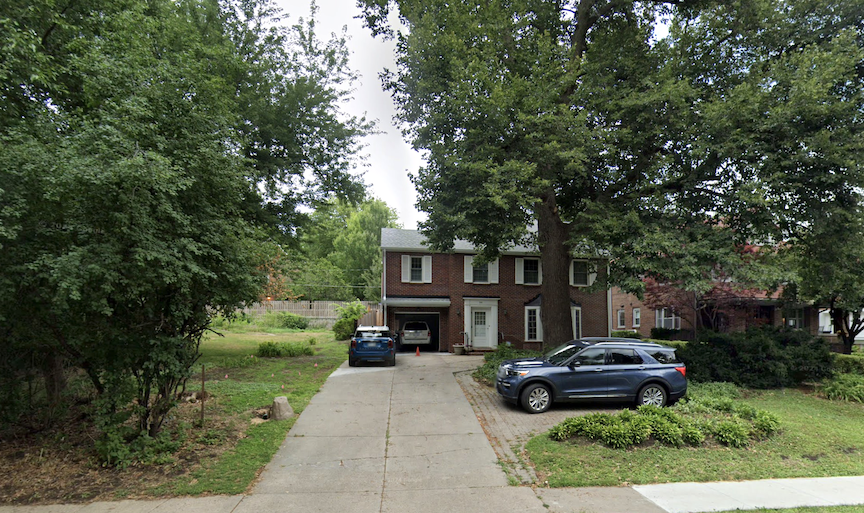
Not too long ago 311 South Happy Hollow and its lot to the north looked like this.
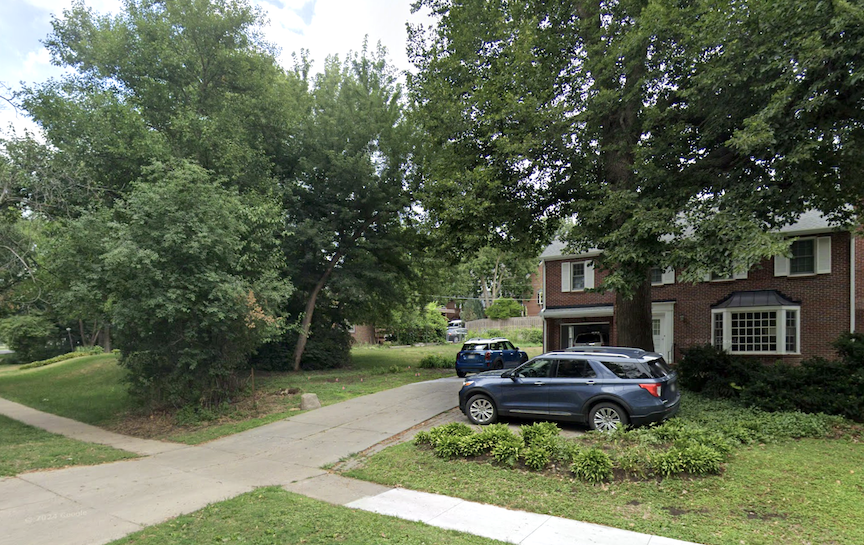
Northeastern angle shows the peaceful empty lot.
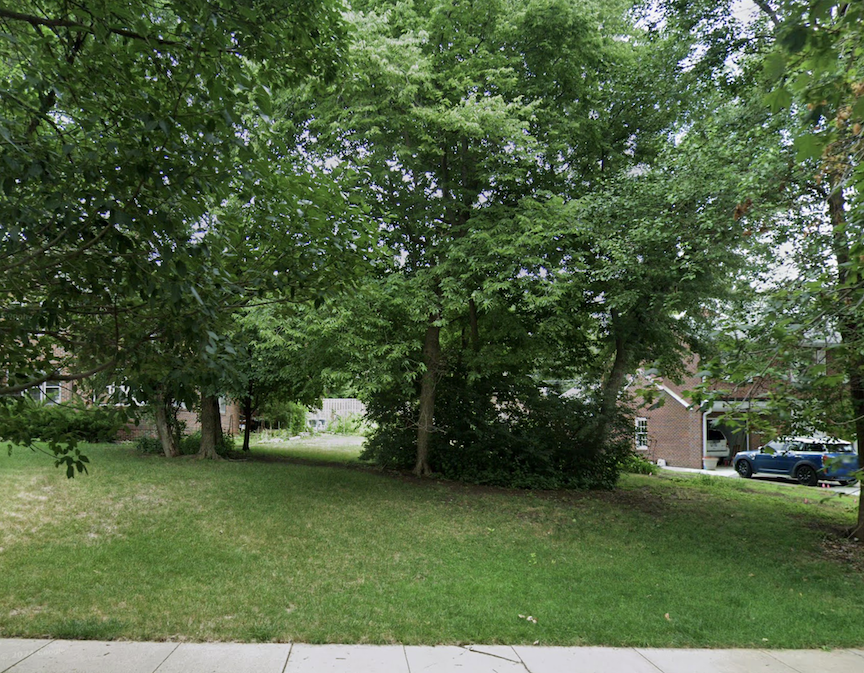
The empty lot. From historical aerial images, it looks like in the 1930s and 40s there were even more trees. It must have been lovely.
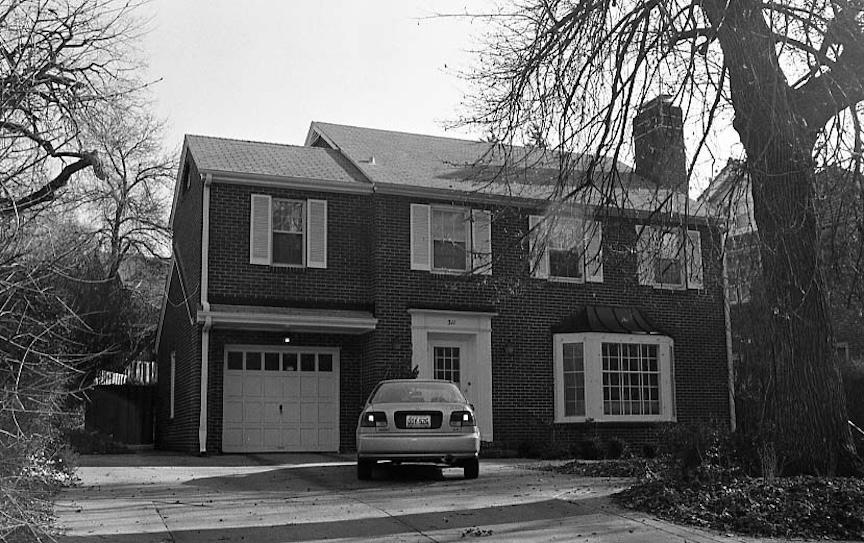
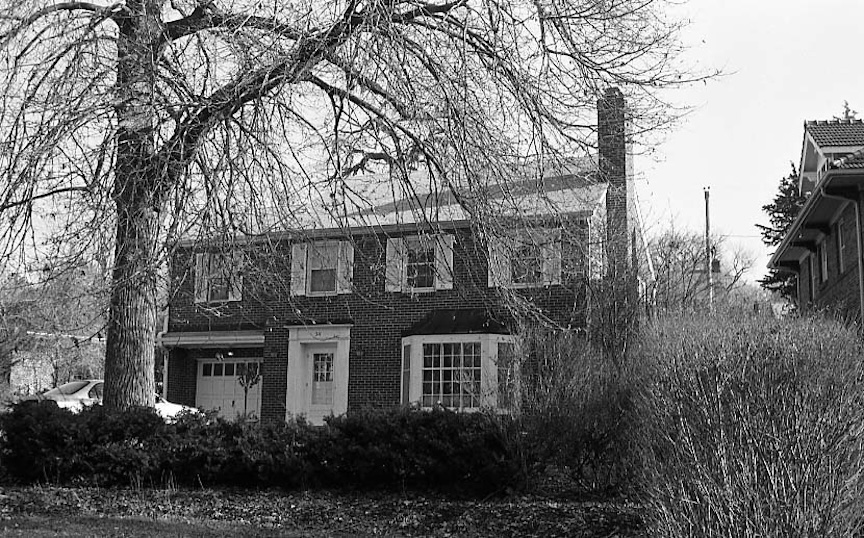
Historical survey photos from the 1990s. 311 South Happy Hollow Boulevard.
Brava, Miss Carriage House and thank you, Homeowners, for creating something of beauty and a true delight. We love your new carriage house.
Love new garages that resemble the old? Check out: MAGNIFICENT OBSESSION: THE NEW GARAGE AT 3567 HOWARD STREET
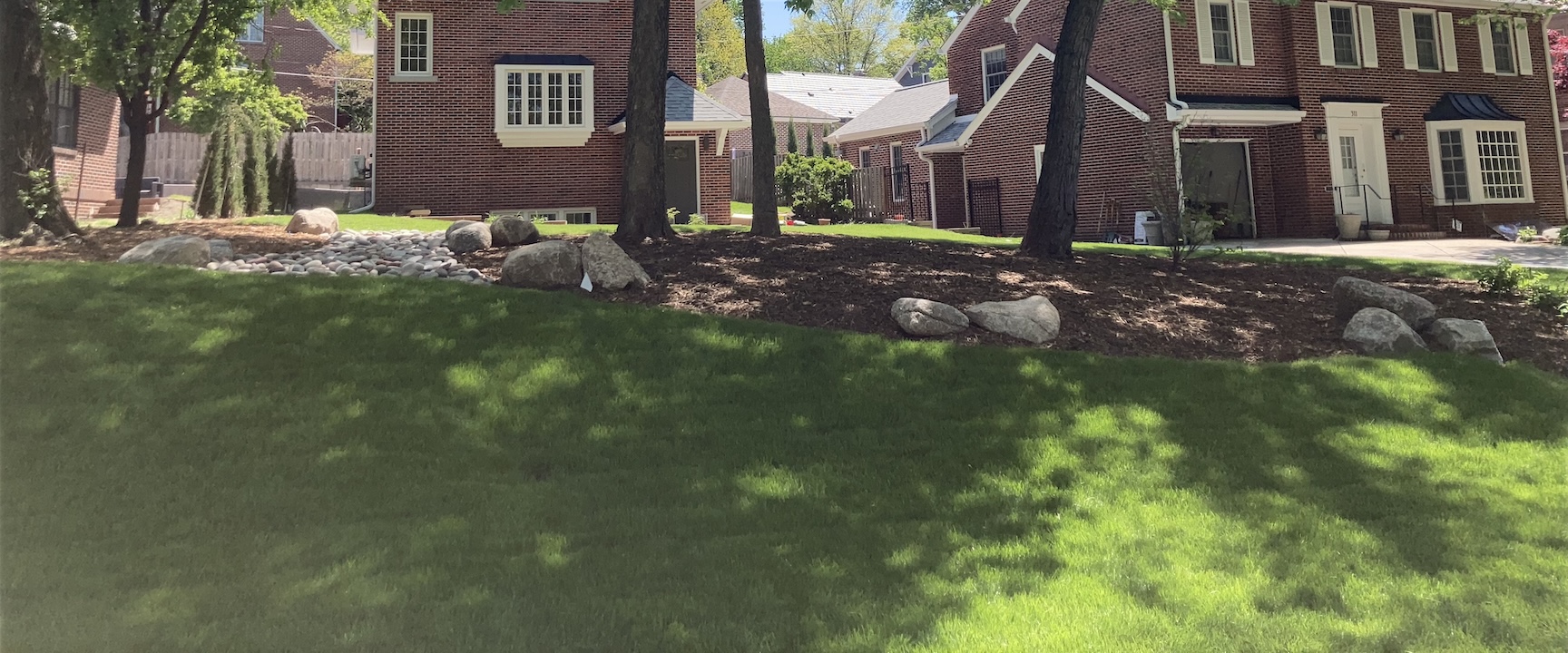
Accept no substitutes. Check back often for the real deal. The Real In-depth Deal. You can keep up with my latest investigations by joining my email group. Click on “Contact” then look for “Sign me up for the Newsletter!” Enter your email address. You will get sent email updates every time I have written a new article. Also feel free to join My Omaha Obsession on Facebook.
With love,
Miss Cassette
If you are looking for more architectural and Omaha history sleuthing fun, ask your local or bigbox bookseller for my book: My Omaha Obsession: Searching for the City. Also available everywhere online. Thank you.
I welcome your feedback and comments on this great modern carriage house. Please share your additional clues to the story in the “Comments.” Everyone would enjoy reading what you have to say, and it makes the sharing of Omaha history more fun. You can use an anonymous smokescreen name if need be. We want to hear from you.
© Miss Cassette and myomahaobsession, 2026. Unauthorized use and/or duplication of this material without express and written permission from this site’s author and/or owner is strictly prohibited. Excerpts and links may be used, provided that full and clear credit is given to Miss Cassette and myomahaobsession with appropriate and specific direction to the original content.
Great post and I applaud your observation—the carriage house door should face south and not front the street. Otherwise, a very thoughtful new build. Well done!
Thank you, dear Mark! Somehow the email alerting to this post did not go out–so I am so glad that you even saw this.
In dignified, established, neighborhoods it’s rare to find contemporary infill which is not abrasive, so this carriage house gets a thumbs up. Does it have shortcomings? Sure, but far fewer than many new builds in similar contexts. The brick exterior relates nicely to the houses on either side of it and helps it to blend in, but that’s where the subtlety stops.
It could be argued that the structure is indeed performing for the street with the inclusion of a large and prominent oriel window at the center of the composition. That and the door which faces the boulevard both give it a residential character rather than one of service. In addition, the houses on either side have orderly fenestration: the windows are arranged in neat tiers so as to clearly articulate each story. The carriage house, on the other hand, displays five distinct tiers, two of which are presumably stairwell landings (the entry at grade and the single window to the north below the roof). The busyness of the window composition is fun and delightfully playful, but far from innocuous.
Stylistically, the structure is independent from its neighbors; it is not visually tied to the house it serves and in many ways competes with it rather than complementing it. The roof of the carriage house has pronounced overhanging eaves and a hipped roof while the postwar colonial revival house it serves has no eaves and a gabled roof. The large gables of the carriage house relate more to the Tudor next door than the colonial. I feel that these gables would be more successful had they been dormers instead. This could have been accomplished with slightly shorter attic windows in combination with the roof line continuing beneath them rather than having been deleted. I get the feeling that the structure was built to be an independent residence, a real 309, at some future date.
I like the carriage house, but the things I have noted will, to my eyes, always make it read as a quirky house shoehorned into a narrow lot rather than a service component of the house next to it. If the goal was to avoid mimicking the colonial revival, the goal was met. If the goal was to make it seamlessly blend in to its environment, it fell a tad short. But it is a positive sign that new construction is taking more cues from the past and for that I am grateful. Thanks for highlighting this interesting place!
Correction: The “gables” I refer to above are actually called “wall dormers”. Because they seem a bit over-scaled and are gabled rather than hipped, like the main roof, they have the impact of a gable. Wall dormers not traditional dormers but not fully gables, either.
Brilliant. Will you be my BFF?
You two really ought to meet—or maybe you are already know each other!
I asked my Magic 8 Ball and it replied “Outlook good”.