
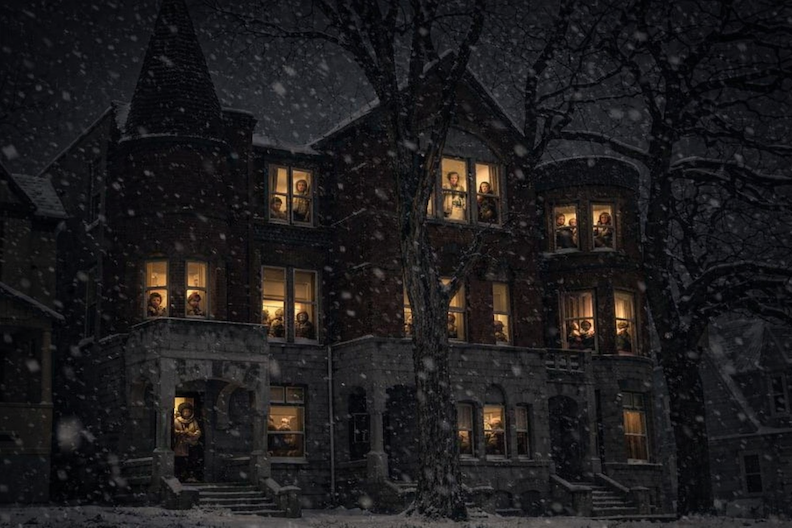
We have all, at one point or another, wondered about 1040 South 29th Street. She was a fortress of a house—variously described as mansion or a castle, as if plopped down on the Nebraska prairie. Austere and enigmatic, the Georgia Row House at 1040 South 29th Street presented itself as a singular and commanding residence. Yet this was the first trick the building played. Behind her strange facade lived not one household but three entirely independent residences, each with its own entrance and private domestic dramas. It was, architecturally speaking, a splendid deception, and rather a good one. Those of us with romantic inclinations naturally preferred the fiction. Every now and then, seeking out the musings of youth and melancholy, I go see about the historic Georgia Row House. She had been reconfigured in our day, recast optimistically as The Castle. Like visiting a cemetery outlined in a cast-iron fence, one pauses, reads the names, and remembers the lives once arranged down below–that is how I visit The Castle. For former residents, the building—and the peculiar memories attached to it—remains unforgettable. One returns partly out of affection and partly, I suspect, to confirm that the thing existed at all. Indeed, for decades she stood in a state of handsome decay, a moldering ruin, the kind cities neglect until the instant before demolition. I remain haunted by it. We Have Always Lived in the Castle, or at least some enduring part of us has, and there are many among us still wandering its corridors in memory.
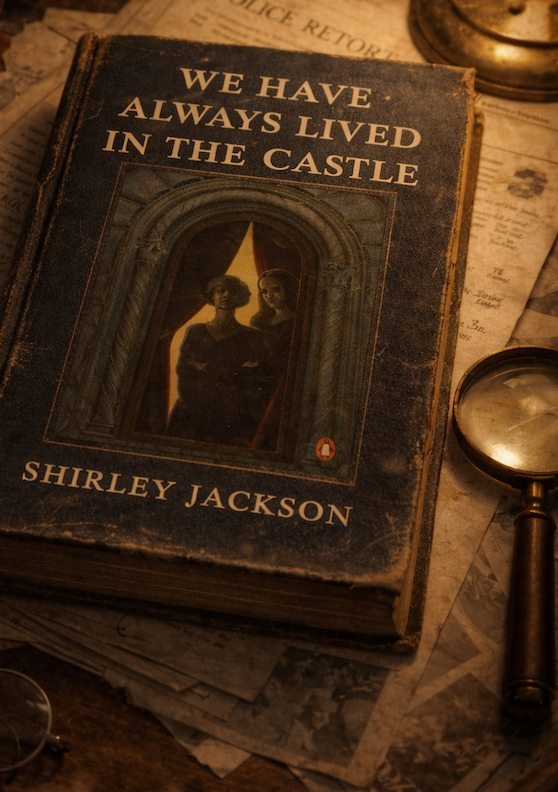
To say We Have Always Lived in the Castle is to invoke not only the unsettling genius of Shirley Jackson, but also the “persistence of elements” or historical weight of place* itself. While I privately reminisced about the Georgia Row House-The Castle apartment building over the years, former tenant friends continued to inquire after the Castle, as though checking on an older eccentric relative who had once equally frightened and charmed them. Once My Omaha Obsession investigations began in earnest, the inquiries multiplied. Prying Paiges and Snooping Spencers arrived through the agency doors with questions, recollections, and theories. It soon became apparent that our curiosity regarding the Castle was hardly unique. The building had lodged itself firmly within the public imagination, where it remained looming—half memory, half myth, and wholly incapable of minding its own business.
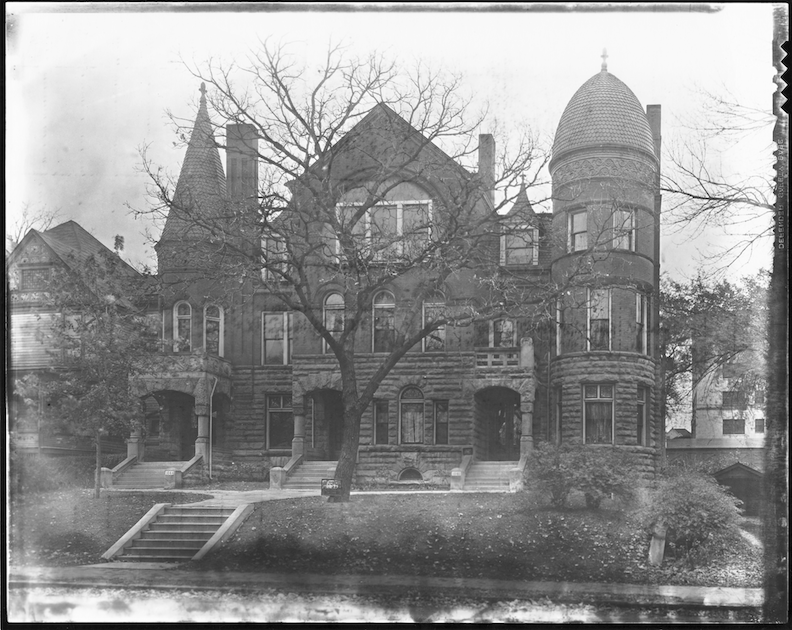
1932. “Unprocessed Dewell Collection.” Nebraska State Historical Society. At the time of this photograph, the 1040-1044 South 29th Street apartments rented between $32.50 and $50 a month.
*Jacques Derrida first presented this philosophical concept, termed hauntology, in 1993. Hauntology is a portmanteau pun of haunting and ontology (the study of being), that describes the notion of the present being haunted or overshadowed by the past. It is an intricate range of ideas that intersects archaeology, architecture, psychology, historical research, philosophy, cinema, anthropology, literature, and the arts and one that I frequently contemplate. For example in this case, one would consider how the past haunts the present of the former residents of the historic Georgia Row House, or the Castle, as it was known in our day. Because of the remnants of the past imbued by previous occupants, the Castle, in and of itself, is filled with character, possesses an emotional resonance of place and holds memory… seeped into the very structure.
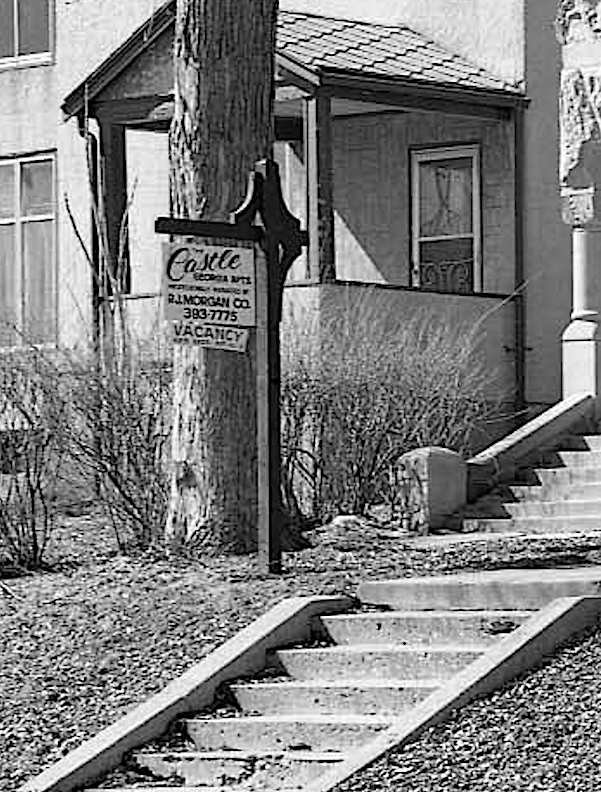
One aspect of the theory asserts that cultural memory maintains our emotional connections, as we have left fragments of ourselves in the persistence of the past and that we have active access to this immersion. I am not suggesting the Castle and its people were or are primarily haunted by specters, rather, I am hinting that our shared experience of the Castle visits us through traces, and residual secondary hauntings, referred to as “collective intrapsychic states.” I was brought into the fold of Hauntology by culture critic Mark Fisher’s (RIP) writings on music and cinema, although I have contemplated these strange matters of the Castle for several decades. I offer them for your consideration. Hauntology has profoundly influenced my life, perhaps all of ours- recognized or not, and facilitated an exploration of perceptions that I experience in my continual journey researching the history of local architecture. I soak in the notion that the resurgence or “persistence of elements” from the social or cultural past haunt the present. I hunger for the temporal disjunction, especially Hauntology as it touches the arts, particularly musical styles where the artists tap into aesthetic and sonic manifestation of unsettling nostalgia in the moment and the “lost futures” that never arrive–the musicians Boards of Canada, being a prime example. Individuals who connect with the work of director David Lynch already know what this visual and aural aesthetic “feels” like–caught in a loop of unease. Anthropology relates to hauntology in its research methodology– studying social life through “temporal entanglements, focusing on haunting and memory rather than solely on tangible, current human interactions.” Psychological anthropologist Sadeq Rahimi, in his book The Hauntology of Everyday Life (2021), posits, “the very experience of everyday is built around a process that we can call hauntogenic, and whose major-product is a steady stream of ghosts.” A topic near and dear to my heart, what I particularly appreciate is how Rahimi illustrates the cultural embodiment of “ghosts” resulting from the amassed historical traumas of war that pervade our nation, explaining that these aren’t literal ghosts but unresolved affects and memories. Julian Wolfrey expresses in Victorian Hauntings (2002) that “’to tell a story is always to invoke ghosts, to open a space through which something other returns’ so that ‘all stories are, more or less, ghost stories’ and all fiction is, more or less, hauntological.” Of course I acknowledge and am holding space that a part of this building’s history possibly involves primary hauntings as well, lending that eerie allure.
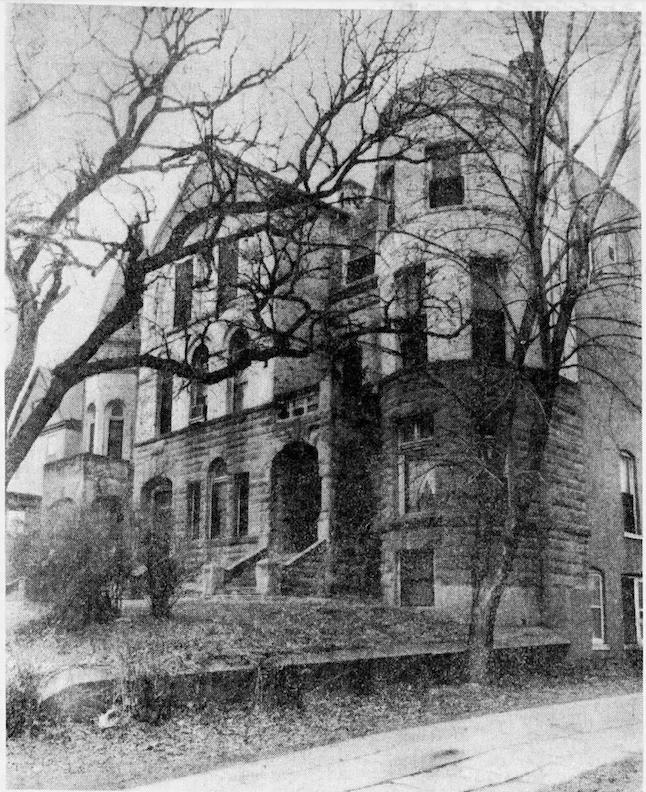
Omaha World-Herald. 1986, April.
My Process
When I first embarked upon this Castle pursuit, I quickly discovered that an industrious company of architectural sleuths, preservationists, journalists, and former owners had already performed the backbreaking labor of tracing the history of 1040–1044 South 29th Street. Their efforts laid the essential groundwork, portions of which I intend to share here. Indeed, among Omaha’s historically inclined circles, the story of the Georgia Row had long since been chiseled into local memory—particularly following the considerable media admiration surrounding inCOMMON’s dazzling rehabilitation of the property in 2022. Accordingly, tonight’s investigation does not attempt to retell the building’s already well-documented chronology. Instead, it concerns itself with the oddities, overlooked details, and human peculiarities orbiting the structure from its earliest days. The building, rather inconveniently for cautious historians, appears to have commenced with a strange inception from the outset. This has never been mentioned. Because I am drawn to the romantic as well as the sensational, the clues easily found me. What follows is an exhaustive, formal architectural survey within a cabinet of curiosities: stories of eccentric investors, unconventional proprietors, improbable tenants, and the curious chain of circumstances. I shall resist wandering further into the emotional thickets of Hauntology, having likely indulged that tendency sufficiently already. Yet for the chronicle’s middle period—the late 1980s—I write not merely as researcher but as witness. Where memory failed me, old friends from our punk scene graciously supplied their own recollections, enlarging the narrative in ways both affectionate and incriminating. Consequently, portions of this account read less like a preservation report and more like a memoir scribbled in a telephone closet, which seems entirely appropriate for the Castle. Most gratifying of all, this investigation concludes happily—a rarity in Omaha architectural history, where the usual ending involves demolition, a new, cheap box of apartments that no one can afford or a parking lot seldom used. In the weeks preceding Georgia Row’s 2023 grand reopening, I greatly enjoyed corresponding with Christian Gray of inCOMMON regarding the restoration, and more recently again. Readers are encouraged to consult the conclusion of this investigation for Gray’s reflections on the rehabilitation, together with recent architectural and interior photographs demonstrating that, against all reasonable Omaha odds, the old Castle survives splendidly.
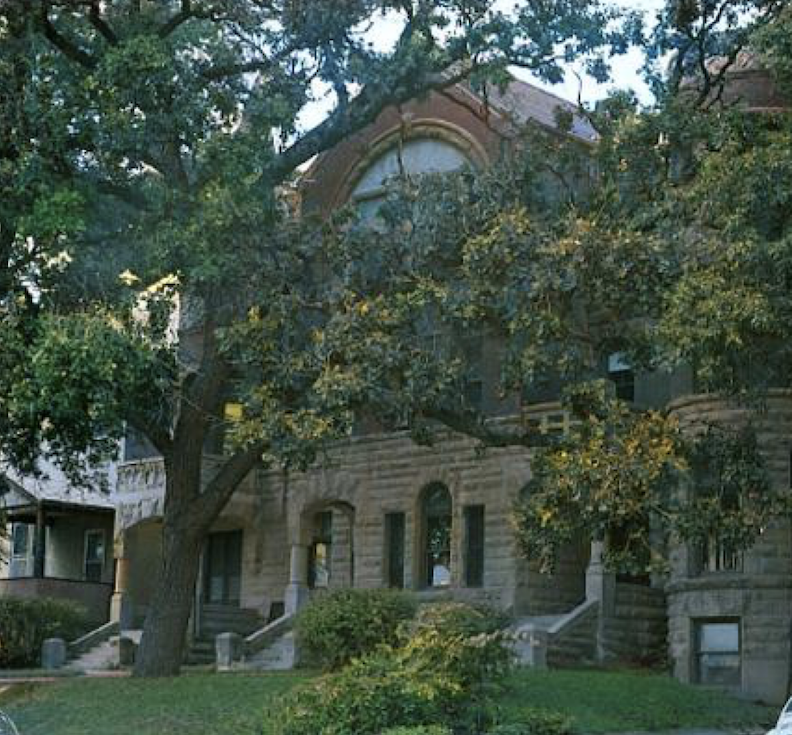
The Georgia Row House, the Georgia Boarding House, The Georgia Hotel, the Georgia Apartments, the Castle—she has traveled through a rather exhausting number of names over the years. Her official designation is the Georgia Row House, despite never being referred to as such. I shall do my best to call her by the proper title appropriate to each period, though this does require you, dear reader, to remain reasonably alert as well. She occupies Lot 27 at Rees Place. Just a street west of the Gerald Ford Freeway/I-480, the “elegant stone residences” opened in 1890 and is one of the oldest apartment buildings still standing in Omaha. In its one hundred thirty-plus years, the building has had many owners, due to its long and complex history. A posh building tarnished by a tinge of shame from its origin, her unusual aura transitioned to a boarding house, a hotel and apartments involved in a public scandal, then at last, a drowsy sort of place and later a somber structure with a past, headed for ruin. Perhaps as the architectural gods intended, there was a true functional alignment as its inhabitants consistently reflected its ambiance, seemingly harmonizing with the surroundings. A few of these veterans will remember the passage of time. Investigating the origin, the context of the trying conditions, and repercussions was destined to cast the Georgia Row-Castle in an unfavorable light. Examining it from this perspective does not detract from its numerous flattering attributes, rather it enhances them. So that readers may more properly be on their guard, let me begin to enlarge the building before us…
Now gather round, friends. Secure for yourselves a suitable drink, an assortment of restorative nibbles, and a chair capable of supporting both the body and the historical burden about to be placed upon it. This promises to be a dense examination—part architectural inquiry, part social history, and part prolonged neighborhood séance…We shall commence momentarily. One does so hate to rush a mystery of this magnitude.
Still from Enchanted Cottage.
Hide and Seek
The site of our mystery building is at 1040-1044 South 29th Street. Georgia Avenue, presently known as South 29th, was initially called Georgia Street in 1880. Georgia Street would gain prominence when the new lots in Terrace Addition were advertised as situated on Park Avenue, stretching east to Georgia Street. This thoroughfare was named for quick-witted and much admired Harriet “Georgia” Hanscom Pritchett, daughter of Honorable Andrew Jackson Hanscom, who, a decade prior, donated the land and developed Hanscom Park. By approximately 1882, the city appeared to have ironed out the logistics in accordance with municipal ordinances (new whims), and Georgia Avenue emerged as the principal name. Residential parcels along Georgia Avenue in the J. L. Redick Addition were extensively promoted due to their proximity to the new streetcar line, complete with the new trolley car barn situated at Park and Woolworth Avenues. But then in a very Omaha manner, Georgia Avenue was also referred to as South 29th Street interchangeably starting in 1886. Then there was an odd period when Park Avenue was officially changed to 29th Street, according to H. Ben Brick’s deep dig The Streets of Omaha: Their Origins and Changes, but now I’m just looking for trouble. I mention these anecdotes because they amuse me and reflect a city finding its footing, (a stability we still navigate awkwardly), but also because the building of our current fixation bears the historic name of Georgia Row House.
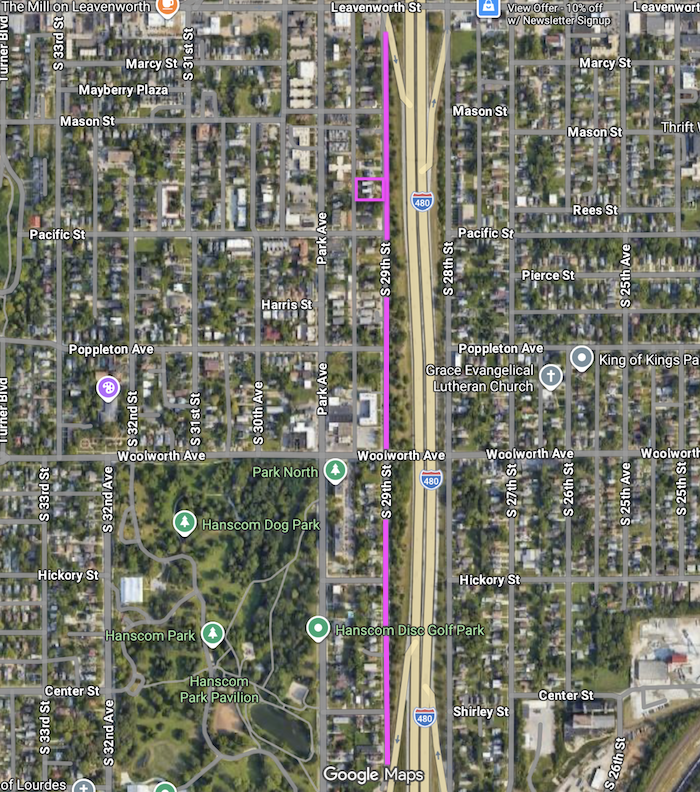
Georgia Avenue/South 29th Street is seen running north-south in hot pink. Top of image is north. Bottom of photo is south. I outlined the Georgia Row property in pink, as seen between Mason and Pacific Streets, just west of the I-480. Park Avenue is seen one street to the west. Aerial image borrowed from Google Maps.
The design and construction of I-480 would take out many blocks of houses in this area between South 28th Street (previously Virginia Avenue*) and South 29th Street (previously Georgia Avenue). *Virginia Avenue was named for Andrew J. Hanscom’s other daughter, Virginia Cornelia Hanscom, who was not said to be witty like her mother and sister.
The Curious Case of Mr. Rees
Our story begins with the mysterious life and perhaps more mysterious death of one Joseph M. Rees. Joseph M. Rees was born in Pennsylvania in the year 1819. Prepared to explore opportunities in the more expansive western territories, Rees arrived in Omaha in 1856 with brother Thomas, and engaged in the hardware and stove industry. The Barker Letters detail Omaha as a wild frontier outpost with the majority of its predominantly male arrivals concentrated on land speculation. There was significant activity in the registration of land titles, with numerous soldiers of the War of 1812 and the Mexican-American War utilizing soldiers’ bounty land warrants to obtain 160-acre plots in the public domain. These warrants were transferable and could be sold or traded to speculators. It was in this bustling climate that Mr. Rees allegedly secured prized lands across town, presumably for future profit from incoming settlers. “Under the call of President Lincoln,” our man Rees became a Union soldier where he fought numerous battles in the Civil War, attaining the rank of sergeant. Wounded in combat, Mr. Rees was hospitalized in Philadelphia. Upon his eventual return to Omaha in 1865 to see about his holdings, he discovered that “traitors” had appropriated “a greater portion of his property.” We previously learned in our Park Wild mystery that numerous unscrupulous land swindlers were active around this wild frontier town, making Rees’ accusations plausible. Due to the endeavors of Judge Clinton Briggs, “a remnant” was saved, which Mr. Rees would later designate as “Rees’ Place.”
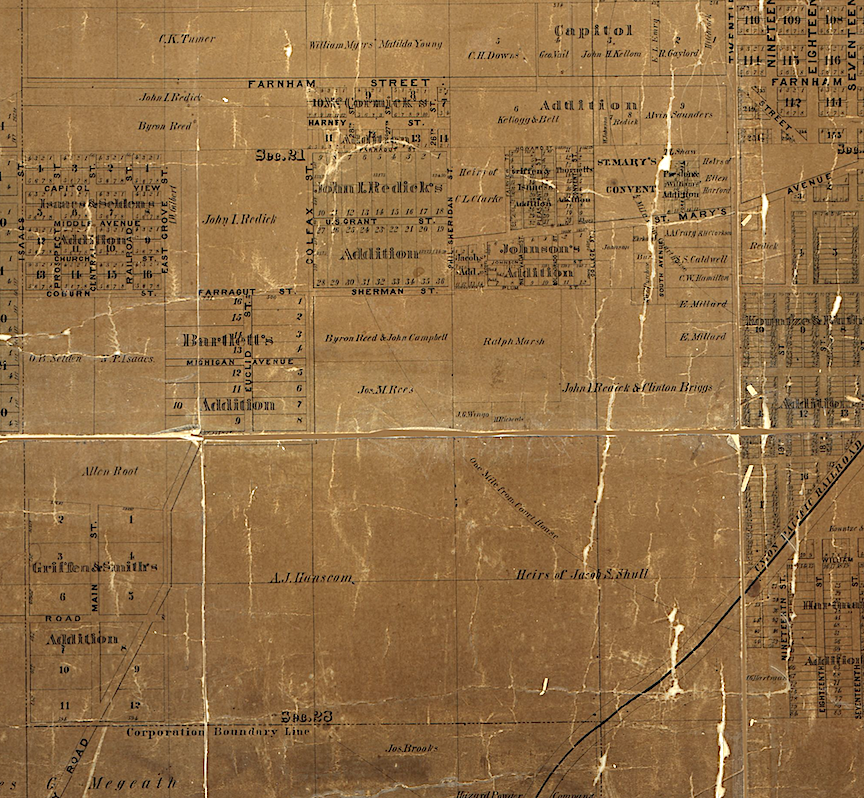
Incredible hand drawn map. Just rich! This is a wider view with details enlarged below. Map of the City of Omaha, 1870. Published by Byron Reed & Co., August Gast & Co., lithographers, St. Louis, Mo., H. F. Greene, draughtsman. Borrowed from the Omaha Public Library. Top of map is north, for orientation.
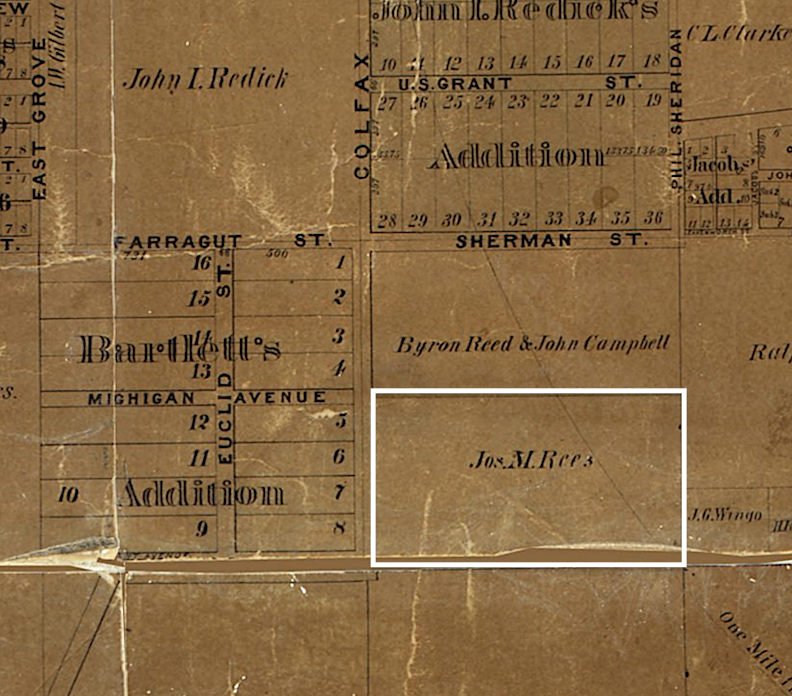
The above map magnified and Mr. Rees’ remaining plot outlined in white. Map of the City of Omaha, 1870. Published by Byron Reed & Co., August Gast & Co., lithographers, St. Louis, Mo., H. F. Greene, draughtsman. Borrowed from the Omaha Public Library.
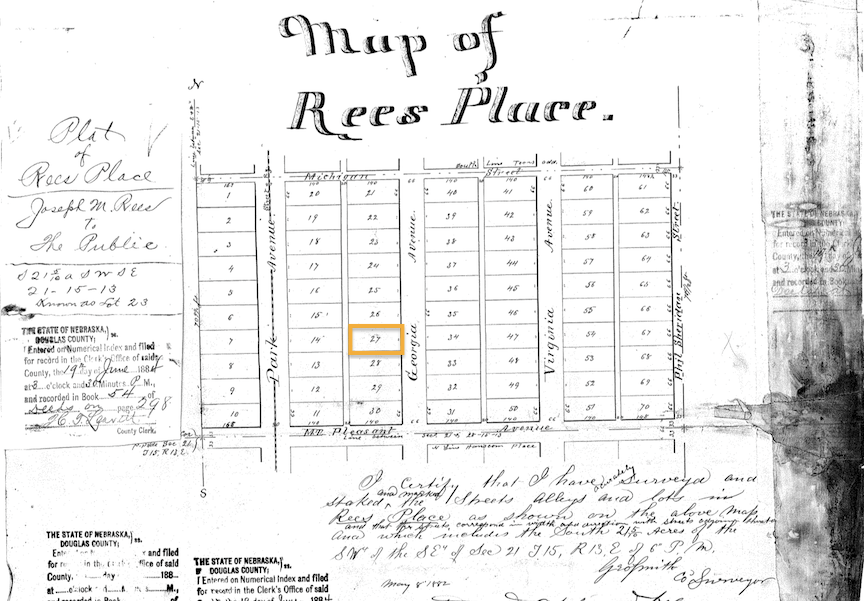
Probably my favorite map of this whole investigation. Plat of Rees Place. Map of Rees Place, 1882. Borrowed from the Douglas County Engineer/Omaha Planning Department. Site of the soon to be Georgia Apartments at REES PLACE LOT 27 BLOCK 0 outlined in mustard. These 1882 street names would all change except for Park Avenue.
Although purportedly only a sliver of the Omaha land he had acquired previously, Mr. Rees moved forward with the Rees’ Place addition in 1882, having it surveyed, platted and recorded in the City of Omaha, Douglas County. By that time, Omaha had experienced population and commercial growth, resulting in significant affluence. There were many impressive homes being built. I discovered the ambitious Mr. Rees wholly devoted himself to buying up gobs of new parcels all around town in 1883, in addition to selling land, while the Rees Place Plat map indicates that this addition was not truly formalized until 1884. The Rees Place addition was considered “a most beautiful location on the line to Hanscom Park.” By this time historic maps indicate that Park Avenue had a modern streetcar line, a true asset in the development of this West Omaha district. Rees, and later the Rees heirs, owned and managed much of this land for years to come.
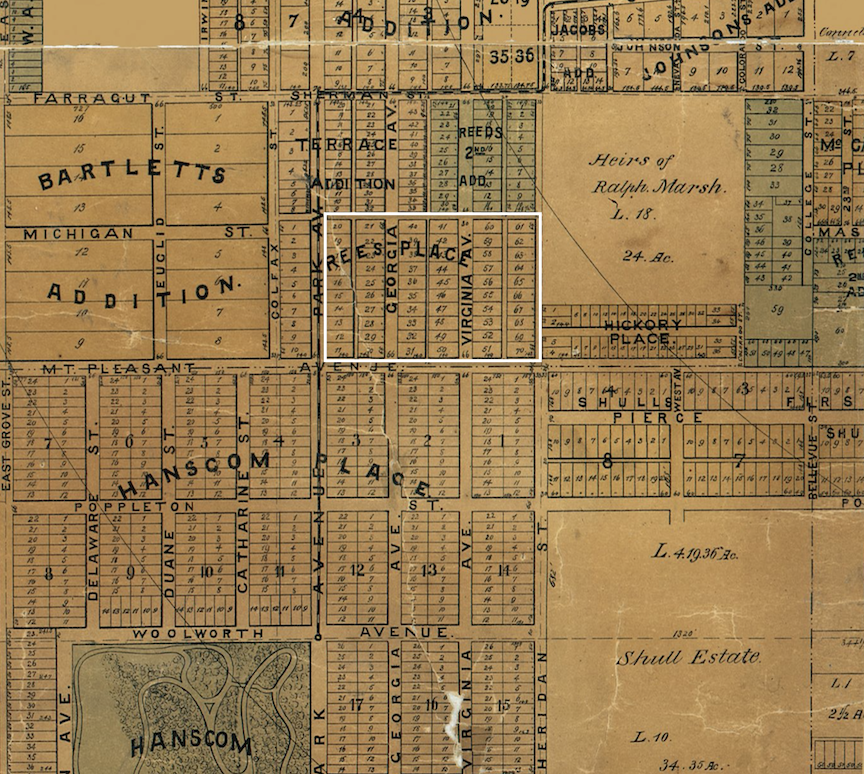
Another hand drawn gem. I outlined Rees Place in white. Map of the City of Omaha, 1883. Published by George P. Bemis’ real estate agency, compiled under direction of Andrew Rosewater, City Engineer. Drawn by Jacob Hauck. Borrowed from Omaha Public Library.
I could not find that busy Mr. Joseph M. Rees ever married or had children, with any degree of certainty. At the time of his unexpected death at the age of 62 in July 1885, Mr. Rees was said to be “single.” I discovered: “During his illness and for some time previous, he resided with Mr. M. Donnan, where he was tenderly cared and prescribed for by Dr. J. P. Peck and watched over by Mr. D. B. Houck and others but all was of no avail.” He left behind a brother in Pennsylvania and a sister in Ohio. He was to be buried alongside his mother and other relatives, which I traced in Bellville Cemetery in Bellville, Ohio.
Joseph M. Rees owned several blocks of valuable real estate along Georgia Avenue, situated between Leavenworth and Poppleton Avenue. At the time of his death in 1885, Rees was actually a resident of Mansfield, Ohio, although he passed away “while visiting Omaha.” Nonetheless, I found it peculiar that at the age of 62, he was regarded as “one of the old settlers of Omaha.” I also find it hard to believe that he did not live in Omaha. Had he picked up stakes, relocated here as a speculator, traveling intermittently to acquire further land? For the record I could find no information on Mr. M. Donnan, with whom Rees was living and being cared for “tenderly.” Dr. Jason P. Peck was well known in Omaha as was D. B. Houck, the local constable. The Rees estate was sealed in 1889. Years later, upon reaching adulthood, Rees’ minor heirs demanded their “proper shares” of his wealth. Two specific (previously minor) heirs were employed by the Illinois Central, which allowed them regular transit through Omaha, whereby they gained access to the old estate case files. We have also come across the Samuel Rees Sr. and Samuel Rees Jr. files in our previous investigations. This great Rees Printing scion was originally from Ohio, which gives pause.
It is widely recognized that J. Herbert Van Closter acquired Lot 27 in Rees Place and constructed the Georgia Row House, designed by the architectural firm Findley and Shields. However, it took years for that to transpire.
Lot 27
Two months before to his death in May 1885, Joseph M. Rees sold Lot 27 of his Rees Place development, the site where our Georgia building would later be constructed, to Mrs. Mary W. Gaylord for $1,400. Mrs. Gaylord was the widow of Rev. Reuben Gaylord, the founder and inaugural pastor of the First Congregational Church. Piously consecrated, Mrs. Gaylord was styled “the Mother of Omaha Churches,” by whom, we do not know. I presumed she acquired this land as an investment. In October 1886, Mary W. Gaylord transferred ownership of lot 27 in Rees Place to Warren Switzler and his spouse for $3,000, yielding a profit. Mr. Switzler was a local attorney who had begun acquiring properties and renting these houses.
In November 1886, Warren Switzler and his wife sold Lot 27 to George Patterson for $3,500. In 1883, Mr. Patterson, the previously mentioned Rev. Reuben Gaylord, George Towle, and Fred Blake had established the Nebraska Fuel Company. George Patterson was the son of Rev. James Patterson, who emigrated from Scotland to Omaha and served as secretary to Bishop Worthington, contributing to early Omaha Episcopalian society. Junior Patterson, in step with the preceding listed individuals, was buying lots left and right in the upbuild of Omaha. Of interest George Patterson began building a frame house on Georgia Avenue in 1887.
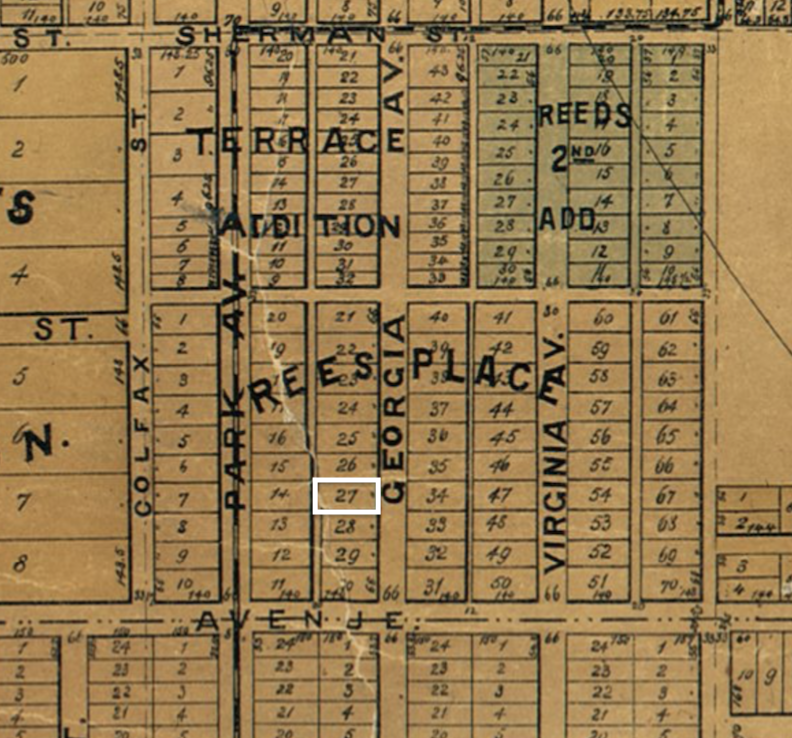
Map of the City of Omaha, 1883. Published by George P. Bemis’ real estate agency, compiled under direction of Andrew Rosewater, City Engineer. Drawn by Jacob Hauck. Borrowed from Omaha Public Library.
Of the Shadows, Mr. Van Closter
Coal man, George Patterson sold Lot 27 in Rees’ Place to J. H. Van Closter for $6,600 in October of 1889.
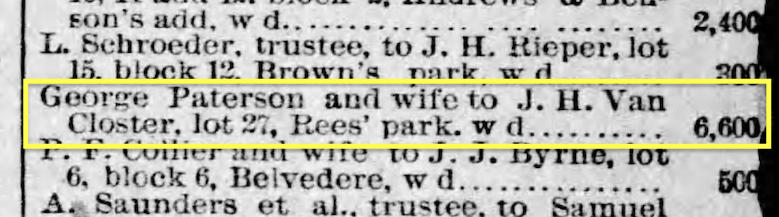
Omaha Daily World-Herald. October 19, 1889.Transaction outlined in yellow.
J. H. Van Closter is recognized for constructing the Georgia Row building and developing other properties in the Park Avenue-Hanscom Park district; yet, my investigation revealed more aspects of his life, suggesting that I have only uncovered a fraction of his past. Firstly—his name. I am still uncertain of his true name. I shall demonstrate to you in a bit.
Mr. Van Closter was born in Belgium to John Van Closter and Nellie Burgmaster, and he emigrated to the United States in 1857. Conversely, the 1910 U.S. Census indicated that he was born in Germany. The 1883 Omaha City Directory indicated that James H. Van Closter served as an Instructor in Commercial Arithmetic and Assistant in Bookkeeping and Penmanship at Wyman Commercial College in Omaha, located at 1114-1116 Farnam Street in 1883.
In December 1884, the Omaha Evening Times-Dispatch reported on its Society Page that Mr. James Herbert Van Closter (sometimes listed as John) was to marry Miss Ada Pauline Gaston, officiated by Rev. Willard Scott. At that time both newlyweds were employed with Union Pacific headquarters, Mr. Van Closter as an auditor. Ada has also been recorded to have been a teacher. It was reported that they soon would “settle down to housekeeping in a snug little cottage on the corner of Twenty-second and Leavenworth.” Sadly, just a year and a half into marriage after the birth of their little son, Master Herbert G. Van Closter, 27-year-old Ada passed away in July 1886. She was interred at Prospect Hill. A year later, the Van Closter’s cozy newlywed cottage was similarly consumed by fire due to a lamp left burning in the attic by a servant girl.
Surprisingly it was Ada Gaston Van Closter’s glorious gravestone that showed she was married to John H. Van Closter. Meanwhile the couple’s Douglas County Marriage License has him identified as James H. Van Closter, with his place of birth recorded as New York state. The 1900 United States Federal Census would later log him as John H. Van Closter, widower, hotel proprietor.
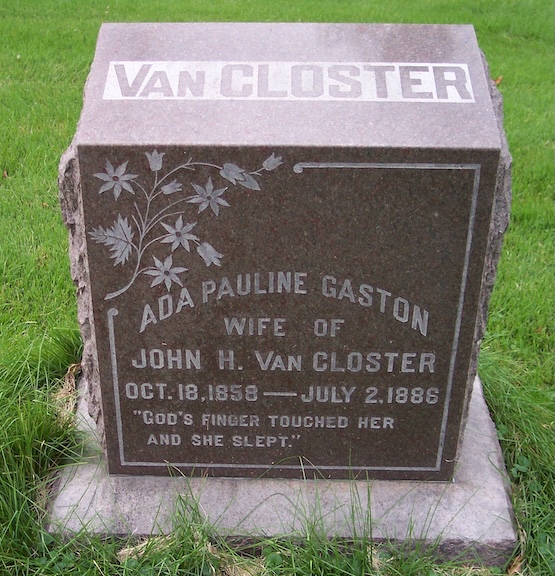
Photograph taken by SRGF of the Find A Grave site.
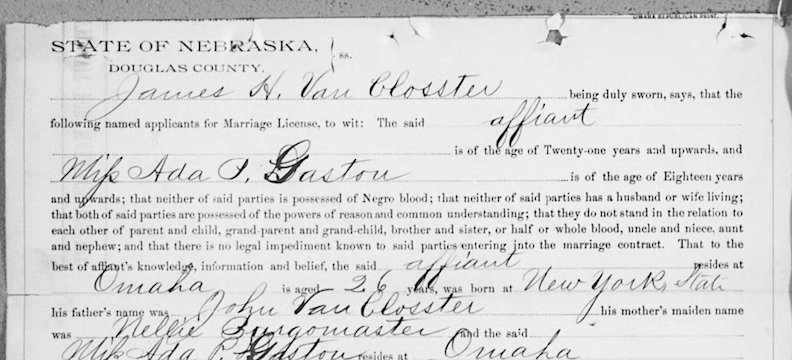
1884 marriage license of Ada P. Gaston and Mr. Van Closter courtesy of the Nebraska, U. S. Select County Marriage Records of 1855-1908.
I believe this gentleman has been referenced in historical texts as J. H. Van Closter and J. Herbert Van Closter, a convenience, due to these untidy inconsistencies. Because we enjoy complication, I kept chiseling away and include these challenges for all of my reader friends.
James H. Van Closter stopped receiving press in May of 1888.
John H. Van Closter began receiving press at the time of the servant girl’s lamp fire in his home after his wife had died in 1886.
The mystery continues…
It was after dear Ada’s death, amidst these complicated circumstances, Mr. John Herbert Van Closter commenced the acquisition of numerous parcels in Omaha, specifically ten days after Miss Ada’s estate was closed and shortly thereafter, ascended to the presidency of the Nebraska Mortgage Loan Company in the Paxton Building. Matters would increasingly become more complex and not favorably. On November 12, 1888, the Omaha Daily Bee reported that the Nebraska Mortgage Company had established operations in Omaha, with an authorized capital of $50,000. “The object of the corporation is to deal in real estate, negotiate loans on realty, chattle, collateral or personal securities,” and was owned by J. H. Van Closter and H. H. Henderson. The name H. H. Henderson came across this detective’s desk again and again in this strange tale. Although Mr. Van Closter is esteemed in Omaha’s historical records for his significant contributions to the development of the Park Avenue neighborhood, engaging in transactions and construction in the Park Avenue-Hanscom Park vicinity, however, none of the firm’s shadowy dealings or questionable practices, nor the details regarding his colorful associate, are included in said history. While conducting business for his Nebraska Mortgage Loan Company, our enigmatic figure Van Closter engaged in numerous transactions with various individuals throughout the area. One of them was his late wife’s mother, Mrs. Mary Elizabeth Bradford Gaston, who ultimately pursued legal action against him. And that was just the tip of the iceberg.
Van Closter and Henderson. The more I dug into them, I found they were so very similar, deliberate, strange counterparts. Two men moving in conscious imitation of one another. Theirs was a fascinating convergence within a shared environment that rewarded charm, speculation, and a certain elasticity of ethics. Omaha in the late 1880s was not so large a city that men engaged in mortgage finance and real estate speculation could avoid one another. Both operated within overlapping commercial circles, frequented the same financial institutions, and participated in the same speculative culture that defined the Omaha’s rapid expansion. In such a big-small town, introductions were more of an inevitability. The similarities in their personal lives, however, lent a planned symmetry to the narrative. Both men were married to women who died comparatively young; both produced a single son; and both, at critical moments, appear to have occupied a position of social respectability, only to thereafter fall publicly, whether deliberately or by misjudgment, into disrepute. More revealing is their mutual transition into hotel management after the collapse of their well published financial ventures. This hotel migration was neither uncommon nor entirely dishonorable.
What you have here is not merely a collection of detective notes but the outline of a small Omaha drama—one that moves from respectability to scandal.
Permit Portfolio
In 1889, John/James Van Closter submitted a building permit for $10,000 with intention to erect “three story double brick flats,” Park Avenue and Pacific Street, followed by another request in November 1889 for $20,000, detailing a location at 29th and Mason Street. The vague specs of both listings did not quite fit our 1040 South 29th Street. I include them here for your perusal.
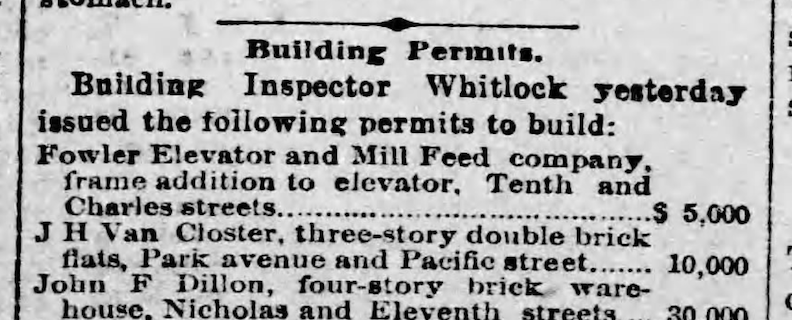
Omaha Daily World-Herald. 1889. Three-story brick flats, Park Avenue and Pacific Street.
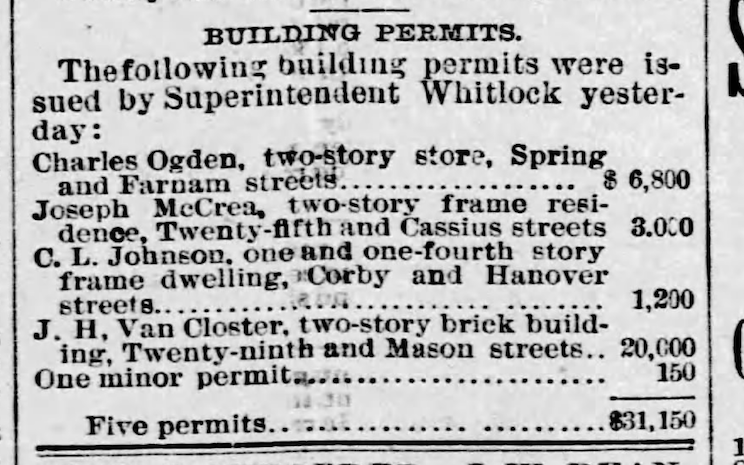
Omaha World-Herald. 1889, November. J. H. Van Closter two story brick building, Twenty-ninth and Mason Streets $20,000 building permit.
The 1980 Landmark Designation application for the Mason Terrace at 2915-2921 Mason Street and 1001 Park Avenue, along with the Van Closter residence at 2911 Mason Street, suggests that the earlier building permits from 1889 most likely pertain to these projects. Of note, Mr. Van Closter selected the architectural firm Findley and Shields for those projects, a duo that would again be hired for our obsession building of focus.
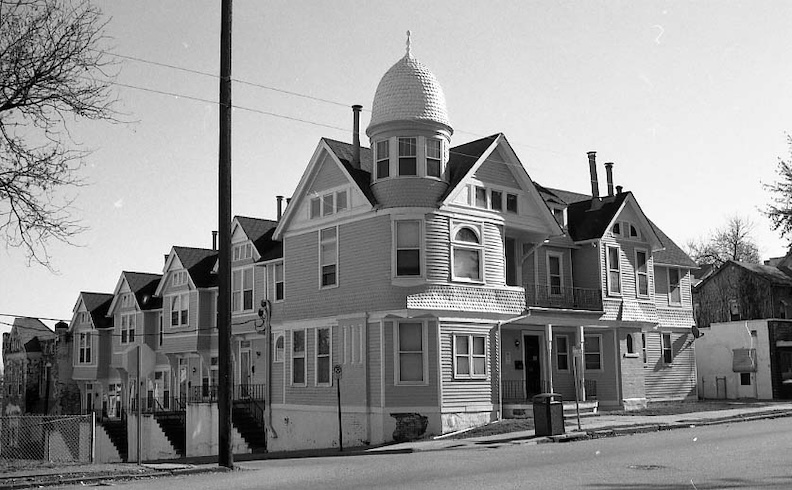
The glorious architectural conglomerate of the Queen Anne 1001 Park Avenue house, the Mason Terrace row houses and the 2911 Mason residence on the east end. Photo borrowed from the Douglas County Reconnaissance Survey (2003).
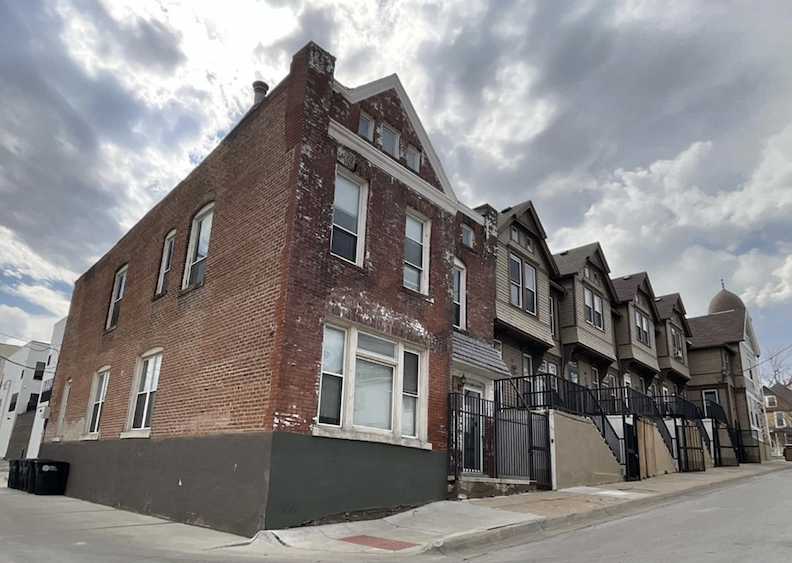
Eastern most end of the conglomerate is the fascinating brick 2911 Mason Street. Current photograph borrowed from the Douglas County Assessor site.
“Would That It Were So Simple,” I could have located the building permit for our splendid Georgia Avenue structure, but I did not. What is traceable is that Van Closter acquired the land in October 1889, and by June 1890, the structure was completed and leased to families. The formal Nomination for Landmark Designation for Georgia Apartments at 1040 South 29th Street, dated October 1978, the National Register of Historic Places Inventory-Nomination Form of 1980, along with the book An Inventory of Historic Omaha Buildings prepared by Landmarks Inc and the Landmarks Heritage Preservation Commission (1980), indicates that the Georgia Apartment building in question was completed in 1890. The Findley and Shields firm has been designated as the Architect of Record in all reports. I wish I could have located my solid clues to authenticate this information and enhance the building’s historical integrity, while I acknowledge that the National Register of Historic Places database is sufficiently reliable. I did find it irksome but validating that there is no evidence in the abstract, concerning the architect or builder.
The Case of the Misidentified Row House
Before we go a creep further, boys and girls, it is worth making brief mention of an article I wrote some months ago concerning the row houses at 563 South 28th Street—a structure persistently confused with our present obsession at 1040 South 29th Street. In that earlier piece I attempted to sort the evidence properly, laying out both the architectural distinctions and the building’s tangled little biography. Regrettably, 563 South 28th Street was demolished after the article appeared, proving once again that in Omaha the wrecking ball often arrives just as the case notes are finally in order. For your perusal:
THE BOARDED WINDOWS OF 563 SOUTH TWENTY-EIGHTH STREET

563 South 28th Street stood on the east side of the future Interstate 480 corridor and, although erected within roughly the same feverish row house period, it was never the same creature as our 1040 South 29th Street fixation. The two buildings merely found themselves staring across the modern interstate like distant cousins at a family funeral—similar in age perhaps, but otherwise possessed of entirely different architectural fingerprints, despite generations of local mythology insisting upon a shared identity.
Findley and Shields
By 1889 the architectural presence of William E. Findley and Alexander Shields emerges in Omaha, appearing with increasing regularity in local reporting, signaling both ambition and opportunity at the edge of a rapidly developing city. The two would join under the firm name Findley and Shields, a collaboration as fleeting as it was productive. The Omaha Daily Bee noted that W. E. Findley began that year with contracts for thirteen building plans—ten buildings of brick and three of wood.
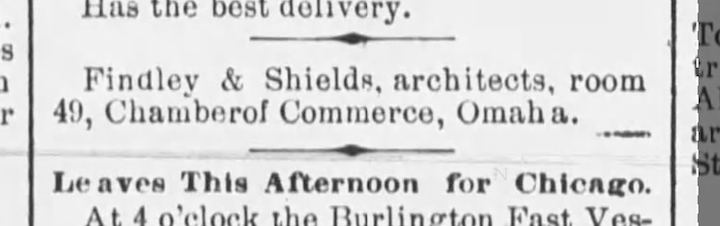
Omaha Evening Bee. 1889.
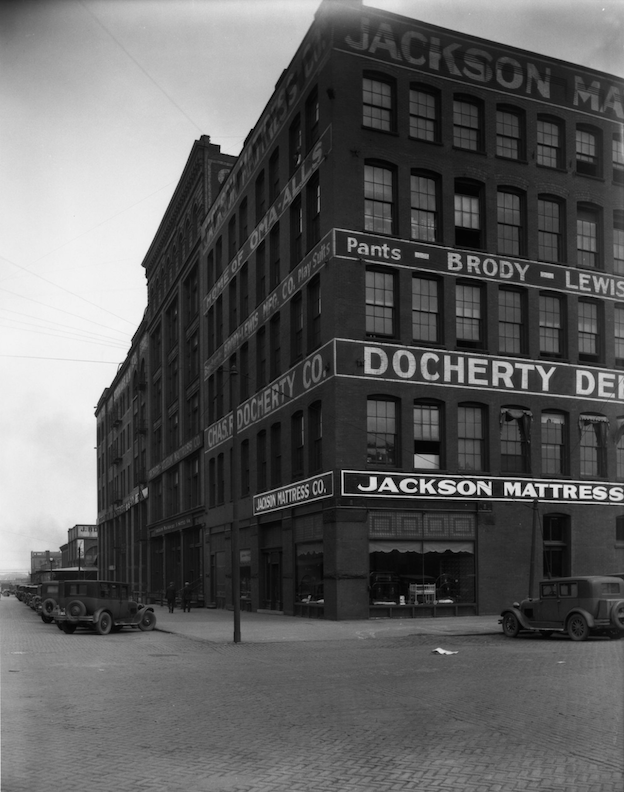
The Jackson Mattress Co. building as seen in 1929 at the southeast corner of 12th and Howard Streets in the Old Market. The five-story brick structure was originally planned by architects Findley and Shields and constructed in 1892-93 at a cost of $40,000 for footwear wholesalers W.V. Morse & Co. and Charles A. Coe and Company. Photograph by Bostwick, Louis (1868-1943) and Frohardt, Homer (1885-1972). The Durham Museum. By the 1950s, Mayfair Textiles, a prominent wholesale fabric distributor, had established its presence. During my adolescence in the 1980s, they had a wonderful retail store on the main and I believe second floors known as Mayfair Textiles. Just rich. In 1999, when the firm relocated westward, the property was renovated into apartments.
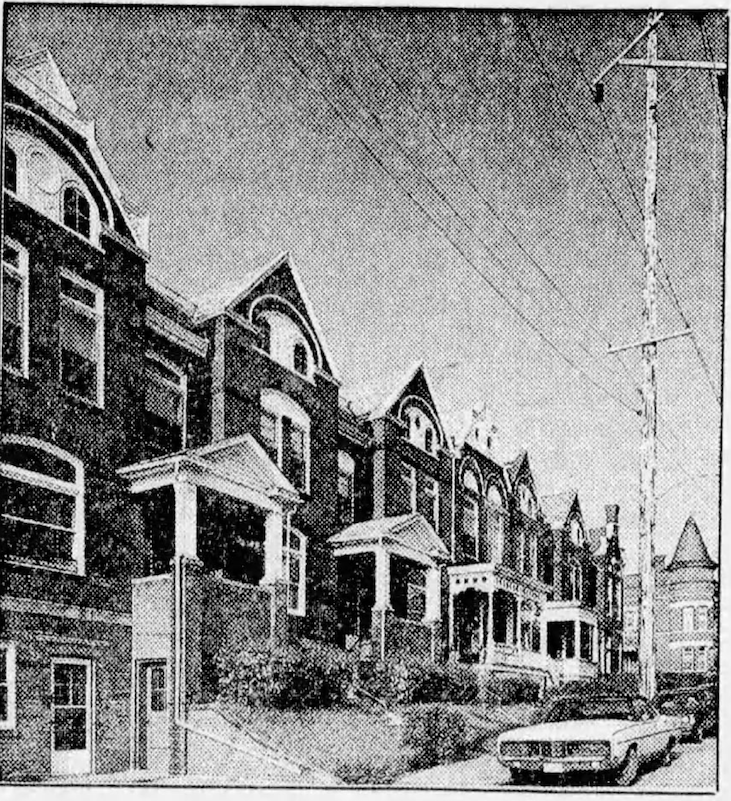
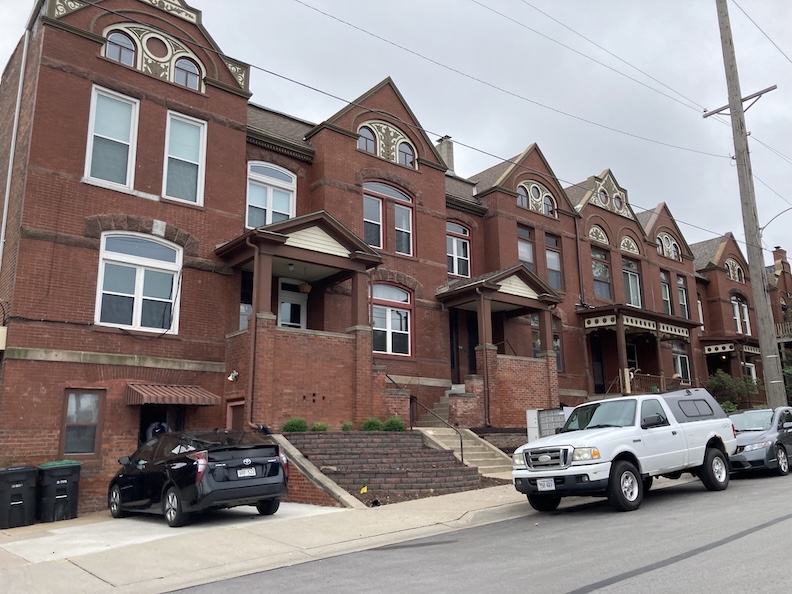
Findley and Shields constructed these lovely row buildings on Pacific Street in the 1890s, specifically from 2661 to 2969 Pacific Street. The black and white photo was featured in the Omaha World-Herald in 1993, although most likely taken decades before. This distinctive collection of row buildings is adjacent to Park Avenue. Their design incorporates aspects of the Queen Anne style, which was prevalent at the turn of the century. I took the second photograph in 2022. In Love.
As summarized in the Landmark nomination report, the firm’s Omaha career spanned only a few years, from 1889 to 1892, yet within that narrow frame they secured several commissions, including the Georgia Apartments and the Mayfair Textile Building at 1123 Howard Street (shown above), erected in 1892. Their work though only intermittently documented (case in point, our Georgia Row building at 1040 South 29th Street) suggested a practice attentive to the prevailing architectural tastes of the period. Findley and Shields’ previously mentioned collaborative work with Van Closter on a series of row houses along Mason and Pacific Street further illustrates their engagement with the Queen Anne style. The partnership came out strong, and their lovely, functional designs endure to this day, as demonstrated before our eyes. That being said, I consider the Georgia Row building at 1040 South 29th Street to be their most significant architectural contribution— their Monument.
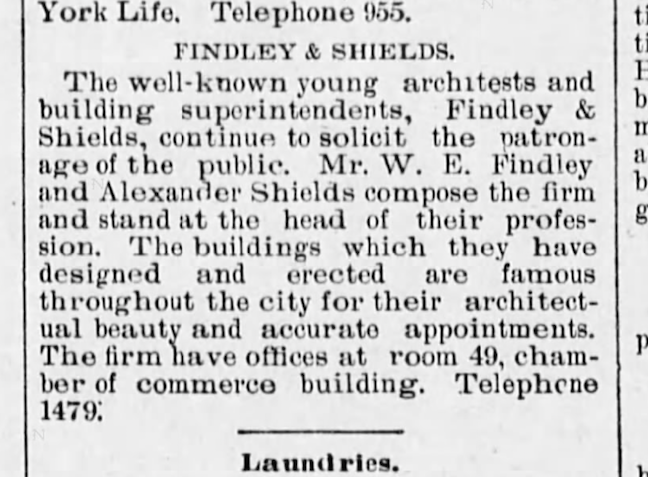
Omaha Daily Bee. 1890, December.
Although it was difficult to find much of these two obscure architects, during the building of the Georgia Row, W. E. Findley’s father passed away and Findley was called out of state to Ohio. In 1892, the Rapid City Journal (Rapid City, South Dakota) recorded Alexander Shields visit to South Dakota, where he surveyed local quarries with an eye toward sourcing stone for a proposed $40,000 building. His assessment—the stone around Rapid City had a superior quality and that Omaha would be a large patron to this area for “you have just the quality Omaha people demand.”
The Findley & Shields partnership dissolved in 1893, as such alliances often did, quietly and without ceremony. Yet both men continued to practice. Here is what I was able to find.
William Elliott Findley was born in 1849 in Ohio to Reverend Samuel D. Findley and Rebecca Hanson Findley. Finding William’s schooling was a bit trickier. We don’t often hear of Miami University in these parts, but indeed William attained his Architecture degree from Miami University from 1869 to 1870. He married Clara Denise in 1874 in Montgomery County, Ohio. He worked as an “editor” in three cities before arriving in Omaha. A clue to one location was the birth of Findley’s daughter, Adala Findley Hopper, in Leavenworth, Kansas in about 1877. Son Raymond Hanson Findley was born in 1884 while the family again lived in Ohio. (Telling of a family gene or influence, son Raymond graduated from the University of Nebraska in 1908 with a civil engineering degree, and soon after joined the Omaha and Council Bluffs Street Railway Company, where he rose to Chief Engineer by 1927.) The William Findley family moved to Omaha in 1888. The National Register of Historic Places Inventory-Nomination Form noted that William E. Findley had been employed in the office of the locally prominent architect John McDonald. Architect W. E. Findley died at age 59 in 1908 in his Omaha home. The Norfolk Press made an interesting connection on that day, noting that Findley’s set of buildings of the National Corn Exposition was razed on that same day. William Elliott Findley was buried at the Forest Lawn Memorial Park.
Alexander S. Shields was born in Pennsylvania in 1851, son of John Shields and Myrtilla Stewart Shields. He grew up on a farm. Alexander Shields wed his first spouse, Florence A. McBride Shields, in Ohio in 1877. The couple arrived in Omaha and established their residence in 1887 or 88. If Findley & Shields were acquainted while in Ohio, I could not confirm that. Wife Florence passed away in her early 30s in 1893. The architect remarried in 1898 to Margaret Dowdle Shields from Illinois. Their wedding announcement indicated that the groom was a “prosperous businessman of this city” and characterized Margaret as a “prominent young woman” from Illinois. It is reported that Margaret died around 1902. Some unsubstantiated evidence suggests that Alexander married a third time. Regrettably, I could not locate any information regarding his formal education or training in architecture; but, I did discover that he was employed as an architect at the Harry Lawrie firm after the Findley & Shields partnership ended. Alexander Shields passed away in 1927 at the Old People’s Home on Florence Boulevard, having lived in Omaha for forty years. He was interred in Forest Lawn Memorial Park, with five brothers as his only survivors.
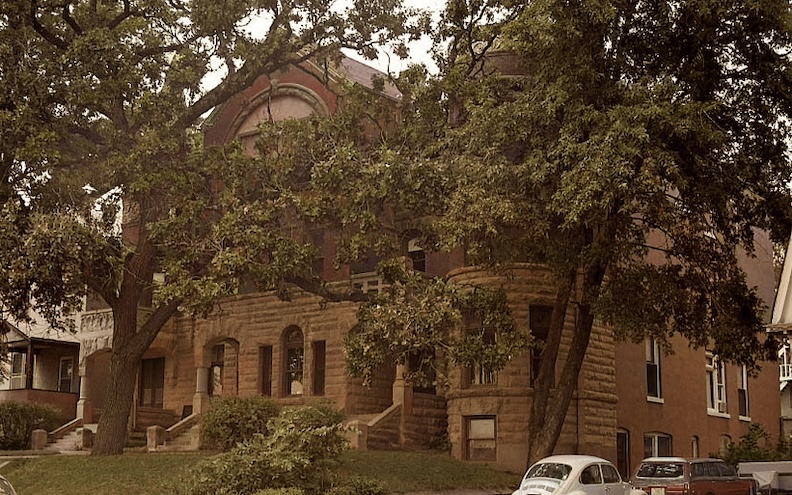
1980.
Introducing 1040 Georgia Avenue/1040–44 South 29th Street
When 1040 Georgia Avenue/1040–44 South 29th Street first rose up in 1890, she must have seemed both towering and majestic, a structure set apart from her surroundings by scale as much as attitude. In a city still finding its architectural confidence (it would be difficult, perhaps impossible, to say that we ever arrived at a settled architectural identity when so much has been lost almost as soon as it was made) the 1040 Georgia Avenue/1040-44 South 29th Street building asserted itself with a kind of deliberate grandeur, standing above its contemporaries much as Omaha’s Black Elk Peak did. Early Omahans dubbed her a Mansion but she “originally contained three housing units stacked vertically.” More than just a shelter, it was a design exhibition –but was this the dreamwork of Van Closter, Findley and Shields, or just Findley and Shields?
The formal Nomination for Landmark Designation for Georgia Apartments at 1040 South 29th Street, (October 1978), the National Register of Historic Places Inventory Nomination Form, (prepared by Robert Peters and Daniel Kidd in 1978), and details taken from the Abstract of Title to Lot 27, Rees Place Addition all consistently emphasized the significance of the building. Built to a cost of some $20,000, it has been characterized as the best residential example of the Romanesque Revival style in Omaha, a building that “perfectly expresses the exuberance of its age.” The façade is divided into three distinct bays, combines heavy ground-level porches with upper-story projections and towers, giving depth and rhythm.
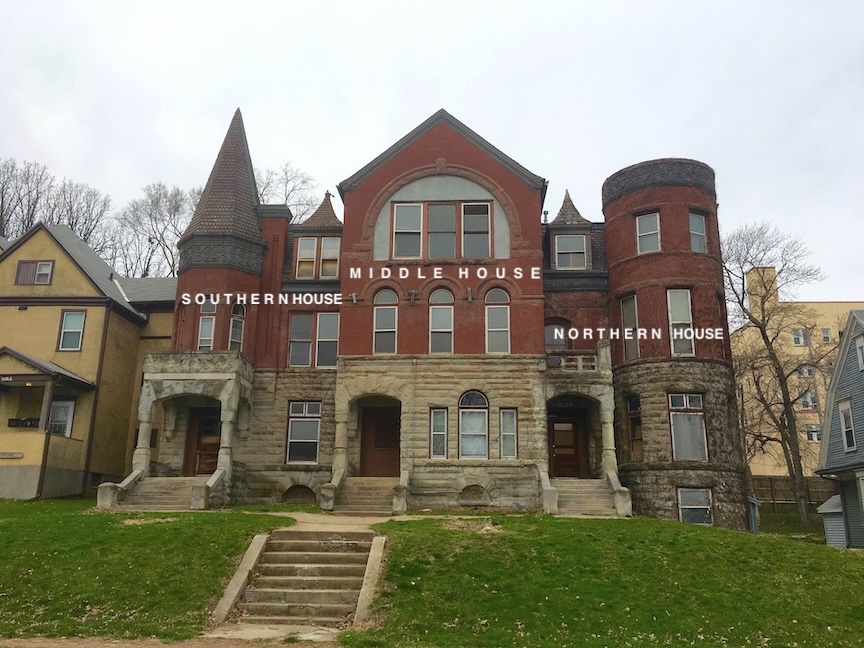
I have utilized this March 2016 LoopNet photograph to delineate the three residences constructed under the convincing disguise of a single monumental home.
Where we had noted previously Findley and Shields’ Queen Anne focus, their work here suggests a confident engagement with contemporary architectural discourse, 1890s, that is–which may appear somewhat peculiar to 2026 observers. The building’s form is at once solid, orderly and restless. While symmetrical in plan, its massing is emphatically asymmetrical, producing a lively, varied silhouette. Towers, turrets, projecting bays, and gables gather in deliberate irregularity, their arrangement governed less by rigid symmetry than by a cultivated sense of “picturesque eclectic” effect. A polygonal turret anchors one side, while a cylindrical tower—or donjon—rises from the other, each contributing to the building’s faintly medieval character. Mother of Miss Cassette has described the structure simply as “scary,” and she is certainly not alone in the sentiment. The Georgia building was not designed for the timid admirer of neat proportions and polite domesticity. The effect is one of studied imbalance, a composition intended to entertain the eye and senses rather than soothe it. She resists easy affection.
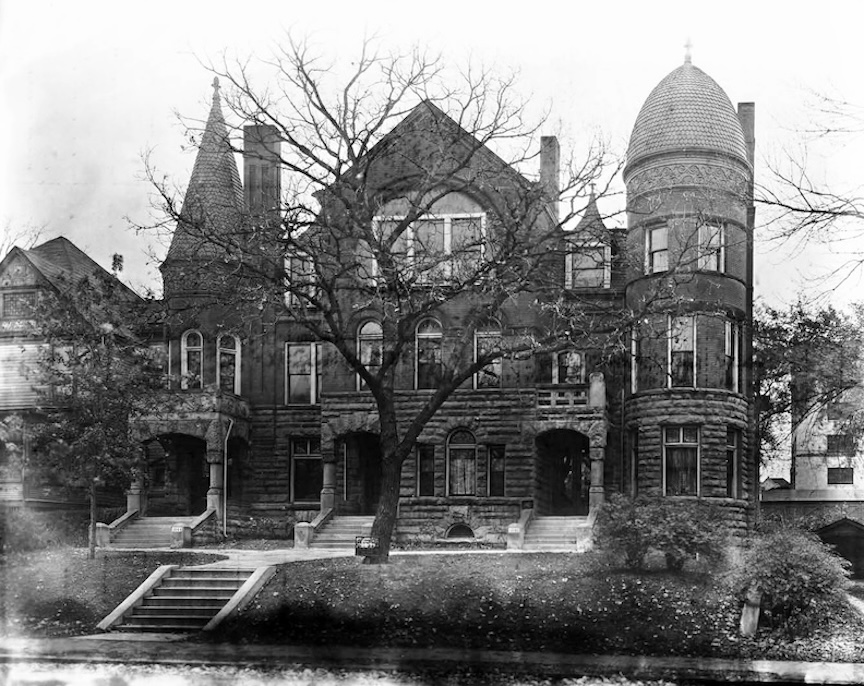
One of our earliest viewings of 1040 Georgia Avenue/South 29th was from this 1932 photograph. “Unprocessed Dewell Collection.” Nebraska State Historical Society.
Materiality plays an equally important role. The lower façade rests on a base of rusticated limestone, whose massiveness is relieved by carved foliage; the upper levels are of red brick with sandstone bands and stained glass. “The resultant sense of weight is reinforced by the depth of straight topped windows which are divided into rectangular lights by stone mullions and capped by stained glass transoms manufactured by the Omaha Art Stained Glass Works.”
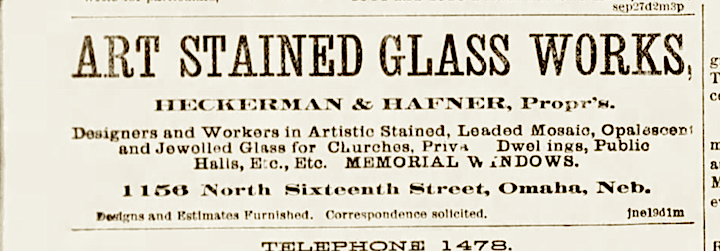
The Daily Nonpareil. 1889, November. Omaha Art Stained Glass Works was at 1158 North 16th Street.
The polychromatic treatment and the combination of rough and smooth textures show the influence of Henry Hobson Richardson and the broader Richardsonian Romanesque tradition, here adapted to the residential. The impression of solidity is expressed in arched entrances, deeply set windows, and ample porches; refinement and complexity are shown in decorative details of terra cotta, metalwork, and glass.
The architectural hybridity was planful. The late nineteenth century, under the influence of the Aesthetic Movement, was a time of rich, varied surface and delightful variation. The Queen Anne design, especially as seen in English examples was about asymmetry, texture, and adornment as virtues. These concepts were given a particularly American expression in buildings like the Georgia Apartments, where they combined with Romanesque massing to produce shapes that were sturdy while inventive. Rows of identical homes gave way to compositions that were never quite the same, and visual interest was developed through contrast and complexity.
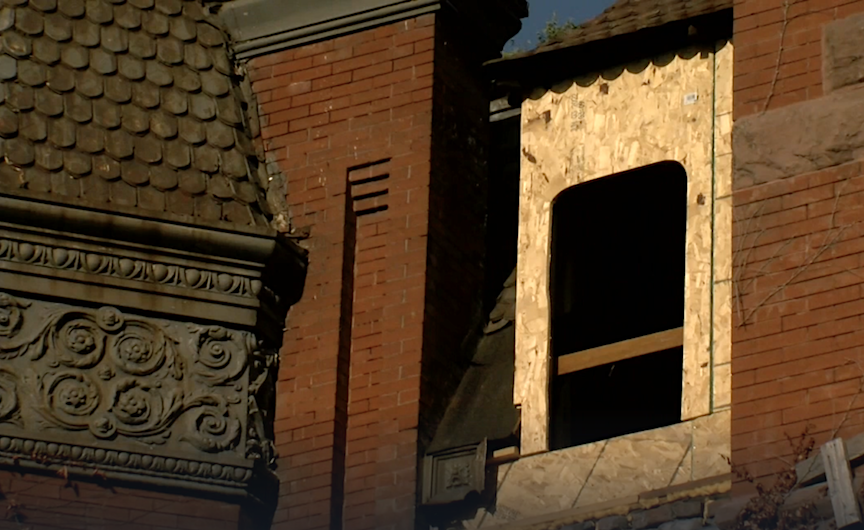
Images captured during the rehabilitation of 1040 Georgia Avenue/South 29th Street really make plain the level of intricacy not easily visible in historic photos. Ornate pressed metal floral cornice* and fish scale roof. Rebuilding of the dormer on the southern side. Right under the soon to be window wood framing, I spied what I saw as a gray porcelain tile.
*I did not know they were pressed metal until much later.
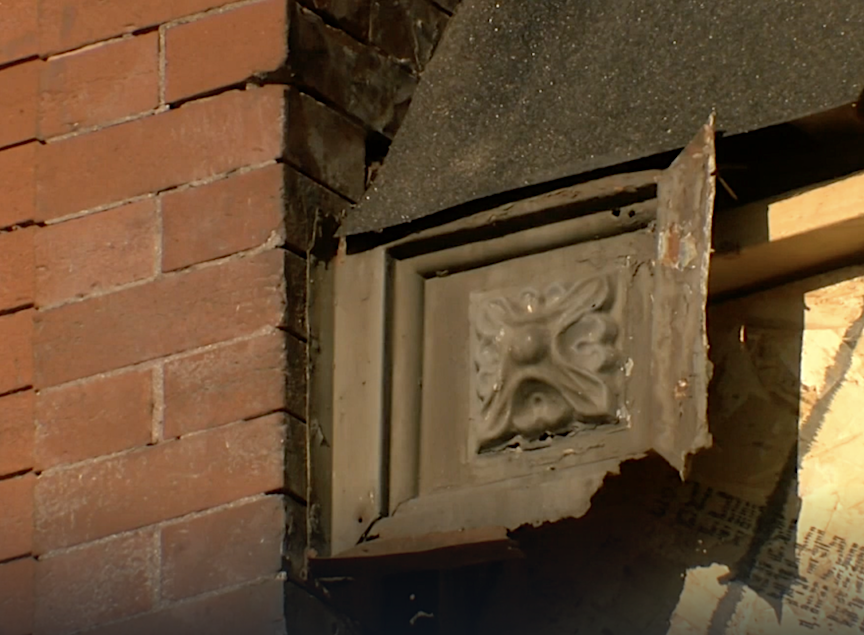
Detail of the tile. An architect friend, Architect Cool Shoes, answered my plea and thought this bit of yumminess looked like it was a pressed sheet metal ornament fragment. She pointed to the edges, which were clearly metal. She surmised it might have extended horizontally, continuous along the dormer’s edge. She suspected it was “part of a repeating motif,” noting the “egg and dart” to the left edging the octagonal tower, or that “it might have been used as an accent for a termination or direction change.” Of note, my little sheet metal tile obsession did not make the Final Cut when inCOMMON completed the building’s spiff up.
A great description from the National Register of Historic Places Inventory—Nomination Form that I would find later: “The rounded tower at the northeast corner is treated with stone banding at the heads and sills of windows, and crowning this section is a pressed-metal cornice with egg-and-dart molding and swirling rinceaux (sometimes rinceau). A similar embellishment appears on the hexagonal tower at the southeast, which is topped by am imbricated roof rising to a peak.”
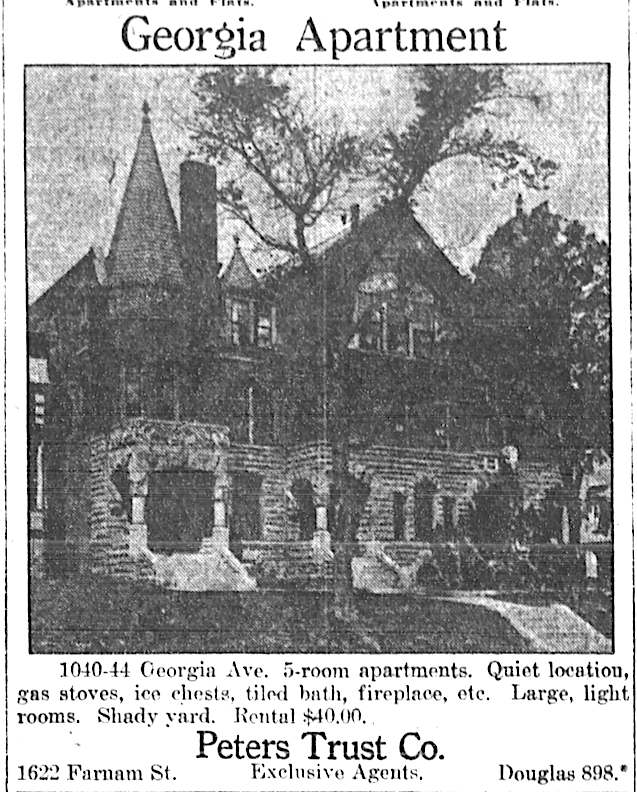
Our earliest images of Miss 1040 Georgia Avenue/South 29th was this 1915 advertisement, back when the structure had transitioned to five apartments. Omaha Daily Bee. May 1915. There was also another big article in this time period where the property was included in the “most prominent apartment houses in Omaha” shortlist.
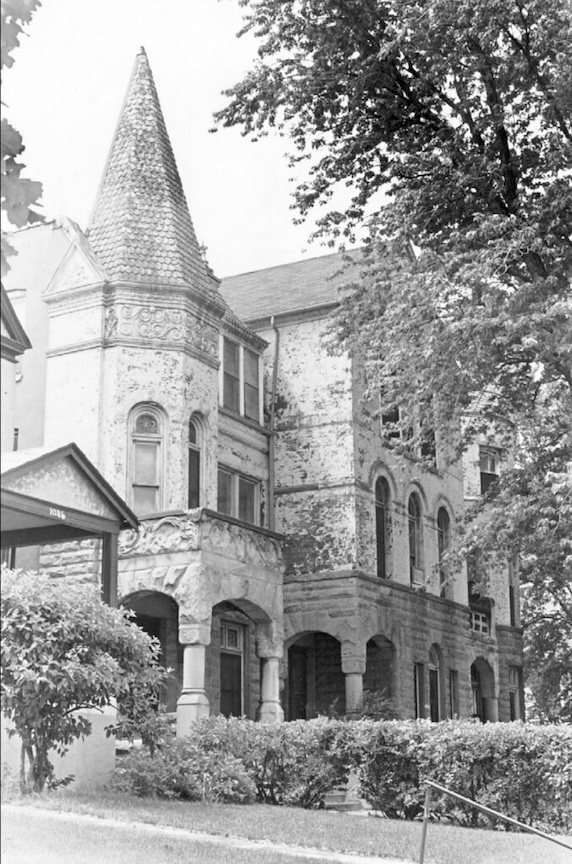
1972 Photograph borrowed from the Nebraska State Historical Society. Rough, rough years.
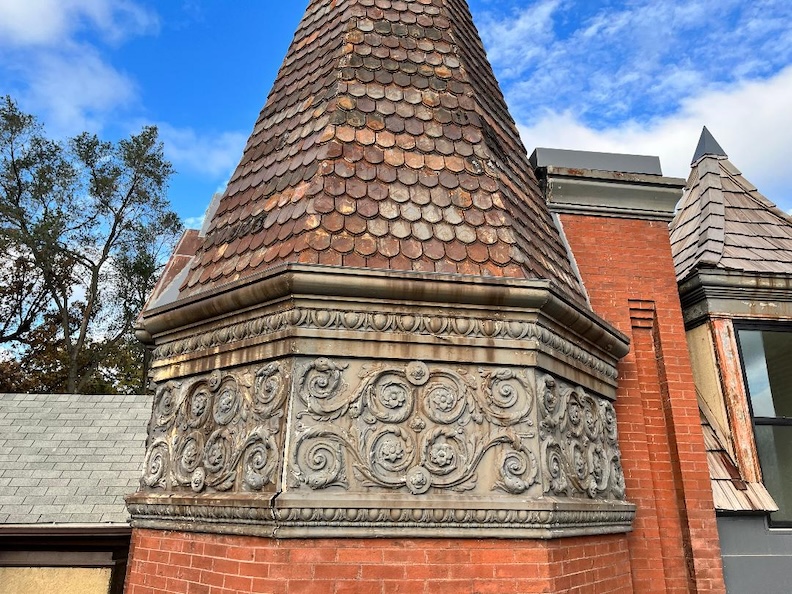
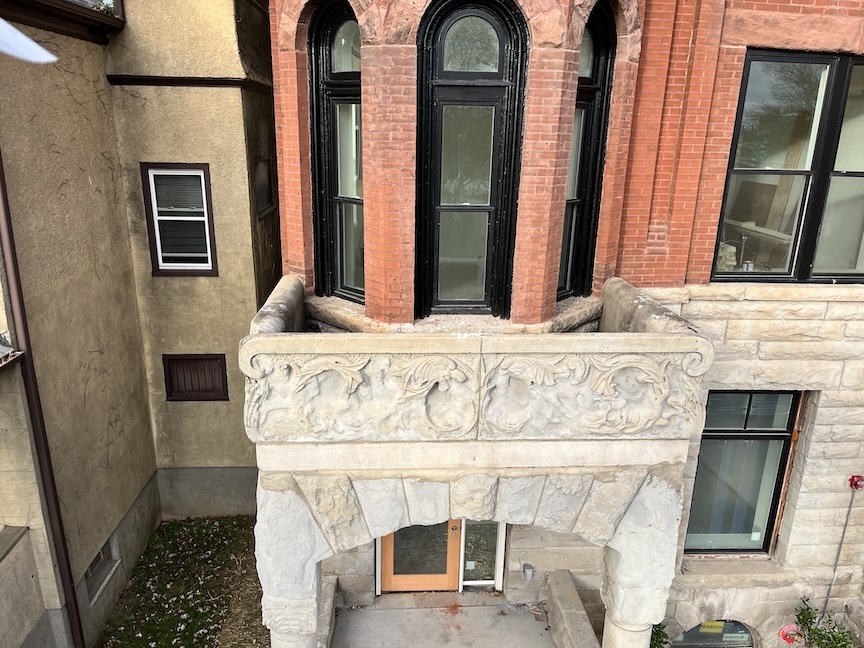
Up Close. Both of these beautiful photos were shared by Christian Gray of inCOMMON. The pressed metal floral cornice depicting swirling vines around a flower motif in the late 1880s and 1890s epitomized the Art Nouveau movement. The to die for fish scales of the high pitched octagonal tower are all the more fascinating up close. This second image is a lovely one of the stone carving of the southern entrance. I see sea creatures carved in stone with a scroll–do you?
The composition of the southern bay of the building is particularly animated, a calculated ease achieved in the juxtaposition of arched and rectilinear window forms. The elevation finishes with an octagonal tower with a steeply pitched metal shingle roof in the so-called “fish scale” pattern, adding texture and a touch of ornamentation. Below it is a pressed-metal floral entablature by the Acme Iron and Wire Works of Omaha, which suggests a touch of refined delicacy, almost a self-consciousness in a space that would have been too heavy.
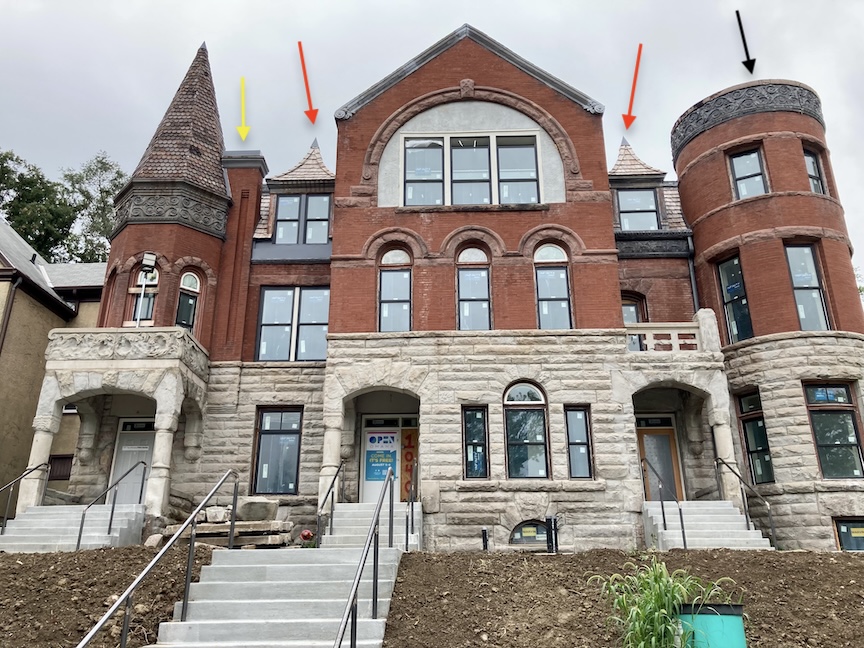
Front elevation. A photo I took during the 2023 rehab. Yellow arrow points to the discreet chimney. Red arrows point to the southern pyramidal dormer and the northern bay dormer, both featuring charming pyramidal roofs. Black arrow points to the northern turret’s pressed metal floral cornice (seen without a roof.)
Between this southern tower and the central bay, the composition tightens. A corniced chimney rises with quiet authority, accompanied by a double-windowed wall dormer capped with a concave, pyramidal metal roof. The arrangement is neither incidental nor entirely restrained; rather, it suggests a deliberate layering of forms, as though the architects, having discovered the pleasures of variety, felt little inclination to relinquish them. To the north, the cylindrical turret—or donjon—offers a counterpoint of equal vigor. Here, straight-topped windows are set deeply within the masonry, their rusticated red sandstone heads and sills emphasizing both depth and solidity. The turret terminates in a pressed metal floral cornice, echoing the decorative language established elsewhere, and is similarly accompanied by a single dormer with a concave, pyramidal roof. Taken together, we see a building that is assertive, entertaining and faintly amused by its own abundance.
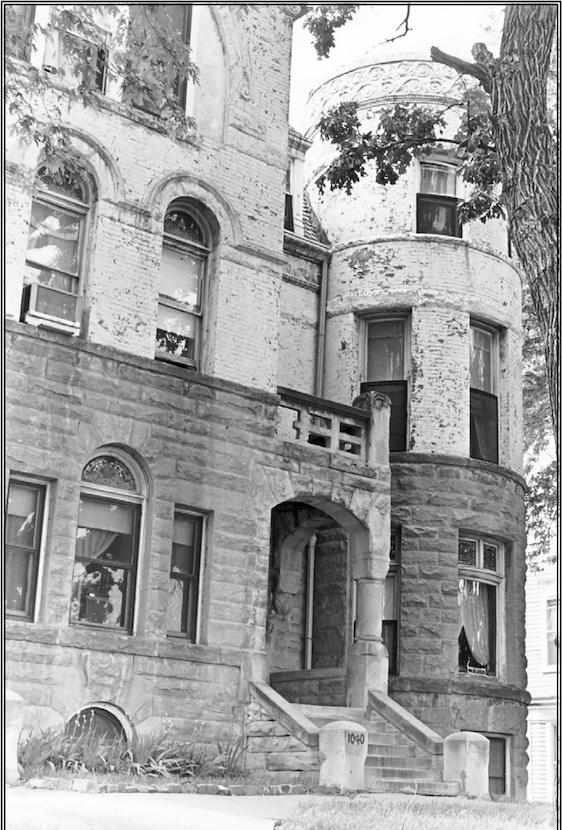
1972 photograph from the Nebraska Historical Society archives. As noted in Robert Peters (Preservation Administrator) and Daniel Kidd (Architectural Historian)’s 1980 National Register of Historic Places Inventory—Nomination Form, “The basement is exposed on the front where it is lit by two round-arched windows, and a prominent feature of the centered pavilion is a Palladian window.”
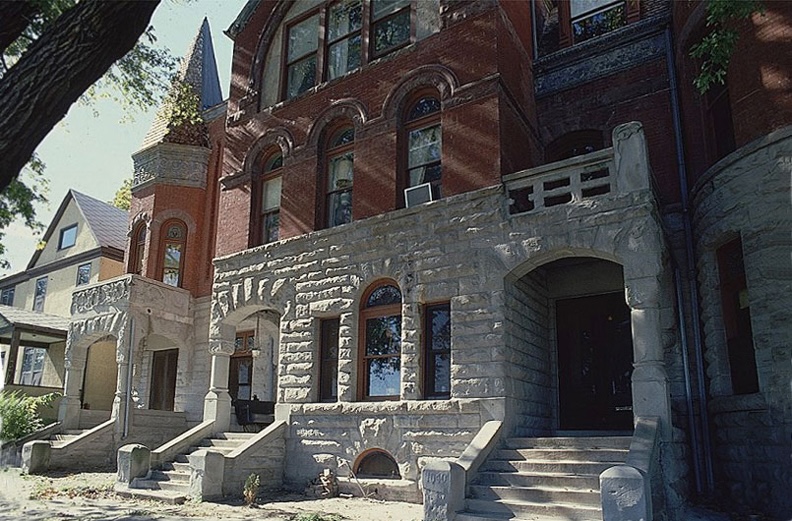
1980s photograph of 1040 South 29th Street. Just how I remember her. From the 1980 National Register of Historic Places Inventory—Nomination Form, “The pavilion’s third level contains a tripartite window arrangement set within a round-arched and stuccoed panel that is girded overhead by a prominent sandstone molding.” This middle, third-floor, three-window arrangement contained two of Apartment #10’s bedrooms, including a room I claimed as my own during the later 1980s.
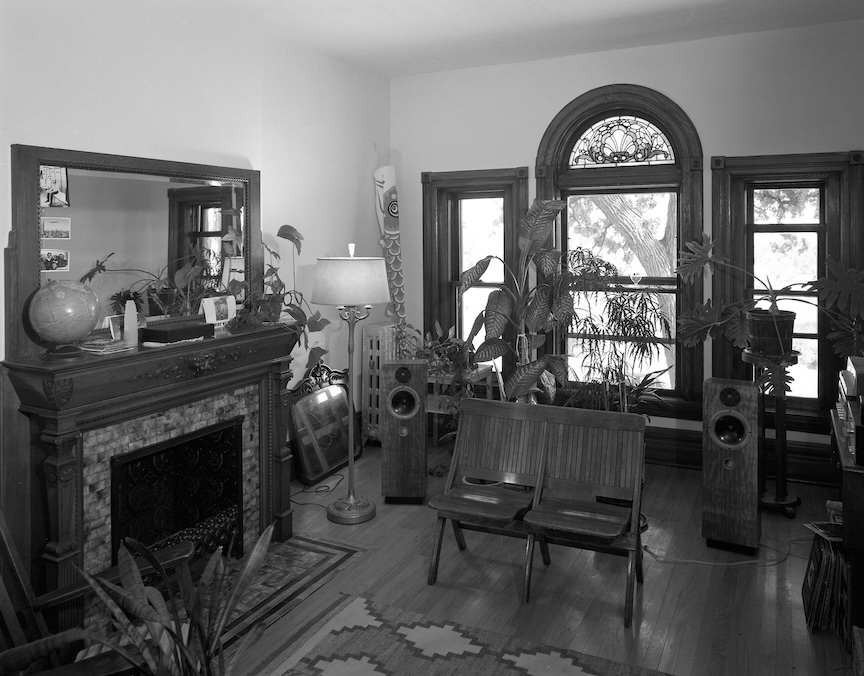
Lovely interior borrowed from the Historic Properties and Surveys from 1980 Landmark Inc. Survey. This has to be the middle house, first floor. If this was your apartment, please let us know. I must know if you still have these speakers and aesthetic and I won’t sleep until we iron this out.
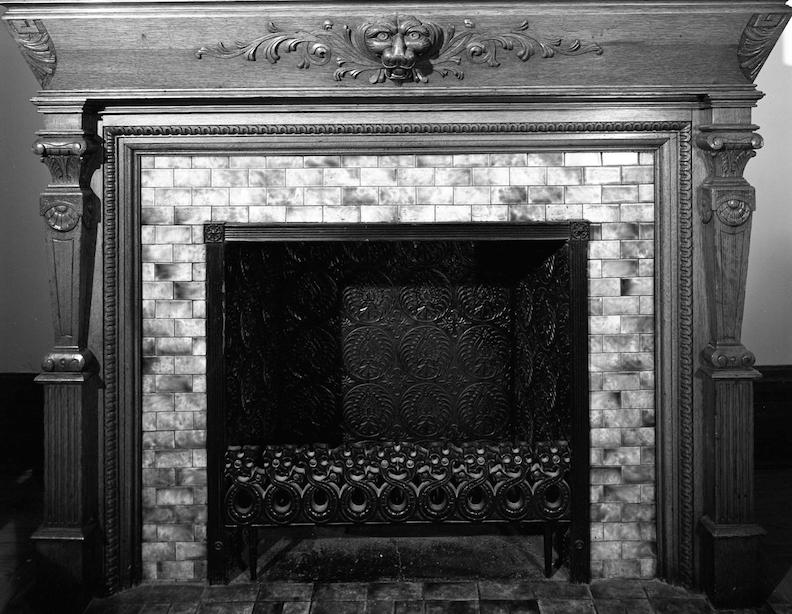
“Eight fireplaces, six on the first floor and two on the second, provide the major focus of ornamentation—oak columns with grotesque capitals frame mirrors below which are located tile bordered fire boxes impressed with classical figural scenes.” Fireplace photograph by Lynn Meyer. Borrowed from the Omaha Heritage Preservation site. Lynn Meyer collection.
Inside, the richness continues in quieter form. Oak woodwork and floors establish a consistent material language, while fireplaces—eight in total—serve as focal points of interior ornamentation. Columns with carved, almost whimsical capitals frame mirrored overmantels, and tiled fireboxes depict classical scenes (six on the first floor and two on the second.) The gradual reduction in ceiling height from floor to floor lends a subtle sense of progression (10’, 9’ and 8’ respectively), while carved floral capped newel posts staircases and spindled balustrades provide moments of decorative emphasis without excess.
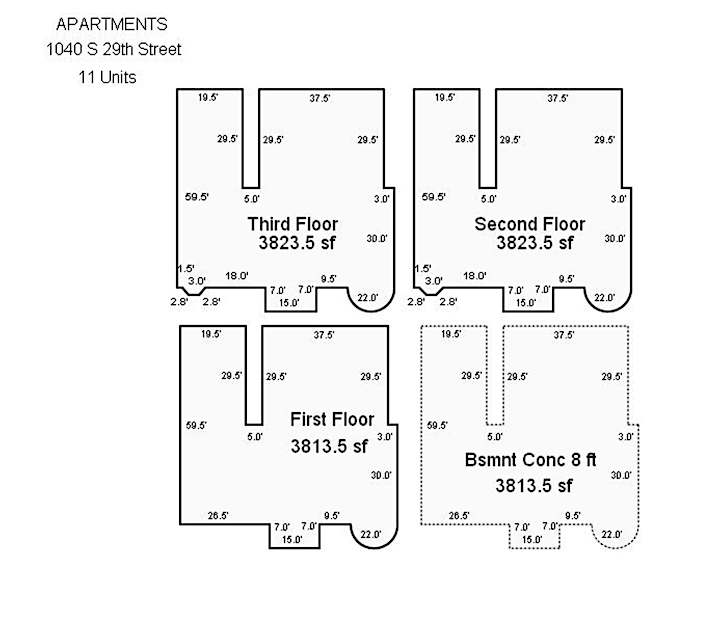
Floor plan image borrowed from the Douglas County Assessor site. The floor plan offered by the Douglas County Assessor is frustratingly vague, though even its outlines suggest the astonishing scale of the early building. (It currently reads “11 units,” quantifying the apartments in the building now. We are considering the footprint and the actual measurements.) Divided among only three households, each residence appears, if my adding is correct, to have contained well in excess of 5,000 square feet—a quantity of domestic space considered a true luxury by modern standards and scarcely less so in the Omaha of the 1890s. Having occupied Apartment 10 during the 1980s, I can attest that even in its diminished state, the floorspace retained a remarkable breadth. One is reminded that many of Omaha’s newcomers arrived from eastern cities where families lived in compressed rows and narrow flats, often stacked upon one another with heroic intimacy. This stone building must have appeared as a kind of western show palace with elbow room in abundance.
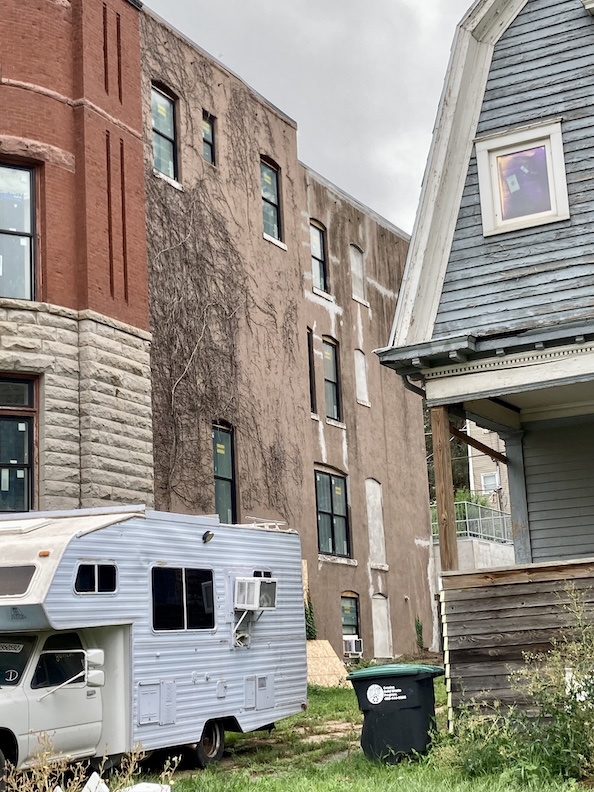
Northern elevation photo captured in 2023.
Yet for all its front facing ornament and complexity, the building retained a certain Omaha reserve. Its side and rear elevations, rendered in plain brick and largely unadorned, remind one that utility and economy persisted alongside display. All except the front elevation had been covered with stucco for as long as anyone living can remember. One suspects these were originally exposed utility brick bearing walls, later subdued beneath stucco in the name of improvement. Honestly, I go back and forth. This is a question I examined in my THE BOARDED WINDOWS OF 563 SOUTH TWENTY-EIGHTH STREET investigation.
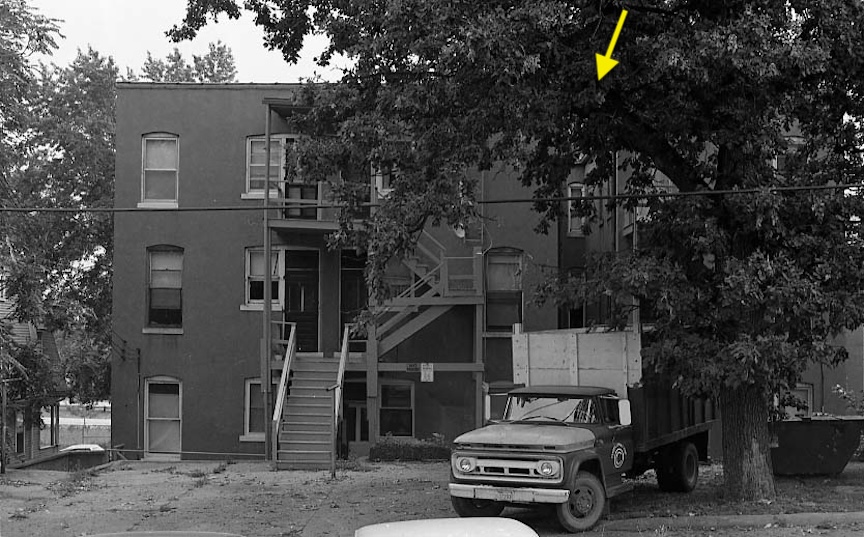
Historic Properties and Surveys from 1980 Landmark Inc. Survey rear elevation. I placed a yellow arrow above the narrow shaft between south and middle sections of building.
The National Register of Historic Places nomination form describes the structure rather clinically as a “building is a modified rectangle with a deep interspace at the rear.” In lived experience, however, this translated into something rather more peculiar: there is odd, slender, deep, vertical shaft that partially divides the southern bay from the middle apartment structure that permits natural light to illuminate the middle bay. Without it, life in the center rooms would have been an exercise in vampire living (we got pretty close) except for the front of house. The feature may also be observed in the floor plan shared earlier. Our own living room and one rear bedroom window faced directly into this descending shaft—an unfortunate circumstance I shall return to later. This contrast—between the elaboration of the principal façade and the restraint elsewhere—suggests a structure conscious of both its public face, its practical functions of ventilation, rentable light, and the stubborn mathematics of construction costs.
By April 1890, reports in the Omaha Evening Bee suggested that the 1040 Georgia Avenue/South 29th stone residences were nearing completion, their elegance already being monetized with brisk confidence by H. H. Henderson for prospective long-term tenants. As a reminder H. H. Henderson and Mr. Van Closter made up the Nebraska Mortgage Loan Company. The stone residences would be completed by about June.
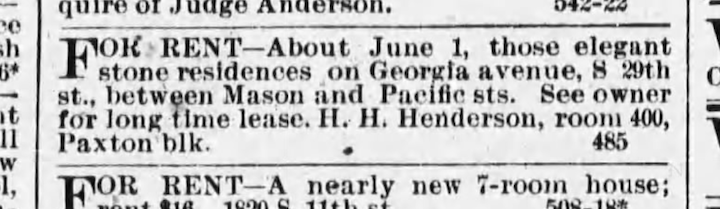
Omaha Evening Bee. 1890, April. “For Rent about June 1, those elegant stone residences on Georgia Avenue, S 29th St, between Mason and Pacific sts. See owner for long time lease. H. H. Henderson, room 400, Paxton blk.”
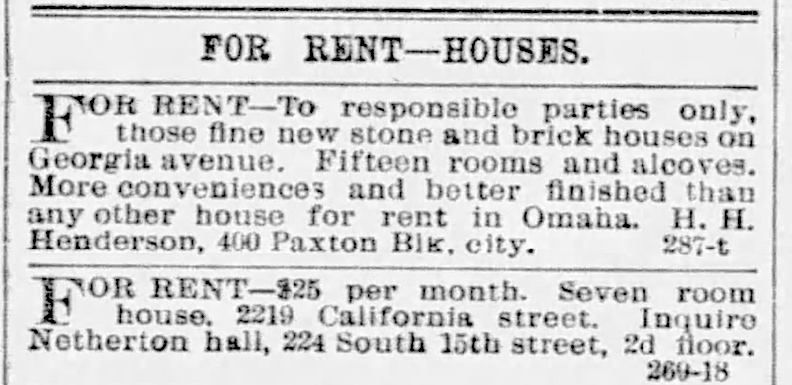
Omaha Daily World-Herald July 1890: “Those fine new stone and brick houses.” 15 rooms and alcoves. “Better finished than any other house for rent in Omaha.”
The Perplexities of Mr. Van Closter
By the autumn of 1890, scarcely months after the grand 1040 Georgia Avenue/South 29th Street residences had opened, signs of financial distress began circling the enterprise with the enthusiasm of crows about a harvest field. Records indicate that J. Herbert Van Closter transferred the 1020 South 29th Street property to his associate, H. H. Henderson, in September of that year. Curiously—or perhaps not curiously at all, considering what followed—Van Closter soon appeared entangled in a remarkable succession of lawsuits concerning unpaid promissory notes. In September alone, architect William Elliott Findley initiated legal proceedings against Van Closter to recover monies owed, while administrators of the estate of Joseph W. Gannett likewise pursued repayment through the courts. Theodore Oleson followed with yet another suit concerning a delinquent note. Nevertheless, amid this small avalanche of creditors, Van Closter managed to sell the 1040 Georgia Avenue/South 29th building to H. H. Henderson for $32,000—a maneuver suggesting either admirable optimism or a man attempting to outrun mathematics itself. The difficulties continued into October and November of 1890. The Nebraska Savings Bank sued Van Closter over a long-overdue note, followed shortly thereafter by foreclosure proceedings initiated by the Mead Investment Company. The Home Investment Company also entered the fray seeking repayment. Altogether, the episode lends the distinct impression that Omaha’s financial community had begun lining up at Van Closter’s doorstep with increasing impatience, each clutching a promissory note.
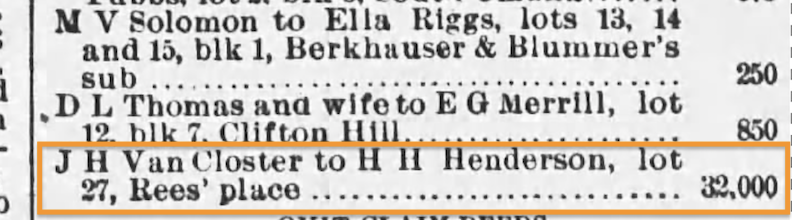
Evening World-Herald, Sept 1890. J. H. Van Closter to H. H. Henderson, lot 27, Rees’ place $32,000.
It was an unfortunate turn that Van Closter transferred the property of our 1040 Georgia Avenue/South 29th obsession to Mr. Henderson, for Henderson himself would soon demonstrate considerable difficulties in remaining ahead of his creditors.
Early Tenants
Back in 2016, the W. Dale Clark Library still housed the Omaha City Directories, those indispensable volumes through which we detectives happily sacrifice both eyesight and free time. The 1890 Directory did not identify the Georgia Row Apartments, but by 1891 a few hopeful leads began to appear. Of note, unit numbers had not yet been installed in the building. Instead, each tenant family had their own mailing address.
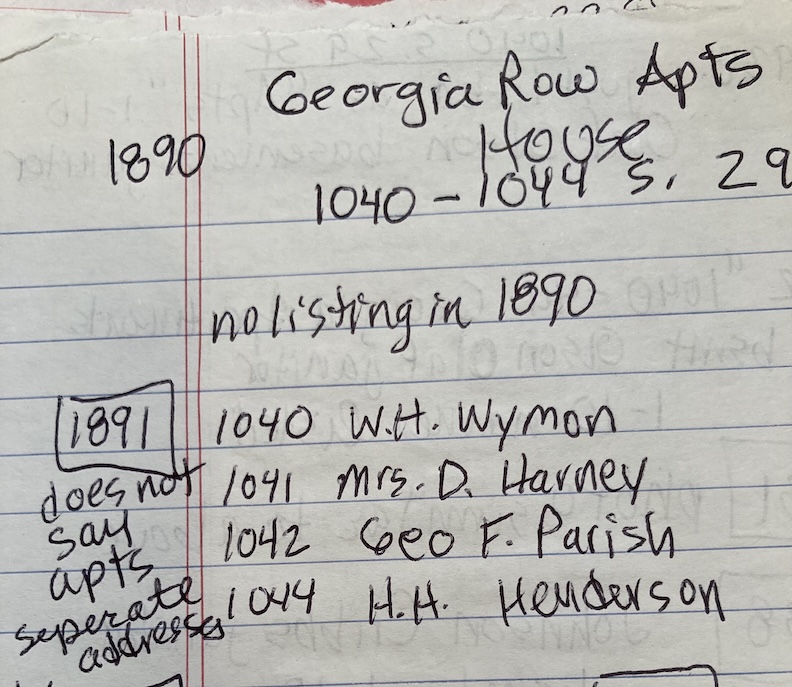
A photograph of my 2016 detective’s notes reveals the earliest known occupants associated with the newly opened Georgia Row.
From 1891–1892, the Northern House of 1040 Georgia Avenue housed the family of William Henry Wyman, a New York-born insurance executive who arrived in Omaha in November of 1890. At the time of his death in 1911, Mr. Wyman was a veteran of the Aetna Fire Insurance Company for half a century and its Northwestern general agent for twenty years. In 1890 Wyman relocated from Cincinnati to oversee the company’s regional interests with what the newspapers admiringly termed a “large force of clerks,” an expression suggesting commercial vigor. I believe the Wymans may have moved into the mansion almost immediately upon their arrival in Omaha in late 1890, although the absence of a listing in that year’s Omaha City Directory leaves the matter frustratingly unconfirmed. Residing with him were his second wife, Maude Crosby Wyman, daughters May and Isabelle, and the family servant, Mary Hoffman. Omaha Society, never entirely immune to the seductions of respectable culture, appeared particularly captivated by Wyman’s private library of some 1,200 carefully chosen volumes, themselves drawn from his Cincinnati collection of more than 2,200 books. One likes to imagine those leather-bound volumes shelved within handsome bookcases in Mr. Wyman’s 1040 library, their polished spines catching the flicker of the fireplace. By 1893, the Wymans had built a residence of their own at 21st and H Street.
At 1041, I believe on the east side of the street, where the interstate now runs, appeared a Mrs. D. Harney, who will remain, at least for today, more shadow than substance.
The Middle House, at 1042, was occupied by George F. Parish and presented a more curious trail. Particularly notable was an announcement published in the Omaha Daily World-Herald in March 1889, in which a Mrs. George F. Parish of Council Bluffs publicly declared she was searching the city for her husband, a blacksmith who had apparently “decamped with a disreputable woman.” Whether this unfortunate fugitive was the very same George F. Parish remained uncertain for a time. The historical record, ever determined to be unhelpful precisely when needed most, contains references to George E. Parish and George M. Parish as well, though only a solitary mention of George F. Parish could be located. One hopes, at the very least, the disreputable woman appreciated the inconvenience she caused future researchers. Just yesterday I trailed our man, who I do believe is the correct George F. Parish. By 1891, George F. Parish had established himself within the upper tier of Omaha’s commercial world as general manager of the Manhattan Life Insurance Company, maintaining offices at 306–308 of the celebrated Bee Building. The Omaha City Directory noted that his jurisdiction extended across both Nebraska and Colorado, a regional authority that placed Parish within the expanding financial networks of the trans-Missouri West. Leasing space in the Bee Building itself was no ordinary address. Promoted as the “Palace Office of Omaha,” it embodied the city’s late-nineteenth-century confidence and metropolitan ambition, boasting incandescent electric lighting together with elevator service operating both night and day. To occupy offices there was a declaration of status and embracing of Chicago modernity.
In 1044, the far South House, was in H. H. Henderson’s name, whose involvement with the new residence at 1040 South 29th Street/Georgia Avenue was far from concluded. Mr. Henderson would re-enter the narrative repeatedly.
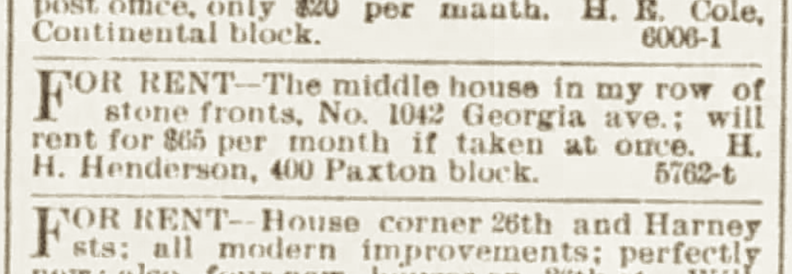
Omaha World-Herald. 1891, January.
H. H. Henderson and the Question of Respectability
Mr. Hallett H. Henderson emerges in Omaha as a figure of initial integrity, whose fall was both swift and spectacular. Articles of incorporation filed in June 1889 formally established the Henderson Mortgage and Investment Company, capitalized at $30,000 and organized by Henderson alongside his mother, Meron A. Grey Henderson and a relative named George J. Henderson. Contemporary Omaha City Directories reinforce his standing: by 1889 he served as secretary and treasurer of the Nebraska Mortgage Loan Company firm that he shared with Van Closter at 1057 South 29th Avenue and by 1890 he was listed as President of the Henderson Mortgage and Investment Co at 400 Paxton block, boards at 1039 South 29th Avenue. And what, you may reasonably ask, became of Henderson Mortgage and Investment? Was not the Nebraska Mortgage Loan Company likewise operating from Room 400 of the Paxton Block? And why were these South 29th Avenue addresses so similar? Aside from the suspicious connection of Van Closter and Henderson, the answer appears to lie within the rather intimate and precarious nature of Omaha’s speculative real-estate culture during the boom years. Investors, developers, mortgage brokers, and builders often occupied the same offices and financed one another’s ventures. One suspects the distance between respectable enterprise and financial calamity could scarcely have exceeded the length of a Paxton Block hallway.
I went back again and again with a fine-toothed comb. Biographical evidence situates Henderson as a native of Indiana (b. 1864), formerly a schoolteacher between 1887 and 1890, and a man who arrived in Omaha in the late 1880s with a reputation sufficiently sound to facilitate both social and financial trust. He resided with his wife, Ida M. Ball (d. 1898), their son James Melville, and extended family members, including Mother Meron and sister Zoraida S. Henderson Hutchison, stating they arrived from Rushville, Indiana. During these years, Henderson actively acquired property in Omaha—particularly within the Park Avenue district—while maintaining connections to landholdings in Indiana and Nebraska. I would find Henderson bought land in Ogallala, Nebraska in 1887 and sold 160 acres in Rushville, Indiana in 1889, among too many other properties.
Yet beneath this veneer of respectability there developed a pattern of calculated deception. By 1891, Henderson’s operations had expanded into systematic fraud, characterized by forged signatures—often those of acquaintances or relatives—and the manipulation of real estate and loan instruments. His methods were, as contemporary reporting observed with reluctant admiration, almost “artful”: he solicited funds from personal contacts under the pretense of lucrative, secured loans, while simultaneously courting institutional investors with falsified applications designed to release capital tied to encumbered properties. The scale of his activities soon attracted legal scrutiny. Suits filed by entities such as the American National Bank and other creditors alleged unpaid notes, fraudulent conveyances, and contested property titles across multiple states. By mid-1891, Henderson had absconded, leaving behind a trail of litigation and financial ruin. Estimates of his illicit gains varied—from $25,000 in cash to nearly $40,000 in forged instruments—though reports suggest that a considerable portion was dissipated through gambling, conducted under the alias “Jack Brown.” By the end of the month The Evening Bee announced to a hungry Omaha that poker was the vice. And much like Geraldo Rivera’s highly publicized television special of Capone’s empty vaults, the local creditors swung open Henderson’s safe and found it empty. They estimated he made off with at least $36,000 but actually took little with him when he skipped town. “The greater portion that he obtained, it is claimed, passed over the gambling table of the city.” His personal life assumed a curiously shadowed character: a respectable businessman by day, a reckless gamester by night.
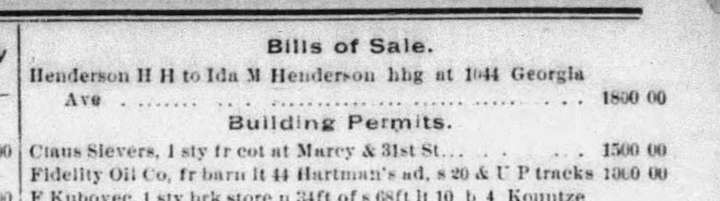
The Daily Record. 1891, July.
By July of 1891, H. H. Henderson and his wife had begun transferring the 1040 Georgia Avenue/South 29th property, along with additional Omaha lots, into the name of Meron A. Henderson, Hallett’s mother. In the very same period, Mr. Henderson also shifted the 1040 Georgia Avenue/South 29th building’s ownership into the name of his wife, Ida. Such transactions may well have been perfectly legitimate, of course, though historians are inevitably suspicious when property begins moving through family members with the speed and discretion of the “good” silverware. Oddly an 1892 Omaha Evening Bee article about the paving of South 29th Street noted it was Meron A. Henderson paying taxes on the Lot 27 property.
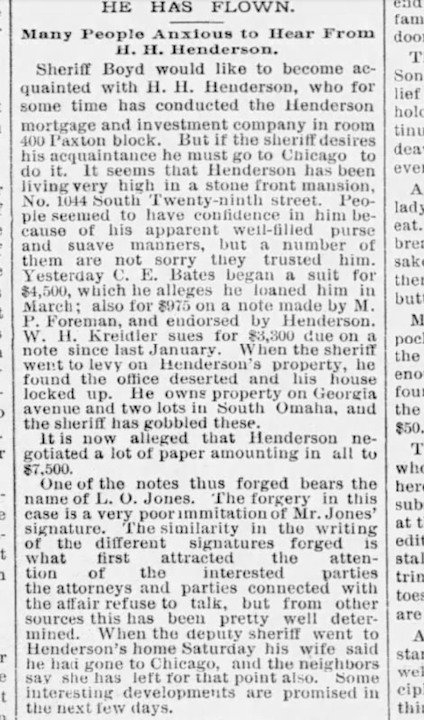
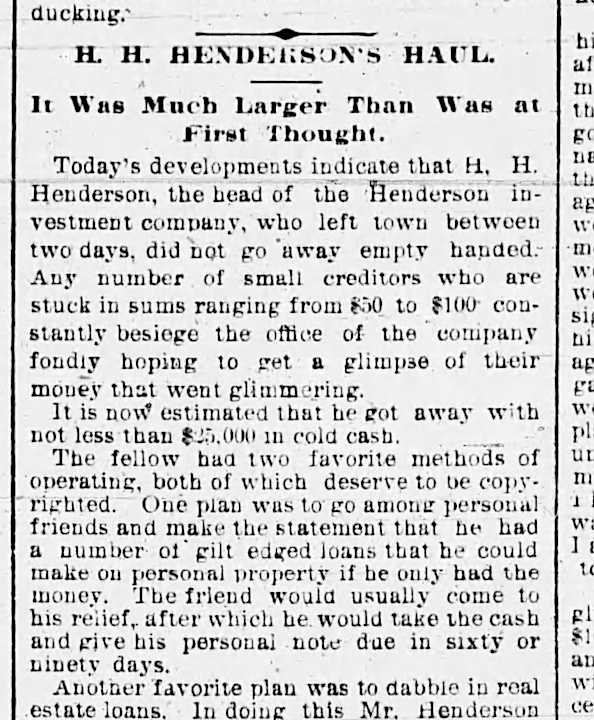
“He Has Flown.” The Omaha Bee. 1891, July. “H. H. Henderson’s Haul.” The Omaha Evening Bee. 1891, July.
The aftermath was immediate and severe. “In order to save what is can, the bank has attached everything in sight, including the Georgia Avenue mansion and the office furniture of the defunct Henderson investment company.” Meanwhile, certain related institutions, notably those affiliated to J. H. Van Closter, went through times of financial turmoil. The Henderson family was said to live in high style at the Georgia Row. In fact, he left his wife and boy in Omaha when he ran to Chicago doing “promoter work.” I would trace him to Louisiana. (They say the town of Henderson, Indiana was named for Hallett and Ida Henderson—though, considering the peculiar financial theatrics surrounding Mr. Henderson elsewhere, one has to wonder how that all came together.) In April 1892, while working for a trust company in Chester, Pennsylvania, Henderson was arrested and sent back to Omaha to answer allegations of fraud and embezzlement. Yet months in jail, multiple court appearances and accusations of massive fraud even from his own family had not resulted in a definitive conviction. By early 1893 Henderson had been freed under dubious circumstances and had been momentarily rewarded with clerical employment in the district clerk’s office. The absurdity was compounded when the Evening Bee later reported that Sheriff Bennett, himself then under indictment for embezzlement, had taken the imprisoned Henderson to one of Omaha’s most prominent gambling establishments, where the prisoner was permitted to gamble for all but a few hours of the night, at one point being left entirely alone—an event that further highlighted the strange connection between law enforcement and complicity in this case.
Where Mr. Van Closter Reappears
By the summer of 1891, the affairs of the Nebraska Mortgage and Loan Company had descended into public melodrama. According to the South Omaha Daily Stockman, President J. H. Van Closter had resigned in August 1890, company leadership fell into dispute when, according to court filings, Van Closter and Isaac Adams allegedly convened a private meeting in August of 1891 to reclaim control of the firm, prompting injunctions, arrests, and counterclaims in district court. One suspects the shareholders had imagined mortgages would involve less theater. Meanwhile, contemporary reports attributed the company’s worsening financial condition to the disappearance of H. H. Henderson.
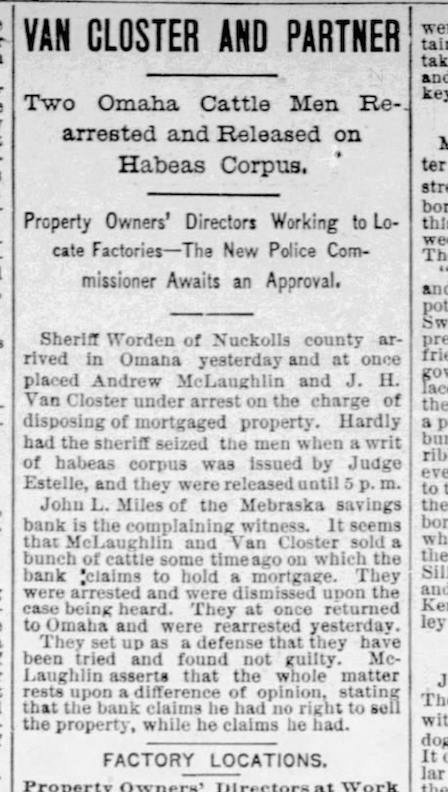
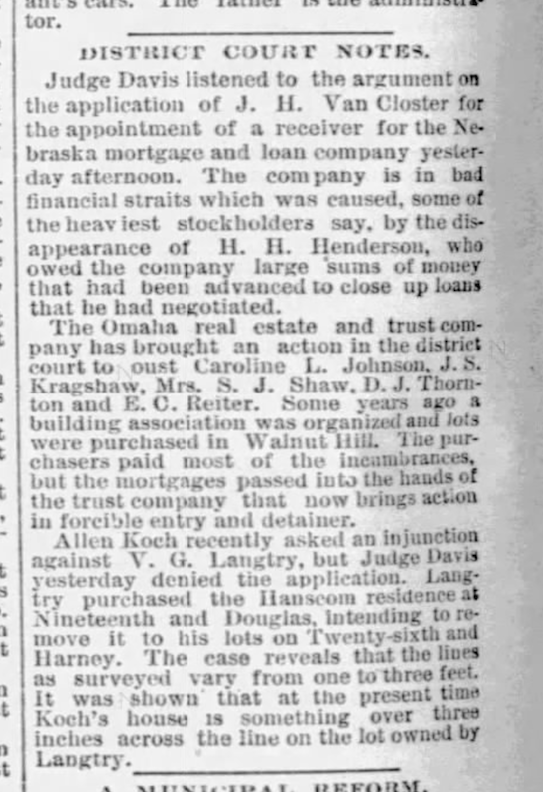
“Van Closter and Partner,” Omaha World-Herald. 1891, June and “District Court Notes,” Omaha World-Herald. 1891, August. “The Nebraska Mortgage and Loan Company, of which J. H. Van Closter is the president, mourns the loss of a large amount of money that was confided to Henderson for loaning purposes, but just how much is not known as Mr. Van Closter refuses to give the figures.”
Those Restless Gentlemen
In a conclusion so strange, both Hallett H. Henderson and J. Herbert Van Closter resurfaced by the close of the century not in finance, but in the hotel trade, managing establishments in Omaha and later appearing in similar roles elsewhere.Yet it is difficult to assign clear authorship to the ambitions that united the Van Closter-Henderson pair; more likely they recognized in one another a familiar appetite for advancement unconstrained by ordinary caution. Their shared capacity for reinvention—after exposure, arrest, and public disgrace, was quite remarkable. Henderson managed Omaha hotels including the Capitol, Kirkwood, and later the Midland Hotel, while Van Closter—declared bankrupt by 1898—reappeared as proprietor of the Thurston Hotel (15th and Jackson) and owned and managed The Klondike (North 16th)– before establishing himself in Kansas City and Denver hospitality circles. Their migration into hotel management was revealing rather than unusual. The hotel trade in the 1890s and early 1900s offered a curious refuge for men of compromised reputations: it required managerial competence, social ease, and a willingness to operate in environments where discretion was often more valued than transparency.
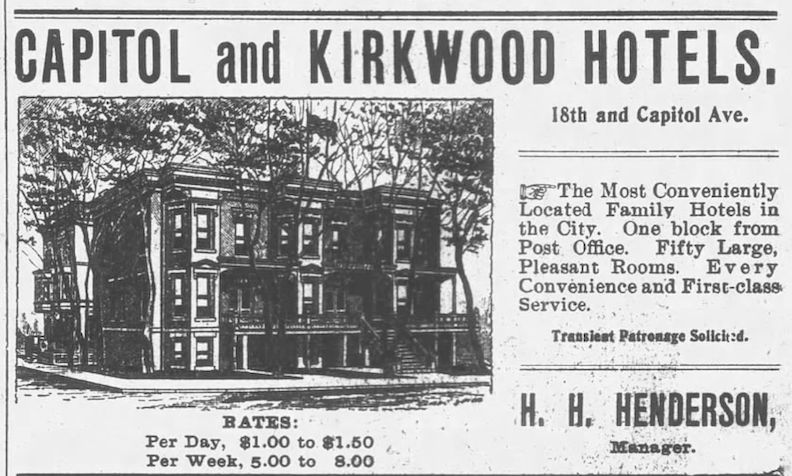
The Omaha Hotel Reporter. 1899. “H. H. Henderson, Manager.” I discovered H. H. Henderson was managing the Capitol and Kirkwood Hotels at 18th and Capitol Avenue. Years later I found him at the Midland Hotel.
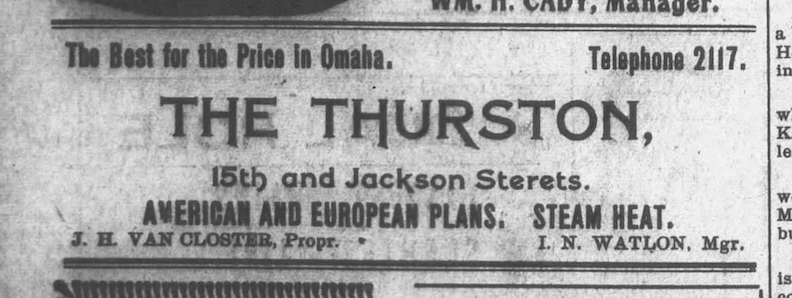
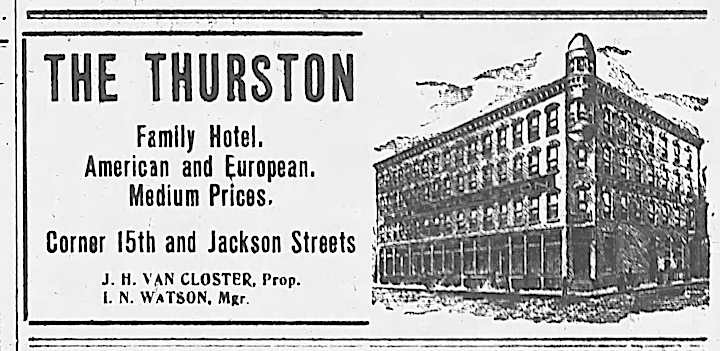
The Omaha Hotel Reporter. 1900. “J. H. Van Closter, Proprietor.” The two (J. H. Van Closter and I. N. Watson) had also owned and managed The Klondike on North 16th Street.
The Omaha Hotel Reporter of 1902 announced the retirement of J. H. Van Closter, proprietor of the Thurston Hotel, which he sold. “A well-known hotel man in Omaha,” what the article didn’t mention was that 42 year old John H. Van Closter wed 29 year old Helen M. Combs Van Closter in June 1902. They allegedly honeymooned in Kansas City, where they seemingly cultivated a fondness for the city and their swift relocation completed the transformation with almost suspicious neatness. “They say ev’rything’s up to date in Kansas City,” and for Van Closter it evidently included the opportunity for respectability under the polished brass of a hotel desk. He was said to have initiated hotel investments in 1903 and soon after was known as a prominent hotelier in both Kansas City and Denver. By the time of his death in 1917, in his apartment suite at the Parkdale Hotel, he was buried under the name John Herbert Van Closter. Was the name mystery ever truly solved or had it simply exhausted itself?
From Parlors to Boarders
By 1892, even as the financial affairs surrounding Hallett H. Henderson unraveled with increasing public drama, his mother, Meron A. Henderson, continued to retain ownership interests connected to the 1040 Georgia Avenue/South 29th Street property. Records indicate that she paid the paving tax assessment for Lot 27 in Rees’ Place that year. It was under her ownership that the Georgia Avenue property had already drifted from posh residence toward the more ambiguous status of boarding house. It was most likely not only the ongoing troubles surrounding Van Closter and Henderson that encouraged the building’s transition. Omaha, like much of the United States, was heavily affected by the economic collapse associated with the Panic of 1893, and the city experienced a severe local depression throughout much of the 1890s. The downturn was particularly harsh in Omaha because the city’s late-1880s boom had been driven by aggressive real estate speculation, railroad expansion, mortgage lending, and optimistic development schemes—the very world inhabited by men like Henderson and Van Closter.
By 1893, the W. H. Wyman and George F. Parish families had moved from the 1040 Georgia Avenue/South 29th Street building. Ownership remained with Meron A. Henderson, while daughter-in-law Ida M. Henderson appears to have undertaken management of the building her name recurring steadily in City Directories and boarding house listings through at least 1895. By the year 1893 Hallett Henderson himself was listed as Deputy Clerk of the District Court while residing at 1040 South 29th Street, formerly the Wyman residence, whereas his wife Ida appeared separately at 1044 South 29th Street, the original Henderson quarters. Possibly it was merely a directory error—or something more suggestive.
What remains uncertain is whether the lovely interiors were physically subdivided to accommodate more tenants. My suspicion is that they were not, or at least not extensively. A boarding house offered far more than a rented room. For working people, widows, traveling professionals, and others seeking respectable urban lodging without the burden of maintaining a household, it provided a semi-domestic way of life. Boarders generally received a furnished bedroom, communal meals at fixed hours, heat, washing facilities, shared parlors, and perhaps most importantly, a degree of routine and social respectability. In a more fashionable establishment—particularly one operating within a former mansion such as the Georgia Avenue property—tenants might also enjoy ornate interiors, better meals, and the lingering prestige of an elegant address. Such places often sold propriety as much as shelter. But the boarding-house held a precarious social standing in the late nineteenth-century city. Some were quite respectable; some had a reputation for short-term tenants, gambling, drinking, discreet scandal. This is what many of Omaha’s once-grand homes did during the economic turbulence of the 1890s, trading private family life for the practical economics of rental rooms and shared dining tables. The Georgia Avenue house tenant roster was apparently made up of respectable citizens: manager of the Western Temperature Regulation Company, Charles A. Barker; yardman, Nelson Franson; schoolteacher, Miss Maggie O’Neill; buying for D. M. Steele & Co., John Westphaling; and many others. In the 1895 Omaha City Directory, Mrs. Ida M. Henderson again showed prominently in the company listings under “Boarding Houses,” which strongly suggests that she either managed or ran the enormous Georgia Avenue property in an official capacity. I wondered if Ida Henderson’s management of the boarding house, combined with Hallett Henderson’s continued residence within the building, cast the Georgia Avenue property in the slightly ambiguous light?

Evening World-Herald. 1892.
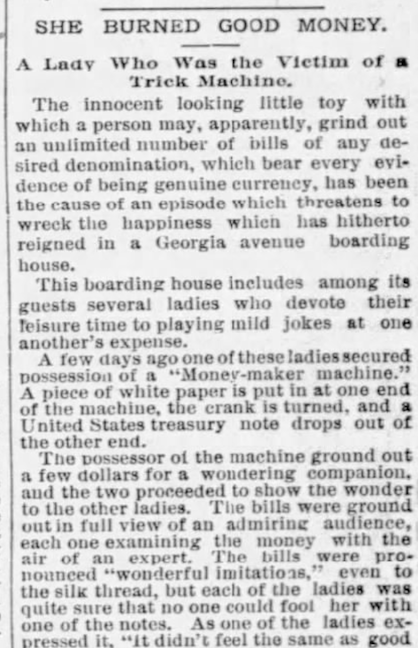
A rather strange article from 1892 described the Georgia Avenue boarding house and its tenants, gathered round a counterfeit machine that someone came to own. One unfortunate woman, persuaded that the counterfeit device discovered there was merely a toy stuffed with fake currency, burned the apparatus believing the federal detectives would catch on to them. A well-known local physician residing there reportedly educated the woman that the counterfeit machine was a toy but that it was stuffed with genuine currency, only seemingly cranked out for fun—that she had promptly burned the counterfeit machine and the cold cash. Feeling “victimized” by the tenants, the woman remarked with admirable restraint that “the atmosphere in the vicinity of that boarding house is not entirely conducive to the good health of the occupants.” It was perhaps the politest possible description of a property encircled by financial theatrics of its own making.
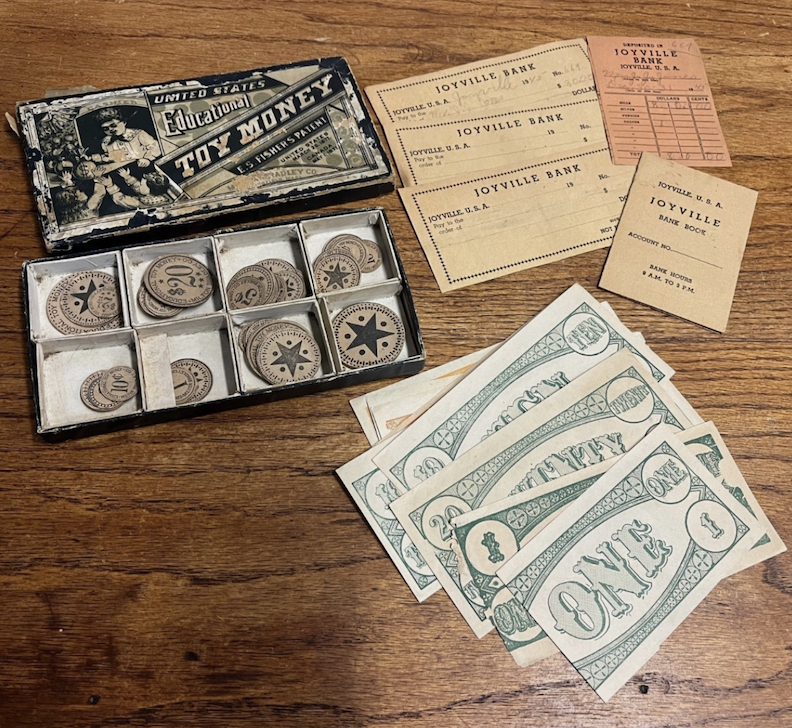
While I could not locate the precise crank-operated contraption of my imagination—surely something forged of dark iron and endowed with the menace of a small industrial press—I did uncover, thanks to Ebay, an 1890s educational toy money set produced by Milton Bradley Company under E. S. Fisher’s 1877 patent. Alas, no counterfeit printer accompanied the device.
Mr. W. H. Kriedler Gets His Revenge
Among the more persistent casualties entangled in the Henderson and Van Closter affairs was Wilbur H. Kreidler—occasionally rendered “Kriedler” by newspapers and genealogy sites. Another real estate and loan man operating out of the Paxton Block, Mr. Kreidler repeatedly insisted that both Hallett Henderson and J. H. Van Closter had drawn him into elaborate confidence schemes while presenting themselves as perfectly respectable businessmen.
In July of 1891, Kreidler filed suit in district court against H. H. Henderson for $3,300 allegedly due on a note. By April of 1893, he again appeared before the courts, this time accusing Van Closter of swindling him through a trade involving nine horses exchanged for supposedly valuable Dawes County farmland which, according to Kreidler, proved to be anything but productive land.
Yet historic architecture delights in irony. In February of 1893, Meron A. Grey Henderson, Hallett’s mother, transferred ownership of the Georgia Avenue property to Wilbur H. Kreidler himself. Was this transfer to cover a debt? By 1897, Kreidler still owned the great 1040 Georgia Avenue/South 29th Street house. After years of alleging that Henderson and Van Closter had outmaneuvered him in business, W. H. Kreidler ultimately ended up holding the deed to their grand residential experiment—a conclusion that must have offered at least some personal satisfaction.
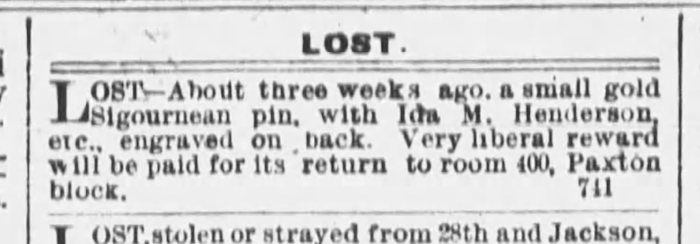
I include this because I grow sentimental about such things—even when the individuals involved appear of questionable behavior. In May of 1898, while back in their hometown of Rushville, Indiana, Ida and Hallett Henderson drafted a will for Ida, witnessed by Ida’s brother. A month later, Omaha newspapers carried a small lost-and-found notice for a gold Sigournean pin engraved “Ida M. Henderson,” misplaced some three weeks earlier on the Paxton Block—as if even her name had begun slipping loose from the world. Then on August 11, 1898, Ida M. Henderson died in Los Angeles at only thirty-two years of age from consumption, the era’s relentless pulmonary tuberculosis. She did not die in a hospital, but in a building with a regular postal address, perhaps in one of the western refuges so many consumptives sought in hope more than certainty.
The Omaha Evening Bee. 1889, June.
Her May 1898 will read with the practical tenderness of someone who likely understood more about her condition than the newspapers ever stated. Ida bequeathed “the farm in Jackson township” to her son, James Melville Henderson, directing that its income be used for his “maintenance and education until he becomes of age.” All personal property was left to her husband, Hallett H. Henderson. It is a restrained document, almost painfully ordinary in tone, which somehow makes it sadder.
The Andresen Question
Unfortunately, it appears W. H. Kreidler was also failing to meet mortgage obligations and, perhaps like his adversaries, had been overtaken by the broader financial collapse of the 1890s. By March of 1899, I discovered a “Sheriff Sale” transferring the property to H. A. Anderson. Such sales commonly indicated foreclosure proceedings tied to unpaid debts—usually mortgages—although one must leave a tiny historical escape hatch open: sheriff’s sales could stem from a variety of legal troubles, none especially cheerful. And the 1890s were positively dripping with such troubles.
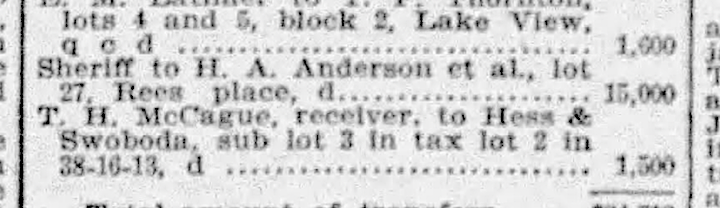
Evening World-Herald. 1899, March. The Georgia Boarding House sold for $15,000.
The historical record suggests that newspapers may have confused “H. A. Anderson” with H. H. Andresen, who appears far more plausibly connected to the Georgia Boarding House transaction. In May of 1900, H. H. Andresen sold the property to M. B. Sunderland, lending weight to the argument that the earlier sheriff’s sale purchaser was not some mysterious Anderson apparition conjured by exhausted typesetters, but Andresen himself.
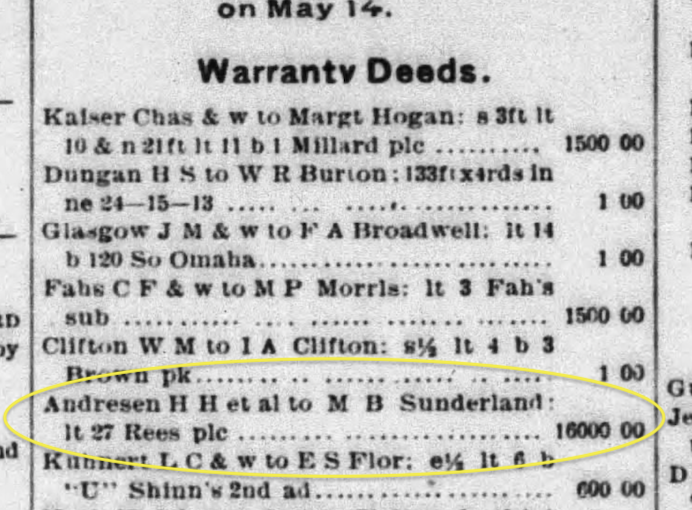
The Daily Record. 1900, May.
Mr. Anderson had previously operated in Omaha’s grocery trade under the firm name of Forsell & Company before retiring in 1894. As for the Mr. Andreson argument, by the time of the U.S. Census, he was seventy-three years old and living comfortably in Davenport, Iowa with his wife Marie, two adult children, and a nineteen-year-old German servantgirl. Born in Germany and immigrating during the 1850s, Andresen was listed with the magnificently vague occupation of “capitalist,” that wonderfully elastic nineteenth-century term usually meaning a gentleman possessed of sufficient property to avoid lifting anything heavier than a fountain pen. Together with relatives, he maintained interests in valuable Omaha estates. The evidence points rather firmly toward Andresen but who really knows…Mr. Anderson may simply have sold the property quietly to Andresen somewhere along the way, leaving behind no surviving breadcrumb for modern researchers.
The New Neighbors
In the years that followed, Georgia Avenue—later South 29th Street—began steadily filling with residences. Even so, 1040 Georgia Avenue remained a conspicuous architectural standout. The east side of the street was ultimately erased during the construction of Interstate 480, taking with it an entire row of structures. What survives today offers only a partial glimpse of the streetscape as it once unfolded.
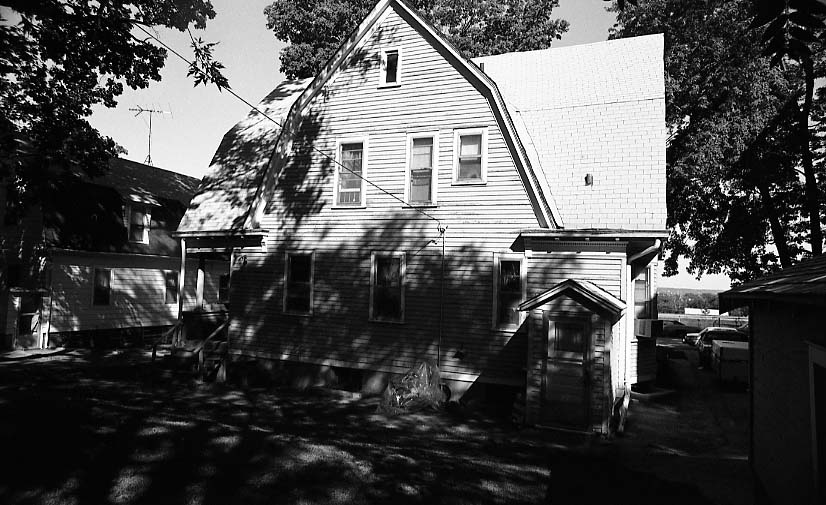
Presented here, in order of construction, are several neighboring buildings that remain, together with a brief account of their architectural and historical character. The photographs are not the prettiest ever made but they are very cool and offer an amazing glimpse of 1980.
1886 — A.V. Larimer Residence
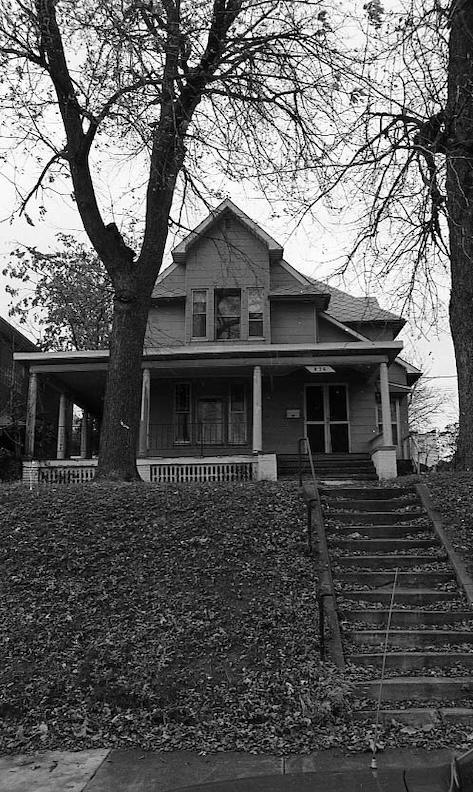
826 South 29th Street
One of the earlier surviving houses on the corridor, the A.V. Larimer Residence was built in the High Victorian Gothic Revival style. Like many ambitious Omaha residences of the boom years, it announced prosperity through ornament, verticality and an air of mystery–at least by 1980.
1894 — H.N. Wood Residence
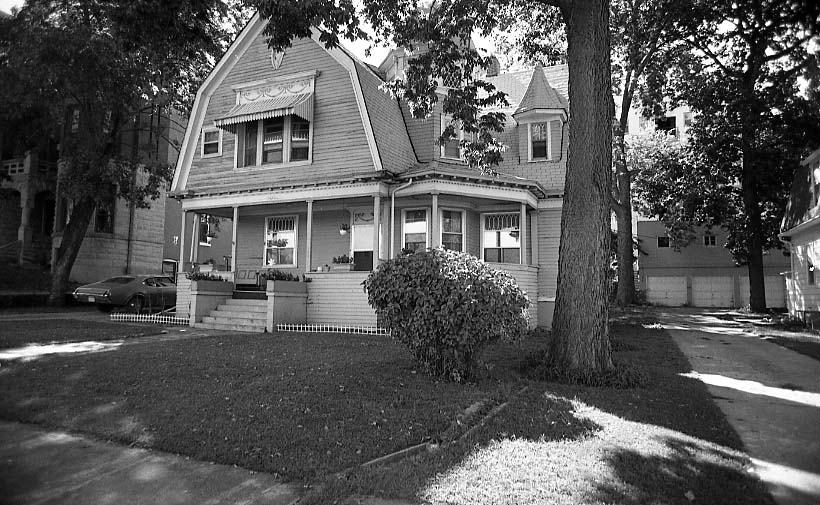
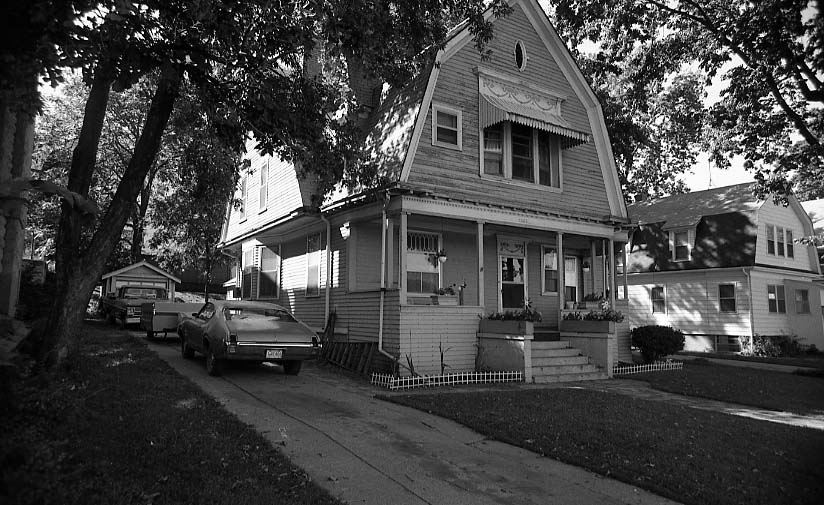
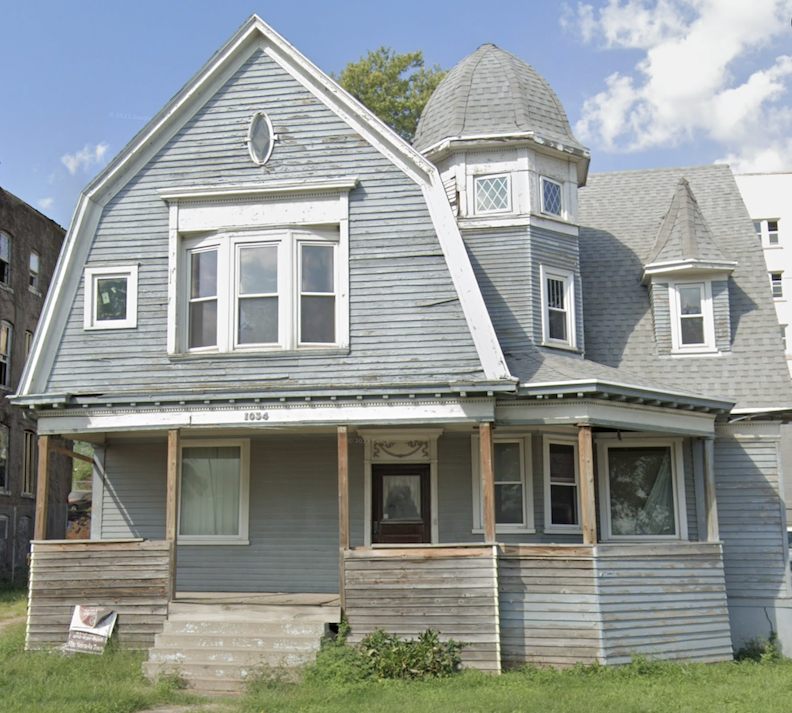
1034 South 29th Street
Designed by F.C. Ledebrink, the H.N. Wood Residence embraced the Queen Anne mode at precisely the moment Omaha society was most enamored with architectural exuberance. Turrets, varied textures, and picturesque asymmetry remained the preferred language of citizens wishing the neighborhood to understand they had arrived. I have always been particularly fond of this one. I took the last photograph in 2022, back when they were rehabbing the Georgia building. When I was living in the Castle and the owners of 1034 South 29th Street seemed perpetually engaged in porch-sitting, gardening, or gently toodling about with an automobile in the driveway—the sort of reassuring activity that makes an old house appear pleasantly inhabited. For all of the weirdness I experienced in the area, this house and its people felt like home.
1897 — J.J. O’Connor Residence
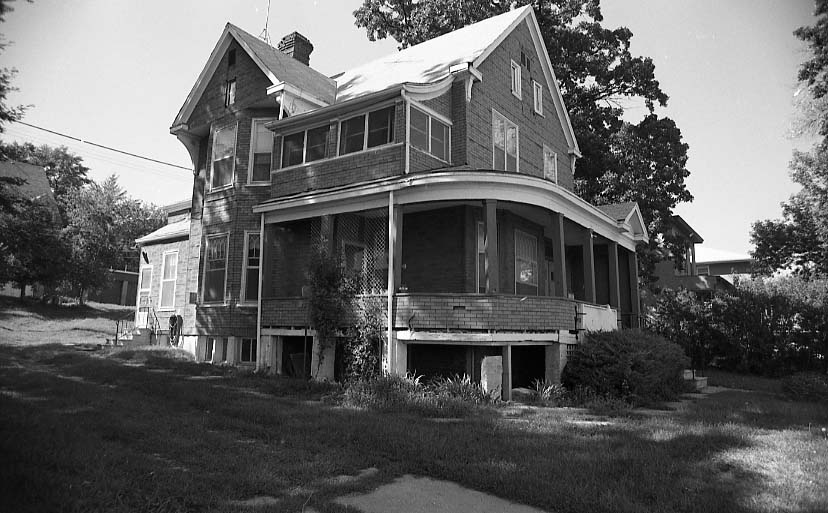
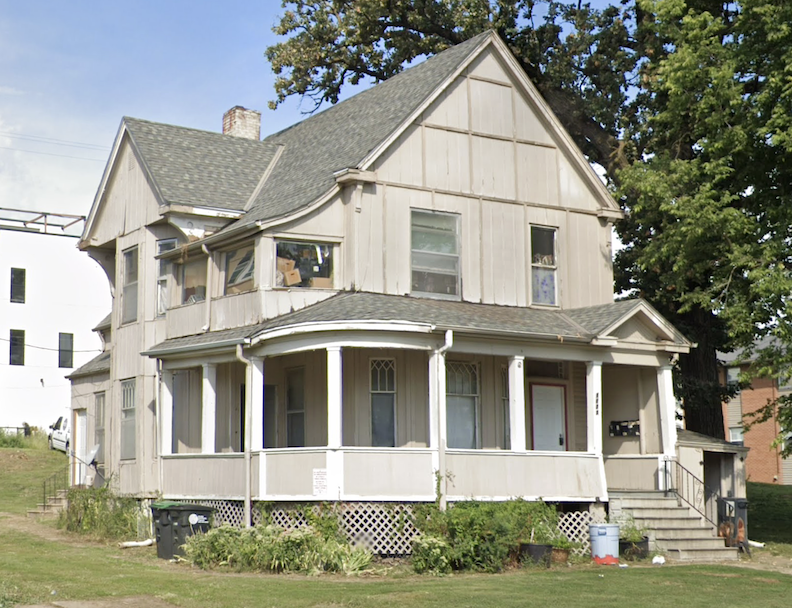
1022 South 29th Street
Constructed during the uneasy recovery years following the Panic of 1893, the J.J. O’Connor Residence reflected the lingering popularity of Late Victorian domestic design. Even amid economic uncertainty, Omaha owners and builders remained remarkably committed to respectable grandeur. I took this last photograph in 2022 and noticed that several of the building’s more intriguing windows had been covered over, which is always a slightly melancholy sight on an old structure.
1900 — Apartment Building
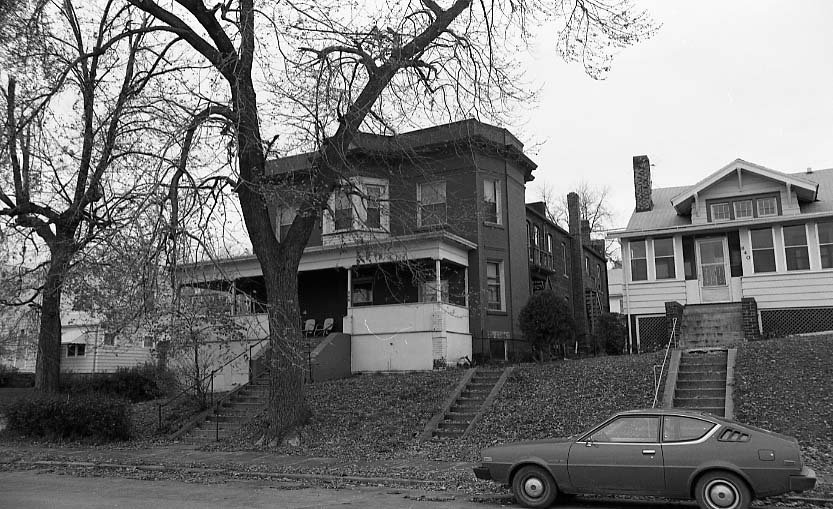
846 South 29th Street
Designed by Frederick A. Henninger in the Renaissance Revival style, this apartment block signaled the gradual transition of the district from strictly single-family prestige residences to more urban multi-family living. By the turn of the century, Omaha was learning that elegance could also be rented by the month.
The Clues and the Boarders
The clue placed before us is that by May of 1900 M. B. Sunderland had taken up the reins. There is also considerable evidence that during these years 1040 Georgia Avenue/South 29th Street functioned as both a boarding and lodging house. In a few short years it would transition again.
As noted in the 1900 U. S. Census, there were 48 persons logged as residing at 1040–44 South 29th Street: two owners, seven servants, 26 boarders, and 13 lodgers. By 1900, the distinction between boarders and lodgers was generally understood, if not always consistently applied. Lodgers merely rented rooms, perhaps access to a washstand, and meals were not typically included, whereas boarders paid for both lodging and meals and occupied a more entangled social position because they ate at the family table, endured the landlady’s opinions, listened to coughing through velvet curtained walls. These were the very things of the Victorian novel.
I began to think about the impact to the interior of the once three-household arrangement from 1890. Most likely, the original building as laid out already contained large interconnected parlors, sitting rooms, or suites readily adaptable to boarding use, allowing later owners to subdivide and improvise without entirely reconfiguring the structure. By 1900, the M. B. Sunderland owner or a landlord might simply add more doors, partition walls, or rented rooms without fundamentally rethinking the building’s circulation. Often the result in these cases was a wonderfully confusing interior where one passed through one person’s territory to reach another’s—an arrangement tolerated far more casually than modern tenants would accept. From what I have read, privacy in boarding-house culture was nearly nonexistent.
I turned to the 1901 Sanborn Fire Insurance Map, that most gloriously nosy of architectural and city planning informants, to discover what the Georgia building, and its neighborhood had become by the dawn of the twentieth century. We detectives are obsessed with these maps. The actual Sanborn Map Company maps were typically produced by teams of surveyors, draftsmen, and cartographers employed by the company. The field surveyors walked the streets taking meticulous notes on building materials, heights, windows, doors, stables, water mains, and even dangerous details like boilers or elevators. Those notes were then translated by draftsmen into the maps at company offices. The process was intensely practical and commercial. These were insurance documents first and aesthetic objects entirely by accident—though one suspects many of the draftsmen possessed a quiet artistic temperament while spending their days carefully rendering Omaha alleyways, privies, and coal sheds in tiny perfect rectangles. (I have mentioned this elsewhere in our investigations but early in his investment career, Warren Buffett became involved with the Sanborn Map Company in the late 1950s.)
But back to our 1901 Sanborn Map Company rendering of South 29th Street—Mason to the north, Pacific to the south. The map revealed a district of substantial residences (note the large footprints), Victorian dignity of wraparound porches and shapes, flats, stables, and a church on the southwest corner of Mason and South 29th Street. The Georgia itself appears less as an isolated mansion than as part of a tightening streetscape—still imposing, certainly. Now formally called “The Georgia” boarding house. Admired from a streetside carriage, I only wish we had a photograph from that time.
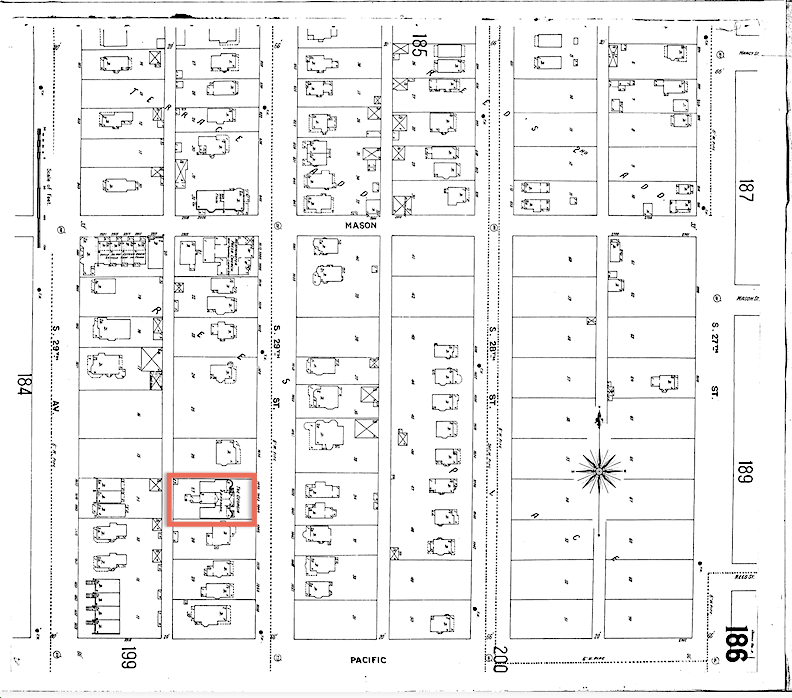
Look at this beautiful map. Top of map is north. Bottom of image is south. I have outlined the Georgia building. What becomes immediately apparent is how thoroughly developed the east side of South 29th Street was before the interstate’s mid-century appetite erased so much of it. Between South 28th and South 29th Streets stood a tightly woven urban fabric of houses, outbuildings, narrow service corridors, and carriage structures—an entire domestic ecosystem now largely absent from the modern landscape. 1901 Sanborn Fire Insurance Map of Omaha, Nebraska, produced by the Sanborn Map Company. (Courtesy of Trina Westman and Shelley McCafferty, former and current City Planner, Historic Preservation Administrator of Omaha City Planning Department.)
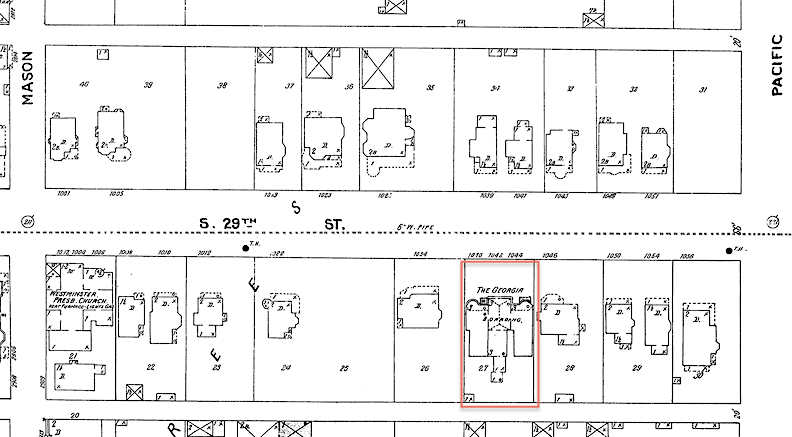
Enlargement and focused area of the previous map. Please note that I turned the map. North is now the left side of the map. South is on the right side. The Georgia outlined in orange, facing east. We view The Georgia from the alley, facing east on South 29th Street. Of particular interest in the 1901 Sanborn Map is the presence of Westminster Presbyterian Church anchoring the southwest corner of Mason and South 29th Street. Every structure along the South 29th Street block was identified as a single-family domestic residence, marked simply with the letter “D.” The Georgia was the only boarding house, typically notated with a B, in this case they wrote it out. 1901 Sanborn Fire Insurance Map of Omaha, Nebraska, produced by the Sanborn Map Company. (Courtesy of Trina Westman and Shelley McCafferty, former and current City Planner, Historic Preservation Administrator of Omaha City Planning Department.)
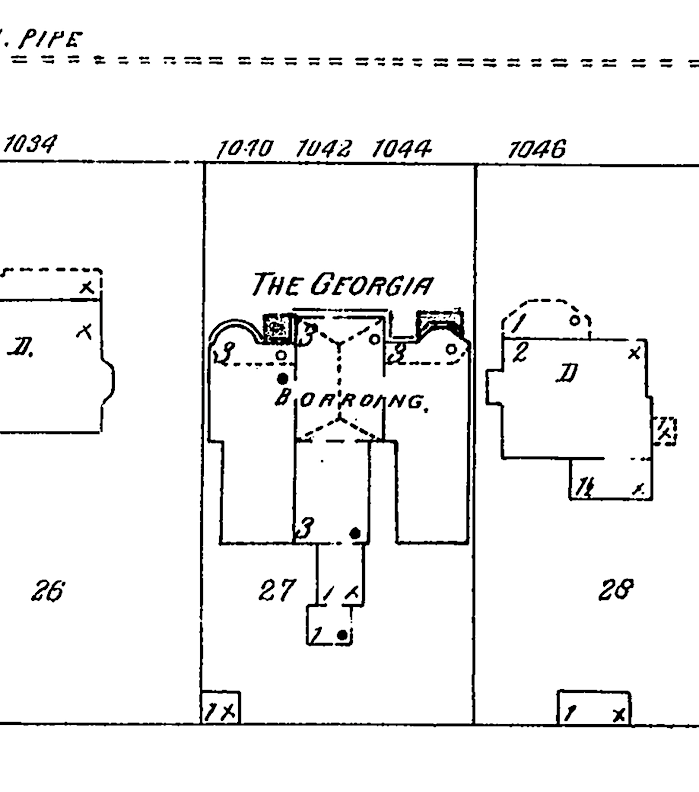
Further magnification. “3” denotes three floors. 1901 Sanborn Fire Insurance Map of Omaha, Nebraska, produced by the Sanborn Map Company. (Courtesy of Trina Westman and Shelley McCafferty, former and current City Planner, Historic Preservation Administrator of Omaha City Planning Department.)
The Comfortable Side of Life
Maria Burnett Sunderland (“M. B. Sunderland”) and William C. Sunderland married in 1874. William, born inBurlington, Iowa came to Nebraska from Chicago in 1872 by way of Kearney and the lumber trade before eventually settling in Omaha in 1888 as a lumber broker. Through his association with Harry B. Morrill of the Nebraska Coal and Lime Company, Sunderland drifted—rather profitably—into the world of grain, stocks, and provisions as a commission merchant. By the turn of the century, he was considered a considerable success: owner of a “very handsome home property*,” comfortably prosperous, president of the Omaha Field Club in its second year, and by all accounts the sort of attractive, self-assured gentleman other men placed on the front pages of newspapers in hopes that success might prove contagious.
*The Sunderlands owned “a large home at the southwest corner of Dewey Avenue and 39th Street.
39th and Dewey Avenue” in addition to our Georgia Avenue/South 29th Street building, so one is left momentarily uncertain which residence the article means to flatter—though I rather suspect the Georgia would have insisted upon consideration.
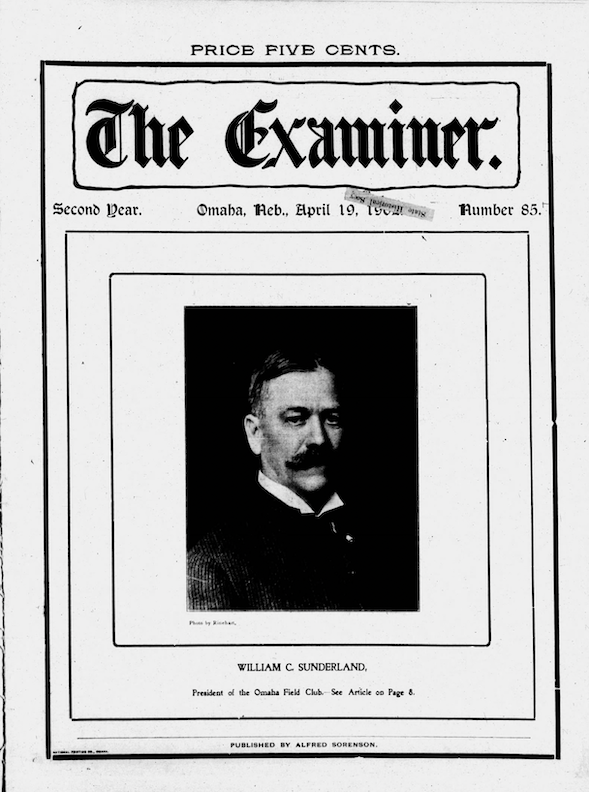
The Examiner. 1902, April.
In January of 1902, McWhorter, Hollinger & Sunderland took over the Logan & Bryan commission office, tying Omaha speculation ever more tightly to Chicago markets. By 1904 our man Sunderland withdrew to form Sunderland & Updike with Nathan B. Updike, later followed by the Sunderland & Saunders firm with Sherman Saunders. Fortunes rose and collapsed with alarming speed in such circles, yet Sunderland had the rare distinction of always landing on top.
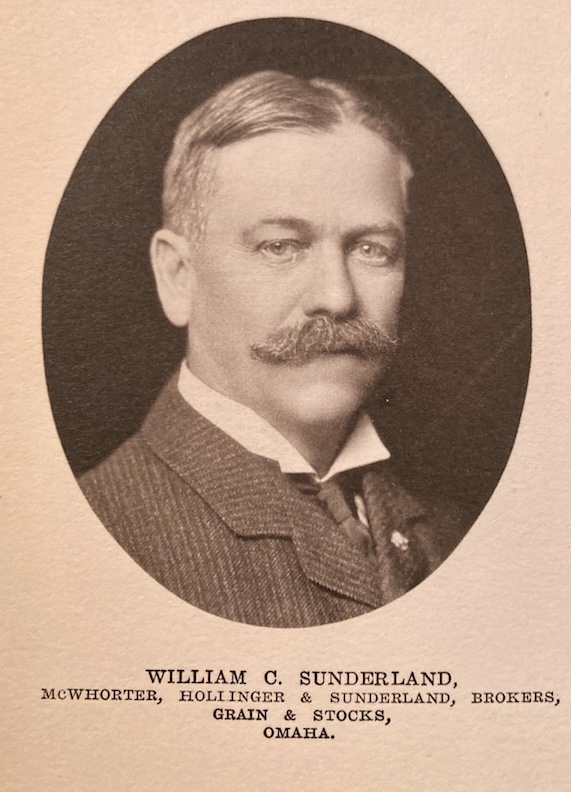
Mr. William C. Sunderland, as seen in one of my favorite books: Nebraskans 1854-1904. (Omaha, Neb.; Bee Publishing Co., 1904.)
While mentioning Nebraskans 1854-1904, I was genuinely surprised not to find Mr. William C. Sunderland in Arthur C. Wakeley’s tome Omaha: The Gate City and Douglas County Nebraska(1917), a volume I have jokingly referred to as my Bible throughout these investigations. Wakeley, an amateur historian after my own heart, assembled a remarkable hybrid of scholarship and social register. Alas, William C. Sunderland did not make it into the Scriptures. Some readers may wonder whether William was related to James or John Sunderland of the Omaha FamousSunderland Brothers Company. I found no direct connection, though distant relation remains possible amid the many Sunderland families circulating through the nineteenth-century Midwest. Had they been closely related, however, one suspects at least a little mutual name-dropping would have appeared in their histories, particularly as all occupied fairly prominent places in Omaha society and business circles.
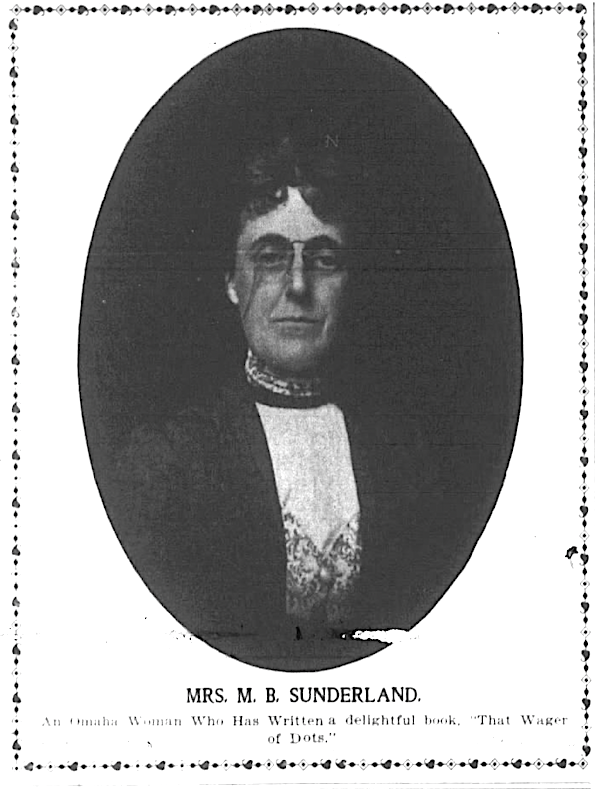
The Excelsior. 1901, December. How to say this? Mrs. M. B. Sunderland gave the air of a woman more interested in competence, seriousness and intellect than fashionable softness. I liked the vibe.
Omaha World-Herald. 1901, September. A bit more casual.
Maria B. Sunderland, meanwhile, was born in Nunda, New York and appears to have possessed considerably more charm than the average property investor. She wrote society pieces for the Omaha World-Herald on the Ak-Sar-Ben Coronation Ball, published a novel titled That Wager of Dots, and later developed an enthusiasm for Pekingese dogs. Curiously, the same year she acquired “The Georgia” in 1900, she also began purchasing Omaha properties at a remarkable pace, suggesting that behind the lace curtains and society columns lurked a woman with a decidedly sharp eye for real estate. I would later learn it was all Mr. Sunderland…or at least he took credit for it.
Mr. Sunderland, better known in Omaha financial circles as “Bill” Sunderland, was no ordinary landlord drifting quietly into property management. Newspaper accounts portrayed him as one of the city’s shrewdest grain speculators—a man who publicly warned others to avoid the market while privately making and losing fortunes in the thrillingly nervous world of wheat futures. According to the papers, Sunderland possessed the rare instinct of leaving the table before The Crash came. During one speculative venture, his partners reportedly remained in the deal waiting for still higher prices while Sunderland quietly withdrew with profits said to approach $15,000. With the proceeds, he purchased “The Georgia,” placing the property deed in his wife’s name with the practical observation: “Now if I ever go busted, we’ll always have something left,” he is reported to have said to Mrs. Sunderland. The Georgia was Mrs. Sunderland’s nest egg. It was at its core, a Midwestern Plan and perhaps, among the more honest mission statements attached to Omaha real estate.
The Boarding House Abandoned
Of interest, in January of 1902 The Georgia was once again offered for sale: a three-story stone and brick structure with basement, thirty-nine rooms, and three furnaces at 1040 Georgia Avenue, confidently advertised as “a very fine rental property known as the Georgia Boarding House.” Mr. and Mrs. Sunderland were living at 1044 Georgia Avenue—the far south wing of the sprawling arrangement—which raises the deliciously practical question of whether the Sunderlands occupied the entirety of what had once been the grand southern bay, basement to third floor, or whether even portions of their domestic quarters had quietly surrendered to boarding-house life.
The sale, intriguingly, never materialized but it put a bug in my ear, as these things do, and before long I was rummaging through newspapers and records with entirely disproportionate enthusiasm. One suspects the reasons the Sunderlands might want to get out from under the Georgia may have been less architectural than financial—or perhaps simply personal. Mr. Sunderland appears to have traveled frequently to Chicago and Mrs. Sunderland may have grown weary of being tethered to the endless practicalities of a thirty-nine-room boarding establishment masquerading as a mansion. Through scandalously attentive newspaper reporting, it becomes clear that in the following years the Sunderland couple had effectively flown the coop, intermittently, for parts unknown, despite continuing to retain ownership of the property.
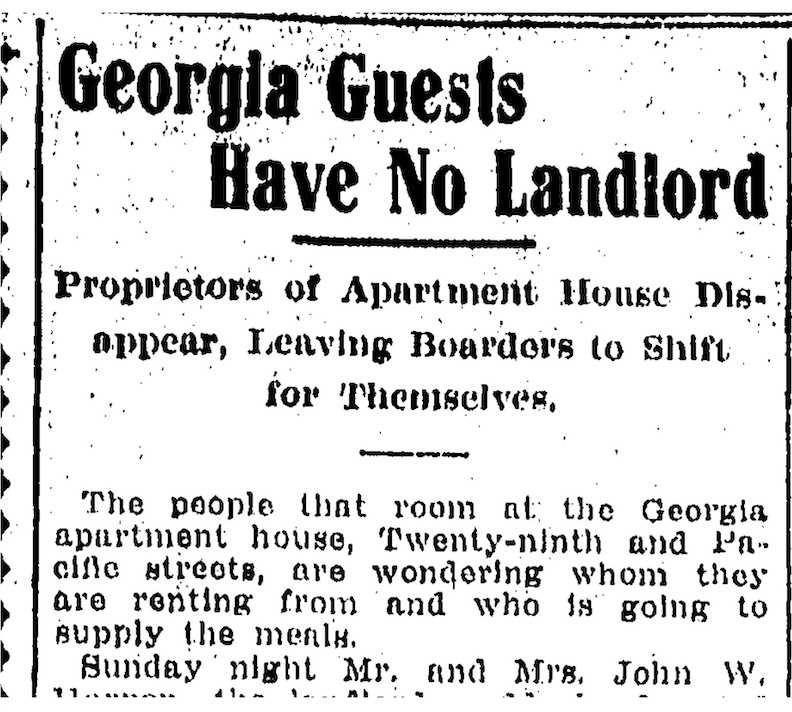
Evening World-Herald. January, 1908. “Georgia Guests have no Landlord.”
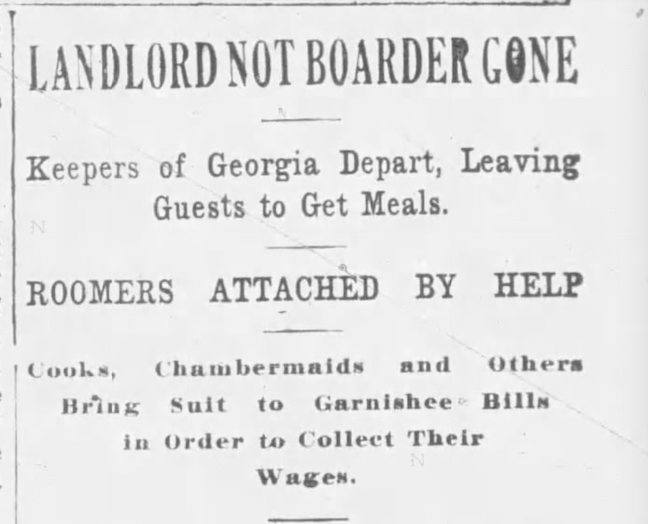
Omaha Evening-Bee. 1908 January.
Omaha Daily-Bee. 1908. Mrs. Josephine Harpon and husband, John W. Harpon, proprietors of Georgia apartment house, depart suddenly.
By January of 1908, the Georgia Boarding House had descended into one of those peculiarly Edwardian crises in which forty respectable boarders awoke to discover that management had quietly vanished in the night, leaving behind unpaid servants, disputed furniture notes, grocery bills, uncertain meals, an impressive quantity of litigation, and possibly the most pressing question of who exactly intended to provide breakfast. All the while the cooks, chambermaids, and assorted unpaid help hurried to court in pursuit of wages. Newspapers announced with unconcealed pleasure that the “Georgia Guests Have No Landlord,” while the Harpons—Josephine and John W.—reportedly departed under cover of Sunday evening, perhaps anticipating the county court’s increasingly chilly opinion of their bookkeeping. One paper delicately suggested they had gone “possibly for South Omaha or California,” as though the two destinations were spiritually adjacent.
The affair revealed the Georgia not merely as a boarding house, but as a small business balanced precariously upon subleases and promissory notes. As it turned out, the Harpons had subleased the Georgia in August of 1907 from John and E. S. Cloyer, themselves lessees under owner Maria B. Sunderland. The Cloyers sued over promissory notes tied to the house furnishings, alleging roughly $900 remained unpaid, while the Harpons countered those pieces of the furniture had been substituted. Judgment ultimately went against the Harpons. Meanwhile, Maria B. Sunderland moved swiftly to reassert control over the property. I discovered The Daily Record of January 6, 1908 revealed a civil suit whereby Maria B. Sunderland was suing Josephine Harpon et all for “forcible entry and detainer” which is a legal action involving possession of property. Sunderland then formally notified tenants that all future rents belonged to her. A meeting of the boarders was reportedly called to determine how the Georgia might continue operations.
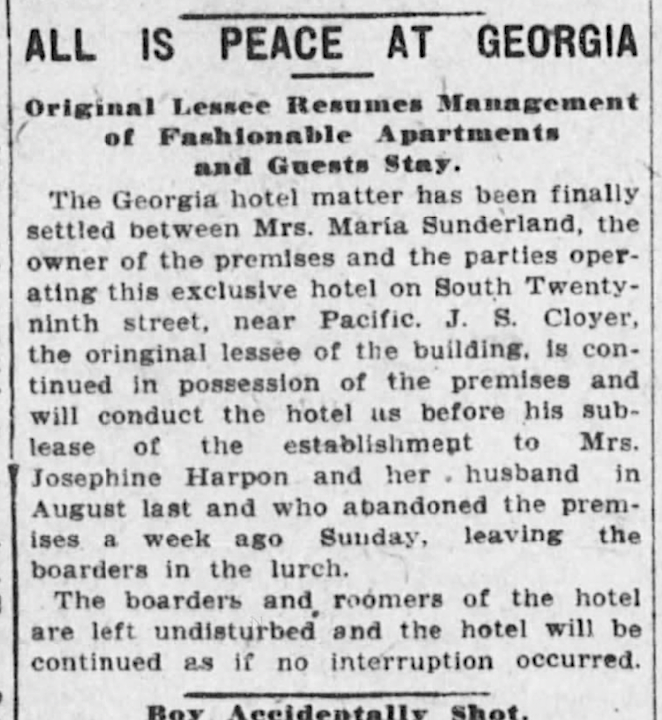
Omaha Daily-Bee. January 14, 1908.
Within months, the Georgia had resumed its preferred public identity: newly renovated, fashionable, and entirely respectable “one of the best family boarding houses in Omaha,” at least according to the Omaha Daily Bee of April 1908. Advertisements proudly announced thirty-four rooms, seven bathrooms, and accommodations “put in first class shape,” while by November 1908 suites with private baths and rooms from twenty-five dollars upward were once again available to discerning tenants. Peace, the newspapers reliably assured readers, had returned to the Georgia, with remarkable resilience.
We’ve got one other matter to discuss because I know some sly readers caught this phrasing, as did I. The Georgia was being described interchangeably as the Georgia Boarding House and the Georgia Hotel, which, in truth, it appears to have been simultaneously. In this scenario Mrs. Sunderland advertised “hotel rooms” for nightly guests, perhaps maintaining her long-term boarders upstairs, all the while offering what newspapers cheerfully called “home cooking.” In and amongst the boarders and lodgers, was this additional hotel business. I am making assumptions here, based on readings from the time period: A hotel offered short-term lodging to traveling people. Guests rented rooms by the night or week. Meals might be available in a dining room, but they were not always included in the room price. Hotels emphasized service and a degree of anonymity. Aboarding house, by contrast, functioned more like semi-domestic housing, as previously discussed. Just for extra delicious confusion—there was another option at the Georgia—that of apartment hotel which further blurred matters. These accommodations offered suites of rooms with some domestic features while also providing hotel-like services. One tenant might stay two years while another occupied a room for three nights. The architecture often still betrays these layered lives: subdivided parlors, extra sinks awkwardly added to bedrooms, improvised kitchens, and transoms for ventilation. I hope to later share what the Georgia was like by the 1980s, by which time the building had already endured countless architectural indignities.
Steam Heat and the Auction
By September of 1909, the Omaha Daily News announced that the Georgia Apartments were again being remodeled, this time with the installation of a modern steam heating plant by the Johnson-Rowe-Paige Company under owner W. C. Sunderland. The Johnson-Rowe-Paige Company of Omaha is generally remembered for plumbing fixtures and fire-suppression equipment, later pivoting, and rebranding itself the Omaha Sanitary Supply Co. Yet the archives, lost to time, reveal the firm spent years in the heating business as well, even securing heating contracts for the officers’ quarters at Fort Riley, Kansas. Johnson-Rowe-Paige installed the Georgia’s cast-iron radiators and coal-fired steam boiler system, a locamotive style, sending heat upward through the building. Unfortunately this ambitious improvement came with litigation. By January of 1910, Dr. A. L. Hunt, a dentist residing at the Georgia, had sued after steam allegedly poured through an open radiator escape in a closet, saturating his dress suit, dinner jacket, and portions of his wife’s wardrobe. Hunt demanded $300 in damages and was reportedly prepared to produce the injured garments before the court like casualties of industrial progress. The judge ultimately awarded him $157, because it emerged that the doctor himself still owed $85 in unpaid board.
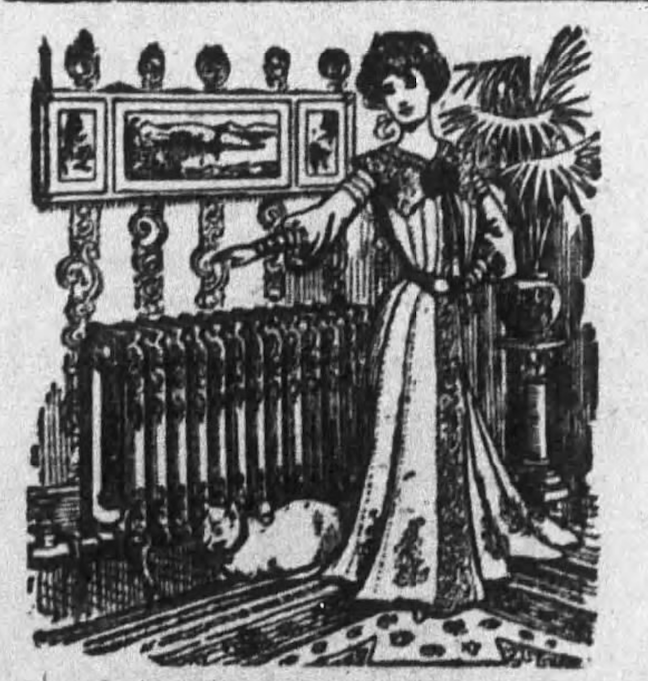
I adore this advertisement of the same year. One can rather see the Georgia in this illustration, as it must have appeared in its boarding-house years: bustling, overfurnished, overheated. It read: “The luxury of steam heat.” Omaha Daily-Bee. 1909.
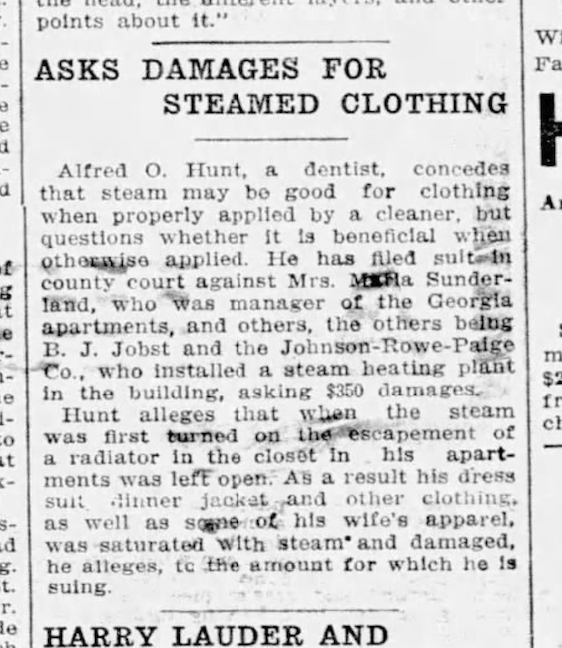
Omaha World-Herald. January 26, 1910.
I make mention of the steam radiators installed in 1909 because I suspect they were very likely the same cast-iron heating system still laboring away at the Georgia “Castle” when I lived there in the late 1980s. Architecturally, this upgrade fit the building’s evolution. The large stone and brick building had relied on furnaces, fireplaces, and gravity heat but by 1909, steam heat represented modernity. Built with almost absurd durability, these radiators often endured in apartment buildings, and I resided in many that continued to utilize them into the 2010s. The hissing, the clanking, like old spirits working in the basement. The steam heat radiator components were expensive and difficult to remove. Owners frequently patched around them, painted over them twenty-five times, cursed them in winter, yet left them precisely as they were, with window panes and human occupants either perspiring profusely or windows frozen over with frost from the prior day’s condensation burst due to a radiator surge. It was an endless cycle to be endured. I could never understand why the Castle placed the steam radiators directly beside enormous, drafty windows quite deliberately. It seemed absurdly inefficient, as though our building alone were financing the outdoor climate of Omaha, but I later learned that around 1900 this very placement by a window was considered good engineering: the radiator’s heat was intentionally positioned to counteract cold air infiltration pouring from the windows. The open window was an essential factor. More on that later when I show you my bedroom.
The following year matters became even less upholstered. In April of 1911, Omaha newspapers advertised a grand public auction at the Georgia Apartments, offering the contents of thirty-four furnished rooms: 16 chamber sets, 9 chiffoniers, 18 rugs, 12 bedsteads, 22 mattresses, 51 dining chairs, quilts, and enough rocking chairs to furnish a sanatorium. The legal notice explained that the “chattels” were to be sold to satisfy a debt secured through a chattel mortgage recorded with the county clerk. In practical terms, movable furniture had been pledged as collateral against unpaid loans and was now being seized and auctioned accordingly. Such situations were probably not unusual in early twentieth-century Omaha, where a respectable domestic business might move from stylish renovation to public liquidation, but I felt the sting of social perception for our building and the Sunderlands not paying on their loans. I realize that seems strange.
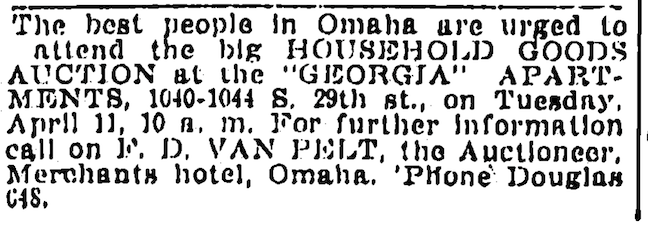
Omaha World-Herald. April 1911.
Intermission
Let us all take a break. Put the kettle on, though something stronger would perhaps be more historically faithful. Adjust your spectacles at nothing in particular.
The real-life Double R Diner from Twin Peaks.
The Georgia Joins Polite Apartment Society
By late 1911, following the rather public liquidation of thirty-four rooms’ worth of furniture, the Georgia re-emerged yet again under the management of Peters Trust Company. Advertisements confidently announced that 1040–42–44 South 29th Street had been redecorated and modernized with steam heat, tiled baths, hardwood finishes, janitor service, and five-room apartments “now ready,” as though the building had merely enjoyed a brief decorative pause rather than a chattel-mortgage auction. By the 1912 Omaha City Directory, the structure had formally settled into its new identity as the “Georgia Apts.,” complete with numbered apartments:1, 5, 6, 7, 8, 9, 10. (Two and three?–were those the Sunderlands’ quarters?). In the years that followed, the address drifted rather casually between 1040 South 29th Street and 1042 South 29th Street.
By the mid-1910s, Omaha was enthusiastically constructing a new generation of apartment houses—solid brick edifices with names such as the Flo-Les, the Helen, the Athlone, the Alsatian, the Helen, the Hamilton, and the Colbert—each advertised with the breathless confidence of a city determined to appear modern and prosperous. Against this backdrop, it is hardly surprising that William C. and Maria Sunderland, together with the Peters Trust Company, attempted to reposition the aging Georgia within this fashionable company. Newspaper advertisements from 1915 presented the “Georgia Apartments” alongside Omaha’s most prominent apartment houses, emphasizing five-room suites, steam heat, fireplaces, tiled baths, janitor service, shady yards, and “large, light rooms,” all for the thoroughly civilized sum of thirty-seven to forty dollars a month. It was a remarkable rebranding exercise, yet the Georgia possessed a stubborn talent for survival. One suspects the Sunderlands understood that Omaha no longer wished merely to board; it wished to reside in something called “The Athlone”—a building I had covered in a previous investigation.
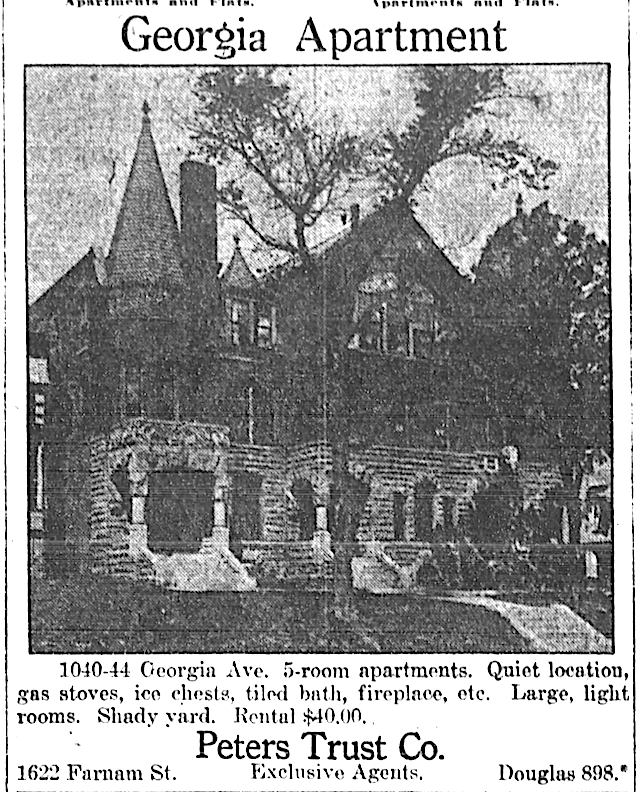
The Daily-Bee. 1915, May advertisement. Georgia Apt in Peters Trust Co. name.
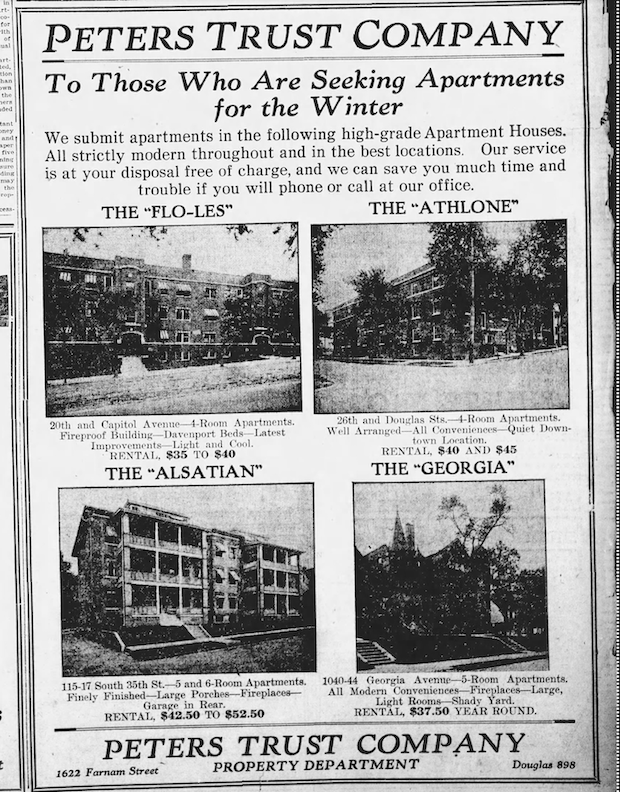
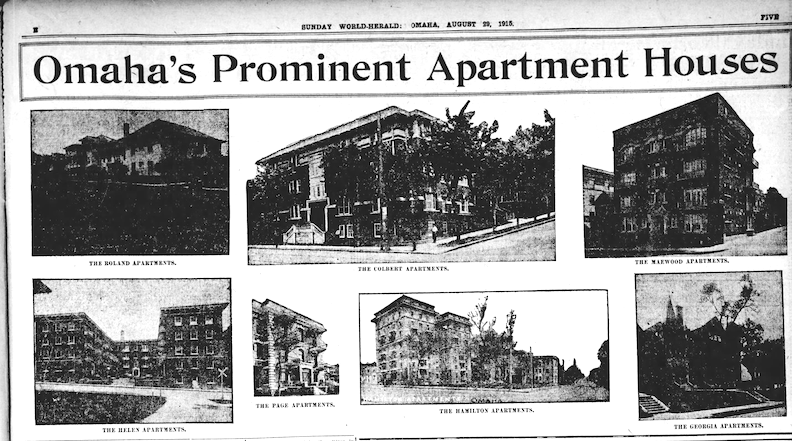
Omaha World-Herald. 1915, August. Both the above Peters Trust Company advertisement and the article on “Omaha’s Prominent Apartment Houses” were featured in the late summer paper.
The Georgia’s fortunes remained tethered to the Sunderland couple. William C. Sunderland, the grain broker and proprietor whose career appears to have consisted largely of surviving lawsuits…until he suddenly passed away. In November 1913, Sunderland reportedly “dropped dead at the grain exchange” from apoplexy at age 66 in his Brandeis Building office. By today’s standards, these historic death announcements very often arrived with a shocking harshness, as though scrawled across an Irish butcher’s paper in thick black ink for public display. Newspapers described Sunderland as a wealthy grain man, although probate records initially listed only about $1,000 in personal property—an accounting that promptly inspired further litigation as Maria Sunderland moved energetically to consolidate notes, claims, and scattered assets into her own name. (For example, suing Mr. Julius H. Olseen for $27,265.01 allegedly owed to the Sunderland estate.) She would, in time, locate considerably more money than the early filings suggested, and one should not trouble oneself on Maria’s behalf; Mrs. Sunderland emerged as a woman of very comfortable standing indeed. By May of 1915, Mrs. Sunderland appears to have satisfied her mortgage with the Byron Reed Company, one of Omaha’s long-established real estate and loan firms—a small but telling indication that whatever financial merry-go-round had encircled the Georgia in earlier years, Maria Sunderland remained in command of the ledger.
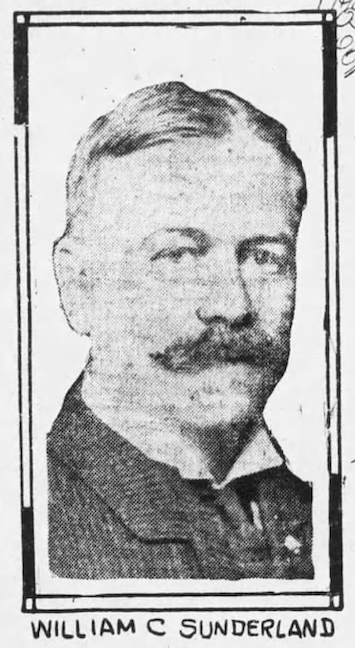
Mr. Sunderland as seen in 1910 in the Omaha Bee newspaper.
A few years after Mr. Sunderland’s death, Maria and her faithful companion, Tillie Matida Danielson,appear to have withdrawn, at least partially, to the Isle of Pines off Cuba’s southern coast, that curious tropical refuge where wealthy Americans, “invalids,” and optimists alike went in search of health, sunshine, and occasionally financial reinvention. Mrs. Sunderland was said to have built a lovely home. Yet the paper trail wanders a bit, as such things often do.
A few years after Mr. Sunderland’s death, Maria and her faithful companion, Tillie Matida Danielson,appear to have withdrawn, at least partially, to the Isle of Pines off Cuba’s southern coast, that curious tropical refuge where wealthy Americans, “invalids,” and optimists alike went in search of health, sunshine, and occasionally financial reinvention. Mrs. Sunderland was said to have built a lovely home. Yet the paper trail wanders a bit, as such things often do. An Emergency Passport Application dated October 30, 1916 notes Maria Sunderland leaving the United States and arriving at the Isle of Pines via Havana on November 5 for “health reasons,” suggesting either a new departure or perhaps a return to a life already begun there the previous year. Tillie, Mrs. Sunderland’s Swedish servant and constant companion, had arrived in Omaha much earlier to live in the couple’s “large home at 39th and Dewey,” and one senses she was the solid figure in Mrs. Sunderland’s life. Needless to say, this plot thread was far from finished.
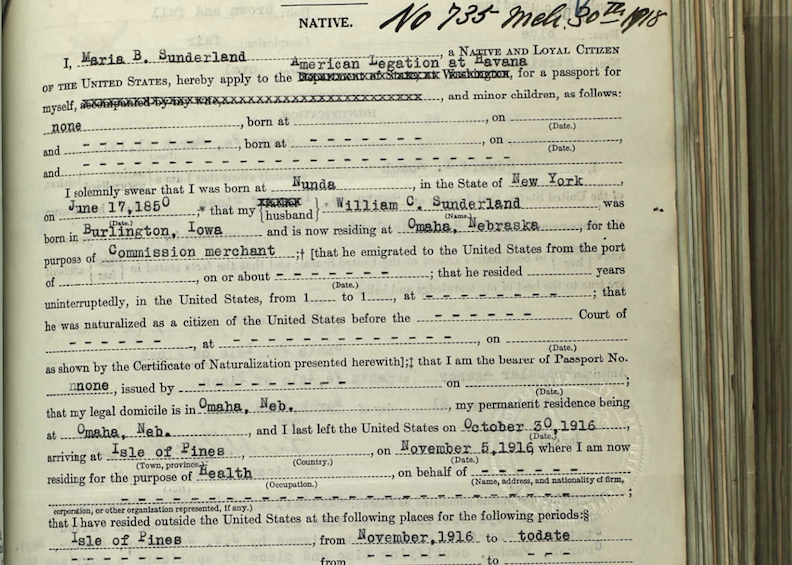
“Emergency” Passport Application dated October 30, 1916.
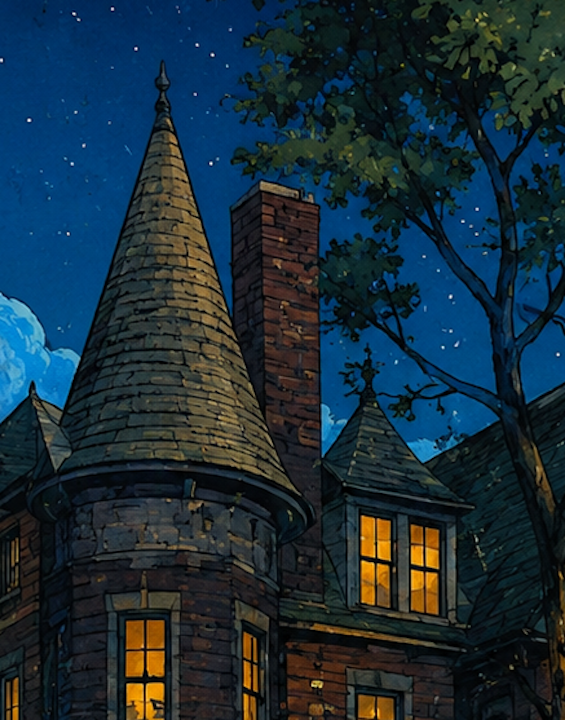
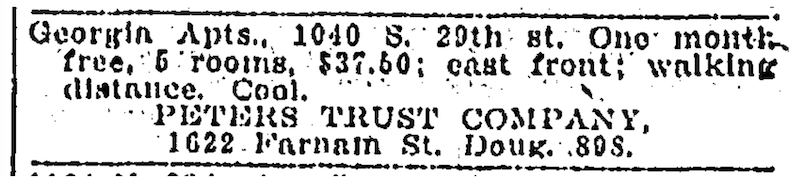
Omaha World-Herald. July of 1916.
Rooms Full of Lives
Meanwhile, inside the Georgia, life went on in its curious and uneven way. Mrs. M. H. Blackwell baked what the newspapers called “delicious crispy brown cookies” and sold them to the Georgia residents and to friends beyond the building. It was later learned that she also moved through revivalist circles and took a particular interest in the young factory girls arriving from the outskirts of Omaha, quietly gathering souls. Former city treasurer Henry Bolin died at the Georgia Apartments in 1916 at the age of sixty-eight. He had come to Omaha from Schleswig-Holstein in 1869 and, like many men of that restless period, had passed through several lives in one lifetime: farmer, grocer, legislator, and twice city treasurer before shortages in his accounts carried him off to the penitentiary. This newspaper managed to spell his surname three different ways within the same article, which somehow felt less like an error than an honest reflection, whereas I noticed that other newspapers, omitted his stay in the pen altogether.
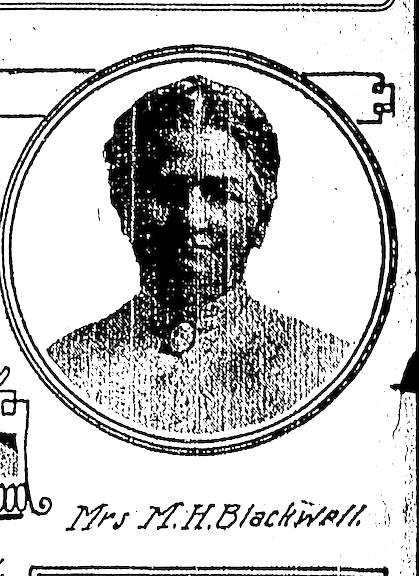
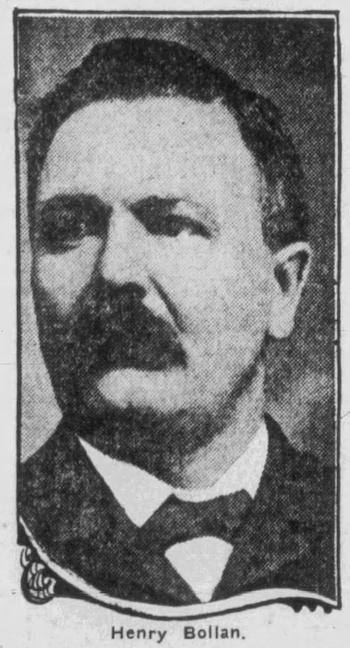
Omaha World-Herald. 1915: “Mrs. M. H. Blackwell makes cookies.” Omaha Daily News. 1915. Mr. Henry Bolin-Bolian-Bollan: His name accumulated nearly as many misspellings in the newspapers as he had chapters in his life.
Under the management of J. A. Kranberg—occasionally rendered Cranberg, the Georgia housed the sort of residents who drift through city directories with little indication of the private weight they carried.
Among the long-term residents of the Georgia Apartments was 56-year-old Miss Carrie M. Boutelle, a kindergarten teacher at Pacific School (12th and Pacific Streets), who lived there with her widowed mother Mary and her adult siblings, Anna and James. In February of 1918, while walking to school, Miss Boutelle slipped upon an icy sidewalk at 14th and Leavenworth Streets and reportedly spent eight weeks in Nicholas Senn Hospital suffering from a broken arm and extensive bruising before suing the David Cole Creamery Company for the then-dazzling sum of $20,000. Carrie Boutelle had not been able to work since the accident.
Two years later, in 1920, Omaha newspapers reported that Miss Boutelle, after twenty-eight years as a teacher in the public schools, had taken her own life in the Missouri River. One of her former pupils, Joe Blazak, had seen her wandering about the Train School grounds (6th and Hickory), where she had formerly taught years prior. “She walked away when he approached.” In a strange coincidence, a few minutes after Joe saw her at the Train School, his father, Joseph Blazak saw the teacher standing near the riverbank staring toward the Iowa side. The articles noted with chilling casualness that her body was discovered stuck in the mud near the foot of Woolworth Avenue by Anton Hason, a laborer, who lived at 107 Woolworth Avenue—only later was it revealed it that Anton’s teenage sons, Rudolph and Walter Hason, found Miss Boutelle because they were already combing the Missouri in search of another suicide victim, U. G. Bridenbaugh—a retired banker who had leapt from the Douglas Street bridge. One scarcely knows which detail lands with greater force: the river itself carrying away Omaha’s sorrows, or the astonishingly matter-of-fact addition that the three Hasons had, by then, recovered fourteen bodies from its waters owing apparently to their proximity to the Missouri and their efficient roping technique. The reports repeatedly identified the family residence as the Georgia Apartments, where Carrie had lived with her mother, brother, and sister. In one especially grim flourish, a report soberly instructed readers not to mention Carrie’s death to her elderly mother at the Georgia, as she had not yet been informed. Her elderly mother, Mary Boutelle, a widow, would herself die there in the Georgia in 1928 at the age of eighty-seven.
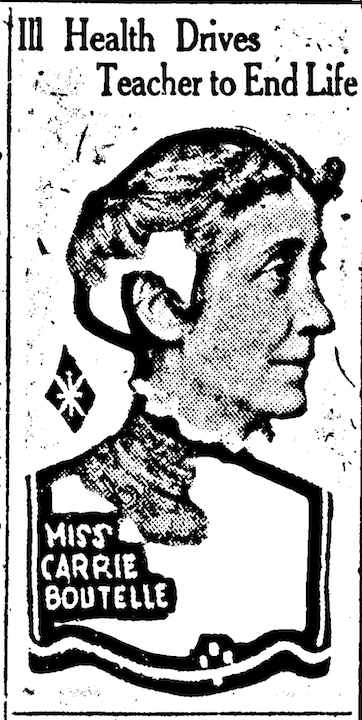
Omaha Daily-Bee. 1920, September and Omaha Evening Bee. 1920, September. Carrie Boutelle had been among the early pioneers of kindergarten instruction in Omaha, reportedly teaching children first within her own home before serving at several city schools and eventually rising to the position of kindergarten director at Pacific School.
A November 1923 fire in the basement of the Georgia Apartments transformed the building’s basement into one of those grim domestic pieces. I include this because certain stories connected to the Georgia’s basement in the 1980s have lingered uneasily in my mind ever since. The Evening World-Herald and Omaha Daily News reported that Mrs. J. P. Smith, seventy-five years old, descended into the basement locker and boiler area—apparently searching for belongings by candlelight or matches—when nearby excelsior ignited. Mrs. Smith reportedly attempted to fight the flames herself before collapsing against the hot water heater, suffering severe burns to her head and arms.
The Georgia’s tenants then performed a chain of rescues worthy of a quieter sort of heroism. Mrs. W. H. Wilbur, smelling smoke, found Mrs. Smith lying upon a burning pile of excelsior and dragged her to temporary safety before herself collapsing in the smoke-filled hallway after sounding the alarm. Another tenant, Mrs. R. W. Bixby, subsequently rescued Mrs. Wilbur, while fireman Ray Bishop carried the elderly Mrs. Smith from the basement. The blaze “ate its way through the floor to the apartment of Mrs. Wilbur” but otherwise remained confined to the basement. The following day Mrs. Smith died at Lord Lister Hospital from her injuries. Mrs. Smith resided at the Georgia with her daughter, Miss Jennie Smith, a teller at the Stock Yards National Bank, and a sister, Mrs. J. Hodgins.
The Omaha Daily News. November 28, 1923.
The Last Arrangement of Mrs. Sunderland
By April of 1918, Maria Burnett Sunderland returned to Omaha from the Isle of Pines with her longtime Swedish companion and servant, Matilda “Tillie” Danielson, taking up residence once again at the Georgia Apartments, a property Mrs. Sunderland continued to own. Their return followed what the Omaha Daily News and Evening Bee dramatically described as the “greatest storm in the history of the little island,” the catastrophic 1917 hurricane which reportedly forced the two women to endure eighteen hours of wind and flood barricaded inside a bathroom of the Sunderland estate. Servant Tillie was said to have nailed the doors shut while the wind and flood methodically dismantled nearly every structure on the island around them. Mrs. Sunderland’s health reportedly never fully recovered. But Tillie in the press was a figure of genuine loyalty, refusing wages after Mr. Sunderland’s death, nursing Maria through sickness, becoming a local legend for waffles supposedly famous “from coast to coast” (which sounded suspiciously like an embellishment, although good waffles probably were different then).
When Mrs. Sunderland died in September of 1926 at the age of seventy-six–her death was variously reported as occurring at Lord Lister Hospital or inside the Georgia itself at 1040 South 29th Street–it was revealed that Tillie Danielson, aged fifty-seven, inherited not only personal effects but an income for life from the Sunderland estate estimated at nearly $50,000–money newspapers confidently said would “keep her in luxury the remainder of her life.” It was predicted that Tillie would get roughly $2,000 a month from the Sunderland estate, which in 1926 Omaha was a staggering sum for a lady who had spent decades in domestic service. The rest was to go to the Old People’s Home on Tillie’s death (Omaha Evening Bee; Evening World-Herald). Contemporary accounts depicted the pair more as a committed domestic partnership of 20 years, “matched only by the devotion of a daughter to a mother,” than as mistress and servant. Mrs. Sunderland was called by Tillie herself “mother” and she said following the opening of the will that serving her “was my whole life. I loved it.”
The Omaha Evening Bee. September, 1926.
I had not initially found evidence that Mrs. Sunderland directly left the Georgia Apartments to Tillie Danielson in her will. Nevertheless, Tillie appears to have remained at the Georgia quite comfortably. When Mrs. Sunderland’s will was opened, the Peters Trust Company* appeared in the proceedings, suggesting some fiduciary or estate-management role connected to her holdings.
Entrance to Peters Trust building. “OMAHA BEE” sign above center arch. “PETERS TRUST BUILDING”, “MIDLAND TITLE GUARANTEE & ABSTRACT CO.” above the main doors. Bostwick, Louis (1868-1943) and Frohardt, Homer (1885-1972). The Durham Museum. 1920.
*By the 1920s Peters Trust had become one of Omaha’s sprawling financial concerns, operating in close association with Peters National Bank from the old Bee Building at Seventeenth and Farnam, thereafter rechristened the “Peters Trust Building.” The company handled the respectable business of trusts, estates, guardianships, mortgage lending, and investment management, though like many institutions of the roaring decade it also developed a vigorous appetite for real-estate speculation. In practical terms, firms such as Peters frequently found themselves overseeing apartment buildings, commercial blocks, and income properties tied to estates or mortgage arrangements, making its appearance alongside the Sunderland estate entirely plausible within the increasingly corporate world into which the Georgia had drifted. Then came 1929. Peters Trust itself unraveled spectacularly amid collapsing mortgage values and an embezzlement scandal involving senior officials, prompting court-ordered liquidation.
By 1930, I discovered rental management of the Georgia Apartments had shifted to the United States National Company operating from the third floor of the U.S. National Bank Building.
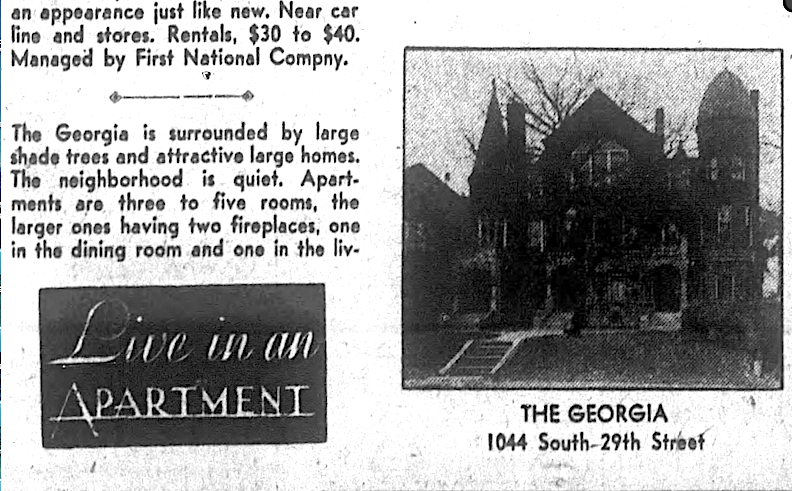
The Omaha Evening Bee News. October of 1932. By the Depression years, even the grander five-room suites at the Georgia Apartments had fallen to rents of forty-two dollars and lower; by 1931 advertisements offered apartments for $32.50 to $50 a month. There is something distinctly unsettling about the advertisement itself. The photograph looks less like an invitation than evidence submitted at an inquest. Or perhaps the effect is intensified because the advertisement appeared near Halloween time.
I went positively wild attempting to untangle our Miss Tillie Danielson of the Sunderland saga. At first glance she appeared to fit a familiar Midwestern pattern: the unmarried Swedish domestic companion who, over decades of service within prosperous households, gradually ceased to be regarded as a servant at all and instead became something far more intimate, if never entirely acknowledged in formal language–an emotional heir. The Scandinavian surname, interchangeable first names (Mathilda/Matilda/Tillie), overlapping Nebraska immigrant communities, and newspapers that often flattened women’s identities. The trail eventually clarified. Matilda “Tillie” Danielson died at the age of eighty-six, unmarried, while living at 3922 Castelar Street. Her survivors were listed as nieces and nephews in Omaha along with relatives in Sweden; among them was Mrs. Carl O. Anderson. The Castelar residence itself—a handsome 1919 house with formal dining room and two bedrooms—had been built by Carl O. Anderson, who turns out to have been Tillie’s niece’s husband.
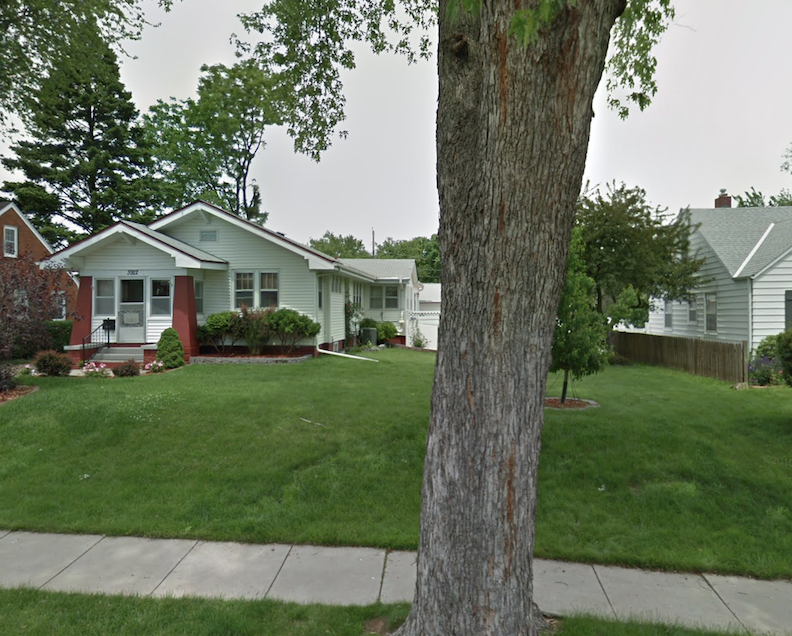
3922 Castelar Street. 1919 house built by Carl O. Anderson, who turned out to have been Tillie’s niece’s husband.
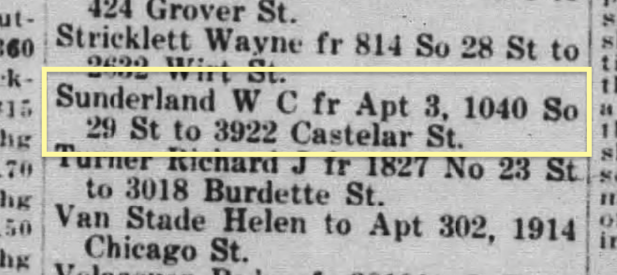
The Daily Record. March of 1941.
Then came the small but deliciously peculiar detail that sent me back to the archives with renewed caffeine intake. In March of 1941, the Daily Record noted that a “W. C. Sunderland” moved from Apartment 3 at 1040 South 29th Street—the Georgia—to 3922 Castelar Street. Of course, the original William C. Sunderland and Maria B. Sunderland had long since died. Why, then, did Tillie continue using the Sunderland name after relocating to her niece’s household? Habit? Sentiment? Social convenience? Or had the identity become so intertwined with her own life that abandoning it felt rather like abandoning family itself?
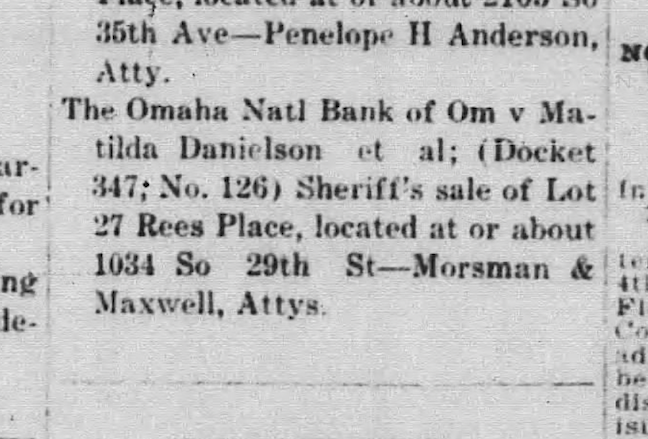
The Daily Record. November 26, 1940.
What complicated matters even more was a previous legal trail that I discovered in the eleventh hour. By November of 1940, theOmaha Daily Record carried the matter of Omaha National Bank of Omaha vs. Matilda Danielson, followed in December 1940 by a sheriff’s sale notice involving “Lot 27.” That development strongly suggests that whatever the precise mechanism, Tillie eventually did acquire ownership or at least a substantial legal interest connected to the Georgia property itself. One begins to suspect the transfer may have occurred later through probate settlement, survivorship arrangements, subsequent conveyance, or some quieter legal maneuver not immediately obvious in the earlier will proceedings. The final curtain lowering on the Swedish maid was not something that I liked to hear but something clearly had gone wrong. For whatever reason—taxes, accumulated debts, the bills were no longer being paid and the Georgia was sold off.
The Long Afternoon of the Georgia
By the late 1920s and into the 1970s, the Georgia Apartments enters one of those frustratingly dim archival periods in which large buildings continue existing quite stubbornly while leaving behind very little commentary beyond city directories, classified advertisements, janitors’ names, and the occasional legal unpleasantness. The Georgia had settled into the quieter business of surviving.
It was in the 1920s that I began to notice the Olson family had settled into the basement apartment of the Georgia Apartments, where Olaf Olson served as janitor. One suspects Mr. Olson witnessed the building’s gradual transformation more intimately than any owner or property manager ever could: the endless tenant turnover, the repainting campaigns, the whispered financial worries drifting down stairwells like boiler heat. The 1932 Omaha Directory again listed “1040-44 Georgia Apartments,” with Olson still faithfully occupying the basement quarters. Olaf Olson died there in June of 1934 at age sixty-eight, residing with his wife Minnie and daughter Alice. Alice herself briefly wandered into newspaper immortality through her pet chipping sparrow, Babe, who reportedly enjoyed hamburger meat—a detail so oddly precise.
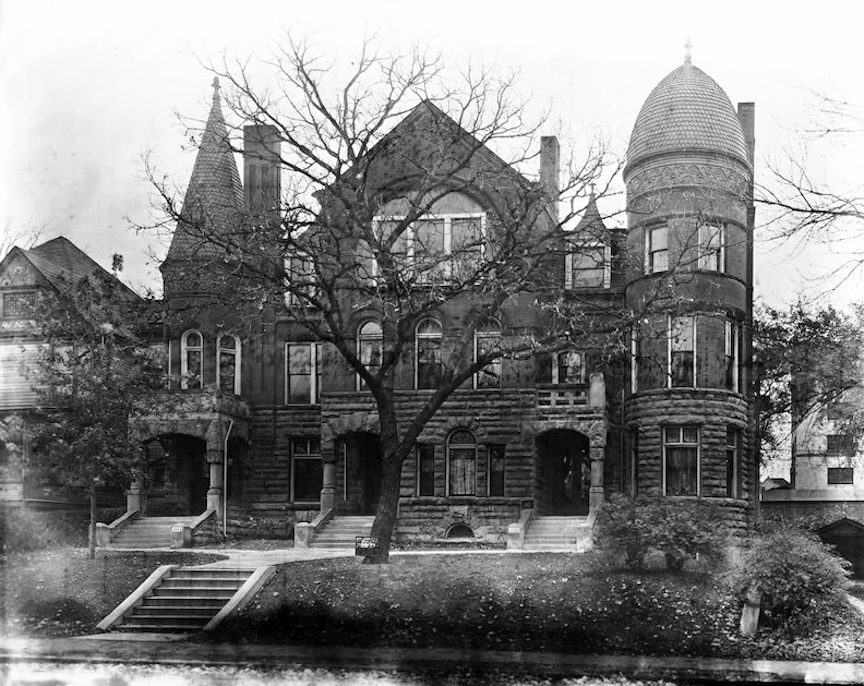
1932. “Unprocessed Dewell Collection.” Nebraska State Historical Society. I had shared this photograph earlier, but it falls so neatly within our timeline at this juncture that it deserves another appearance.
By 1938 another janitor, Johnson Cribbs, occupied the basement apartment—perhaps a convenient refuge after his rather public 1936 divorce proceedings with Queen Esther Cribbs. He was also the first Black resident and employee I have thus far identified within the history of the Georgia Apartments, a small but notable shift in the building’s long social evolution. During the 1940s the building was reportedly redecorated, while rents drifted downward to approximately $37.50. Yet the building endured. By 1945 the Omaha Directory listed a bewildering collection of apartments—1 through 9, then 10A, 10B, 11A, 11B, 12A, 12B, 14, and 15—evidence of continued subdivision inside the old structure? An Omaha World-Herald advertisement from March 1945 offered the property for sale as “one of the older type buildings, solidly built; will last a lifetime.” The listing described nineteen apartments, fourteen with private baths, twelve furnished, and monthly income of $617.50, plus a five-room owner’s apartment. “Near the carline,” the advertisement added hopefully.
The trail grew particularly thin between 1950 and the early 1960s, as though the Georgia Apartments had retreated into an even quieter middle age. The 1950 Omaha City Directory still listed apartments 1 through 15, though advertisements from the period suggest the building had drifted once again toward a boarding-house arrangement, offering three-room suites by the week for sixteen dollars. The Georgia, which had once housed financiers and insurance executives in its towers, was now renting practical shelter by the week.
And yet fragments of affection survive. I received a marvelous note from Robin Paprocki, whose mother had lived there as a newlywed in 1958–1959 and asked if My Omaha Obsession had done any research on the old Georgia Apartments / Georgia Row House on south 29th Street. “Her kitchen was the south turret,” Robin wrote, which is exactly the sort of sentence capable of reviving an entire building. One suddenly remembers that people cooked dinners beneath those absurdly picturesque roofs and were staring out as the new interstate was being planned. Robin added, “It sounds like it was amazing inside,” and I suspect she was quite right.
The directories resume in 1961 with “1040-1044 Georgia Apartment,” and by 1963 the property was for sale again: nineteen units, including a custodian’s apartment, spread across five main-floor units, three second-floor units, six third-floor units, and two basement apartments, offered for $64,500. The listings read like a carefully subdivided maze inside a Victorian shell. By 1968 the addresses had again been split between 1040 and 1044 Georgia Apartments, with units 1 through 16 listed.
During the 1960s and early 1970s, construction of Interstate 480—later designated the Gerald R. Ford Freeway (who had been born in Omaha)—permanently altered the neighborhood surrounding the Georgia Apartments. The route itself had been planned in the late 1950s and was controversial almost immediately because it cut through older residential neighborhoods and required extensive demolition.The construction beginning in the early 1960s with portions opening in stages beginning in 1966, the freeway cut directly through older residential districts, erasing entire rows of houses between South 28th Street and South 29th Streets in the name of modern traffic efficiency. The Georgia survived the upheaval, but the east side of the block it had once presided over in 1890 did not survive with it. The transformation must have been startling from inside the Castle itself. Windows that once overlooked porches, shade trees, and tightly clustered Victorian homes now faced ramps, open cuts, and the concrete confidence of the interstate age. One of the quieter tragedies of historic preservation is that a building may remain architecturally intact while the environment that once explained its existence disappears around it.
**Addendum of June 10, 2026** One of the most valuable recollections of the neighborhood comes from Jackie Alloway, who grew up across the street from the Georgia at 1025 South 29th Street. Jackie recalled that her family’s home was demolished for the construction of Interstate 480 in either 1960 or 1961, although the family had already moved away in 1956. Jackie remembered that the property immediately opposite the Georgia was arranged rather differently than one might imagine today. At 1023 South 29th Street stood a substantial house and, further east, down a driveway, was a smaller building that housed three apartments, which, one must admit, sounds rather ample in itself. According to family lore, this building was the original carriage house when the property was a private residence. Her parents moved there in September of 1939. In 1911, the main house was occupied by the Green family according to a brief dig. By 1915 the residence seems to have begun renting rooms in the private residence. The exact construction date of the carriage house is unknown but really intriguing to hear of its survival into the mid-twentieth century.
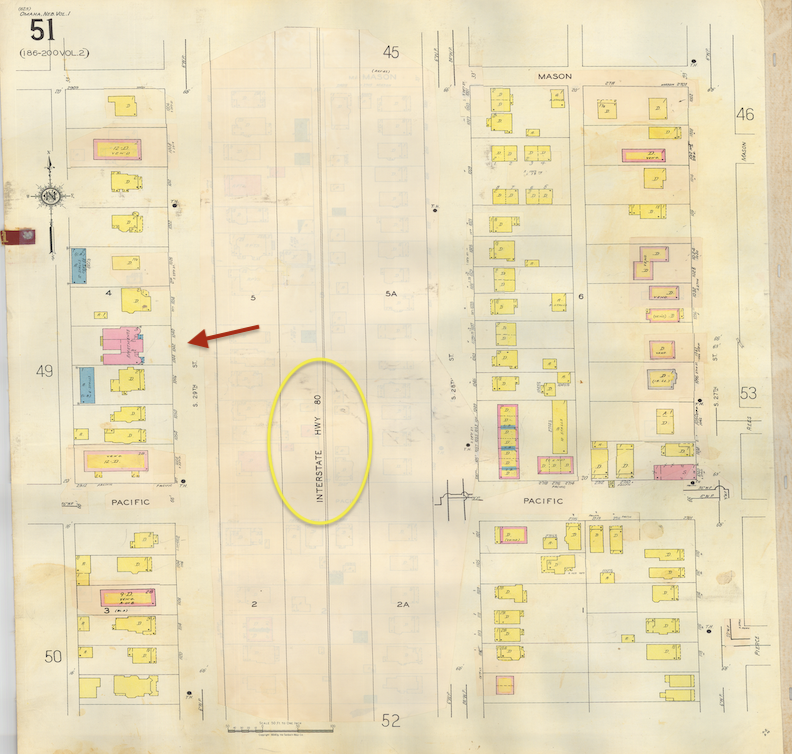
Colored Sanborn Fire Insurance Map of Omaha, Nebraska, produced by the Sanborn Map Company. (Courtesy of Trina Westman and Shelley McCafferty, former and current City Planner, Historic Preservation Administrator of Omaha City Planning Department.) Top of map is north. Bottom is south. Righthand side is east. Lefthan side is west. This interesting map, undated, is full of detail about the neighborhood around the Georgia Apartments during the years of Interstate building. Most stunning is the way the “Interstate Hwy 80” corridor appears to have been practically put on top of the older drawing, allowing the original footprints of the demolished houses to remain faintly visible beneath the freeway overlay like architectural ghosts. That was the usual way. I have included a red arrow pointing to the Georgia itself.
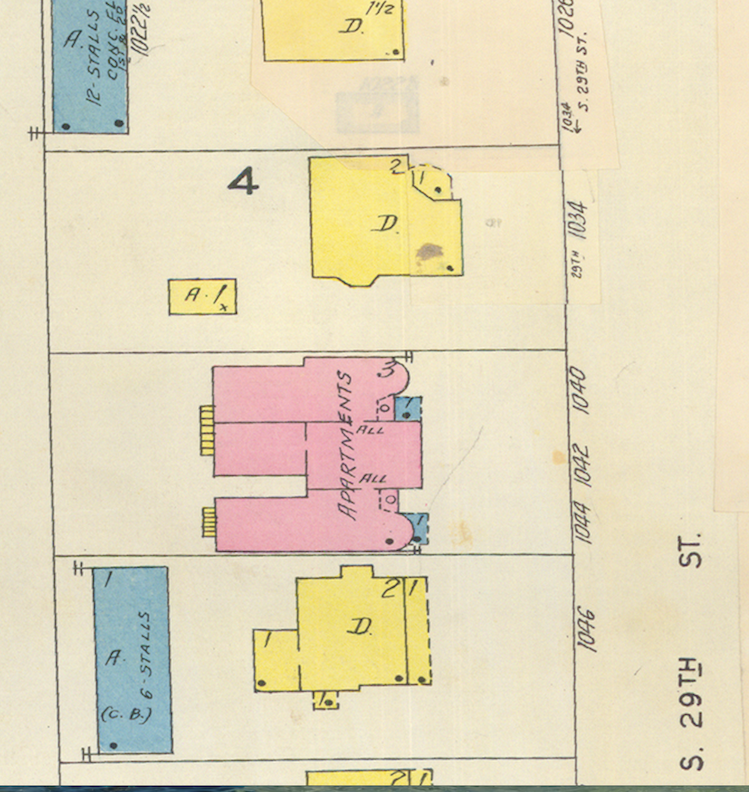
Colored Sanborn Fire Insurance Map of Omaha, Nebraska, produced by the Sanborn Map Company. (Courtesy of Trina Westman and Shelley McCafferty, former and current City Planner, Historic Preservation Administrator of Omaha City Planning Department.) Detail of the above map.
The Castle Comes Alive
By the 1970s the Georgia Apartments had fully embraced its new identity as “The Castle.” The building’s Victorian eccentricities—largely ignored for decades—had at last become marketable romance. Newspaper advertisements promised stained glass, fireplaces, enormous closets, oak floors, and kitchens “large enough to eat in.” One 1978 ad announced, “The Castle—and you’ll believe it,” which sounds less like rental advertising than a challenge made during a séance. I was in love with this rebrand.
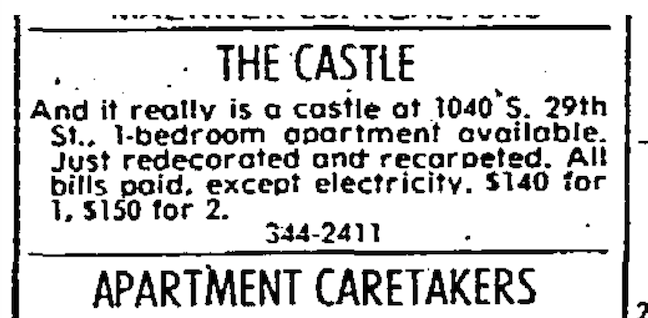
Omaha World-Herald. 1978.
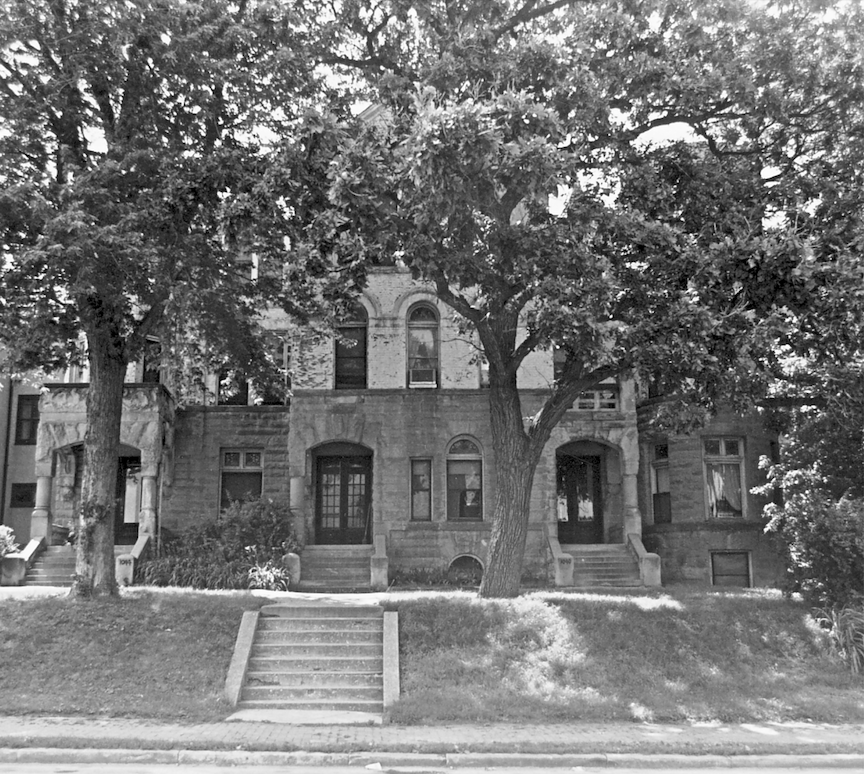
1972 front elevation. Photograph courtesy of the Nebraska State Historical Society.
And yet, beneath the theatricality, something more serious was occurring. By October of 1978 the owners, Dr. Norman and Ruth Dawson, had requested Landmark Designation for the building through Omaha’s Landmarks Heritage Preservation Commission. The commission application noted that the Georgia Apartments, designed in 1890 by Findley and Shields, represented Omaha’s “finest residential example” of Romanesque Revival architecture and possessed a “picturesque profile” that “perfectly expresses the exuberance of its age.” By November the Omaha planning board recommended the structure for local landmark status, and in May of 1979 the Nebraska State Historic Preservation Review Board advanced the property toward inclusion on the National Register of Historic Places amid wider discussions about what, precisely, qualified a building as historically significant. I have referenced the formal National Register of Historic Places Inventory Nomination Form earlier in our investigation. The Georgia, after decades of surviving foreclosure notices, subdivided apartments, redecorating campaigns, and Depression arithmetic, had apparently lived long enough to become important again.
The 1978 landmark materials reveal that preservation of the Georgia Apartments was not motivated entirely by sentimentality over turrets and stained glass. The Landmarks Heritage Preservation Commission stated that the structure was consistent with the city’s 1977 Community Development Master Plan, which designated the surrounding district a “Major Rehabilitation Area” for home rehabilitation through grants and low-interest loans. By the late 1970s preservation was economic policy. Many American communities, having gleefully leveled portions of their 19th-century neighborhoods, began discovering with varied degrees of shame that they quite missed them. Omaha’s preservation language appropriately accented that transition: concern for “public awareness” of architecturally noteworthy properties sits easily next to the practical promise of financing instruments geared to maintain aged housing.
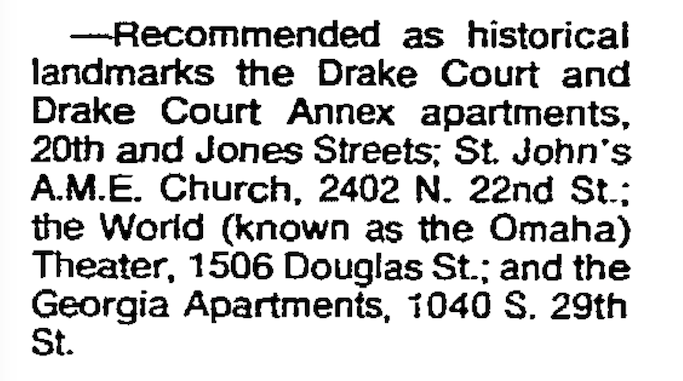
Omaha World-Herald. 1978. By October of 1978, the owners of the Castle-Georgia Apartments had formally requested landmark designation for the building at 1040 South 29th Street. In November members of the Omaha planning board requested that it be included to the city’s list of historical landmarks, and by May of 1979 the property had been recommended for inclusion on the National Register of Historic Places. They weren’t just going through the motions. Owners of buildings listed on the National Register became eligible for certain tax advantages and rehabilitation incentives, part of a larger late-twentieth-century realization that preserving historic buildings might be less destructive—and sometimes even less expensive—than razing them altogether.
Naturally, it was also for sale. A December 1978 advertisement announced, “The Castle Apts.—First Time Offered,” describing seventeen units making over $33,000 per year. The old building had become both relic and investment simultaneously, which is the natural fate of nearly every Victorian survivor in America. By 1985, the Georgia was once again on the market with fifteen units, later fourteen, despite being designated an official landmark. The Castle spent the twentieth century doing the same amazing trick over and over. She was architecturally important and financially precarious.
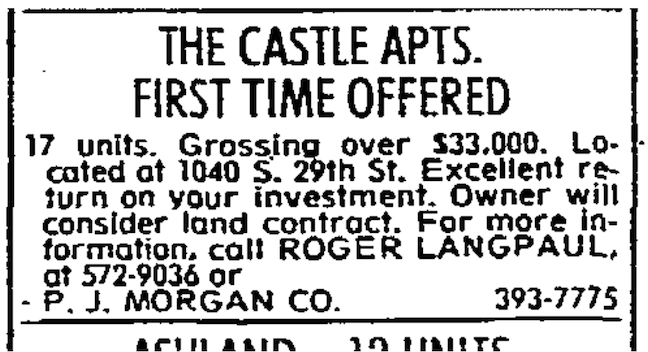
Omaha World-Herald. December of 1978. “First time Offered”–We beg to differ.
The Strange Affair of the Missing Dome
You have perhaps wondered when I intended to mention it—the elephant in the room, seated there. For all of my research across these years—and after an almost embarrassingly toothless scrutiny of landmark paperwork, surveys, and formal documentation—I have found absolutely nothing explaining the disappearance of the dome roof atop the rounded northeast turret of the Georgia Apartments. This is especially frustrating because there are not many photographs of the building to begin with. The rounded, fish-scaled turret roof appears clearly in the 1932 image, and then, rather mysteriously, vanishes altogether. By the 1972 Nebraska State Historical Society photographs, the turret remains, but its roof is gone.
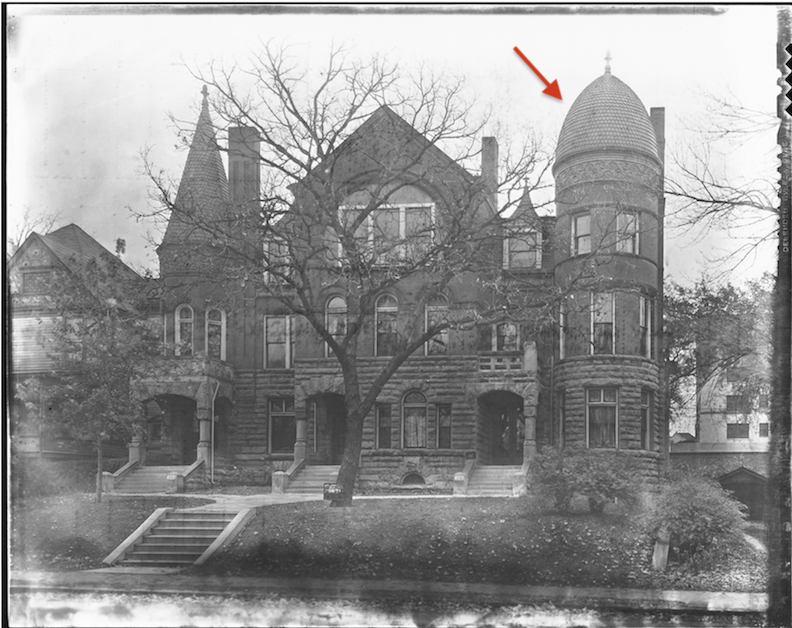
1932. “Unprocessed Dewell Collection.” Photograph courtesy of the Nebraska State Historical Society. Red arrow points to the beautifully shaped Acorn Dome.
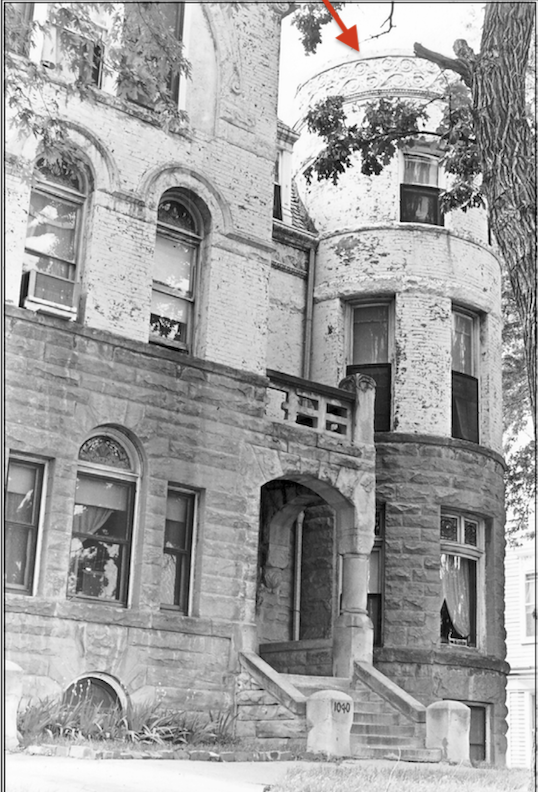
1972. Photograph courtesy of the Nebraska State Historical Society. Red arrow points to the missing clue.
One suspects the cause was likely mundane: storm damage, neglected maintenance, structural instability, water penetration, or the mere cost of fixing an intricate Victorian roofline in decades when such embellishments were an inconvenience requiring scaffolding. But it’s odd because there is no record whatsoever. Architecture doesn’t just shed complete features without a sound but the Castle-Georgia seems to have done just that. Perhaps it was during one of the many times the building was in financial jeopardy, when its survival mattered more than architectural purity. No one imagined We Obsessives would be digging through the paperwork fifty years later asking for an accounting of every missing shingle.
The roof on the north turret of the Castle-Georgia Apartments would most accurately be described as a conical dome or helmet-shaped conical roof clad in fish-scale shingles. The turret itself is cylindrical rather than polygonal, so the roof reads more as an elongated dome than a rigid polygonal spire. The southern turret, on the other hand, is more properly a polygonal spire roof, taller and sharper, more typically Gothic/Queen Anne in style. The right turret is softer and more Romanesque, a great fit with the building’s Richardsonian leanings. And that is exactly why its absence seems so graphically meaningful. That domed roof was a counterpoint to the whole façade composition. Without it the building loses some of its asymmetrical dialogue, the interaction between the harsh pointed turret on the left and the heavier domed turret on the right. Victorian architects loved this kind of managed imbalance.
The Secret in the County Records
By the later twentieth century, the Castle-Georgia survived largely through sheer human stubbornness. Land contracts passed quietly from Wayne P. Eves to Thede A. and Lucia B. Jensen in 1963, although the deed itself did not finally settle until 1977; thereafter another land contract carried the property onward from the Jensens to Dr. Norman and Ruth Dawson. These were hardly grand transfers, and the details did not give themselves up easily.
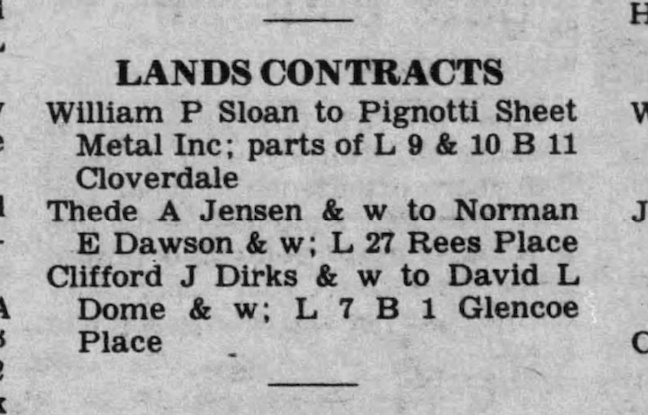
The Daily Record. November of 1977.
I confess I had not understood any of this at the outset, which is perhaps why the humble Land Contract deserves a moment under the lamp. From the 1950s into the 1990s, Land Contracts became common instruments for older apartment buildings throughout Omaha and similar Midwestern cities. By then, structures like the Castle-Georgia occupied a deeply inconvenient category: architecturally significant, physically aging, heavily subdivided, increasingly difficult to insure, and located in neighborhoods frayed by disinvestment and arrivals, ahem, of interstate highways. Banks regarded such properties with the wary expression one reserves for a charming relative who has repeatedly borrowed money. A building could be historically magnificent and financially radioactive at the same time. Land contracts stepped neatly into that vacuum, allowing sellers to unload difficult buildings while buyers—small landlords, speculative investors, or undercapitalized dreamers—assumed control with little conventional financing. The resulting paper trail was less a tidy chain of ownership than a thicket of installment agreements, assumed debts, balloon payments, and informal arrangements scattered through the county records. I lost the trail more than once and remain quite certain I have uncovered only half of it.
Dr. Norman E. Dawson appears in this story as a preservationist or weary caretaker of the impossible. In his professional life he was the Music Supervisor of the Council Bluffs Public Schools, but he was also the Georgia Caretaker who in February of 1978 telephoned in a 2:38 a.m. fire at the apartment building. Repairs followed that spring with a reported $23,000 restoration permit for 1040–1044 South 29th Street involving Beals-Arch-Mag Contractors. In March of 1979, Dawson resigned at age fifty after nine years in public education administration, having previously held a similar post in Rapid City, South Dakota. with newspapers noting he intended to enter “private business.” Not long afterward, the Castle-Georgia apartments were placed up for sale, although the building proved unwilling to sever ties with him entirely.
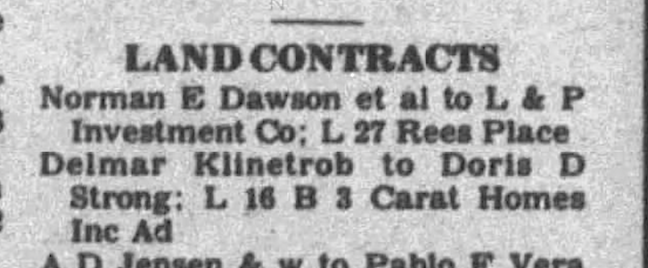
The Daily Record. March of 1980.
The later 1980 notification “Norman E. Dawson et al to L & P Investment Co.”—suggests that Dawson had already obtained enough equitable ownership interest to assign, sell, refinance or otherwise leverage his contractual position in the property. Buyers under Land Contracts often operated in an operational sense as owners long before the documentation matured into a deed. Technically the seller still maintained ownership, but they collected rentals, oversaw repairs, assumed obligations, and sometimes arranged secondary financing.
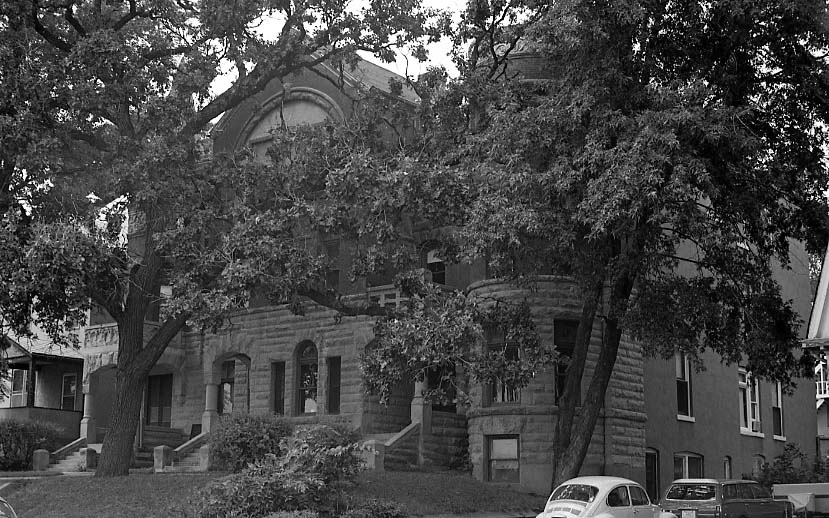
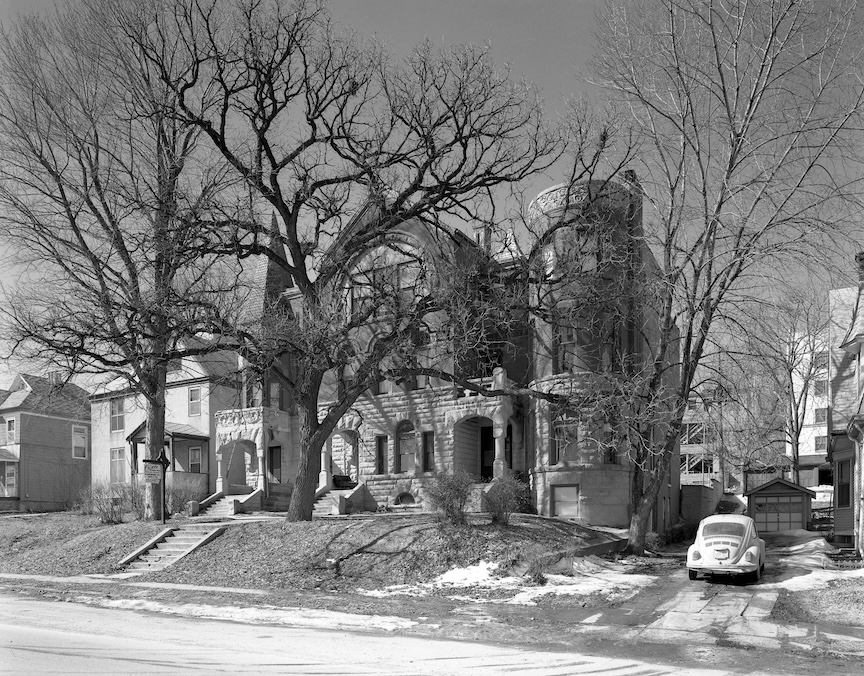
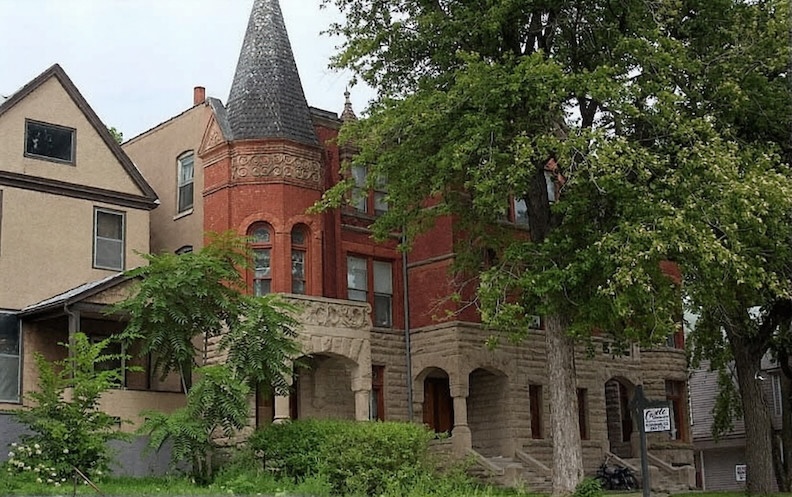
Incredible 1980 photographs courtesy of the Historic Properties and Surveys– Castle-Georgia Apartments from 1980 Landmark Inc. survey. Note The Castle sign in the front yard which is exactly how it looked by the time we moved in.
By February of 1994, the Omaha World-Herald reported that Mr. Thede A. Jensen sold 1040 South 29th Street to Dr. and Mrs. Norma E. Dawson for $105,000, the matter of the deed seeming at last to settle. Yet the transaction carried the faintly circular quality so common in the Georgia’s history, for the Dawsons appear to have been tied to the property for years beforehand through land contracts, refinancings, and intermediary arrangements with L & P Investments Co. that blurred the distinction between owner, investor, and caretaker.
Second Intermission
May I suggest–cocktails in a damp garden; smoke dramatically at an open window, even if only spiritually; wander through the house looking for evidence of vanished pocket doors.
Scene from After Hours. 1985.
Strange Owner Swap
By the mid-1980s, even after landmark designation, the Georgia was once again for sale. The Omaha World-Herald noted in April of 1986 that the “old row house” at 1040–1044 South 29th Street—by then divided into fifteen apartments—still retained portions of its former dignity: original stairways, eight tile-bordered fireplaces, and enough architectural drama to survive decades of subdivision. “Grosses $45,000. Tenants pay lights.” Advertisements from 1986 revealed: “Historic Georgia Apts.,” “laundry room, $235 per month, tenants pay lights.” August of 1986 “Historic Georgia Apts. 14 unusual units. Oscar Manger Co.” One suspects the fireplaces did a good deal of the advertising work. By 1987 the Omaha City Directory listed “The Castle Apts.” with units divided between 1040 and 1044 South 29th Street. Curiously Lou and Pat Lamberty were listed as owners at the time, the same Lou and Pat Lamberty who, according to a 1972 World-Herald notice, had once worked the George McGovern campaign at the Hilton Hotel.
Omaha World-Herald. May of 1972.
Lou and Pat Lamberty appear as owners in the period accounts, though Dr. Norman E. and Ruth M. Dawson of Council Bluffs, Iowa were likewise listed, and by then the Georgia’s ownership had already drifted into the pleasant fog of land contracts and intermediary arrangements. As for whom we actually paid rent to, I could not honestly say. Most likely the Oscar Manger Company, one of those durable Omaha property management firms quietly tending eccentric apartments.
Late Spring of 1987
By the time we arrived, the rent at the Castle was $235 a month with a $150 deposit, which suited our financial circumstances perfectly. Matt Dillon and Lisa, then a very new couple, were the first of our crowd to discover the place. We had each completed a year of college here and there. None of us had recently returned from “being finished” in Paris or Munich. That summer of 1987, Lisa worked at a wonderful gift shop in the Old Market. Matt Dillon worked at a factory that manufactured cardboard boxes while simultaneously dabbling in what he described as a “little side hustle.” I found my way back to town after a catastrophically unfocused year away at college, having been firmly advised by the administration to remain absent for the next two semesters until I could demonstrate a more respectable enthusiasm for scholarship. Shortly thereafter, I managed to compound matters by totaling my father’s favorite car. At that point, I considered myself destined for less orderly pursuits and was prepared to forget the entire academic and automobile disasters and devote myself to becoming a punk artist. (Translation: quickly attaining employment in the Old Market as a hostess.) We drifted naturally toward Old Omaha that summer and the Park Avenue District, although no one called it that, seemed perfectly suited to my reinvention. The area was cool in the forgotten way that truly interesting places often are. The punk and artists’ scene liked anything old, a little run-down, freighted with history, and a good distance from the mainstream West Omaha quest for upward beige. I am not entirely certain how Matt and Lisa found The Castle, though I suspect it was by the old methods: a vacancy placard swinging from a lawn sign or a cryptic newspaper ad buried between appliance repairs and used Chevrolets—the way the Gods intended people to find apartments.
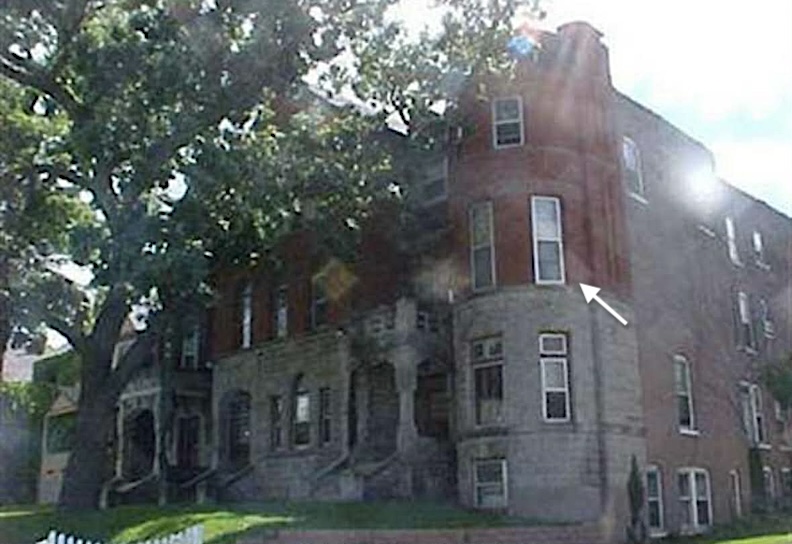
I believe this old real estate photograph was taken in the early 1990s, by which time the northernmost tree along the side drive had already been removed. Even so, it remains one of the clearest exterior views of Apartment #5 in the north house section of the Castle. White arrow points to the Apartment #5 turret bedroom. Photograph courtesy of Mister Rogers.
Matt and Lisa rented Apartment #5 on the second floor of the northern house. The apartment was reached through the far-right door on the north side, a heavy old entrance and true castle-like porch. Their bedroom occupied the turret itself: a marvelous round brick room with windows facing north and east, exactly the sort of room that encouraged teenage beer drinking, heartbreak, and youthful existentialism. (White arrow points to the bedroom.) I remember a long hallway running between the front-facing bedrooms and the darker rear rooms, a transitional space that seemed perpetually dim even in daylight. Of particular marvel to us as teenagers was the realization that each above-ground apartment extended the full depth of the building—from the grand front elevation all the way to the rear. However fragmented and peculiar the configurations had become through decades of subdivision, the apartments still retained an undeniable graciousness, with proportions and scale inherited from a far more ambitious domestic age. Much original woodwork survived, though the kitchen, to Matt’s memory, had clearly suffered a heavy-handed 1970s remodeling campaign. The kitchen sat on the far west side overlooking the alley; the bathroom occupied the north side, though I do not actually recall a window there, and this photograph suggests there may not have been one after all. Between them the living room gathered a strange light through the larger northern exposure of two large, lovely windows. There was a rear bedroom in Apartment #5 where I would later stay, though only for a short time. I remember the fact of the room more vividly than its details. A secondary stair descended from the kitchen, I believe, toward what had once likely been gardens but by the 1980s had surrendered themselves to gravel, sparse parking, and the alley below. The east-facing bedrooms caught the morning light through the once massive trees before the building settled back into its usual dim and cavernous mood. My earliest memory of visiting them involved becoming trapped in the windowless bathroom for what felt like an entire night, though was probably less than an hour. The Castle introduced itself in this manner.
The stairs of the north house were in the entry hall, immediately past the northernmost porch. It was a large and wide enough to carry furniture and trunks without the constricted feeling of the modern apartment steps. What surprised me immediately was that the three sections of the Castle were not interconnected internally at all. From the street one expected there to be halls tying the structures together, maybe hidden passages, or at least shared landings. But no. Each house functioned as its own small realm.
Matt Dillon in the living room. This photograph captured the peculiar mixture of beauty and disorder that I remember from the late 1980s. I love Matt’s posture on the stool– somewhere between summer exhaustion and philosophical contemplation. I see the unmistakable signs of youthful artistic ambition improvised on limited funds, plants reaching toward the light, a mixture of thrifted furniture and that large Ansel Adams print and Indian headdress propped ceremoniously on a tripod establishing immediate credentials in seriousness and taste. The original woodwork survived magnificently, and only now can I see it–framing the scene with the gravity of another century. What is striking is the scale of the room and remembrances of a far grander domestic arrangement. Photo courtesy of Matt Dillon.
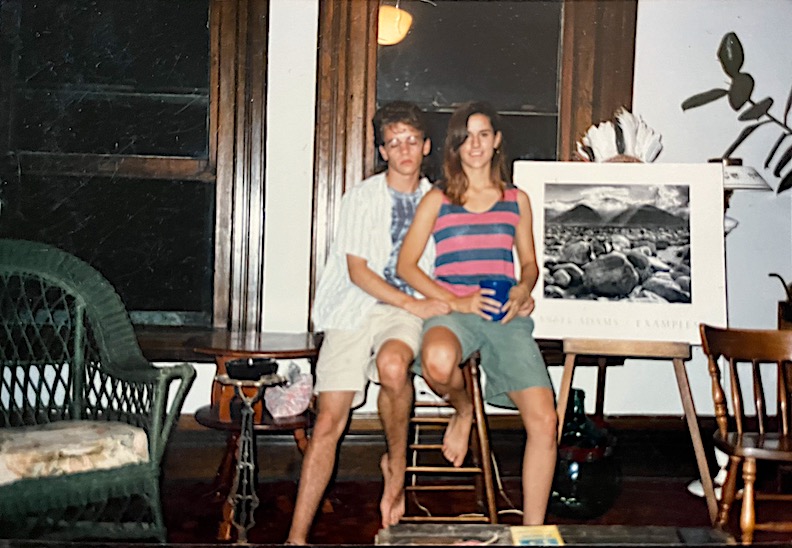
Matt and Lisa in the living room. Visible in the window is the original hanging pendant light fixture, one of the apartment’s surviving decorative remnants from the building’s earlier life. Photo courtesy of Matt Dillon.
The turret bedroom was a marvelous and slightly feral sort of room, built of curved brick walls and low windows that descended almost to the floor, giving the impression less of a conventional bedroom than of some improvised artist’s lookout perched inside a medieval tower. The windows wrapped the curve of the room. The windows themselves were what impressed me the most. They came down so low that you could sit right up against them, and feel strangely suspended over the street and trees outside, half-hidden in the tower as the city’s traffic continued on below. Photo courtesy of Matt Dillon.

Two wonderful photographs from that period, generously shared by Simon Joyner.
That May, Jayson Fann introduced Matt and Lisa to a sixteen-year-old Simon Joyner, years before anyone beyond Omaha would know the musician’s name. Matt recalled Simon giving a concert of sorts in the circular turret bedroom, performing for a handful of friends that included his girlfriend, Donadea “Dee Dee” Rasmussen. He remembered Simon in a plain white T-shirt and cut-off jean shorts, singing with startling sincerity, while playing his guitar with so much heart that the room was briefly transformed. In retrospect, it feels exactly like the sort of thing that should have happened there. Simon Joyner himself could not remember the turret performance, though he was unwilling to swear it never occurred. Matt’s version struck him as unlikely because, as far as he could recall, he was not yet performing publicly. On the other hand, he did remember seeing Jayson Fann play at various parties around town and assumed it was Fann who had played that night in the turret.
Photograph of Jayson Fann from the summer of 1987. Simon Joyner remembered Jayson Fann with particular fondness, describing him as remarkably self-possessed, entirely at ease in the world and with himself.
When I relayed Matt’s account, Simon greeted it with good-natured skepticism. What Simon did remember clearly was the building itself. Though only a junior in high school, he was captivated by the Castle and fully intended to live there once he was old enough.
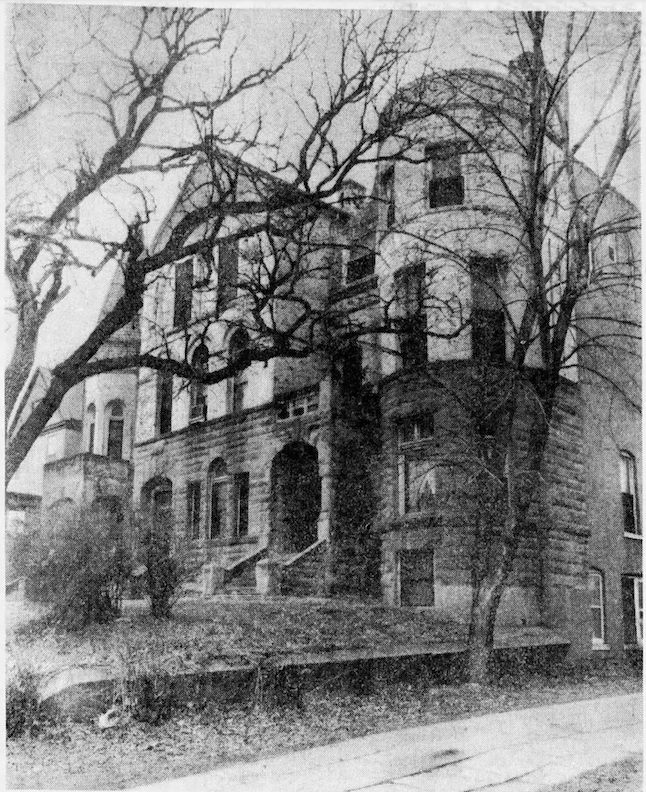
Omaha World-Herald. April of 1986. I include this newspaper photo because it is the closest visual record to the Castle we actually knew.
By summer’s end, Matt and Lisa’s romance had unraveled somewhat, as young romances tend to do, and Matt was preparing to leave for college again. I moved in briefly, having by then mastered the eccentric mechanics of the bathroom door. Oddly, I am only now realizing that I seem to have occupied the curious social role of moving into apartments only after some boyfriend was departing a number of times. Best left medically unexamined, perhaps, but it is a strangely specific niche in life if you have ever found yourself there.
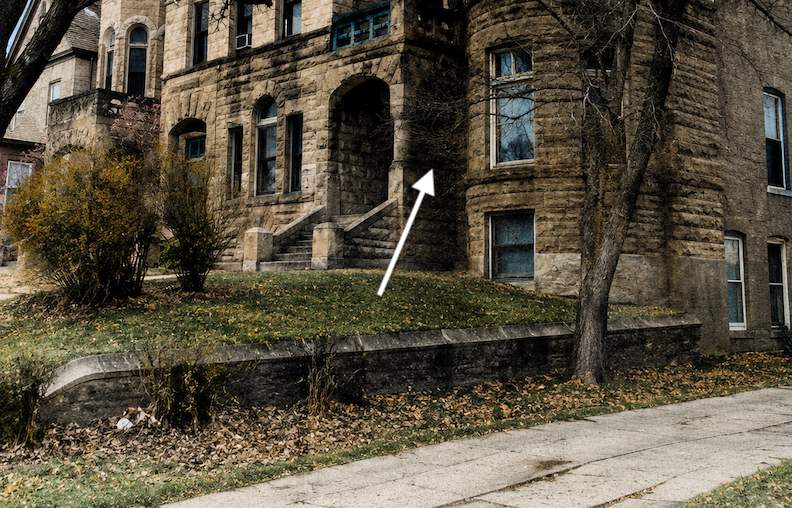
The older tenants of the first floor, whose rounded turret windows we passed each day, seemed ancient to us then. Very recently Matt reminded me that these “old people” were approximately the age we are now. I rejected this suggestion immediately. They possessed the watchful quality of people who had become nosy for the sheer entertainment value. The stone porch featured a great rounded arch opening directly toward one of the first-floor turret windows. It was this particular window that I dreaded passing, for the woman inside took a keen interest in our comings and goings and was often seated there observing the world with unsettling stillness. Passing her apartment at night felt rather like walking past Mrs. Bates in Psycho. I whispered Scary Window. Norman himself, one felt, might easily be renting upstairs. Their rooms glowed with velvet, tassels, and preposterous lamps apparently borrowed from Gone with the Wind. I should confess that I peered through their windows whenever opportunity allowed, provided the lady of the house was not actively observing me in return. But now that I am older, I find myself thinking about the phantom woman in the window with a tenderness that would have surprised my younger self occupied with wrestling books and thrift-store treasures up the stone steps of the Castle and avoiding eye contact with anything that appeared embalmed. The older me has occasionally entertained a theory. Was she, perhaps, the official—or more likely unofficial—caretaker of the Castle? I wonder if her glorious apartment hosted one of the Georgia’s fireplaces or maybe two? What makes the whole thing especially dream-worthy is the architectural continuity of it. Her apartment, ours above, and the equally large apartment on the third floor together formed the eastern bay of 1040 Georgia Avenue—the very three floor house occupied in 1891–1892 by the family and servants of William Henry Wyman.
In recent years, I discovered that by the 1980s many of the Castle’s tenants were indeed in their forties and fifties, and the newspapers suggest a surprising number were periodically arrested for furniture thefts, DWIs, stolen cars, or some similarly doomed enterprise. Curiously, none of us remember the police arriving with any regularity. What strikes me now is how ordinary it seemed for these vast architectural relics to exist half-empty: abandoned suites, silent upper floors, entire unused wings lingering beside occupied apartments. The proprietors appeared unconcerned with full occupancy. The building housed a mixture of punk teenagers, aging petty criminals, and vacant apartments. What could go wrong?
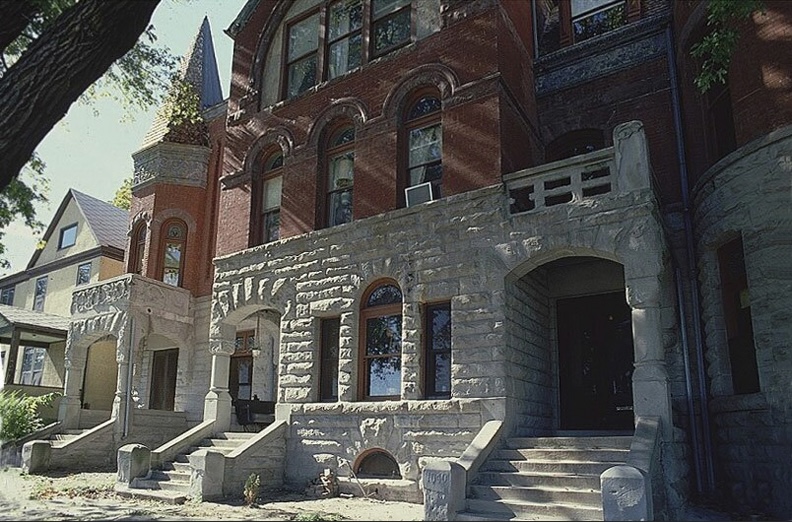
I am not entirely certain when this marvelous photograph was taken, but it is exactly how I remember the Castle looking during our years there—slightly worn, vaguely haunted, just perfect to throw a party in. Photo courtesy of Mister Rogers.
Apartment #10
It was during this period that Lisa, Melissa, and I arranged to move into Apartment #10, a sprawling third-floor suite in the middle house which we imagined would be positively grand. We could scarcely believe our good fortune. Apartment #10 occupied the upper reaches of the Castle, through the central porch door and up a succession of stairs. At the top of the stairs was a large landing, though ours was the only apartment door there. Our door was a heavy antique thing with a large glass pane, beneath which the number “10” appeared in old lettering. The older me cannot help wondering whether we received such a favorable rental arrangement because something had happened in Apartment #10. Like a fire sale of the old days. Not necessarily a tragedy, or anything that would have rated in the newspapers. (My longtime readers know I have dedicated too much time to trying to solve that mystery.) At night the silhouette of a figure on the other side of our front door’s glass was not uncommon. Were they eavesdropping on us? We soon discovered that the landing also functioned, unofficially but with remarkable consistency, as a sleeping room for homeless men drifting through the neighborhood. One evening I returned home to find a man laid across the top stair, his dentures placed with great care on the step below. There was a sweetness there. Other mornings, leaving for work, I would step quietly around sleeping figures and wine bottles on the landing. At the time, we accepted these realities with the elasticity of youth.
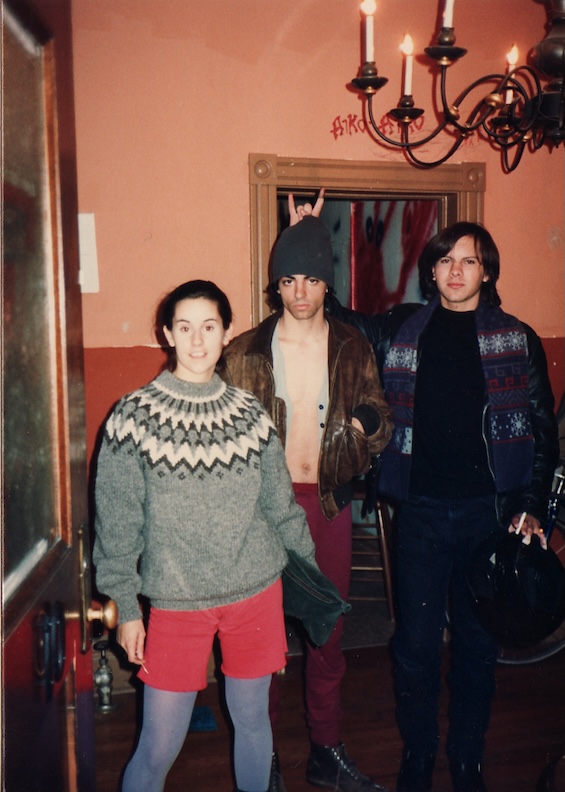
The front door of Apartment #10 opened directly into the massive foyer room. Pictured are Lisa, Lari Brocker, and Thomas Monaghan. This photograph makes me so happy.
Once inside the apartment, one was confronted with an enormous foyer beneath an oversized black chandelier that suggested either a reception hall or the sort of dining room. Naturally, we adored it. From this central great room radiated a series of rooms in evident spatial confusion, though plainly arranged for a much grander style of living than ours. One of the apartment’s stranger features was that the great hall, the bathroom, and the kitchen were all interior rooms without windows. The arrangement makes a certain architectural sense when one remembers that these spaces had once belonged to a much larger Victorian house. The grand foyer occupied the center of the floor plan like the hub of a wheel, surrounded by rooms that relied on the oversized black chandelier to establish its mood. I know now, from this investigation, that we were living in what had once been the third floor of the remarkable home occupied by George F. Parish, general manager of the Manhattan Life Insurance Company. The realization only deepens the mystery. Our apartment contained, by my rough estimate, well over 1,300 square feet—perhaps considerably more. Even then, the amount of space seemed excessive. It was difficult to imagine who would have required so much room on a third floor, or how the Parish family might have furnished it all.
A second question soon presented itself: where had all the interior architectural finery gone?
Compared to Apartment #5 in the northern house with its surviving woodwork and hints of nineteenth-century craftsmanship, Apartment #10 felt strangely stripped of its former grandeur. We had assumed the beautiful millwork, original light fixtures, and architectural dignity found downstairs would continue upward through the building. They did not. Whatever refinement had once occupied the upper reaches of the Castle had long since vanished. It was as though decades of remodeling had methodically erased every decorative flourish, leaving behind only the broad outlines of the rooms. And what strangely configured rooms they were. One could sense that something important had once been there, but not precisely what. Certain walls had been painted in eye-watering shades of deep purple and burnt orange, as though a previous occupant—or perhaps a landlord’s unemployed brother—had stumbled upon a clearance sale at the paint store and proceeded without supervision or remorse. No matter. As teenagers, we were not lamenting lost millwork or missing mantels. We saw possibility in the sheer abundance of space. Empty rooms suggested freedom rather than absence. Or so we hoped.
In memory no one seemed to live below us or on the first floor. At least, no one we ever saw. The apartments beneath us remained stubbornly silent, their doors closed, their windows offering little evidence of life. It added to the Castle’s shifting atmosphere.
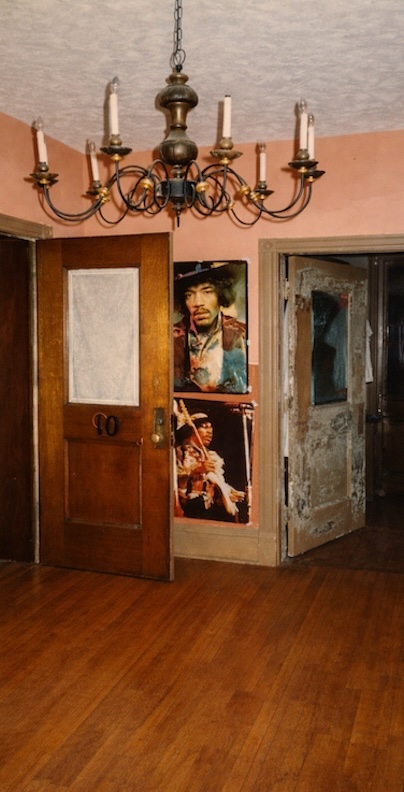
The great room, said with a smile, with doorway leading to Lisa’s east-facing bedroom.
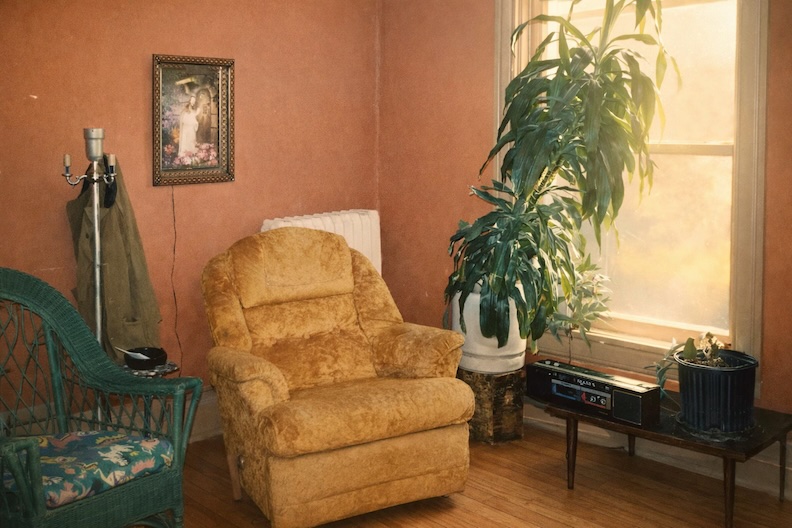
The scary living room in the back, west portion of the building.
The ceilings in the front rooms soared impressively before lowering strangely toward the rear. Once past the grand foyer, the back living room window looked into the sad, narrow light shaft dividing the central and southern bays of the building, originally intended in 1890 to bring civilized daylight into the Middle House of the enormous Georgia Row House. By the 1980s the light shaft mostly supplied a smoky gloom of dirty windows, and the persistent social hazard of accidentally making eye contact with the neighbors to the south, an intimacy none of us particularly sought. I remain convinced that Melissa’s room, west of the living room, had once been a sleeping porch. There was also a small mud room, much like the one in Apartment #5, which opened onto a narrow winding back stairwell descending toward the small back area some used for parking and the alley. It possessed the furtive atmosphere of a service entrance for servants or discreet departures. Sidenote–It was from this open back stairwell that my friend Tim Pollreis and someone else accidentally dropped my antique barrister bookcases—glass and beautiful wood, long in my family—when I eventually moved out of the Castle. The cases slipped from their young hands and landed with the finality of a piano in a silent film. And then all was quiet, that quiet that only comes after real catastrophe, and we all knew, at the same time, that we had just finished off several generations of family furniture in the sad gravel. It should be noted that the same sweet Tim, on the same day, in a total accident, threw a large box of my journals and writings from the early 1970s through 1987 into a nearby dumpster, and confessed the mistake about a week later, when local sanitation had made recovery impossible. He was quickly forgiven.
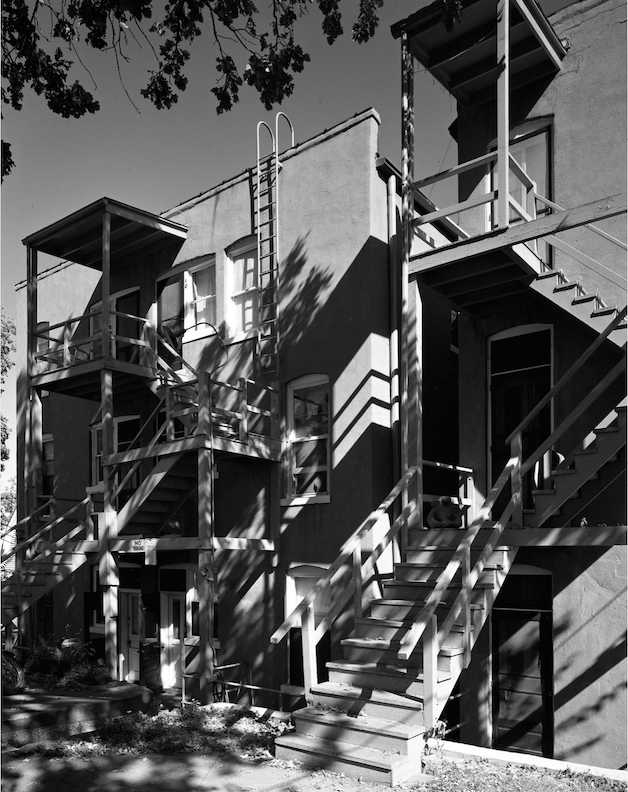
Our stairwell was shared with the North House. Fantastic photo of the back stairwell by the incomparable Lynn Meyer. Borrowed from the Omaha Heritage Preservation site. Lynn Meyer collection.
Strangely, although I was not fond of the living room, it also served a more practical purpose: it housed my records and stereo. Why they ended up there rather than in the grand hall-foyer room remains something of a mystery. As I think about it now, I suspect the grand hall-foyer room may not have had any electrical outlets at all. None. The only modern concession I can recall was the curious telephone jack, perched there as if someone had optimistically imagined the room’s future would involve telecommunications but not electricity. Otherwise, it would have been the ideal place for my records and stereo, or indeed any sophisticated use other than umbrellas hanging on a door frame. The Castle also marked the beginning of a long-standing habit: I did not own a television for nearly fifteen years afterward. One of my happiest memories of the living room took place on an ordinary evening. Lisa made dinner. Lari and I spread blankets across the floor, lit candles, and settled in for one of those nights that seem entirely unremarkable at the time and invaluable decades later. A night picnic. I put on Stan Getz’s Getz Au Go Go, followed by other favorite records of early Chris Isaak and the Jam. We ate, talked, and laughed. Memory is an unreliable witness, but I am willing to testify under oath that Pepperidge Farm Mint Milano cookies were involved.
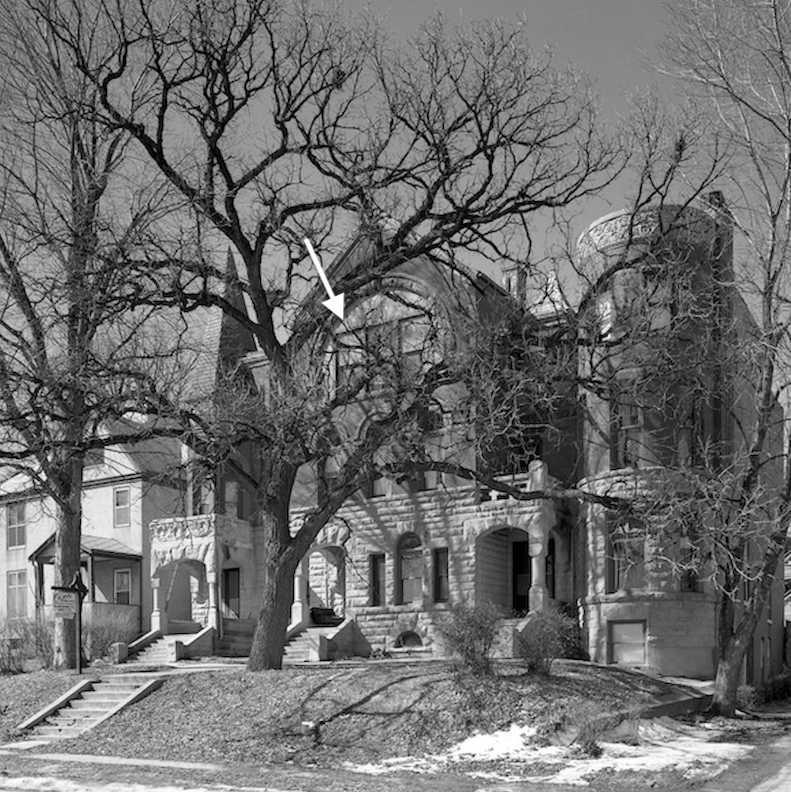
From the exterior, one might reasonably have assumed my bedroom belonged to a far grander domestic arrangement. It occupied one of the three large windows in the middle bay, suggesting dignity, proportion.

My gorgeous roommate Lisa stands in front of the stove, and the door behind her led to my bedroom. The kitchen was an inner room without a window or circulation.
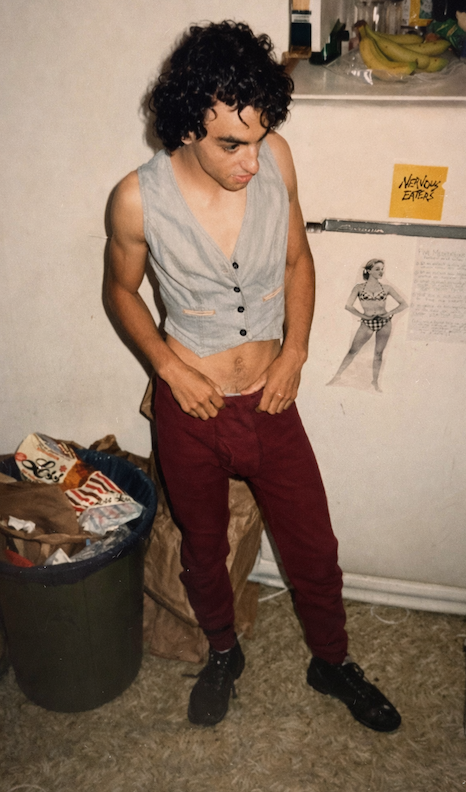
Lari Brocker in the kitchen, striking a pose with all the practiced confidence of the 1950s swimsuit model on the refrigerator. The setting was considerably less glamorous. Aside from the amount of trash, and Lari’s fabulous outfit, the prominent decor was a sticker for Boston’s punk band, the Nervous Eaters. I do believe that Lari had moved in at this point.
I had mentioned that the exterior of the three massive windows led one to believe my bedroom might have been a museum of sorts. However, a wall had been placed between the single southern window and the other two. The reality required one to pass through the foyer to the kitchen—squeezing between the splattered, greasy stove and small, vintage refrigerator—before entering my narrow closet crowded with hanging clothes and shoes (they possibly carried the lingering perfume of roommates’ dinners—curry, scorched oil, onions that I never considered until just now) which in turn deposited the visitor into my room as though arriving backstage through service corridors of hanging sandbags, pulley systems and ropes. One suspects my bedroom may once have functioned as a sitting room or secondary parlor adjoining a larger living chamber which was Lisa’s bedroom. The odd doorway arrangement hinted at alteration rather than design. Am I forgetting that these were pocket doors that no longer fully met, or doors removed altogether and replaced with a makeshift hinged doors into what had originally been a graceful arched opening? I cannot fully recall except that there were hanging blankets involved, with very little authority, allowing me to see straight through to Lisa’s room if one went looky-louing.
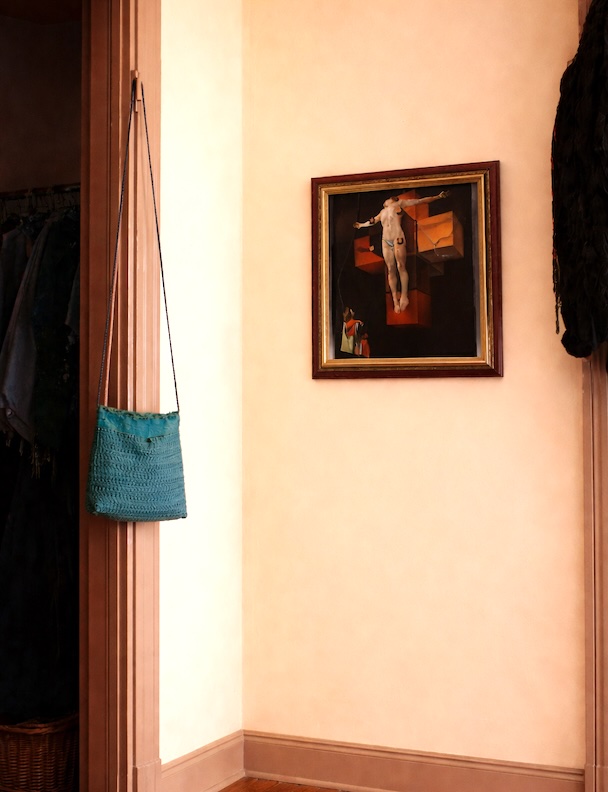
This narrow closet, visible on the left, was the passage one crossed to reach my bedroom. The framing on the right-hand side of the photograph marked the doorway into Lisa’s much larger room, which occupied the other side of the dividing wall. The larger room claimed the remaining two prominent windows visible from the exterior middle bay of the Castle.
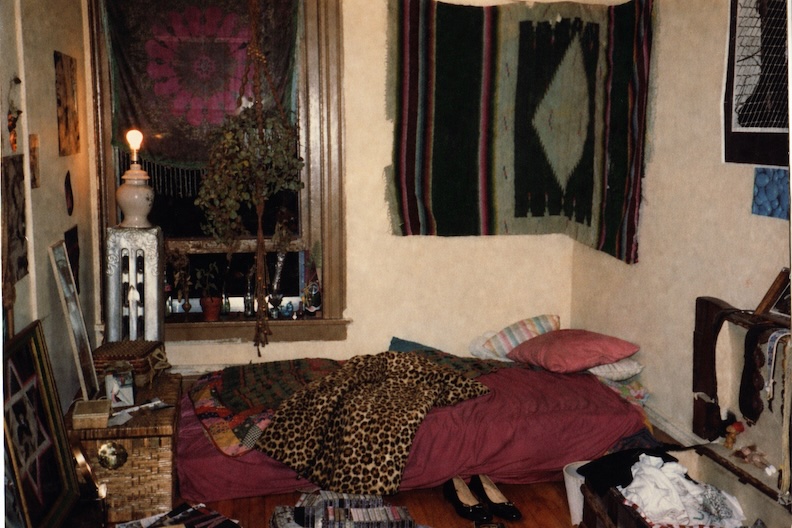
My bedroom featured the large window facing the interstate. This photograph makes the window seem deceptively small. See the following photos for true proportion. The massive steamer trunk I slung belts over and shoved band t-shirts into had seen family members over from our homeland of Ireland. I am sure I managed to lose that blessed trunk in some fateful move. Beneath the window sat one of the cast-iron steam radiators, and upon this radiator precariously teetered a lamp while my foam mattress pressed directly against the thing itself. It is difficult now to understand the casual confidence with which I accepted what was, in retrospect, a potential fire hazard.
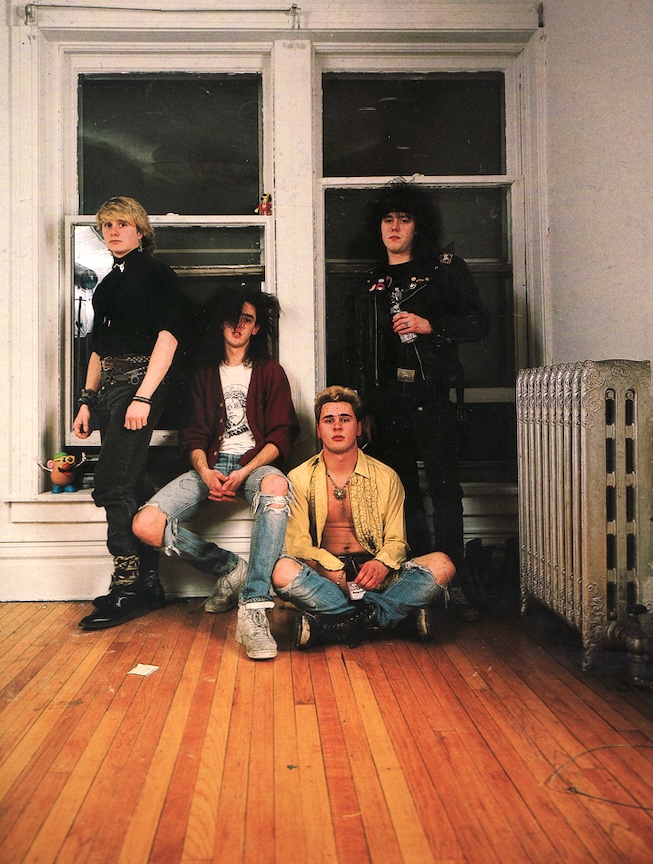
It was there, on the other side of the wall, against those grand windows and within the lingering confusion of the old floorplan, that the back cover photograph for the Apathy album, Out the Window, I believe, a year later, after we girls had moved out. The members of Apathy were our buddies: Mike Homan (RIP), Jimmy Homan, Seth “Deth” Kirshman and Mark Blackman. This gives an understanding of the scale of the room. When this photo was taken Seth Harty and other friends lived in the #10. Sidenote–When I moved out of the Castle apartment building, I moved into a lovely Foursquare house in the Duchesne Academy of the Sacred Heart area with Seth Kirshman, among other friends. Photograph by Jeff Darling.
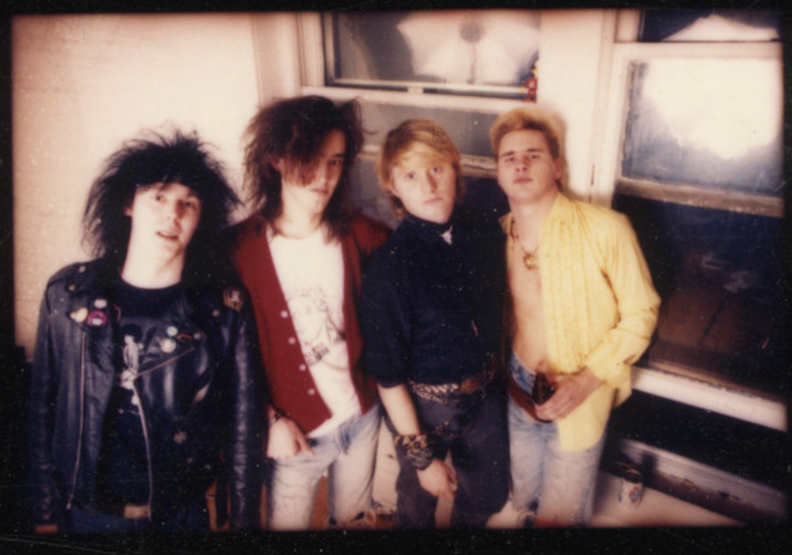
Same photoshoot–this time a great promotional photograph of Apathy. Mark Blackman, Jimmy Homan, Mike Homan (RIP) and Seth Kirshman. Perhaps a more authentic view of the boys and how grimy the apartment looked. This wonderful photo was taken by Rhawn York, I believe.
The additional complication—now that we have uncovered the history of the building’s large steam radiator system—is that beyond the handsome exterior arrangement of three large windows was a dividing wall separating my one window from the other two, with massive cast-iron radiators positioned on either side of that wall next to their respective windows. Since early twentieth-century steam systems were generally installed with considerable permanence and according to the room arrangement then existing, this leads me to suspect that the wall and doorway configuration was either original or already substantially reconfigured by the time the radiators were installed. In other words, what appeared to us in the 1980s as a bizarre and improvised apartment layout may actually have reflected an earlier and more formal division of space within the house. Thoughts?
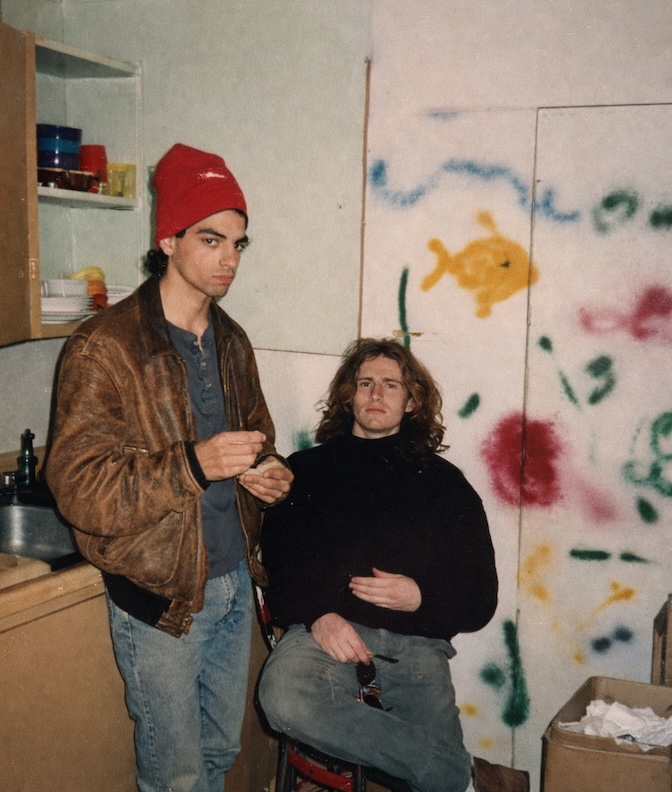
Nice looking laddies, Lari Brocker and Rhawn York, were true characters and almost fixtures at the Castle. Here they are seen in the underwater kitchen.
The windowless kitchen, unfortunately, was filled with cockroaches, previously encountered only in urban legend. I was away for a period of time and, upon returning, discovered that someone had spray-painted a vast underwater scene across the kitchen walls. Tropical fish drifted while seaweed curled itself in a manner intended to improve morale. It did very little for the cockroaches, who continued their activities with established confidence. I suppose the mural was meant to lend the room a sort of desperate cheerfulness. Whatever vintage kitchen had been there, all that remained was the refrigerator, circa 1950s. The cabinets, a strange particle board assembly.
I had my own ideas of murals and this massive Sharpie-drawn Alice in Wonderland was something I did for my own bedroom and seemed perfectly appropriate at the time.
I must introduce the bathroom. The bathroom was probably one of the strangest rooms in Apartment #10 itself. Excuse my weird attempts at blurring my features. I wanted to preserve the bathroom photograph as a historical document. By the time we arrived, it had been painted in competing shades of purple and deep purple. Sometime, quite possibly in the 1970s or early 1980s, the room had been drywalled into near anonymity. Whatever architectural character it once possessed had been buried beneath layers of remodeling succeeding only in making it more mysterious. The bathtub, which may well have been an old clawfoot or similarly venerable fixture, had been boxed in behind drywall. One hesitates to speculate on what archaeological treasures lay entombed within those walls. Perhaps several years of water damage and mold. I distinctly remember that it was not unusual to find empty beer bottles lined up along the interior walls of the shower. I do not remember a window. I have studied the exterior southern elevation and in portion where the Southern House and Middle House met, within the draftway, I could see there had been a long narrow window in the bathroom, suggesting it had originally been a bathroom. That too was apparently dry-walled over. It seems like apartments in the 1970s and 80s wanted clean lines and contemporary vibes. Maybe because they didn’t see it as historic as much as outdated. The bathroom seemed perpetually lit by artificial light, existing in a state somewhere between morgue and cave. The floor was alarming. The purple dry wall built-ins were crusted with the accumulated residue. Did we scrub them into submission? We did not. And so, in this impromptu photo shoot with Lisa, I am sitting on said bathroom floor wearing a fur stole with sunglasses and crimped hair.
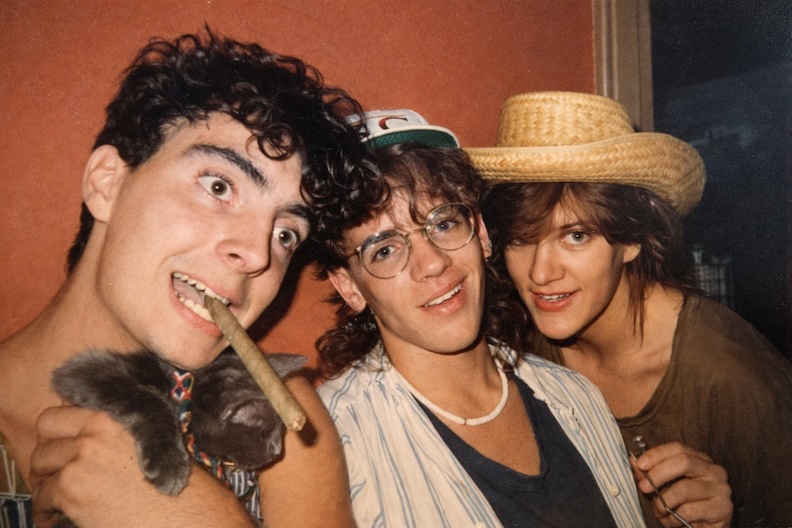
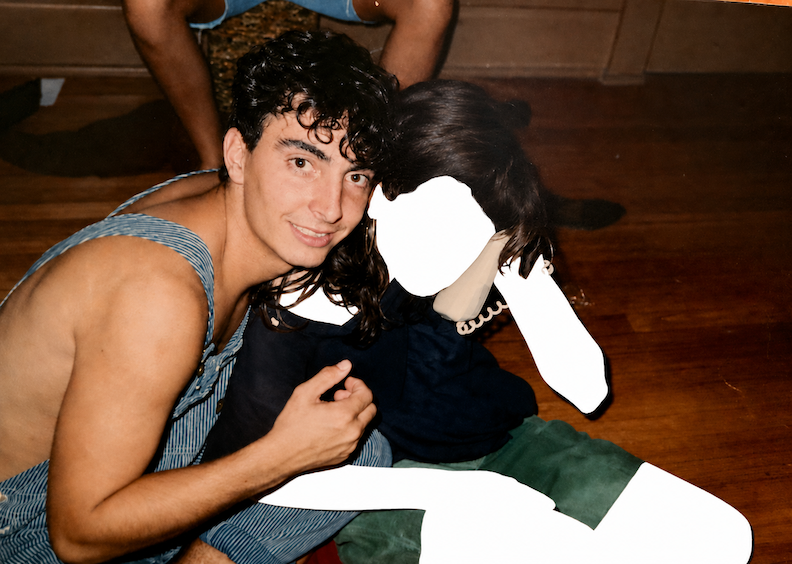
Grand Hall/Foyer shenanigans. The social center and stage for youthful nonsense. Pictured here are Pete Brocker, Matt Dillon, and Melissa; below, Pete and yours truly.

Beautiful roommate Melissa in the odd foyer.
One of my strongest memories of Apartment #10 was the telephone, which sat in the enormous foyer beneath the black chandelier. It had a very long cord and it was not odd to see it pulled under Lisa’s door. The room itself was almost entirely unfurnished except for a full-length mirror balanced atop a wooden crate. Why we never furnished this cavernous space remains unclear. Perhaps the room simply defeated ordinary domestic logic. At any rate, we sat on the wooden floor constantly. In truth, this foyer became the real living room because the actual living room, with its lower ceiling and strange light shaft atmosphere, did not feel right.
Whenever someone used the telephone, there came a mysterious sequence of clicks and interruptions on the line. Eventually the phone company appeared—though whether we summoned them or they arrived for some broader maintenance issue, I cannot now recall. What I remember vividly is the telephone repairman pounding on our heavy glass-paned door and announcing, with the weary excitement of a youngish man who had seen everything inside old apartment buildings, that someone in the Castle had physically spliced into our line. Two neighboring apartments, he explained, could listen to our conversations and place calls themselves whenever we were not using the phone. But here is the thing: as far as any of us could tell, no one lived in the apartment directly below us or in the first-floor apartment beneath that. This presented a mystery. Were the units genuinely vacant? Was there a basement apartment? Or had someone quietly taken up residence in one of those cavernous rooms without the benefit of a lease?
This sort of theft, it turns out, was not especially unusual in the 1980s, particularly in older apartment buildings with accessible wiring and centralized telephone closets. The old infrastructure practically invited tampering. In buildings like the Castle telephone systems still retained traces of the older shared-line logic that had once governed party lines and communal wiring arrangements. Privacy existed mostly as a polite fiction. Somewhere behind the walls, someone had literally wired themselves into our lives. Naturally, we did absolutely nothing about it.
The phone repairman, however, was delighted by his discovery and insisted on showing me the illegal rewiring in the basement. This proposal filled me with dread because the basement of the Castle resembled an assembly of poultry and veal fattening cages and without question, was the most unnerving part of the Castle. Tenants stored belongings in enclosures. Bare bulbs glowed weakly overhead. There was something dark and not right about the basement, and I do not mean merely that it suffered from inadequate lighting, though it certainly did that too. Like many such Omaha buildings of the period, the basement had once likely supported the invisible machinery of respectable domestic life: coal deliveries, boilers, laundry, servants’ movements, storage for preserves and trunks and all the practical clutter. One had the persistent feeling that something unfortunate had either happened there or was preparing to. Pretending bravery, we girls hurried through it with necessary speed and then I never wanted to go down there again–that under structure, itself, having developed a private consciousness. They had found men sleeping in corners downstairs and periodically hand-lettered warning signs would appear downstairs admonishing tenants not to let “these men” into the building, while remaining entirely untroubled by the fact that other men were routinely sleeping on our third-floor landing outside Apartment #10. Or maybe it is because we forgot to mention it? I stayed out of the laundry room entirely, choosing to live in a vast thrift-store wardrobe rather than confront the place head-on. Going down there with an enthusiastic young telephone man eager to show off criminal telephone engineering in a cramped corner felt less like maintenance and more like the first scene in a very low-budget detective movie.
At the time, we accepted these events with surprising calm. One simply adapted. You stepped around, ignored and avoided. But perhaps the prevailing philosophy was one of surrender with how the Castle was. It was not our place to change it. We were the infiltrators. The Castle would remain; we would not.
It was colorful in the truest urban sense—ethnically and socially mixed, and visually as well. Great hulking houses stood alongside apartment buildings with sagging porches and improbable towers, and strange local figures drifted along the sidewalks with the detached gravity of characters who survived at least one scandal and possibly the Great Depression. Everywhere you looked there were secrets of the past. Each late morning, I joined the wanderers as I walked north on South 29th Street to catch the bus to the Old Market. Unfortunately, the stop happened to be directly in front of the Walking Cane Club, a strip club, located at 2909–2913 Leavenworth Street, that lent an unintended ambiguity to my daily commute. (The building later operated as Sheri’s Nite Club before eventually being demolished.) Dressed in micro-miniskirts and tights, I often stood waiting for the bus looking considerably less like a commuter and felt obliged to project an exaggerated air of purpose.
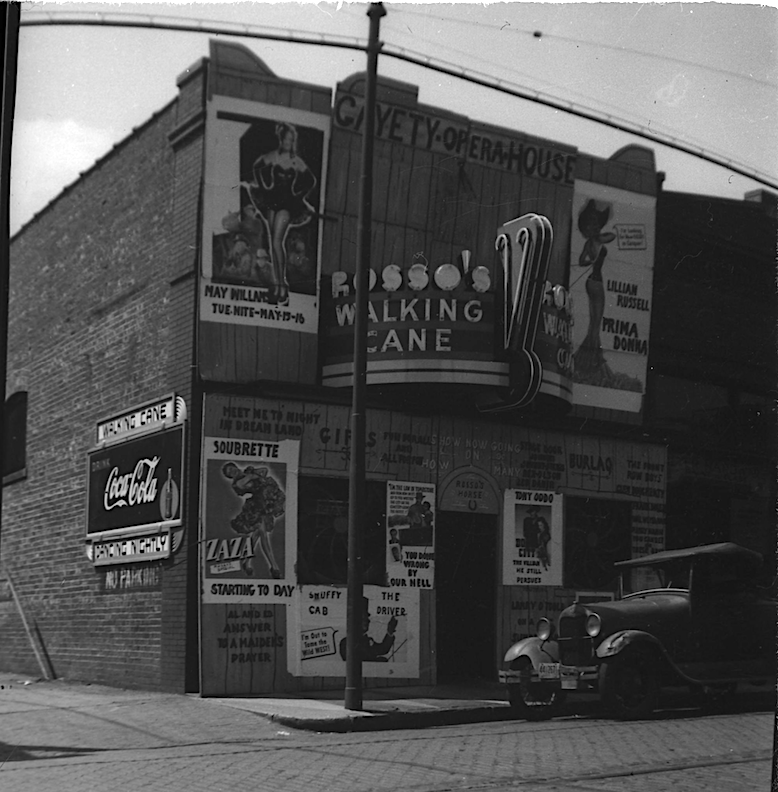
Rosso’s Walking Cane Tavern at 2913 Leavenworth Street when it was a bar and dancing club back in 1939. It had the same neon sign in our day and looked very much the same. However, the building was dolled up a bit in 1939 for Omaha’s Golden Spike Days. Bostwick, Louis (1868-1943) and Frohardt, Homer (1885-1972). The Durham.
I worked the lunch shift as a hostess at Trini’s Mexican Restaurant. Afterward, I would climb the stairs of the Passageway to visit my gorgeous girlfriend, Ann Merrick, who worked at the Garden of the Zodiac Gallery. Ann would generously hand me her apartment key, and I would walk down to the apartment she shared with Troia Schonlau in the ultra-cool Bemis Building. There, I would let myself in, stretch out on a futon or loft bed, and take a nap. I always felt a better, somehow elevated, in Troia and Ann’s environment. When I woke up, I would walk the key back to Ann at the gallery, return to Trini’s, and work the dinner shift. From there I would usually catch a ride home with the dishwashers from the restaurant or with a friend headed in the same direction with the promise of a small gathering back at the Castle. Over and over.
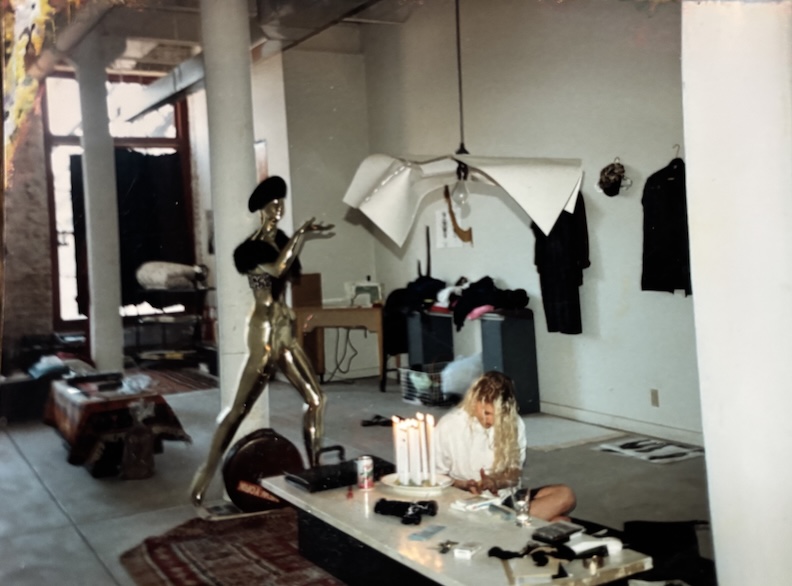
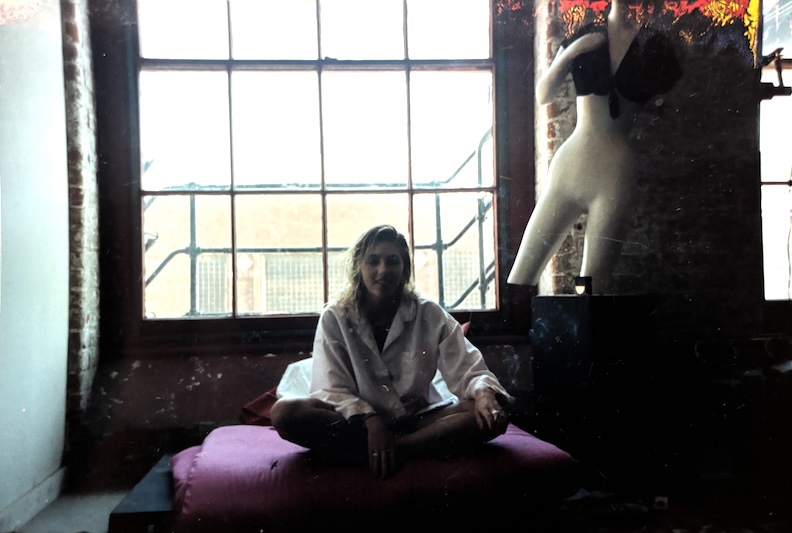
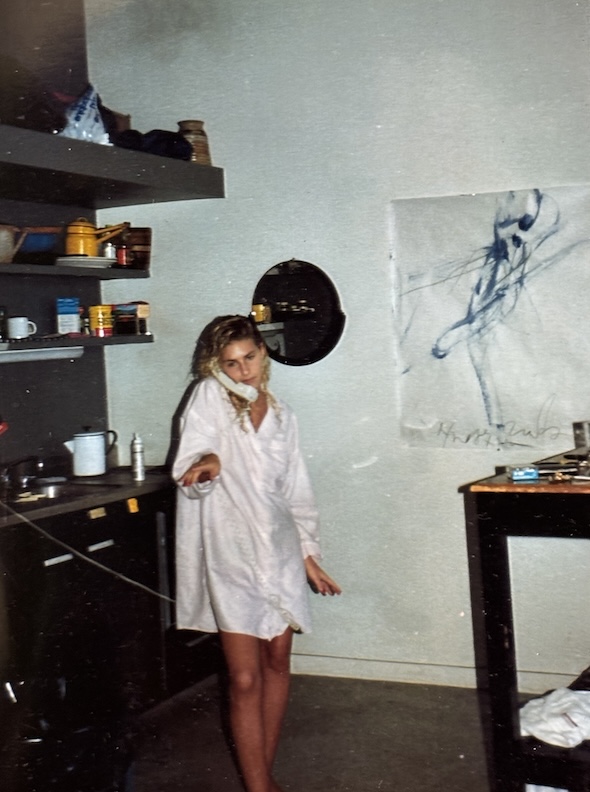
I love my girlfriend, Ann. As these photographs suggest, the Bemis apartment was an airy and contemporary chic refuge from my own quarters. Light poured through the warehouse windows onto these magnetic blondes and their mannequins. Photos courtesy of Ann Merrick.
But back to the Castle… The sad-colored woodwork, the sickly-colored walls, the terrible summer heat, the mysterious smells wafting up from the beautiful old floors, the spackled ceilings, the smells drifting in from the hall, the bugs, the shoddy electrical system, then the freezing cold that arrived that autumn all argued convincingly against Apartment #10. It should have been terrible on paper. And . . . yet many times I found myself imagining what it would be like if a person had just a little money and patience. We could have painted. Strip the woodwork. Get a few decent pieces of furniture. Hang vintage curtains. Put a little dignity back in this place. Wouldn’t have been much. Ultimately we didn’t last long. Of course, the landlord painted when we left. So the timing seemed perfectly in keeping with the Castle’s sense of humor.
The Tree Friends
And now a word or two about trees.
Before the Georgia Apartment building, a great solitary tree guards our first glimpse of the 1915 photo. Somewhere between the 1932 photo and the 1972 photo the great tree had vanished. We do not know whether it had been there since the building was erected in 1890. By 1972 a different cast had entered the scene: a large black locust reached its branches out before my window, and to the south a similarly sized common hackberry. Another locust, or an extension of the same, connected invisibly underground, issued from the foundation on the north side. When we arrived at the Castle in the late 1980s, these trees were mature, witchy, magnificent, their branches clawing at the sky.
The Daily Bee. May of 1915.
1972 front elevation. Photograph courtesy of the Nebraska State Historical Society.
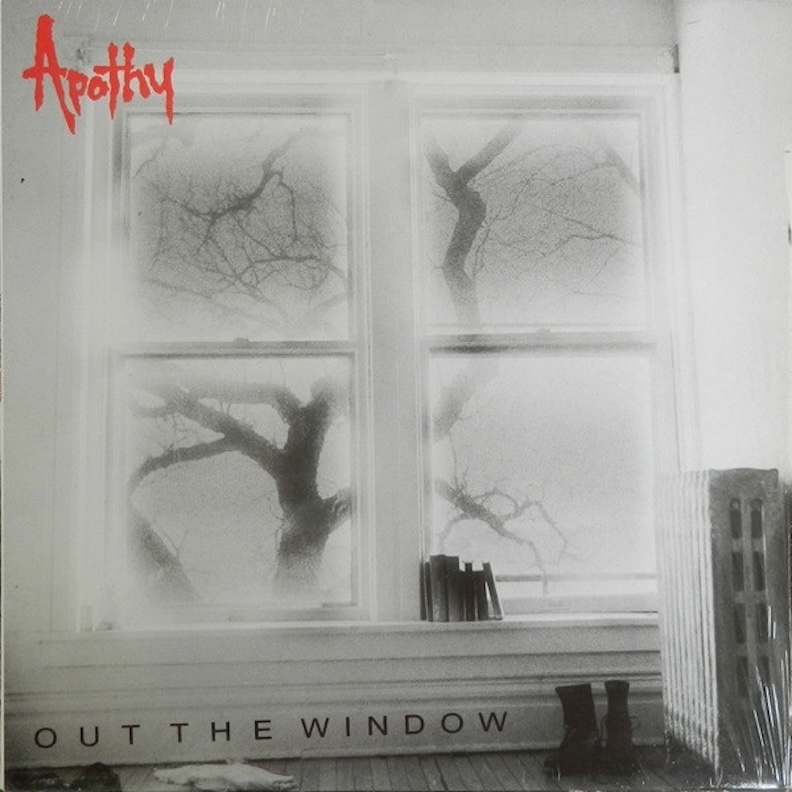
Here is the cover of Apathy’s Out the Window. More of a dreamy artistic view, the interior reality much dirtier. Rhawn York’s photograph captured the additional haunting beauty of the Castle, the locust tree out front.
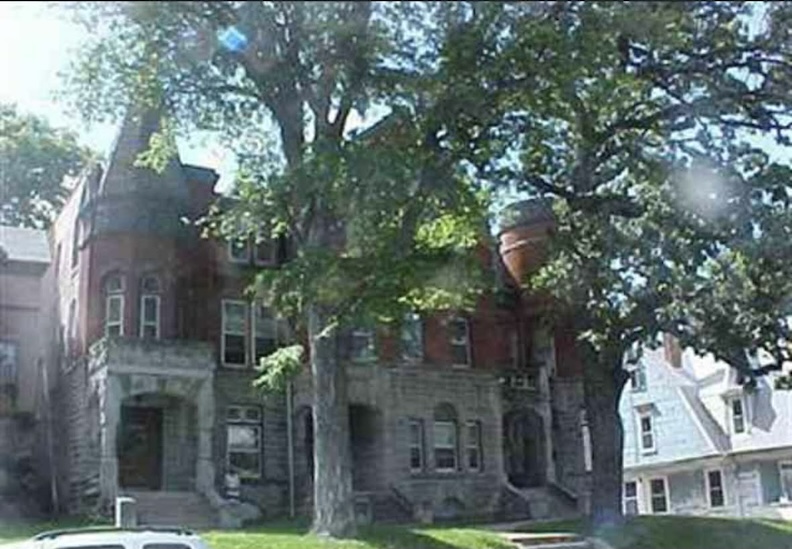
Georgia Apartments, photographed sometime between the 1990s and early 2000s. I cannot say exactly when, but the image preserves the trees as I remember them: as much a part of the Castle as the brick and sandstone. The north tree by the neighbor’s drive had been cut down. Real estate photograph courtesy of Mister Rogers.
I remember lying in my narrow bed on summer nights, listening to their leaves whisper outside my window, wishing for a cool breeze through the heat. In my deepest memory, these three trees were part and parcel of the building itself. Sometime between the early 2007s and 2010, the trees we had known vanished. Their absence left the Georgia looking strangely exposed; the building remained, but without those great trees standing guard, it seemed considerably more forlorn, decidedly less residential. As a tree lover, I really think that’s what’s missing from the Georgia building composition at this time. You will thank me later.
The Boys
I believe I remained in Apartment #10 for only two or three months before moving into the American Foursquare near Duchesne Academy with buddies mentioned earlier. Lisa and Melissa also pulled up stakes. During that brief interval, however, another chapter of the Castle’s history was already unfolding. Our friends Matt Flick, Bart Meadowcraft, and Thomas Monaghan moved into Apartment #5, the second-floor unit in the northern house once occupied by Matt Dillon and Lisa. Around the same period, Marilyn Connor and Greg Whitlash also rented in the building.
Matt Flick remembered Apartment #5 as a place of near-constant activity. “We lived there for only six months or so before we moved over into the house in Bemis Park,” he recalled. “There were people coming and going all the time and people crashed out in the living room almost every night.” Like many first apartments occupied by young people with limited incomes and unlimited energy, it functioned as both residence and social headquarters. “There were always people partying when they got off work,” he said. “Work, party, sleep. Repeat.” Matt was working at the Omaha Country Club in its bar and grill when he first moved into the Castle. This was no small coincidence. Trey Lalley’s father had served as the club’s general manager and, in a move that probably alarmed certain club members while delighting others, had quietly hired a surprising number of Omaha’s punk scene for various behind-the-scenes jobs. Later Matt traded the commute for a position at a bar and grill across from the courthouse at Nineteenth and Harney Streets.
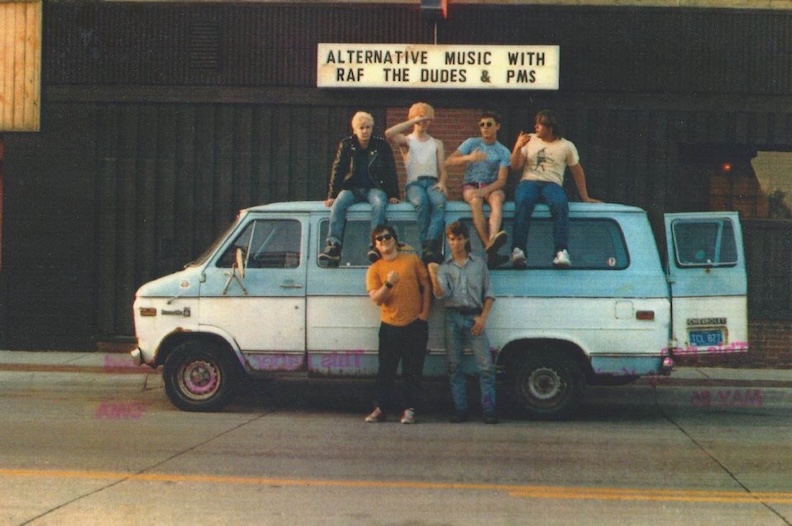
By the time of the Castle years, Matt Flick’s band, the Dudes, had already broken up. This image captures a moment from that period: Tim Cox, Paul Moerke, Matt Flick, Tim Pollreis, Mike Bunger, and Kenny Dupell gathered atop and around their battered van outside Benson’s Lifticket Lounge. Love this one and all of these people. Photo courtesy of Matt Flick.
Flick’s stories reveal a building that could alternate between comedy and catastrophe. One evening a drunken Bill Guilfoyle, on crutches no less, attempted to start a fight with Bob Thorson. “Bob told him he didn’t want to fight him,” Flick recalled, “but Bill just kept being an a—-.” The confrontation ended not with violence but with Bob gently pushing Bill over, causing everyone—including Bill—to burst out laughing at the absurdity of the scene. Other memories were less amusing. Flick remembered discovering his groceries being consumed by a local intoxicated drummer from the scene. “I physically removed him from the apartment and kicked his drunk *ss out on the sidewalk,” he said. When the offender pleaded for his twelve-pack of beer, Flick responded by tossing the cans down from the second-floor window. The Castle was never short of improvisational conflict resolution.
The Castle’s rough edges extended beyond its tenants. Flick recalled having clothing stolen from the basement laundry room and finding individuals sleeping there during the cold months. Around Christmas, a local photographer from the scene arrived to their apartment with several out-of-town females who allegedly absconded with rent money, cash, and drugs belonging to residents. Another story, repeated by more than one former tenant, involved the discovery of a frozen homeless person found against the fence after a winter snow melt.
The neighborhood surrounding the Castle inspired similarly mixed recollections. “Park Avenue was pretty stabby then,” Flick observed with characteristic bluntness. Yet alongside the danger existed the sort of vivid local characters that survive long after precise dates have been forgotten. “The old strip club (the Walking Cane) always had weirdos coming and going.” He remembered an older cashier at the nearby drugstore whose hands and lips were stained dark with nicotine. “She always had a cigarette in her mouth,” he said. Her thick eyeglasses appeared to do very little for her sight and customers wondered whether she could actually read the identification cards she dutifully examined before selling alcohol to obvious minors. “Either blind or just didn’t care.”
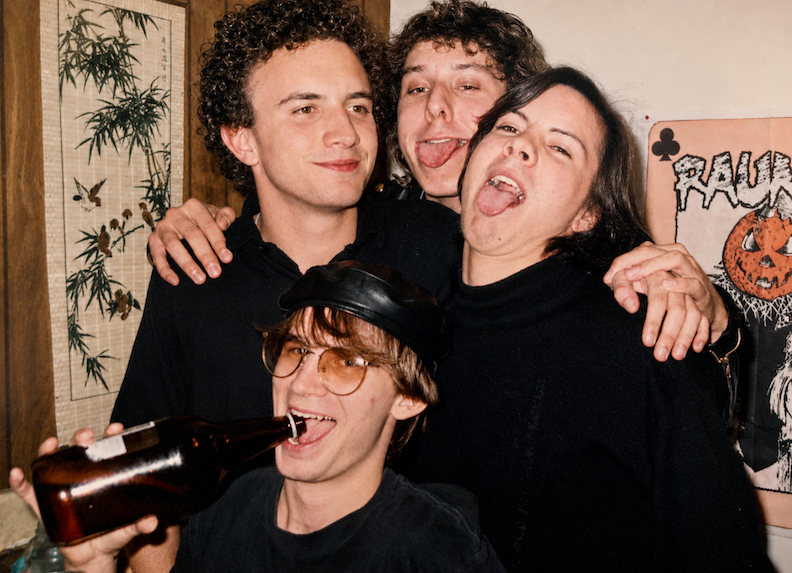
Seth Harty, Matt Flick, Thomas Monaghan and Bill Guilfoyle in their Park Avenue basement apartment. I took this one in 1987.
Other good friends, Bill Guilfoyle, Seth Harty, and Aaron Rosholm (RIP) would take over our newly painted Apartment #10, third floor, Middle House. Bill recalled that he and Seth had played together in the Omaha punk band Something Sacred, though the group had likely broken up by the time they moved into the Castle. Like many young musicians of the period, they pieced together rent money through an assortment of jobs. Seth supported himself by washing dishes at V. Mertz and working at Drastic Plastic, Omaha’s legendary independent record store. The arrangement was not unusual.
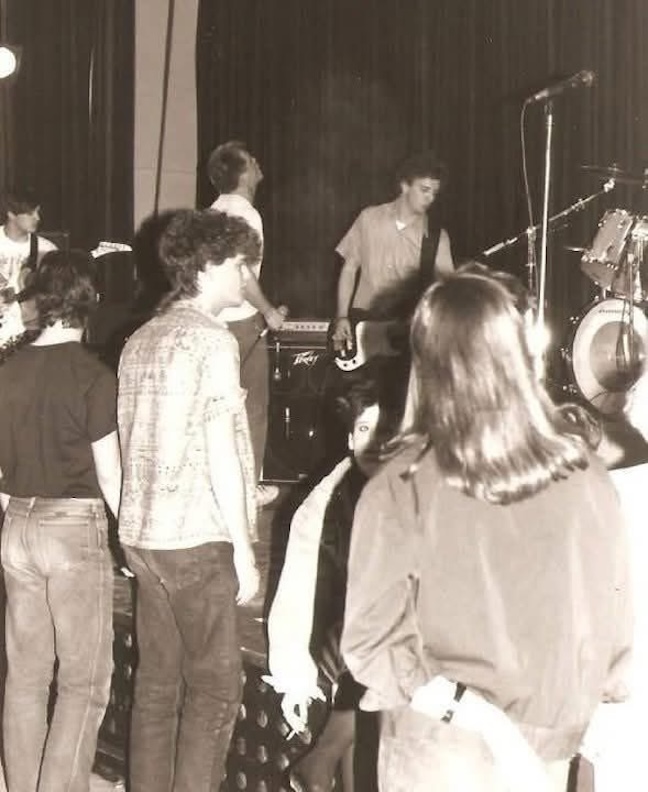
Jay Bacon shared that photo is one of the very few Something Sacred photos. Chris Ventura, Jay Bacon and Seth Harty. Clint Lawrence (RIP) and Bill Guilfoyle are out of photo view. There’s Craig Crawford in the audience. Photo courtesy of the Jay Bacon collection.
Not everyone I contacted could provide dates or photographs. What they often supplied instead was something more valuable: atmosphere. Seth Harty remembered the Castle with unmistakable affection. “Wow, what a great place that was,” he wrote. “We moved in as we were getting kicked out of our basement (Park Ave) apartment.” Harty admitted, “I can’t remember any of the tenants although I have a lot of memories of living there.” Then, with admirable discretion, he added, “I will keep those to myself.” His recollection of the neighborhood closely matched that of others. “The area was a bit rough, but also pretty desolate to my recollection.” By the late 1980s, much of the district seemed suspended between former grandeur and uncertain decline, populated by artists, students, pensioners, working-class tenants, musicians, and the occasional lost soul. Most striking, however, was Harty’s acknowledgment that the Castle occupied an important place in his own life story. “While filled with wonderful memories,” he reflected, “that time was also a time of some low lows for me and the last place I lived before making the decision to go into treatment.”
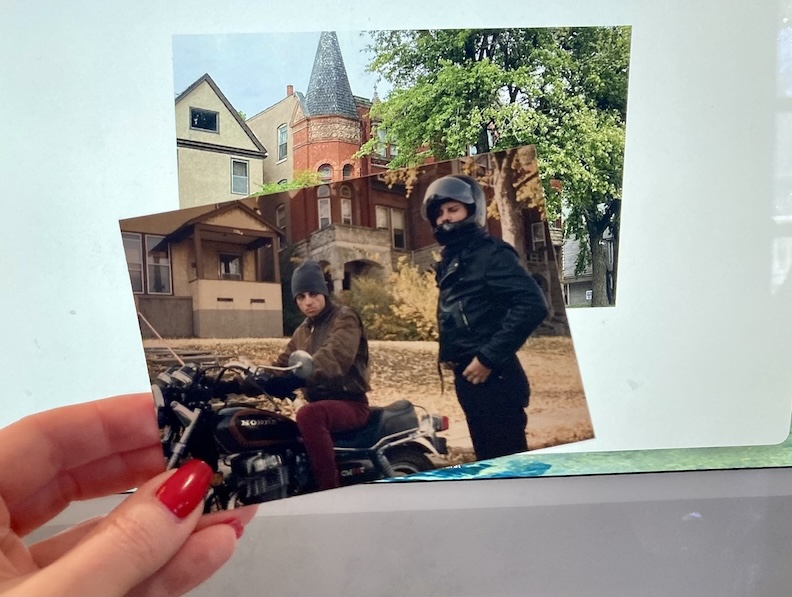
A favorite photograph I took of Lari Brocker and Thomas Monaghan out front in the fall of 1987. Behind it stands the Castle, which I tried to match up, photographed decades earlier.
Days before his death, I had the opportunity to interview Thomas Monaghan. His memories, like those of many former residents, focused less on floor plans than on the peculiar character of the building itself. Thomas remembered drunken nights involving various galpals and the questionable decision of launching bottle rockets over the fence toward the interstate from South 29th Street. More thoughtfully, he remembered that the apartments “were all laid out so differently from one another and weirdly,” a concise observation that captures one of the Castle’s defining qualities. No two apartments seemed entirely alike. Bedrooms were tucked into corners of former parlors. Bart Meadowcraft occupied the turret room, complete with rounded brick walls, perhaps the most coveted bedroom in the building.
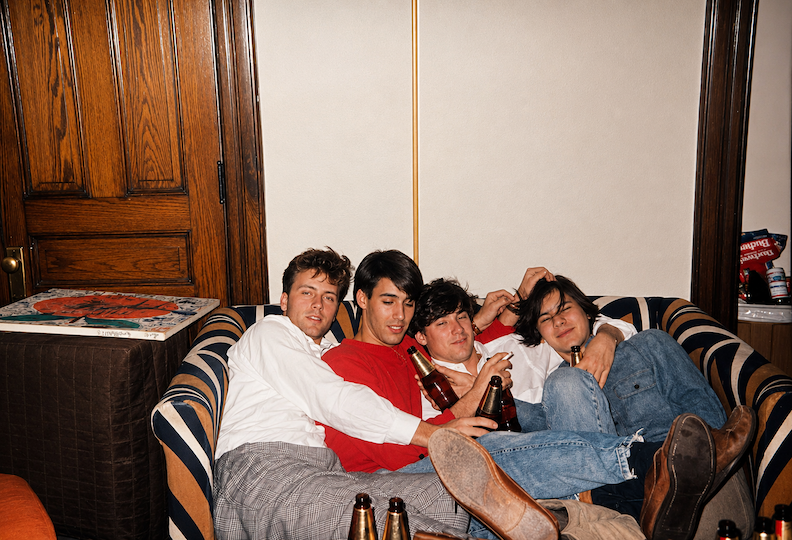
Apartment #5. Nathan Egger, Rick Lombardo, Todd Murphy and Thomas Monaghan featured in the living room. Rick Lombardo kindly provided this photograph, adding this was Thomas Monaghan’s favorite couch, no less.
As Todd Murphy recalls, “It was 1987, late December, and Rick Lombardo, Thomas Monaghan, Nathan Egger, and more had all gathered for the first time since some left for college. We laid in a bunch of Michelob beer. Good party ensued, thereafter.” This, it must be said, was not the sort of occasion that would have attracted the attention of society columnists. Yet for a group of friends returning from their first semesters away, it possessed all the ceremonial importance of a diplomatic banquet. The Castle, as ever, proved a willing accomplice. Its drafty rooms and improbable corridors seemed designed for reunions, absorbing voices, laughter, and cigarette smoke into walls.
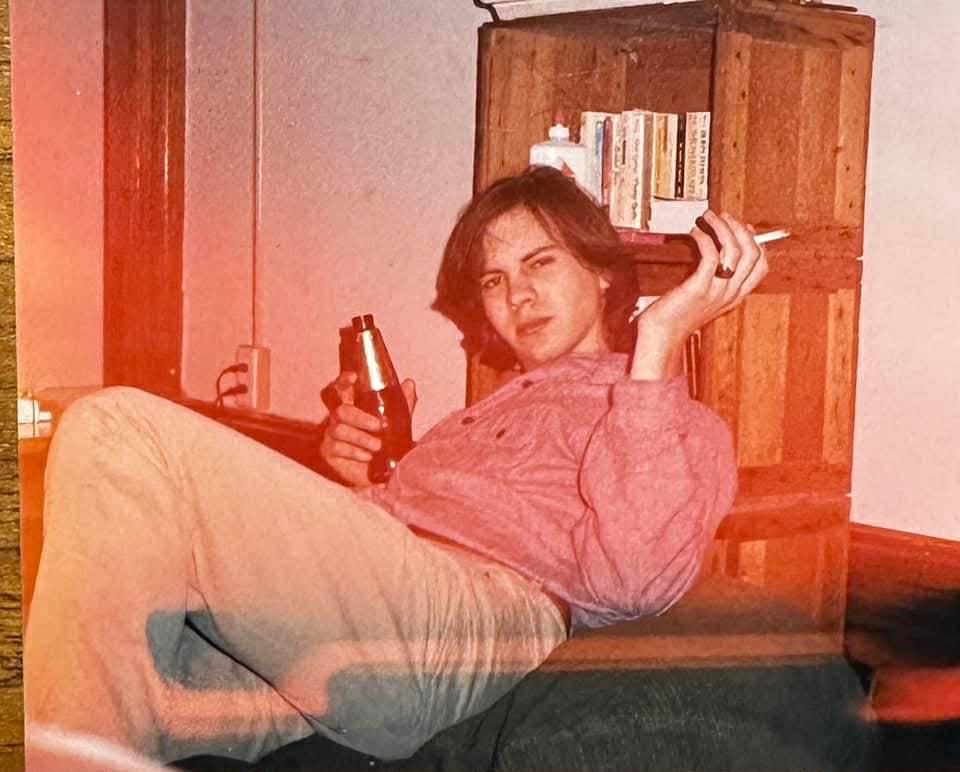
Thomas Monaghan RIP. We love you. As seen in the #5 living room. Photo courtesy of Rick Lombardo.
The boys of Apartment #10 held a farewell party after being asked to leave, which in itself gives one pause. Considering the general state of affairs at the Castle, one is left wondering what, exactly, had finally attracted the landlord’s attention. The imagination runs through a long list of possibilities before concluding that perhaps there are limits after all. In any event, the party quickly achieved a level of enthusiasm that exceeded any reasonable definition of a send-off. Seth Harty remembered as the night progressed, old grievances that had apparently been stored away for future use began to emerge. Bill and Aaron, who had accumulated a catalog of mutual complaints over months of cohabitation, finally decided to address them. The charges ranged from the serious to the absurd, including the perennial and deeply felt offense of leaving dishes in the sink.
There would be other friends and assorted members of the Omaha music and arts scene who passed through the Castle’s doors in the years that followed. During this investigation, I attempted to contact as many of them as possible. Some could no longer recall the specifics. Others preferred not to revisit that chapter of their lives and some never responded. If you lived here in any decade, we would love to hear your memories and include your photos.
In truth, the Castle was only one address among many that formed the geography of our music scene. Many of these places have already appeared in these investigations, and I hope to devote future articles to other structures deserving of remembrance. What follows are a few additional wanderings through this Park Avenue landscape.
The Castle Considers Its Options
By 1990, the Georgia had come full circle and was once again being marketed as the Georgia Apartments, a sixteen-unit complex occupying both 1040 (apartments 1-10) and 1044 (apartments 11-16) South 29th Street. The one-hundred-year-old gal was also for sale yet again, beginning a familiar cycle of transactions, ambitions, and uncertainty that would characterize its final decades. County records show a sale for $165,000 in 1990, followed by another in 1994 for $120,000—a valuation suggesting that the real estate market and the building itself were not always in agreement. Or was there something else going on?
The 1990s were a transitional period. City directories alternated between identifying the property as the Georgia Apartments and, occasionally, the Castle. By 1996, “the Castle” appears to have made its final appearance as an advertised fairytale name. Thereafter, the building settled into the less romantic but more practical identity of the Georgia Apartments. The 1995 Omaha City Directory described it as a sixteen-unit “Limited Access” property, a phrase that may have sounded reassuring on paper. By 1998, however, only a portion of the apartments appeared in directory listings, hinting at vacancies and a shrinking tenant population.
**Addendum of June 11, 2026**One of my favorite readers recently wrote with a memory of the Castle from the mid-1990s, a period when the old Georgia Row House appears to have acquired yet another chapter in its long and colorful social history. She served on a board whose office occupied a building northwest of the Castle. During noon meetings, board members found themselves with an unexpected view of local commerce. Looking out the windows, they could observe not only the Castle but also a row of townhouses perpendicular to South 29th Street. As she recalled, there was a steady flow of traffic cruising through and picking up girls. “There was a parking lot that got a lot of use,” she remembered with admirable understatement. “I am old, that was 30 years ago.” Like many recollections associated with the Castle, the story arrives not as documentation but as lived memory. “Another fun note. I used to help a lady by providing her rides…she lived on Virginia Court….an itty bitty little dead end off of Harney. Now I know why it was called Virginia.”
These glorious photographs, despite their modest resolution, are treasures. They offer some of our last views of the Georgia beneath the canopy of the great trees that once softened its edges and guarded its secrets. I confess I miss those days. Mister Rogers generously shared these real estate photographs from the 1990s and early 2000s.
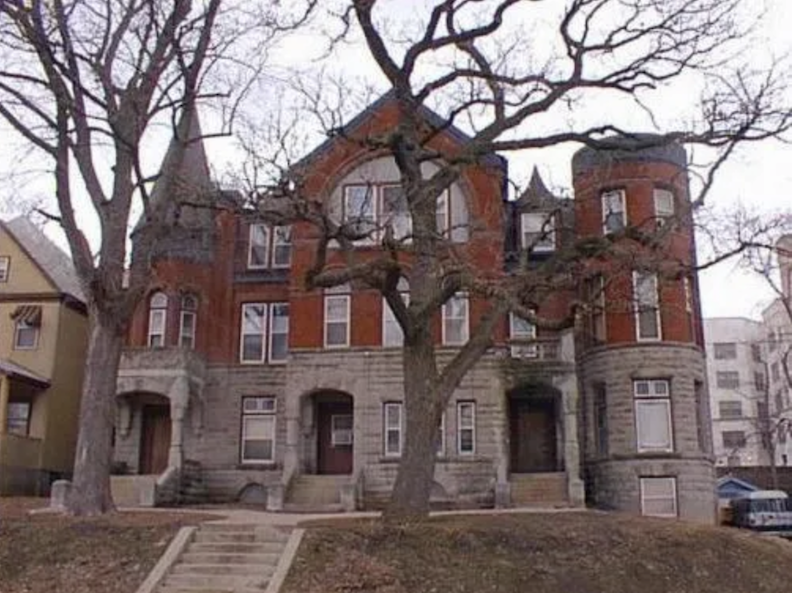
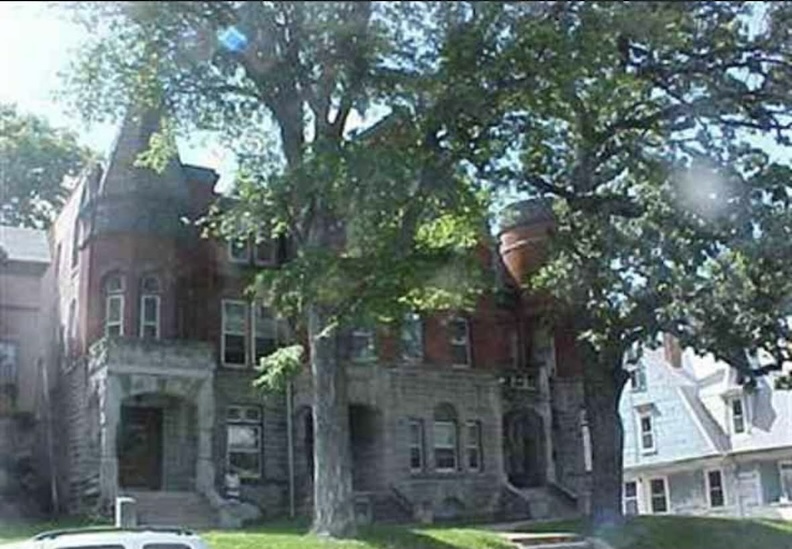
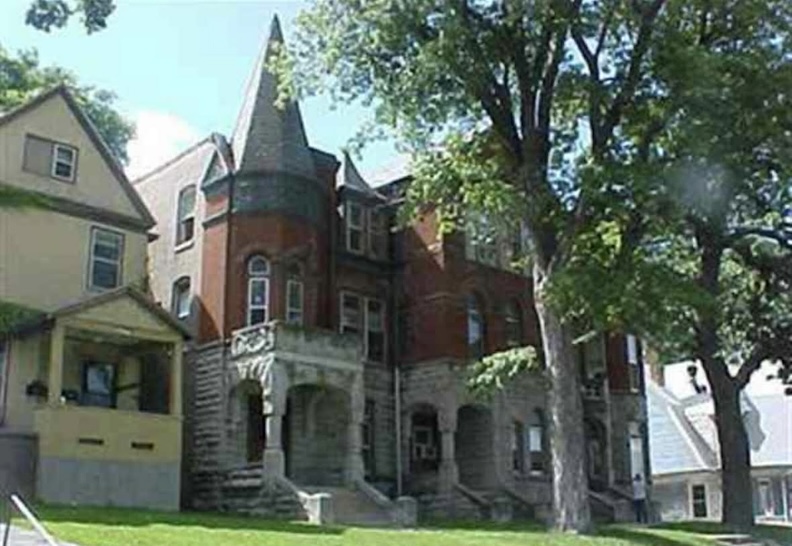
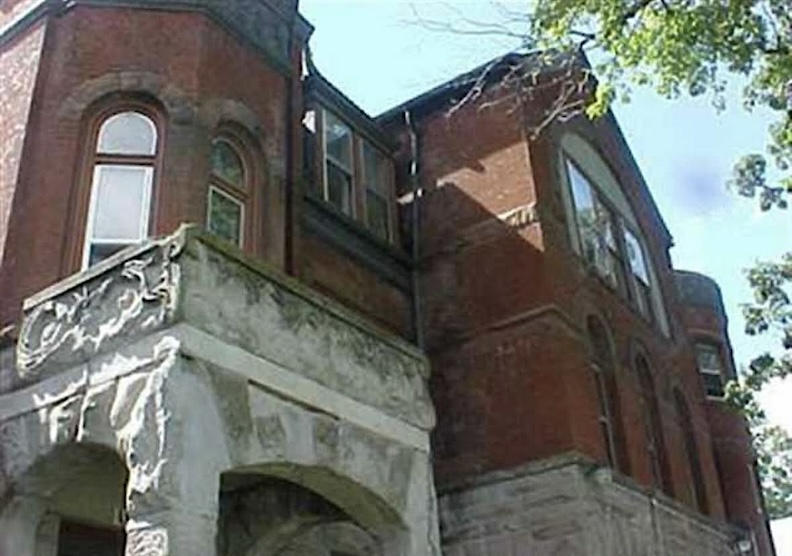
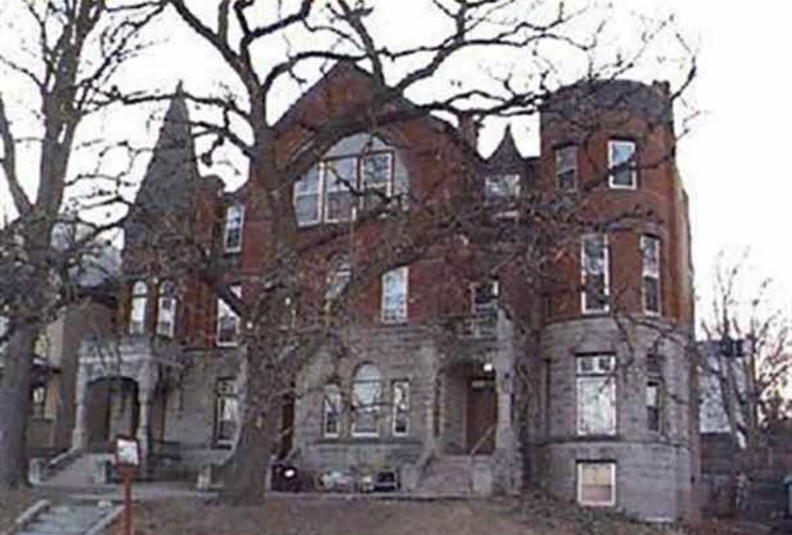
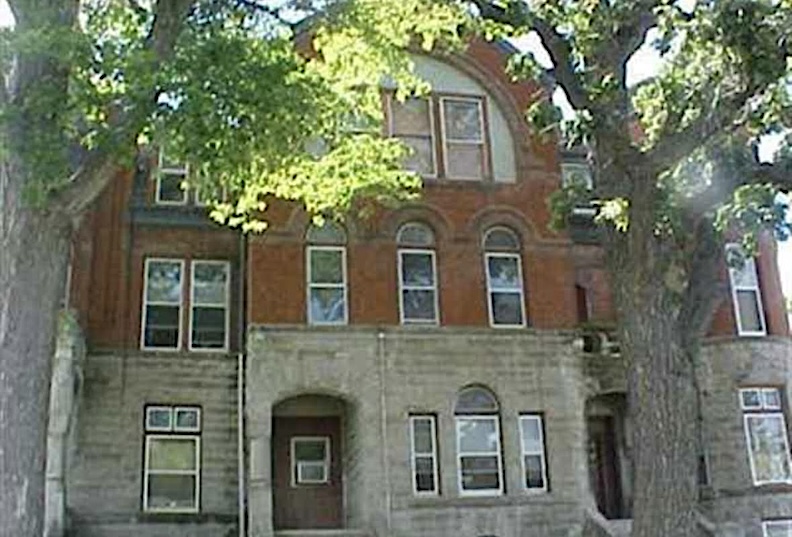
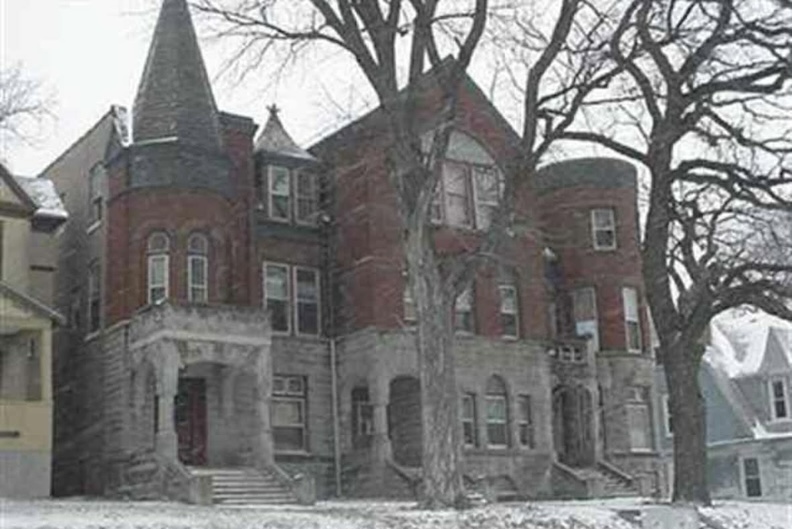
I am obsessed with this snowy photograph. Also worth noting is the condition of the central entrance in these later photographs. The doorway to the Middle House has been boarded over, and, in a solution that can only be described as architecturally adventurous, a window air-conditioning unit has been inserted directly into the wood. It is a wonderfully honest detail that tells a larger story.
Ownership continued to pass from hand to hand during these years. In July 2000, Dennis W. Marbell sold the Georgia to Timothy L. Tvrdy for $190,000. Curiously, Marbell would also sell the apartment building at 563 South 28th Street—another historic property I recently investigated—to Tvrdy in September 2001 for $100,000, along with other historic Omaha buildings.
That article here: THE BOARDED WINDOWS OF 563 SOUTH TWENTY-EIGHTH STREET
Mr. Tvrdy begins to appear throughout the records in the early 2000s, filing plumbing and construction permits as late as 2004. Whether this reflected a grand preservation vision or simply the endless maintenance demanded by older apartment houses is difficult to say. In 2005, apartments were still being advertised—”large 3 bedroom, 1890s brick building, over 1000 square feet, $455 plus utilities”—but by April of that year the property had reached the trustee’s sale stage and was auctioned by Fremont National Bank following a default. The building’s long history of financial drama was apparently not yet exhausted.
Evidence suggests that 2006 may have been the last year in which the Georgia was occupied by renters. In 2007, Fremont National Bank transferred the property to Bellamini Properties for only $56,000. Bellamini Properties LLC, an Omaha-based private real estate investment and management company owned and operated by Alison Walz, held the property during this period. The firm’s portfolio included both residential and commercial properties. If Bellamini Properties harbored hopes of restoring the Georgia, the historical record offers little evidence that those hopes developed into an active rehabilitation effort. The Castle remained in its long state of suspension. By 2009, the City Directory tersely described the site as “2 houses. No current listing.” It was a remarkably understated epitaph.
The 2010s were, at least from my perspective, a strange, uneasy period in the Georgia’s history. At one point a giant vinyl For Rent banner was draped across the façade, a desperate gesture that seemed less advertising than humiliation for a building that had survived since 1890. A For Sale sign followed in 2014. Then the For Rent signs again. And back to the For Sale signs.
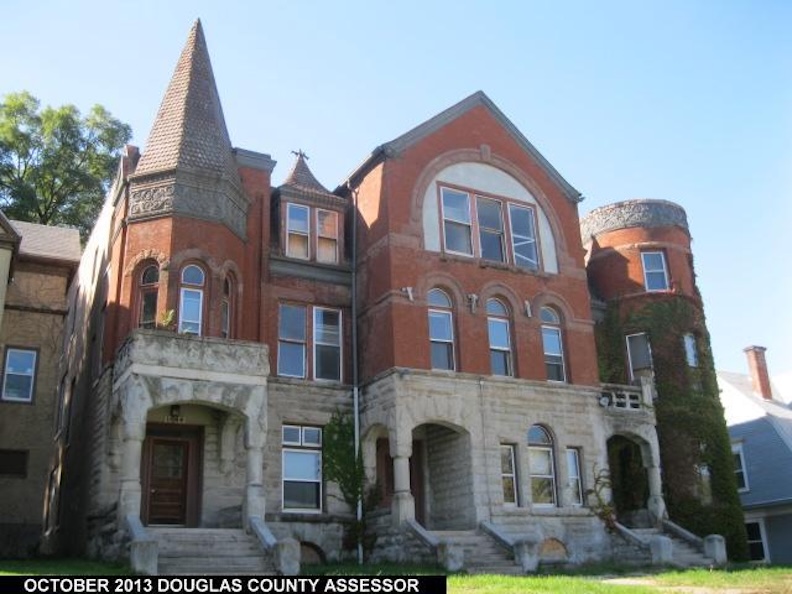
2013. Douglas County Assessor photograph.
The vinyl For Rent sign suggests there were, in fact, tenants in the building during this period. I would be delighted to hear from anyone who called the Georgia home during these years. The prevailing interpretation among myself, many former Castle residents, and more than a few preservationists at the time was that the old building was adrift, like a grand old patient lingering stubbornly near the end of its days. Old building lovers looked on with horror, affection, and empty pockets. Who would save her? The building seemed trapped in a peculiar state between survival and surrender, too magnificent to ignore and too expensive to save.
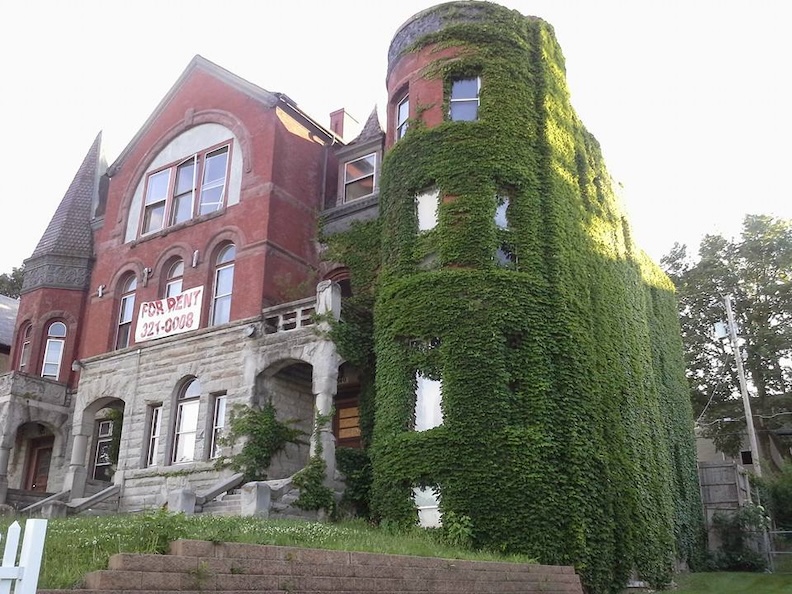
2015. Incredible Michelle Didamo Yates photograph.
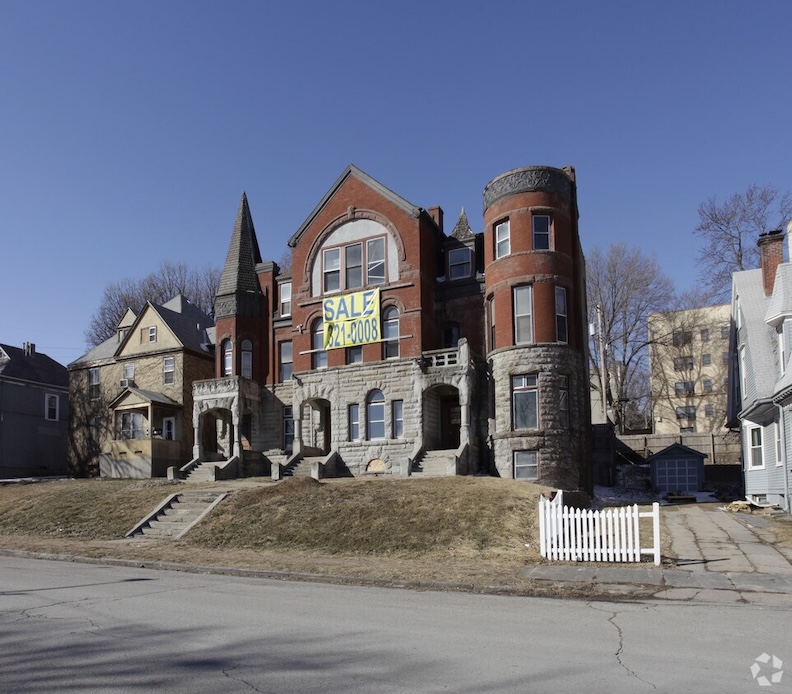
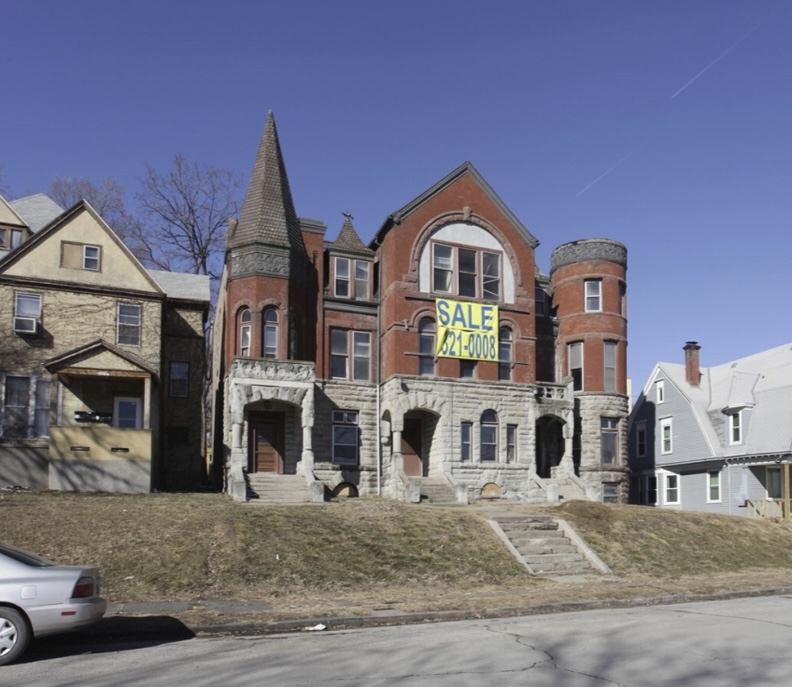
The two “For Sale” sign photographs are courtesy of LoopNet and were taken during one of the Georgia’s many appearances on the market.
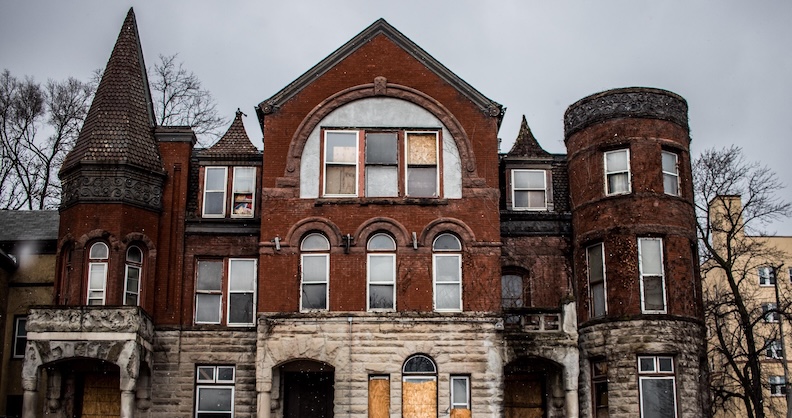
Love this one. Becca J. Photography. Stone cold depiction. It was under these conditions that I looked up at our once brightly lit three windows with deep sadness. The National Register of Historic Places Inventory Nomination Form read: “The pavilion’s third level contains a tripartite window arrangement set within a round-arched and stuccoed panel that is girded overhead by a prominent sandstone molding.”
In the spring of 2016, Sage Capital listed the property for approximately $314,000. To their credit, the marketing emphasized the building’s historic designation, tax-credit eligibility, and redevelopment potential rather than its vacancy and ability to easily be scraped away for new build. The 2016 listing described the Georgia with admirable optimism: “Currently unoccupied and will require a degree of remodeling.” It also highlighted the building’s National Register status as the Georgia Row House (NRHP #82000603), along with eligibility for historic tax credits and TIF incentives. What is striking is what the marketing chose not to emphasize–the listing focused on location, historic significance, and potential. One detail from a realtor involved in the 2016 sale give insight to the interior. They recalled that much original woodwork remained in portions of the building, although many fireplace mantels had been looted, and that rear rooms suffered severe water damage and mold. Empty beer cans left by squatters were regularly discovered during showings. “Showings were always interesting,” was the understated verdict.
The Economics of Affection
Historic tax credits and TIF incentives can provoke strong opinions today, largely because they became highly visible during Omaha’s redevelopment boom of the 2010s. They have also become associated, in some minds with greed, uninspired design, and the all too often architectural indignity foisted upon the city at public expense. In truth, historic tax credits are much older, dating to the late 1970s, and were used for decades to rehabilitate warehouses, hotels, apartment buildings, and districts such as Omaha’s Old Market. We had encountered this sort of tax incentive earlier in our investigation when the Dawsons first pursued Landmark Designation for the Georgia in 1978.
(I shall try to express this in a suitably genteel fashion. I have been remarkably well-behaved throughout this investigation, diligently suppressing the sort of remarks that are better enjoyed over cocktails than committed to print.)
What changed was the scale. By the 2010s, developers and nonprofits had become increasingly sophisticated at “stacking” incentives—a widespread combination of historic tax credits with other incentives: Federal Historic Tax Credits (20%); State Historic Tax Credits (where available); Low-Income Housing Tax Credits (LIHTC); Tax Increment Financing (TIF); New Markets Tax Credits; Various grants and local incentives. Projects that appeared financially impossible suddenly became feasible. Supporters argued these tools saved historic buildings that otherwise would have been lost. Critics countered that taxpayers were helping finance projects that might have happened anyway.
Take the Georgia. Without historic tax credits, TIF, and affordable-housing financing, it is difficult to imagine a private developer voluntarily spending millions to rehabilitate a severely deteriorated 1890 building with only eleven apartments. The economics are challenging. On the other hand, critics of incentives frequently ask why taxpayers should help finance private development at all. That tension became particularly visible during the 2010s because many cities, Omaha included, were experiencing rapid reinvestment after decades of disinvestment. What was particularly off-putting by the 2010s was that even Omaha’s worthiest preservation projects were frequently wrapped in the language of lifestyle branding, with consultants and marketers making promising developments feel curiously overpackaged and inauthentic. One sometimes had the uneasy feeling that Omaha’s architectural history had been repackaged for Instagram, given a clever name, and tied with twine and eucalyptus. Or, conversely, polished into submission with glossy finishes, oversized chandeliers, and enough zhuzh to resemble the lobby of a boutique hotel. In either case, the building was expected to function less as architecture than as a brand. A great many people appeared suddenly to discover a passion for preservation at precisely the moment it became profitable. Suddenly historic tax credits and TIF were no longer obscure tools used by preservationists and downtown developers. They became part of public debates about gentrification, affordable housing, neighborhood change, and who benefits from redevelopment.
The Building That Refused to Die
Back to the spring 2016 marketing campaign for the Georgia. As it turned out, that optimism proved well placed.
In November 2016, Bellamini Properties sold the Georgia to InCommon Community Development for $275,000. According to the Omaha World-Herald, the acquisition formed part of a broader effort to preserve affordable housing in the Park Avenue corridor, a neighborhood increasingly subject to what Executive Director Christian Gray diplomatically termed “redevelopment pressures.” Gray acknowledged that much of the new investment was beautifully executed. The problem was that many of the resulting apartments had become among the most expensive in Omaha, placing them beyond the reach of many long-time residents. InCommon’s objective was therefore preservation in its broadest sense—not merely of architecture, but of community.
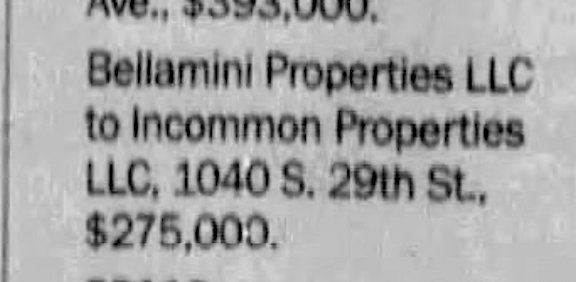
Omaha World-Herald. November 2016.
The organization had already acquired the neighboring Bristol, originally the Hanscom Apartments, in 2015. The purchase of the Georgia the following year represented another step in combating displacement in a neighborhood where residents often relied upon long-established social and family networks. The goal was preservation not merely of architecture, but of people.
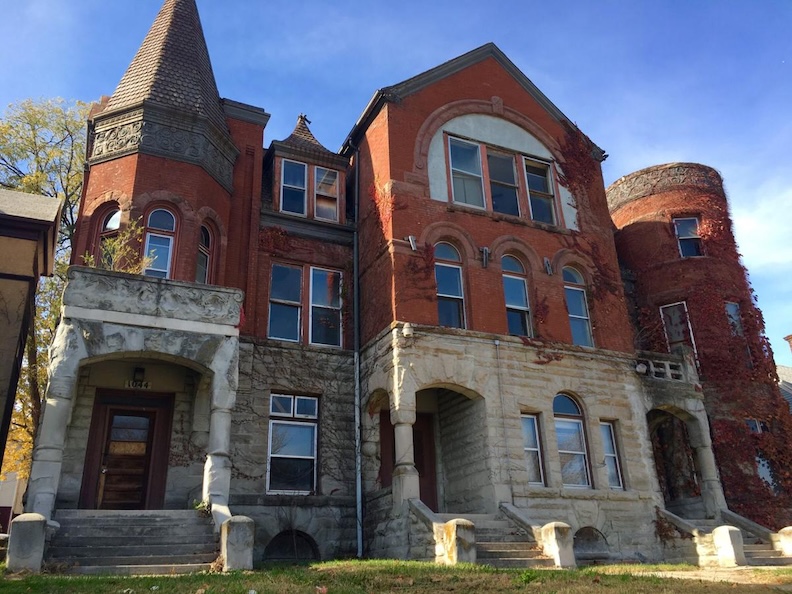
Beautiful 2016 photograph by Cindy Gonzalez.
The challenge was considerable. Years of vacancy had left the Georgia stripped, neglected, and visibly weary. “This is a building that’s been through several years of vacancy, and a lot of things have been stripped out,” Gray observed in 2017. Yet beneath the deterioration, the structure remained remarkably resilient. By 2022, plans were underway for what Gray described to KMTV as a “complete and total rehab”—a project that would preserve the historic exterior while rebuilding much of what lay behind it. Working with AO Architects, InCommon envisioned Georgia Row as family-oriented housing once again. The neighboring Hanscom Apartments followed a similar path. As the World-Herald reported in September 2017, InCommon partnered with Restoration Exchange to secure National Register status for the Spanish Colonial Revival building, enabling the use of federal and state historic tax credits alongside low-income housing tax credits. Such programs have become controversial in some circles, but in this instance, they served the distinctly unglamorous purpose of keeping roofs over ordinary heads. The result was one of the happier reversals in Omaha (!) and in the building’s long and occasionally alarming history. In August 2023, following a $17 million restoration of both the Georgia and Hanscom Apartments, the former Castle reopened with eleven affordable family-sized units. Together, the two buildings provided seventy-five affordable homes. Residents gained access to shared amenities including a community room, library, fitness area, and indoor bicycle storage.
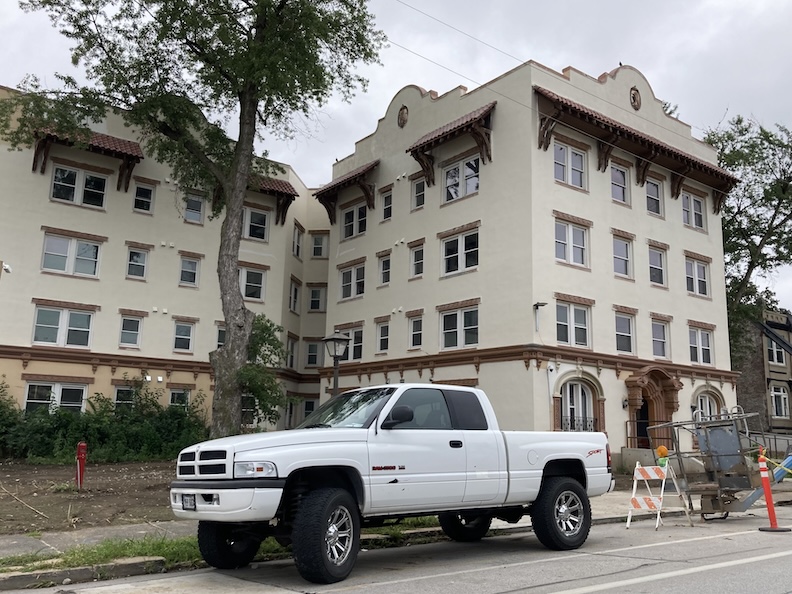
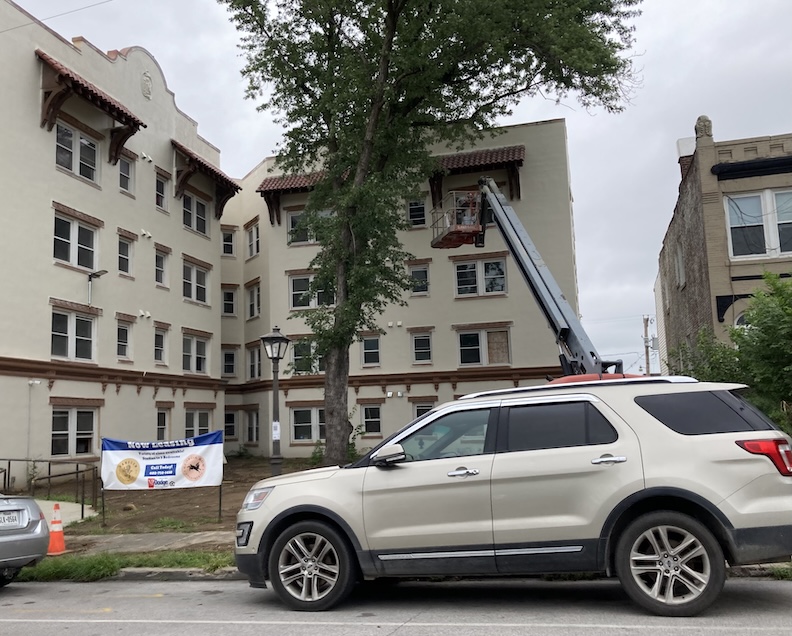
I captured these of the Hanscom-Bristol Apartments being worked on in August of 2023.
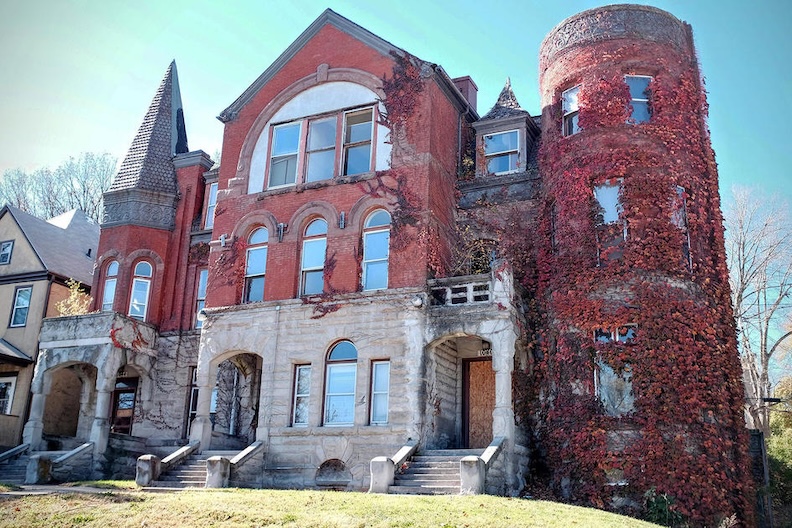
Her 2017 close-up for Preservation Magazine.
InCommon Cause
Let us look for a moment at a few photographic stills taken from KMTV’s August 2022 report, which documented the Georgia at that curious stage between ruin and resurrection. Every old building, if it survives long enough, eventually finds itself standing before a television camera while someone explains that it is about to begin a new chapter. We were all grateful.
Christian Gray described the undertaking with the cheerful determination familiar to anyone who has ever tried to rescue an elderly building from decades of neglect. This, he explained, was not a cosmetic exercise but “a complete and total rehab.” Nearly everything hidden behind the walls—heating, cooling, plumbing, electrical systems—would be replaced. The bones would remain, but the organs would be entirely new. More interesting was Gray’s insistence on preserving the frontage. The façade, after all, is where the Georgia keeps its personality. Modern developers often speak of “character” with the enthusiasm of men discussing a desirable tile color, but in this case the concern appeared genuine.
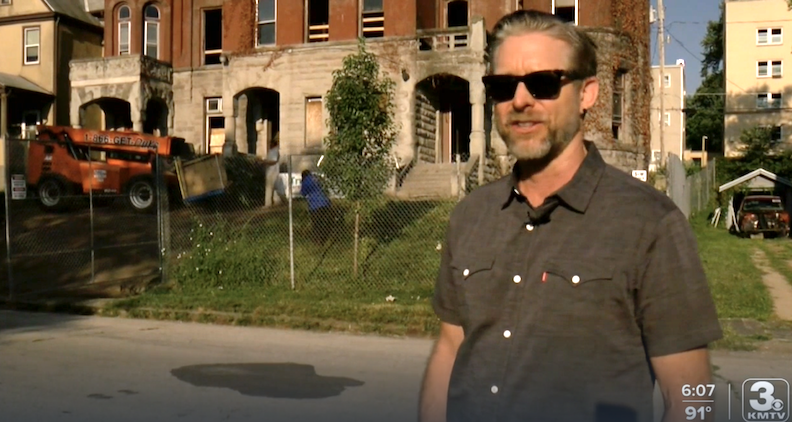
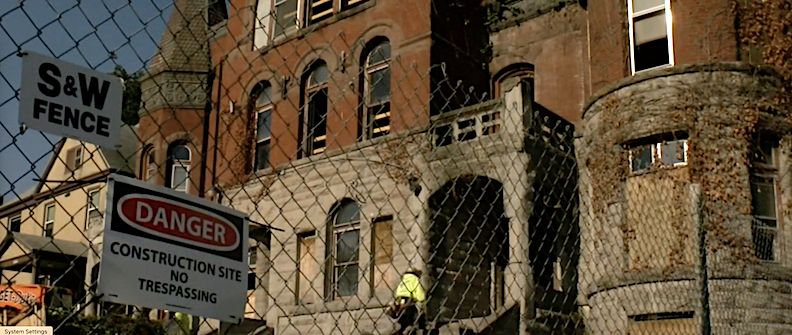
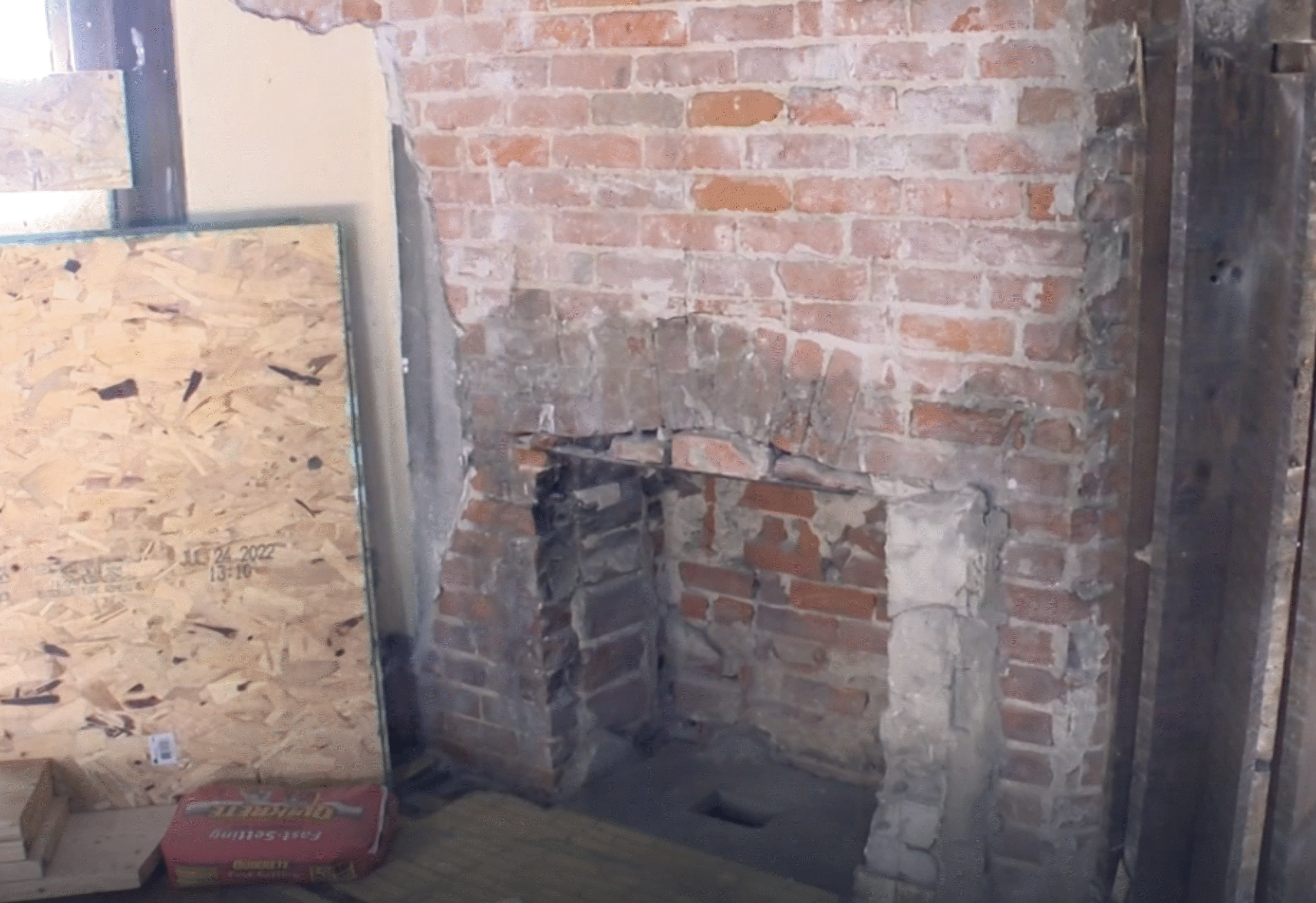
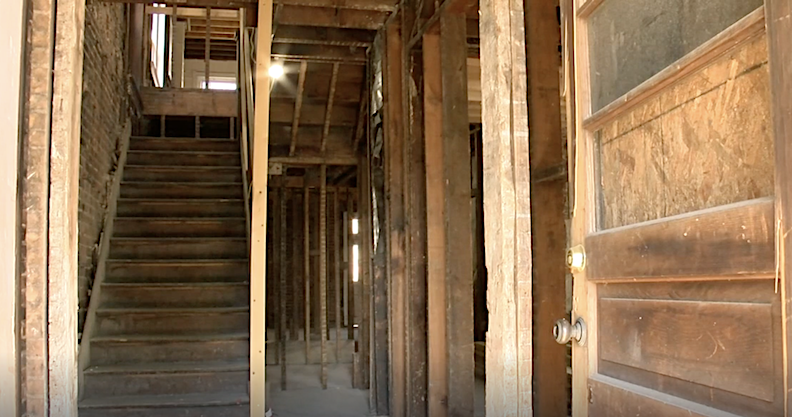
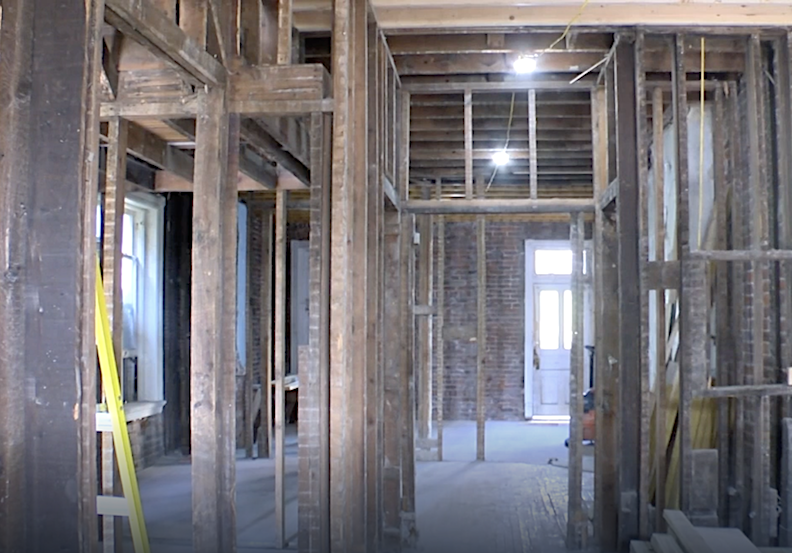
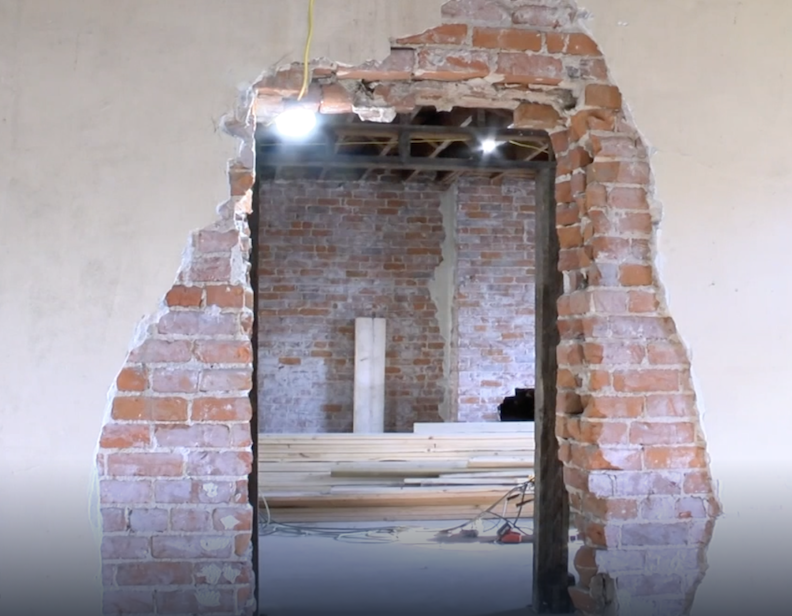
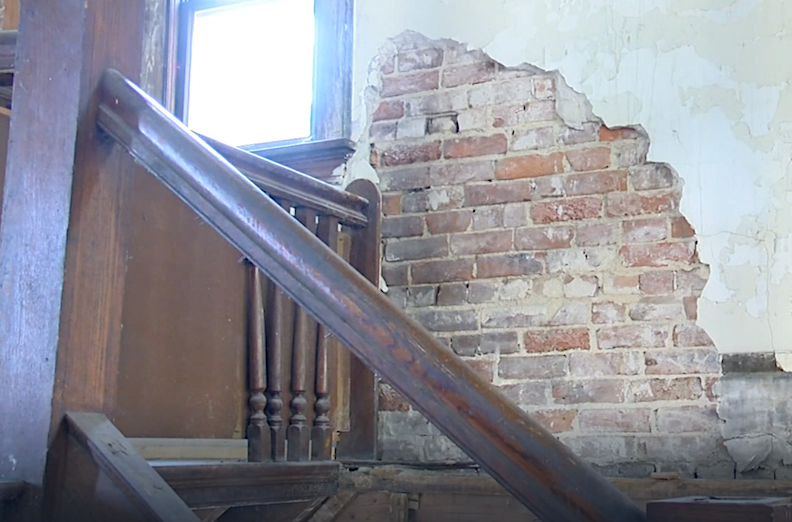
An Invitation
During the rehabilitation, but before the grand opening, I received a note from Christian Gray. He had come across my work on the Georgia and wrote to say he had been reading it. But more amazing, he asked me to the upcoming ribbon cutting ceremony. I was so pleased. Although I ultimately did not attend, I felt a certain kinship with Christian. The Georgia had occupied a corner of my mind for so long that its rescue felt almost personal.
I remember joking with Thomas Monaghan that the ribbon ought to be cut with a 1950s greaser’s switchblade rather than oversized ceremonial scissors. Such a gesture would have been more in keeping with the Castle’s colorful past, though perhaps a shade too dark for this event. More than anything, I was moved. Against considerable odds, the old Castle was alive again.
The photographs that follow are from my own scouting expedition in August 2023, when I finally went to see for myself what had become of the old place.
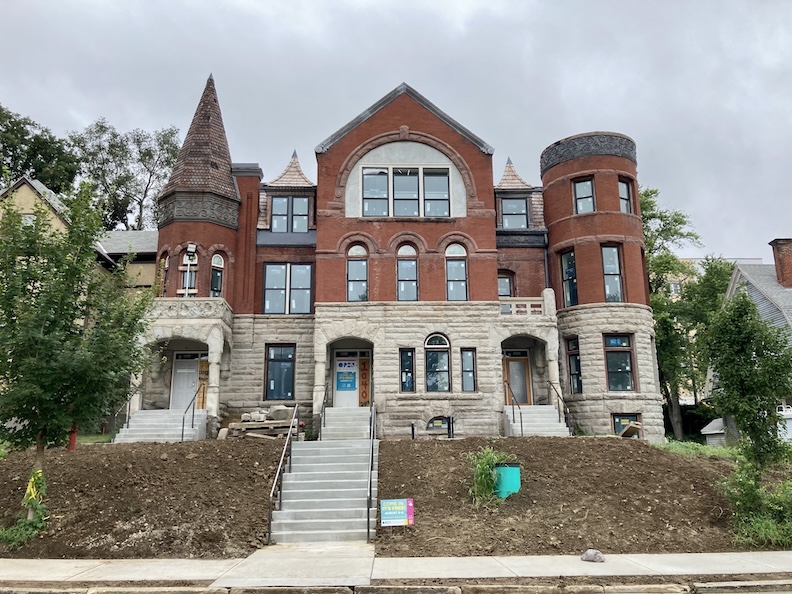
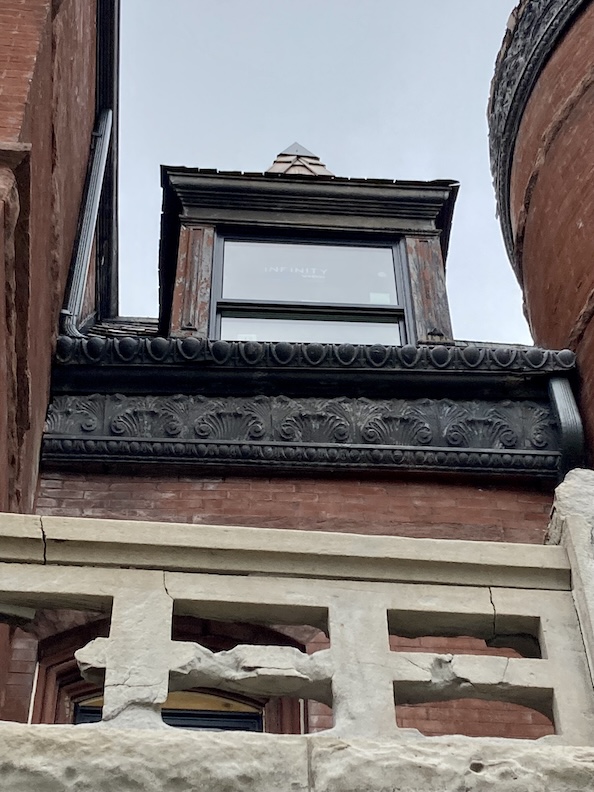
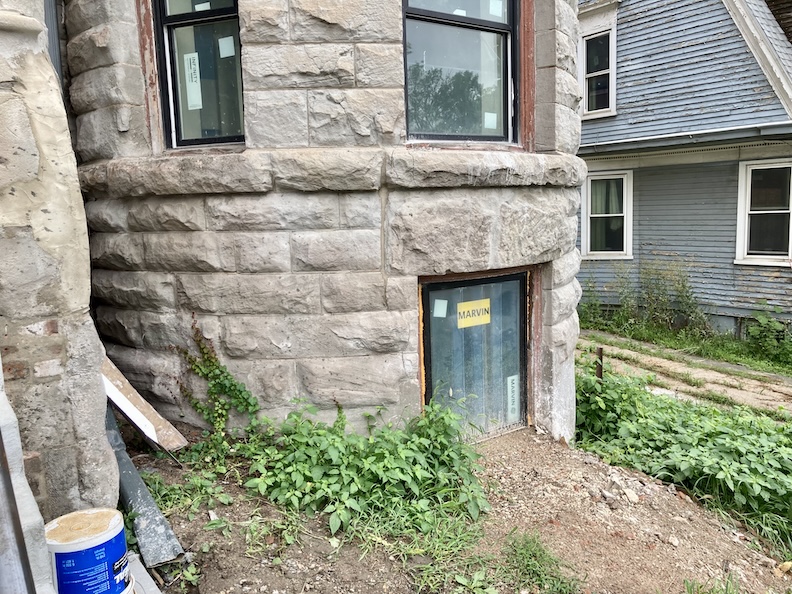
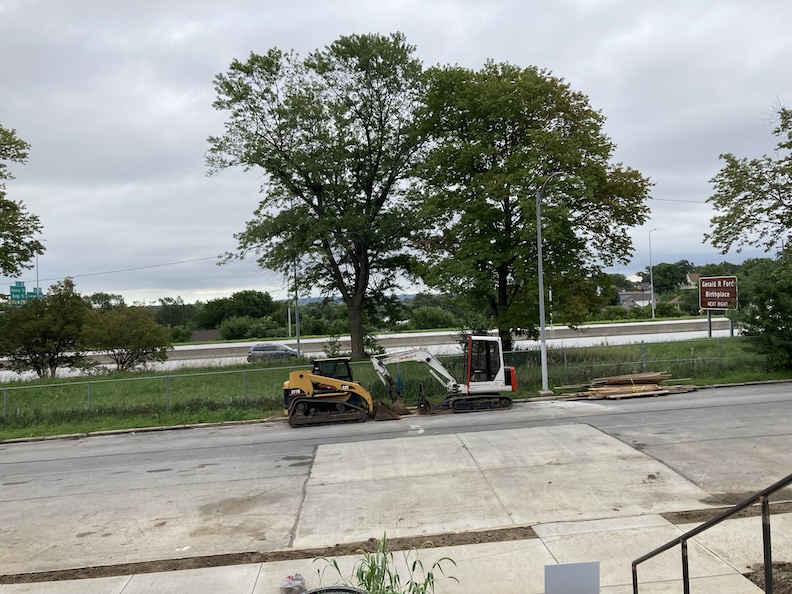
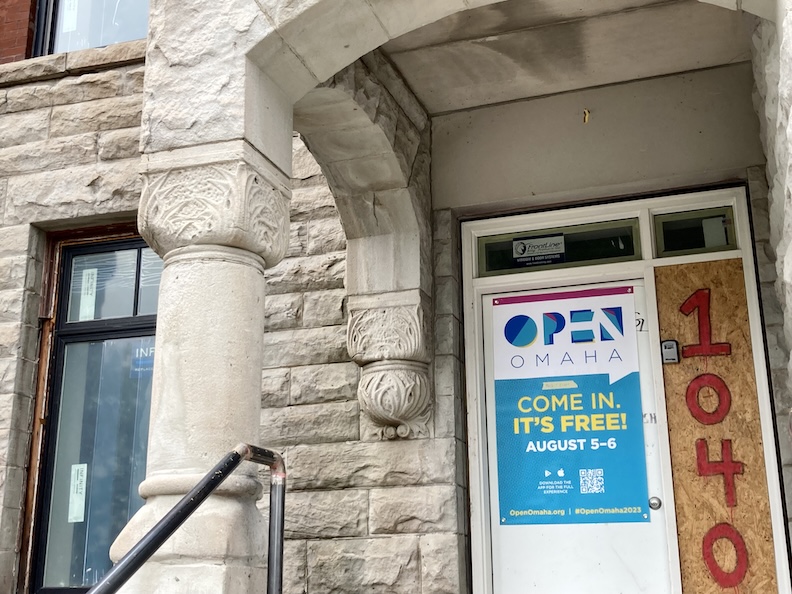
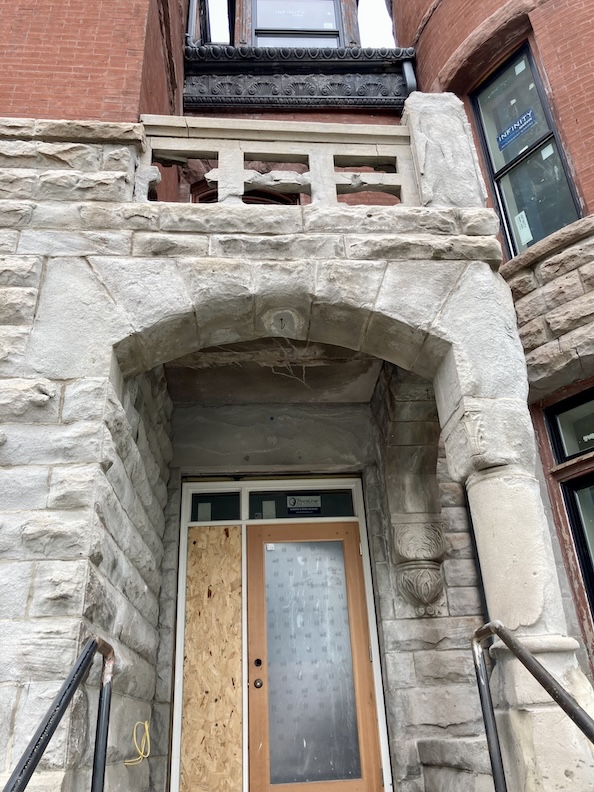
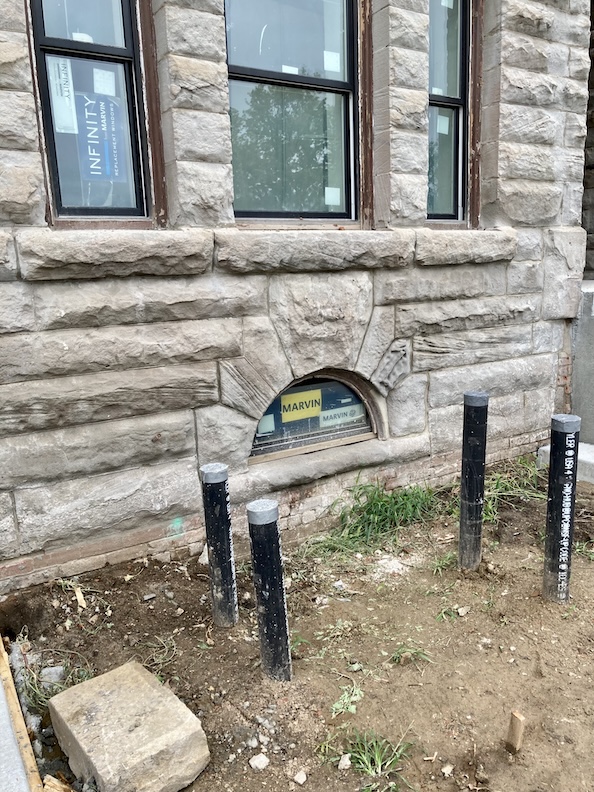
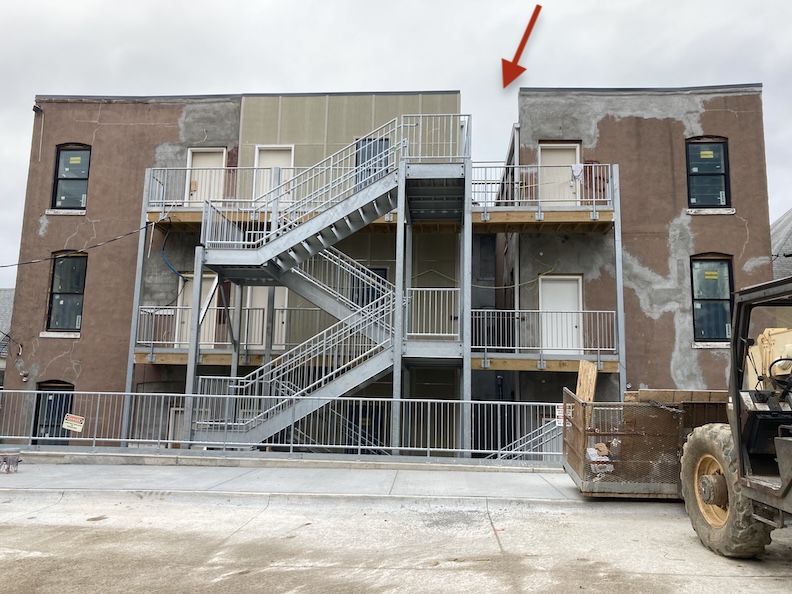
One of the first things I noticed was that the rear of the middle house looked remarkably different. It was entirely new. From what I could see, and in conjunction with what had been shown during the television coverage, it appeared that much of the back portion of our old apartment had been removed and reconstructed. This was the odd section of Apartment 10 with the lower ceilings and awkward proportions, a part of the building that had always felt as though it belonged to a different century—or perhaps to a different building altogether. It now seemed to have vanished entirely. The red arrow points to that narrow seven-foot shaft that separated the southern bay from the apartment mass allowing natural light to reach the central mass (Middle House).
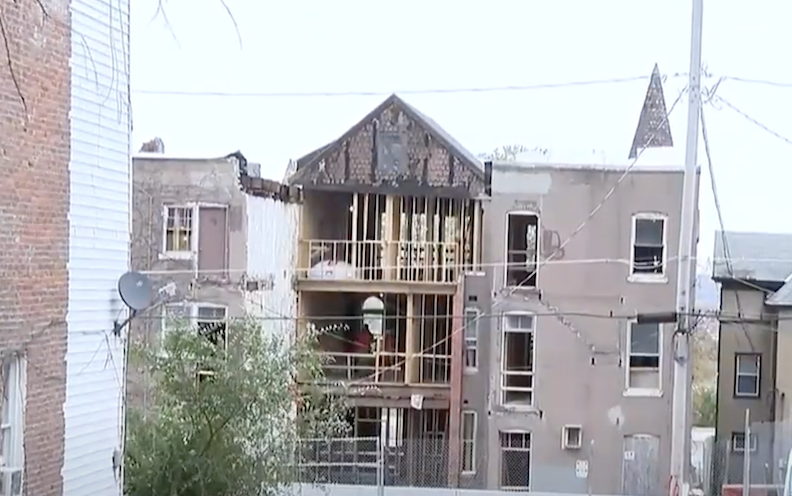
Image from KMTV’s August 2022 report. At the time I could only speculate. The reason for such extensive work would become clear later when Christian Gray explained exactly what had been discovered during the rehabilitation.
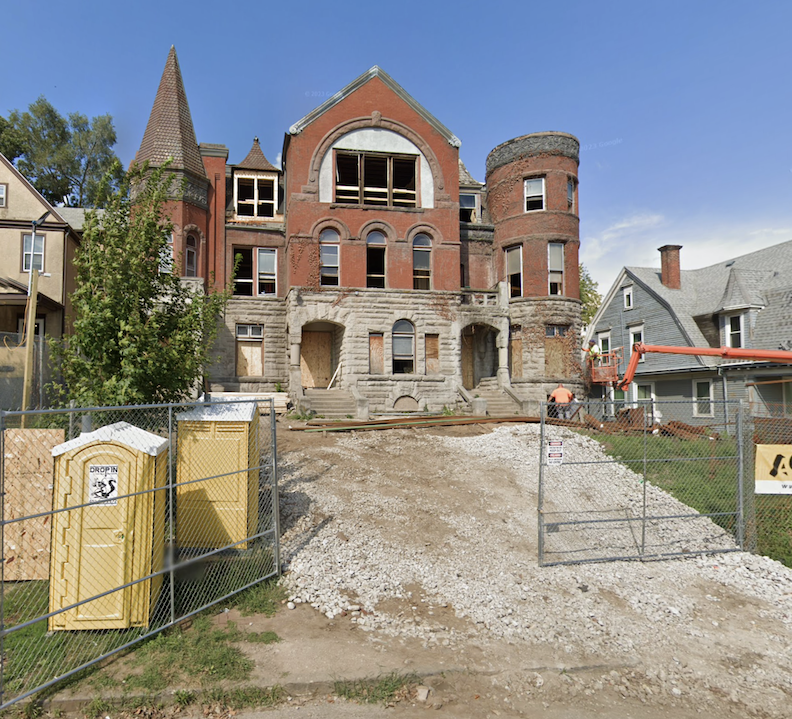
September of 2022.
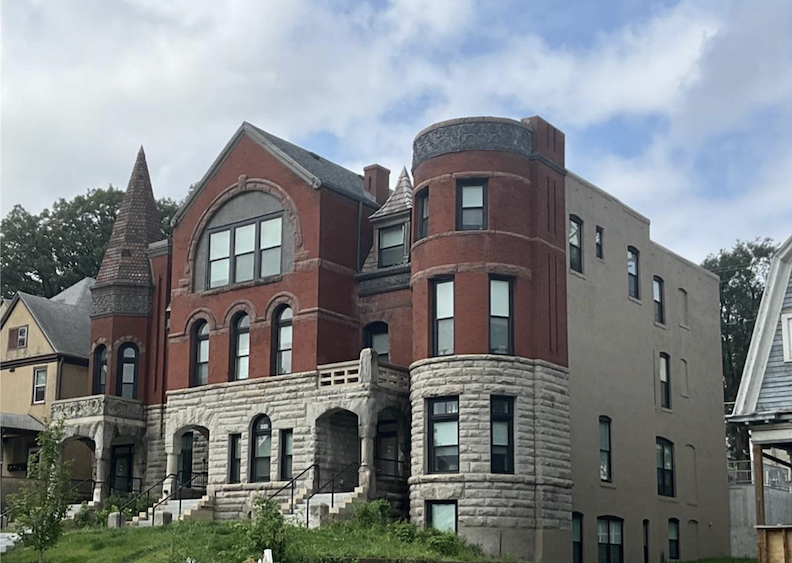
2024. Douglas County Assessor photograph.
Christian Gray
I would correspond with Christian Gray several more times during the course of this investigation. Like many people who rescue old buildings, Gray seemed to understand that one is never really restoring brick and mortar alone. He also seemed to detect what I was trying unsuccessfully to disguise as historical inquiry: that my curiosity about the Georgia had long ago crossed the border into a condition of sentimental proprietorship for which I possessed neither deed, title, nor any recognizable legal standing. Happily, he was very kind about it all. Throughout this section, I will weave in the remarkable photographs Gray generously shared with me, images that offer a rare glimpse into the Georgia.
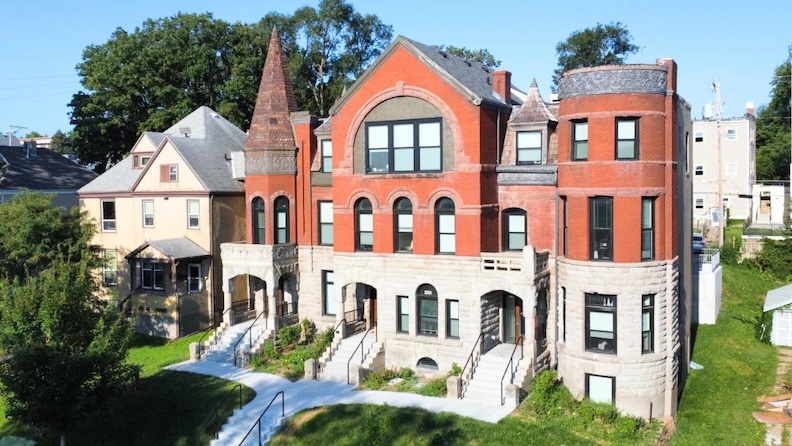
He described the Georgia project as valuable not merely for its architecture, but for the layered benefits it brought to the Park Avenue neighborhood. As Gray noted, the building represents a rare surviving example of Queen Anne multi-family architecture associated with Omaha’s historic streetcar development patterns. Its preservation was no small matter. Gray explained, “During renovation, the loss of an exterior retaining wall at the rear of the building underscored just how close the structure was to total collapse.” I had wondered how narrowly the Georgia had come to being another architectural obituary.
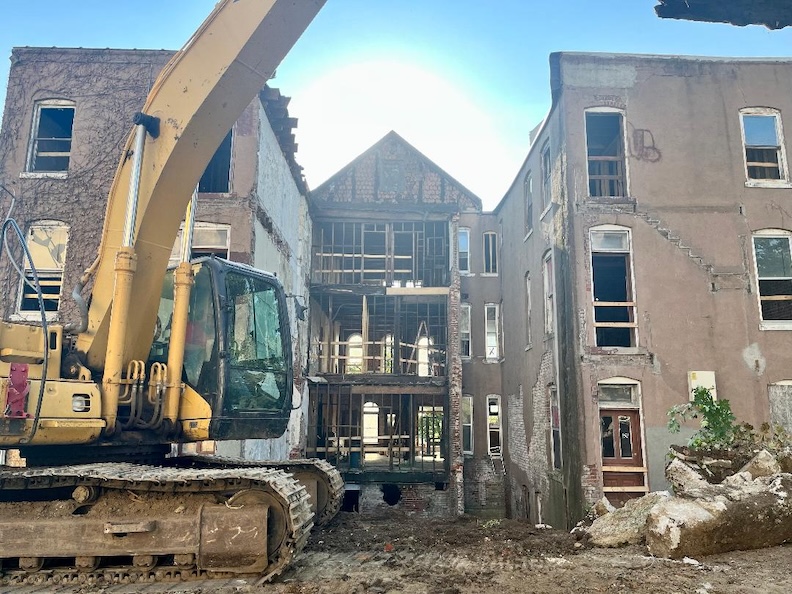
Early in the rehabilitation, the rear wall apparently collapsed, revealing parts of the building that had likely not seen daylight in generations. The camera faces east into the Middle House. This view looks into the portion of our old third-floor apartment that had the higher ceilings and more clearly defined rooms. Even in its diminished state, I could recognize the more substantial part of the dwelling. The missing portion in the odd rear section with its lower ceilings and improvised feeling, was the portion of the building that would ultimately require reconstruction. As an Obsessive, it was rather like looking at an anatomical drawing. My father asked why do you care about such things?
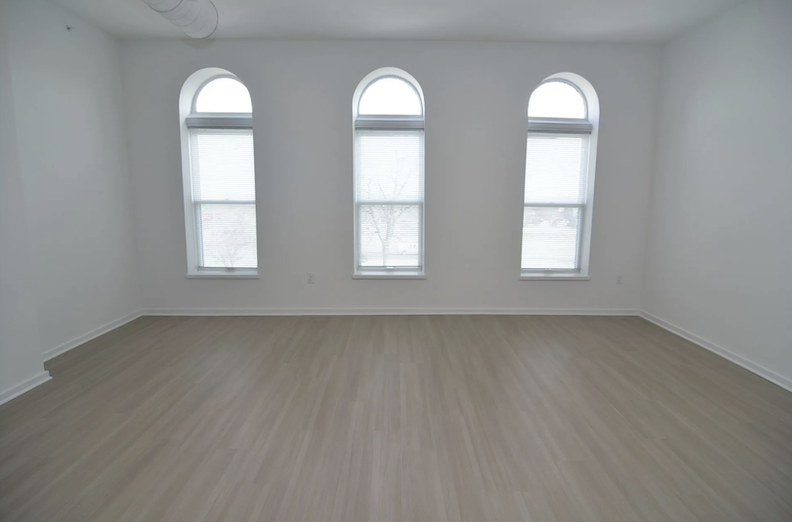
Middle House, second floor.
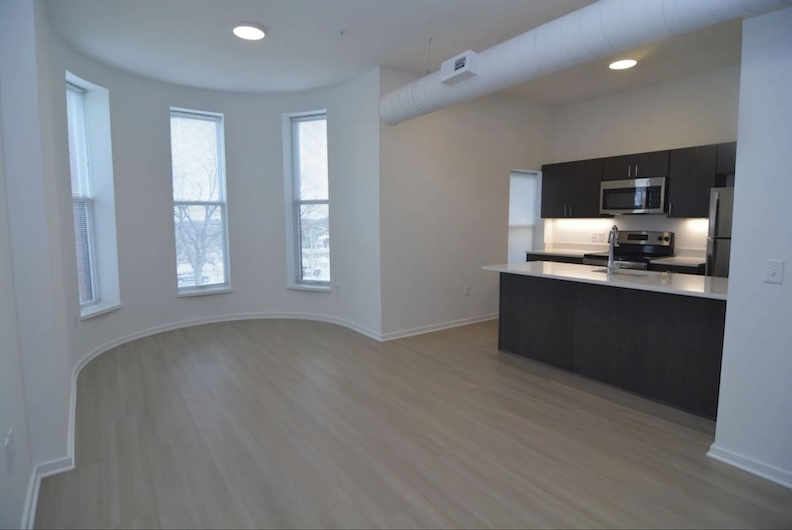
Northern House, second floor. I do believe this was our Apartment #5.
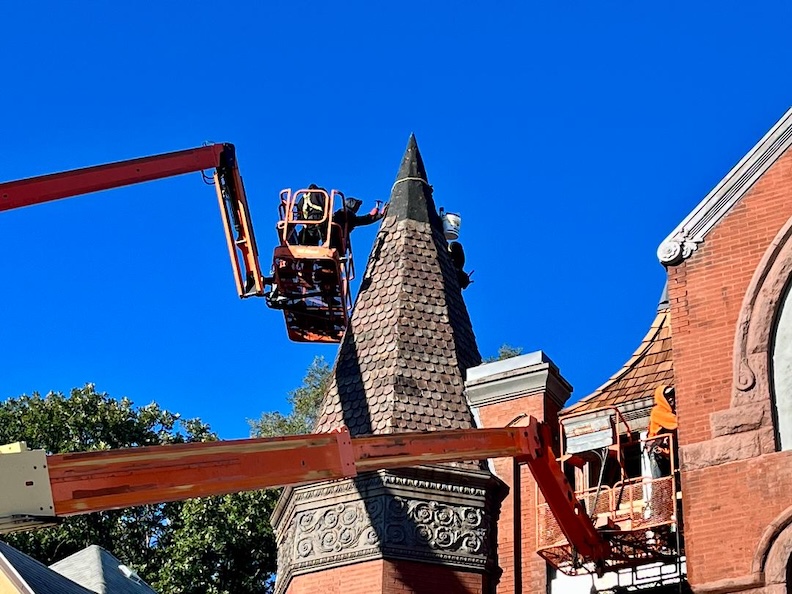
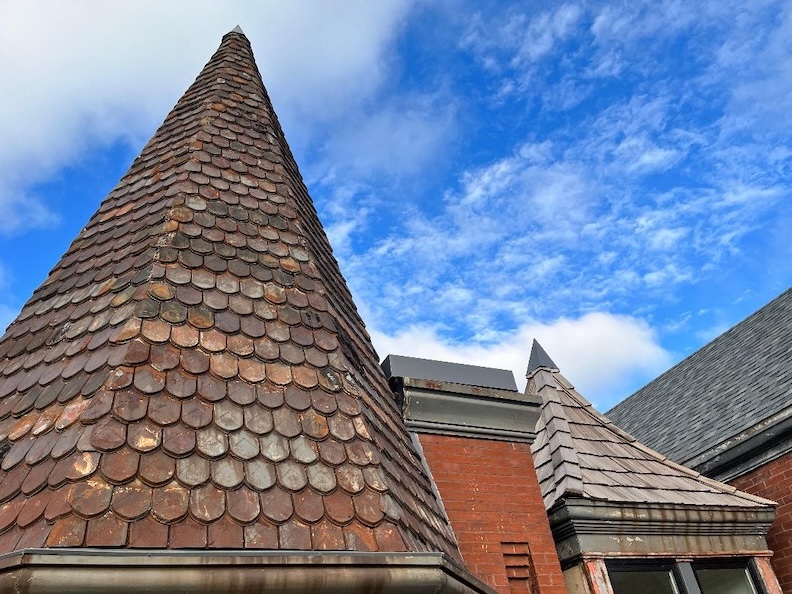
Gray expressed particular pride in the restoration team’s commitment to the exterior. Little original interior fabric remained after decades of alterations, but the building’s outward character was carefully preserved. Most notable was the turret’s metal fish-scale roofing, each tin shingle removed, restored, and reinstalled over a modern roofing system. Such painstaking work is rarely inexpensive and almost never visible to casual passersby, which is perhaps the purest definition of preservation.
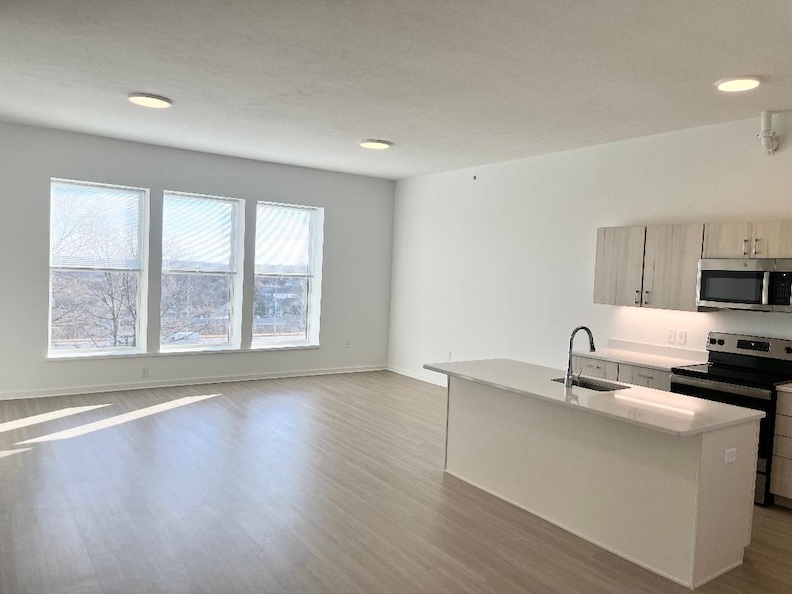
Middle House, third floor. Hard to believe but this corner was my bedroom many moons ago and the photo shoot site of that Apathy album cover. The Georgia walls we knew are gone. Portions collapsed, were rebuilt, or simply vanished. There are places in the Georgia today where not a splinter remains from the rooms we occupied. The physical evidence of our tenancy has been erased with admirable thoroughness. I am going to try to express this without saying it outright. It is entirely without bittersweet longing that I say I am glad the Castle looks so different. This observation may come as a surprise from someone whose usual position is that the original is almost always preferable. But it’s as though I can let go of the haunting.
For those of us who inhabited the Castle during its less dignified decades, Gray’s photographs were endlessly fascinating. Apartment #10 still occupied the center bay on the third floor, but little else was familiar. The rear portion of the apartment—the strange, low-ceilinged section that always felt of a lingering, weighted atmosphere, had ultimately collapsed during early construction and required complete reconstruction. This explained why the rear elevation appeared so different when I visited. The replacement was built of concrete block, and the old rear staircase, once negotiated with equal parts courage, balance, and denial, had been replaced by steel.
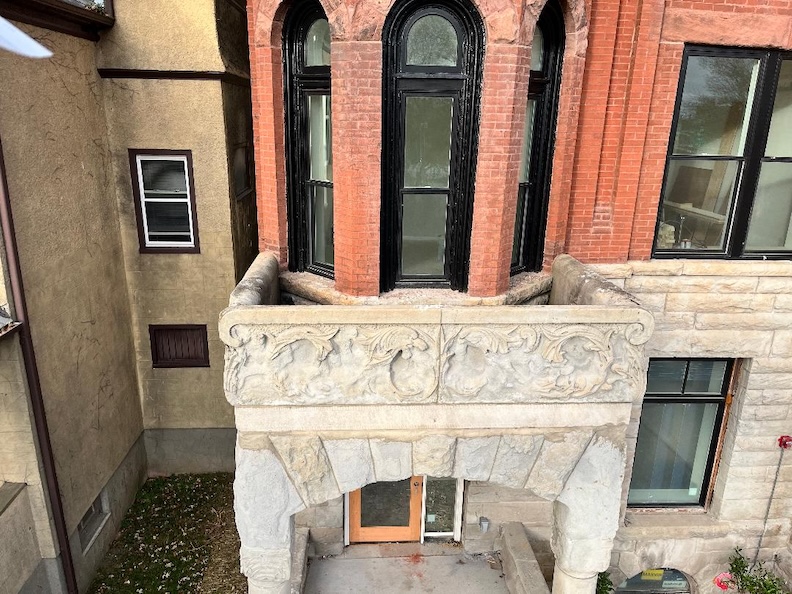
This photograph looks down upon one of the Georgia’s most exuberant architectural flourishes: the great stone entrance porch of the Southern House. It is the sort of decoration builders lavished upon a structure when they expected people to pause and admire it rather than hurry past with their eyes fixed on a smartphone. And look at how close to the neighbors.
I was interested to learn that neither Gray nor anyone else involved in the project had encountered anything supernatural, mysterious, or even particularly odd during the renovation. No diary tucked into a wall cavity? No forgotten love letters tied with ribbon? No baby shoe dropped between the studs in 1891? No worn household broom abandoned by a long-departed maid? Not even a respectable skeleton? One hopes for such discoveries when an old building is opened up, but the Georgia appeared to have held its secrets more grudgingly. And perhaps that is just as well. Gray good-naturedly offered to ask the construction workers, which seemed sensible. If a building intends to reveal its secrets, it is more likely to do so to a man carrying a pry bar than one carrying a development budget.
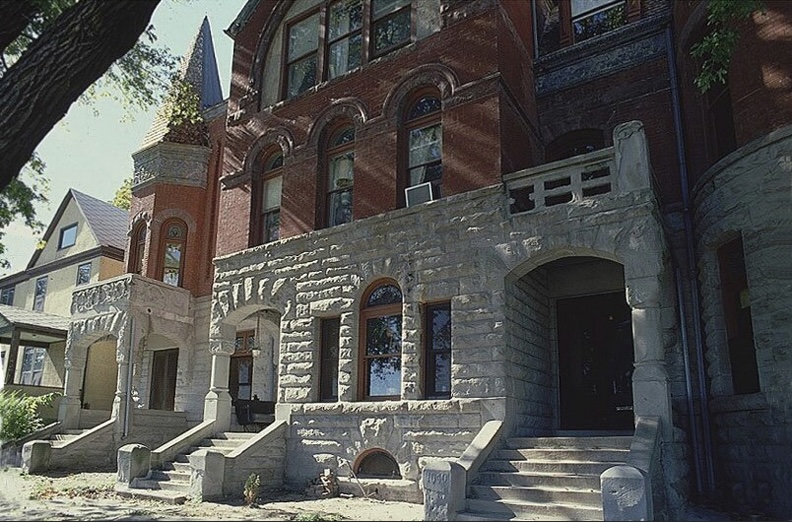
What I felt at the Castle was a kind of leavings. Looking back, I still cannot tell what I was sensing. Was it the accumulation of living pressed into the walls for almost a hundred years? Had something specific happened there, leaving an impression? Or was I answering to some kind of persistent memory that old buildings seem to be able to hold, where generations of tenants still dwell in the rooms of their minds long after they have gone? I am open to the idea that it was none of these.
Another option is the apartment building’s peculiar appearance, its improbable survival, and its near-mythic status in Omaha ensured that it remained lodged in memory. There is an element of bragging rights involved. As the years passed and the building’s reputation and future became dismal, so too did the peculiar privilege of being able to say, “Yes, I lived in the Castle.” But I never quite lost the sense that we were crowded with so many absences in the apartment where we had thought there was so much room. Not ghosts per se, but the accumulated presence of those who had passed through before us. I imagine them still wandering the halls in their own memories, retracing familiar routes.
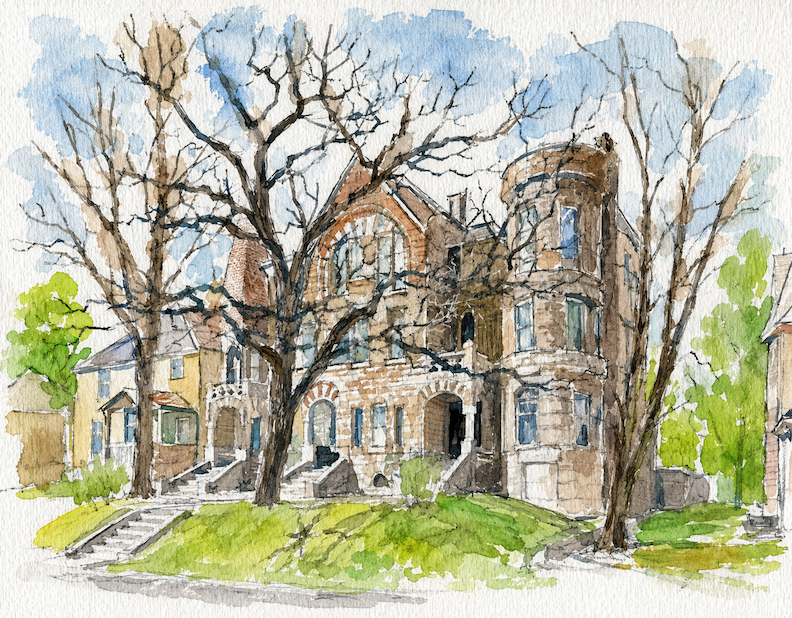
The End
My own time at the Castle was brief. Yet it changed the course of my life in ways I could not have imagined when I hauled my belongings up those stairs in 1987. Had I rented some cheerful, God and Mother-favored apartment complex in West Omaha, complete with clean carpets and functioning insulation, I might not have continued on my obsession with old buildings at all. I might have become a perfectly sensible person. Instead, I found myself living in a weathered Victorian relic that occasionally appeared to be contemplating its own mortality. I loved all of my great friends who lived there too.
For years I scattered references to the Castle throughout my writing like breadcrumbs dropped in a dark wood. The story was always there, waiting. Yet I continually pushed it aside. Certain places carry a peculiar weight, and this one carried more than most. I know I am not alone. Some of you have written over the years and beneath the questions I often sensed the same thing: a bittersweet longing, not merely for a building, but for the people we once were inside it. We are all, in our own way, trying to locate ourselves among those rooms. The Georgia Row-Castle was and is a long story already in progress. What remains is a feeling—part longing, part sadness, and part electrical sense of mystery, merely waiting for someone to pay attention.
Every investigation eventually reveals that it is also an autobiography, and the Castle gave me a colorful past. It gave me access to thousands of colorful pasts that were not even my own. Against all reasonable odds, it still stands on South 29th Street, looking out over a city that has changed almost beyond recognition. And every now and then, when one of us drives by, the old gal still manages to look back.
Thoughts? Secret tips? Photos of the Georgia Row? Let’s hear it, friends. I welcome your feedback and comments on the fascinating Georgia-Castle, the Park Ave neighborhood, the cast of characters. Please share your additional clues to the story in the “Comments.” Everyone would love to read what you have to say, and it makes the sharing of Omaha history more fun. You can use an anonymous smokescreen name if need be. We want to hear from you.
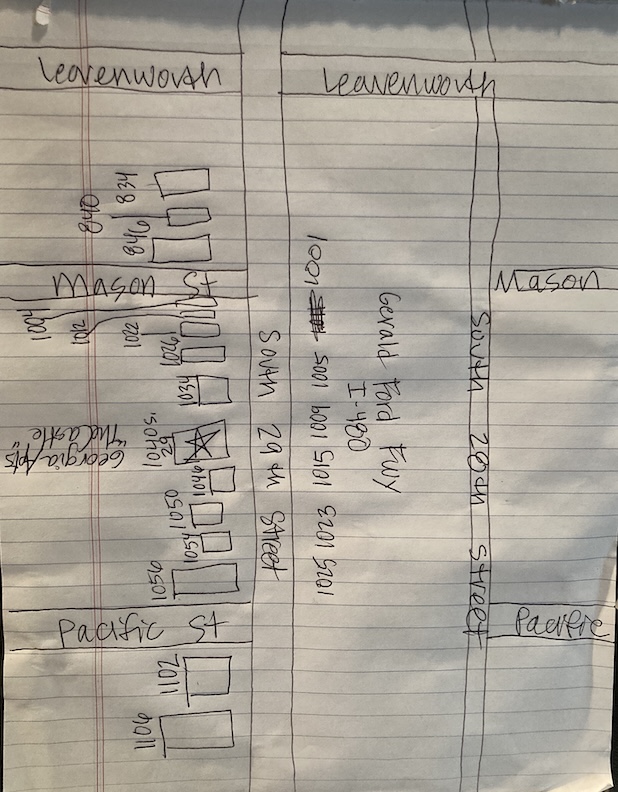
As is my habit, I eventually drew a map. Every investigation seems to require one, if only to convince myself that I understand where things were. This was my 2020 version.
If you like what you see, you can keep up with my latest investigations by joining my email group. Click on “Contact” then look for “Sign me up for the Newsletter!” Enter your email address. It will then display “Thank you, your sign-up request was successful!” Make sure to check your email address to confirm. You will get sent email updates every time I have written a new article. Also feel free to join My Omaha Obsession on Facebook.
© Miss Cassette and myomahaobsession, 2026. Unauthorized use and/or duplication of this material without express and written permission from this site’s author and/or owner is strictly prohibited. Excerpts and links may be used, provided that full and clear credit is given to Miss Cassette and myomahaobsession with appropriate and specific direction to the original content.
If you are looking for more architectural and Omaha history sleuthing fun, ask your local or bigbox bookseller for my book: My Omaha Obsession: Searching for the City. Also available everywhere online.
Thank you, Omaha friends.
Miss Cassette

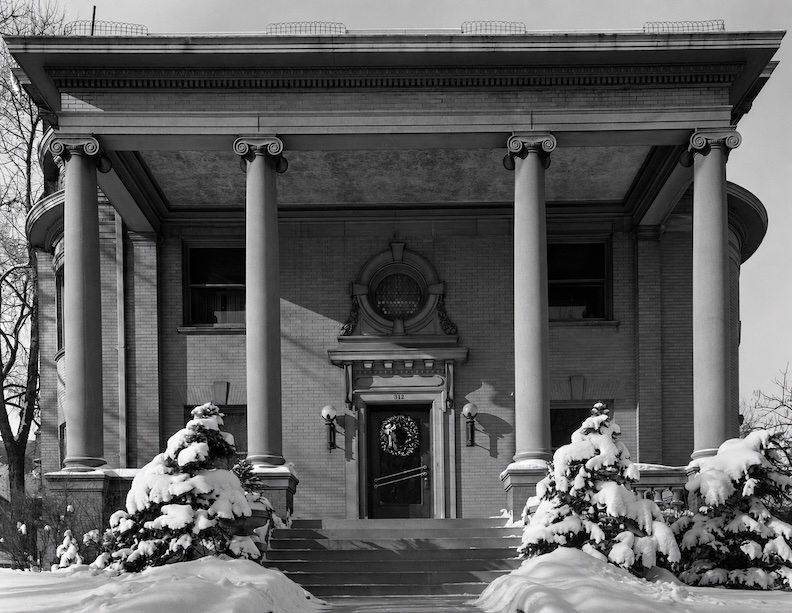

I lived through a similar time when I occupied apartment #1 in the now-demolished Centaur Apartments at 1053 Park Avenue. I was between high school and college, working as a typist by day and living to party with my friends at night. My apartment was the frequent gathering place for a beloved group of people who are still my friends today.
Park Avenue was full of dodgy characters. Occasional gunshots were fired when police were chasing convenience store robbers through a neighboring back yard. I only felt genuinely frightened by one neighbor who I called “the crazy guy.” And he was.
My building was 100 years old. The basement had that same creepy layout as yours with individual storage spaces and dark corners that I was too scared to explore.
I walked into Kohl’s pharmacy to fill a prescription after having my wisdom teeth removed. Novacaine was still working so I couldn’t tell (until after I’d left) that I had blood dripping down my chin. No one looked at me twice in that store; I blended right in.
I too appreciated life in an older building with some history and architectural interest. Thanks for sharing your castle story. It brought back a lot of fun memories of a fearless time in my younger life!
My apologies Judy. I had responded to this and then poof! It disappeared. Anyway I hope this one gets through. I really love what you have shared and laid out here. Another man on the Facebook post also wrote of the Centaur apts. Which really makes me think I need to do a story on it. I do believe I have photos from about 10 years ago of a sort of entrance with little stairs or maybe some kind of formal gate. But the building was already gone. I’ll have to look into my photo files. Thank you so much for taking the time to write.
Me and Tonya lived at the Georgia for awhile in ‘88/‘89….in a studio in the middle building can’t remember the number.
Had no idea all of you familiar faces lived there as well guess it was haunted after all…strange days I am sure of.
We were in isolation that Winter plotting our escape to SF, but have many great memories of that beautiful place…..sad to see how it has been genericized like everything else……remember when we had it all?
Been away too long need a look see real soon…
XO
Ricky
This was amazing!!! It is hard to imagine the time you
spent on your investigation. I always am impressed how you can outdo the previous histories, but you do! Thank you so much, Miss Cassette…it is always a great day when I see a new email from you! Take care.
Thank you so much, Victoria. It was a labor of love. I am sad that it is over but I am also grateful to have finished it. Now I can move on, hopefully to some shorter stories and catch my breath. I hope you have a beautiful end of spring. Thanks for reaching out!
I lived in a 4-plex on 25th and Douglas in the 70’s. Then, the third floor of an old victorian house on 33rd and Lincoln Blvd.
Much earlier than your experience but definitely the same vibe!!
I never saw many cockroaches but the mice roamed free!
Looking back, I’m amazed at how scary it was at times. No car, very little money but great friends. I was fearless!
All that freedom was intoxicating.
Well that was certainly an interesting roller coaster ride though time! I’m left feeling a bit rattled (having learned many things I didn’t know and learning more about some things I had previously known) but am much better off for the experience. Where to begin?!
I have been in the Castle exactly once in my life, and it was at some point in the late 1980’s, so quite possibly it was during your tenancy. A friend of mine from school had rented one of the ground floor units (I think it was in the south or middle house). I remember three things clearly: (1) The entry radiated an air of profound neglect. (2) The interior seemed really dark. (3) There was a fireplace which had beautiful tiles, some of which were loose or altogether missing. They included tiles depicting male and female figures which faced each other on opposite sides of the firebox. My friend and I were debating as to whether they represented actual figures from ancient lore or were simply catalog numbers M-3517 and M-3518.
While I am ecstatic that this beautiful and highly eclectic facade still graces the street, I would not go so far as to call the project a restoration. It’s better than a facadectomy, to be sure, but essentially it is a brand new build inside of an old shell. Whatever spirits may have lingered there have surely moved on from the current generic interiors. Hopefully most of the interior architectural elements were salvaged during the demo work rather than being dumped in a landfill. The facade remains a real asset to both the street and city, so for that we can all be very grateful. It could have been so much worse.
I was delighted to find that the row houses at 2961-69 Pacific were designed by the same architects, Findley and Shields. That incredible row is anchored to the west by 1101 S. 30th. Somewhere I have a photograph of that end unit as it appeared mid-century when it still retained its front porch (which shielded the beautiful stone archway). All six houses had the same porch design originally. The most intact surviving porch is at 2965-67, though the current balustrades looks nothing like the ornate originals. All of the porch posts were originally like the center post between 2965 and 2967.
The black and white photo you share from the newspaper had to have been taken well before 1993 because the row lost its all-white paint job in the late 1970’s and has had its ornament picked out in brown tones ever since that time. Should you ever decide to do an investigation on that row I can share a lot of information (and stories) about it!
Back to the Castle, I suspect that the large arched opening at the top of the middle house was originally an open porch. The three windows are out of scale with the others and appear to be a depression-era modification—along with the surround stucco infill. If so, it would have been a glorious porch. Surely an early photo must exist somewhere!
Your description of your life at the Castle brought back, quite vividly, memories of that glorious time just before the world went completely mad. Did things slowly stop making sense or did we simply see reality more clearly as time went on? Regardless, I feel great sadness for the young people of today who will never know the freedom we could experience in that era before total digital surveillance and the complete loss of privacy. Your skilled research and story-telling remind me not only of what we have all lost in recent decades but made me realize that future generations will never mourn for those things because it will be impossible for them to understand what has been taken from them.
Thank you for this beautiful tribute to the Castle.
You mentioned the Hason family in your story. Four of Anton’s sons were professional wrestlers who used the last name Dusek professionally. They are pretty famous in wrestling circles. One of my grandfather’s cousins was married to Ernie (Dusek) Hason. https://en.wikipedia.org/wiki/Dusek_family
Me and Tonya lived here in ‘88/‘89 in the middle somewhere…..didn’t know all of you guys were there too!
We were in isolation kinda…on our way to SF so maybe that’s why….will never forget that feeling.
Sad to see what has become of it genericized like all the good things…..remember when we had it all?
Thank you for this….
XO
Ricky
Hello, J have enjoyed your website for some time. I lived in the bottom of a duplex at 3015 Pacific St in 1991-92 and passed the Georgia all the time. Park Ave was still rather sketchy then. For us punkers it was a great place to explore the boundaries of intoxication for sure! Great work on these articles.