

There are those who maintain that human beings eventually begin to resemble their family pets. Others insist that married couples, having spent enough years in one another’s company, gradually acquire a certain likeness. But what of our houses? Are they capable of the same peculiar transformation? If you are a gardener, I rather suspect they are. At least, that is what I have observed in our own little 1940s cottage, where Mr. Cassette has managed to bring the garden indoors, whether invited or not. There is invariably a little soil upon the floor, even in the dead of winter, and plants emerge from every conceivable corner, wall, and bookcase, as though the house itself had taken up horticulture. And if you are an artist, I am quite certain the same principle applies. One can no more prevent paint and clay from wandering, in spirit and often in fact, through the home of an artist than one can keep the flowers, mysterious cuttings, and hopeful little snippets sprouting in half-watered Mason jars from overtaking the home of a devoted gardener.
Every corner seems to offer some small evidence of its inhabitant’s passions. But which comes first? Do we gradually begin to resemble our houses, or are we instinctively drawn to the houses that already resemble us? I find the question endlessly fascinating. And please, dear reader, do not spoil my romantic theory by suggesting that we are merely piling our belongings into drafty corners all willy-nilly. I much prefer to imagine that our homes acquire a kind of personal countenance, revealing our interests, peculiarities, habits, and private enthusiasms to anyone sufficiently observant to notice. Indeed, I should like to think that if some future amateur detective were to come poking about your rooms, long after you had departed the premises, the house itself might offer up a most marvelous account of the person who once lived there. It is to be hoped that neither you nor I are ever likely to reach such a finite juncture. There is still far too much investigating to be done.
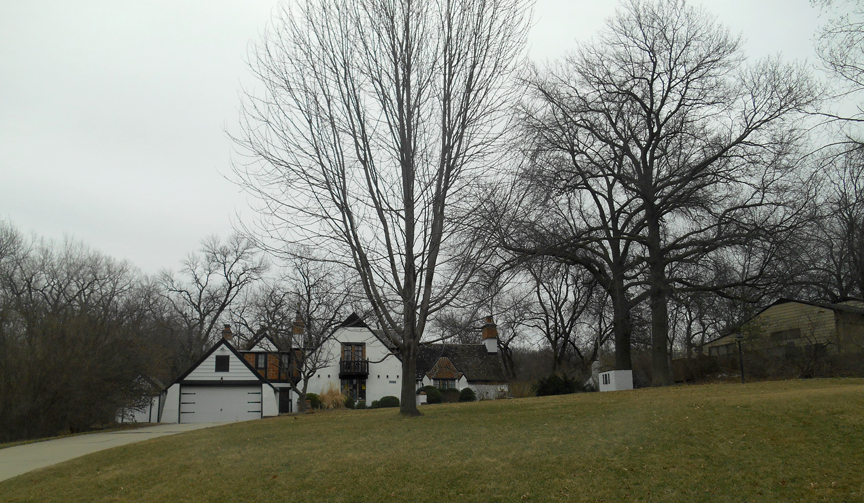
This notion of people being somehow matched to their homes has had me stirring lately. The particular arrangement of china in a cabinet, the old, comforting smell of wood smoke long ago absorbed into the walls, the built-in chest of drawers filled to its very edges with keepsakes and memories. And what of the memories belonging to the house itself, steeped into its very structure? I have come to wonder whether our homes hold on to something of the lives lived within them, long after the inhabitants have gone. Much of this thinking has grown out of my investigations, the peculiar impressions I have formed about certain houses I have encountered, and the extraordinary experiences some of you have been kind enough to share with me.
Not long after completing my investigation of the French Fairytale Cottage at 2417 South 105th Avenue, the most extraordinary letters began arriving at the detective’s office. Former residents, neighborhood children, and friends of families who had lived there came forward with recollections, photographs, and unexpected revelations from the most surprising quarters. Information arrived almost faster than I could make sense of it, and with it came stories I had never, in my wildest imaginings, anticipated. Could the French Fairytale Cottage in Omaha actually be haunted? It was certainly not a question I had expected to ask when I first opened the case, but our beloved cottage apparently had a few secrets of her own. Today, dear reader, I should like to begin sharing these discoveries with you. But I really do think it would be better if we all sat down for a while. I have a story to tell you, and I have the strangest feeling that it may never truly end.
For those of you who have not tracked the clues of the French Fairytale Cottage up to this point, I truly believe that it would be a good idea to get caught up to the investigation before going any further. If the rest of the chorus could be heard, they would all assure you that what follows would be made clearer if you invest the time right now and get up to speed. Start with The Curious Case of the French Fairytale Cottage: Part One. I must warn you or delight you, dependent, with the news that there are three lengthy parts. The Curious Case of the French Fairytale Cottage: Part Two. And last but not least, do not forget The Curious Case of the French Fairytale Cottage: Part Three. They are best savored with a warm beverage of your choice, in a dark study, surrounded by snoring animals, if you are so lucky, in front of a crackling fire, in the middle of the night.
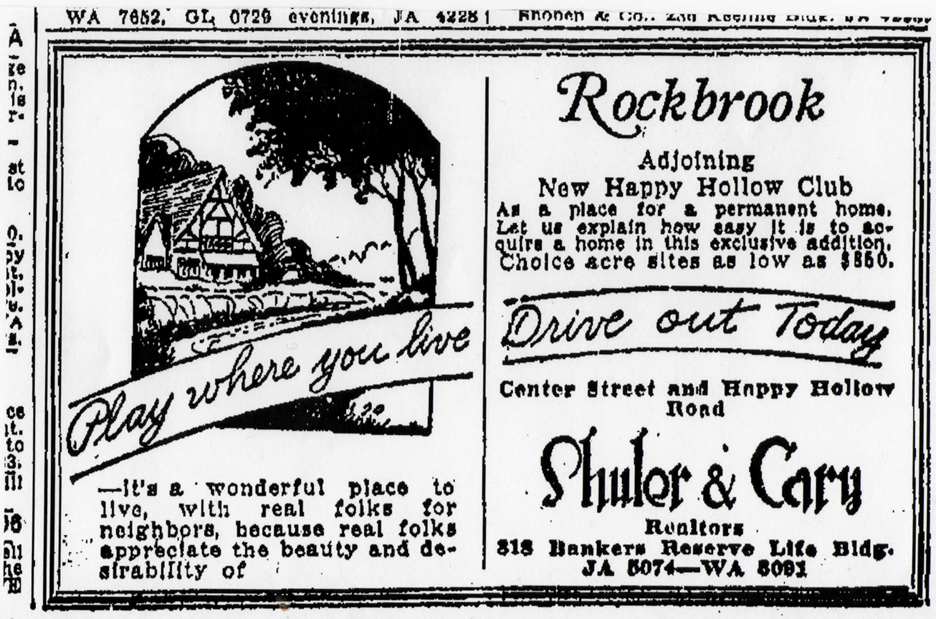
Daniel Greene Cary
Days after putting out Part One of the French Cottage series, I heard from the lovely Joan Field of Omaha. She reached out to me about the real estate developers Shuler & Cary. As it turns out, Daniel Greene Cary was Joan’s maternal grandfather. Don’t you love it?
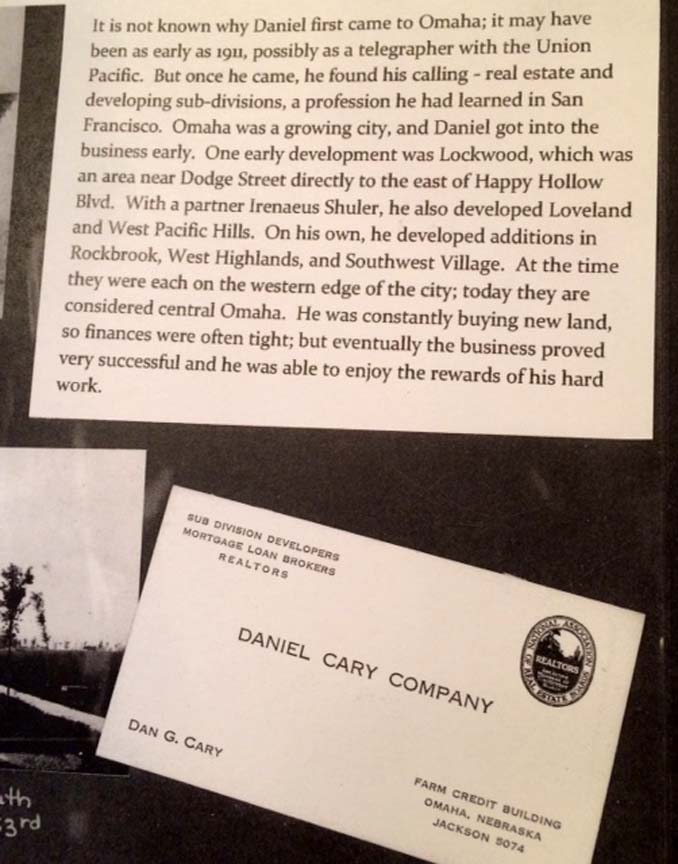
Photo from the Joan Field collection–a family genealogy book that her sister (?) has compiled.
Joan wrote, “In the 1920s he (Daniel Cary) developed parts of land east of Happy Hollow Blvd to about 50th & between Dodge & Howard that was called Lockwood. He built a home at 535 So 53rd St (where my mother grew up) to encourage people to ‘built west.’ I believe in the 1920s, with partner Irenaeus Shuler he also helped develop in Loveland and West Pacific Hills. Shuler built a palatial home facing Happy Hollow Club, I believe 105th St.” Joan elaborated that her Grandfather Cary, along with Shuler would go on to develop additions in Rockbrook, West Highlands and Southwest Village.
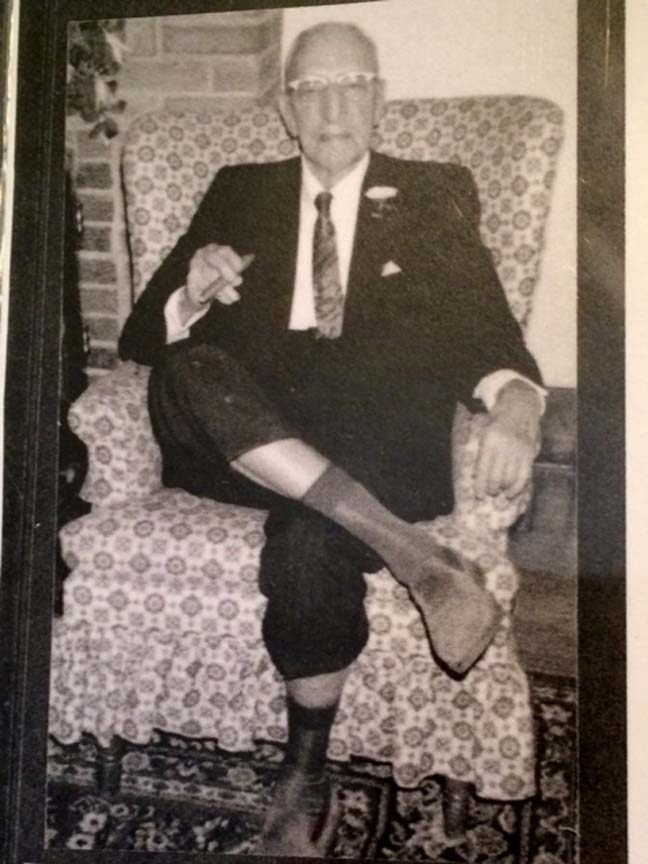
Daniel Cary from Joan Field’s collection. Love this photo. Are those HushPuppies or slippers?
Reports from the Field
I was pleased to receive emails from a handful of people who had toured 2417 South 105th Avenue when it was most recently for sale. I heard things like “Absolutely gorgeous,” “unusual, like a designer home” and “very low, odd ceilings.”
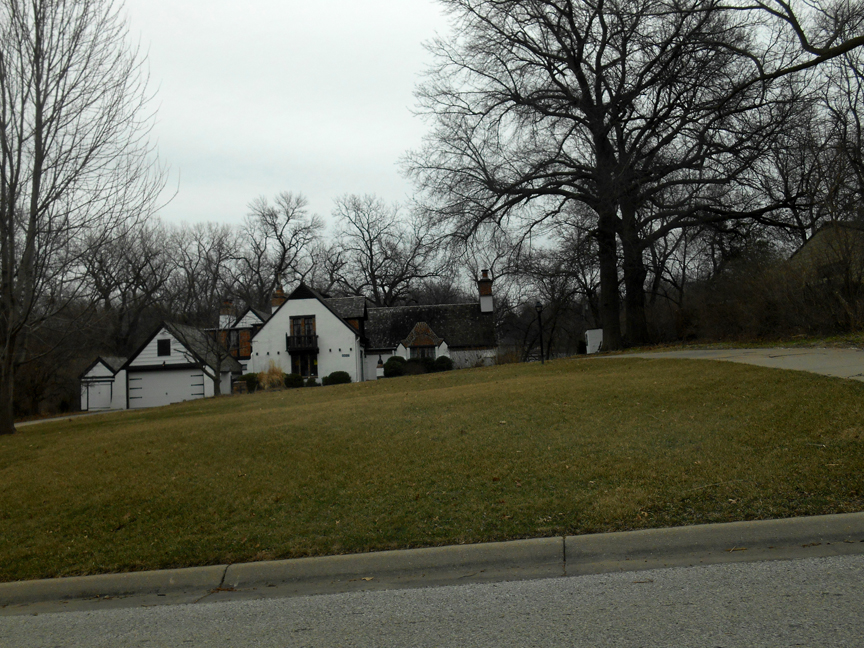
I will include the words of one reader and her beautiful observations. “Each room had stained glass in it that was original and beautiful. The plaster on the walls in the living room had hidden flowers molded into it around the room. So many wonderful original details and hardware throughout! The addition was a two-story addition with the family room on the main floor and a master suite on the second floor with a fireplace, large master closet, and master bath. The addition was very well done and great care was taken to pay attention to having it blend right in with all original architecture. My favorite part of the house was the maid’s quarters or the “princess room” as they (the owners) called it. From one of the back hallways, there was a secret door that opened and a hidden back staircase–secret passageway that led to the maid’s quarters. It was like I had stepped into a magazine.”
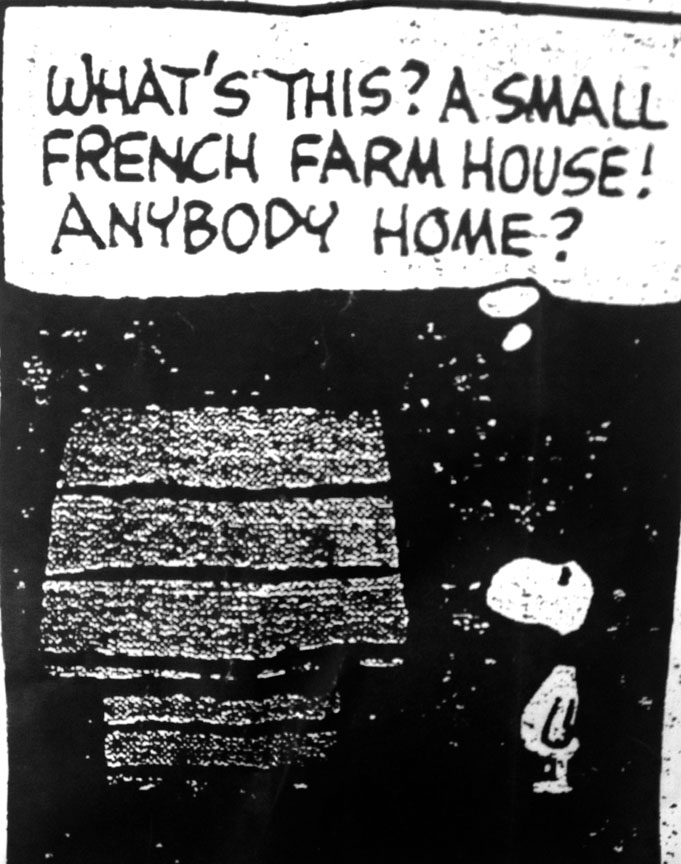
Peanuts comic from 1966.
Other visitors to the house over the decades reported a mix of reviews. Some of the doorways of the French home are apparently “short” with low ceilings in parts, earning it the name “The Hobbit House.” Some found the home to have an unexplained “coldness.” But clearly everyone who wrote in spoke highly of the unique qualities of the home and let on that the cottage left them with a “feeling” or a memory that they would never forget. And this is where things got a lot more interesting…
Past Owner’s Dossier
Can you, dear reader, imagine the chilling pleasure of opening this next email? It came sometime last September, weeks after the series came out.
“Regarding the house, I can only give you my opinion as to why there have been so many owners. It is haunted. Hopefully, I didn’t lose you with that statement.”
The past owner, understandably, did not want to be identified. I will honestly tell you that this detective thought her leg might be getting pulled a bit until I received corroborating reports from other, unrelated, sources soon after. What follows is one owner’s family’s experiences from the French Cottage at 2415 South 105th Avenue.
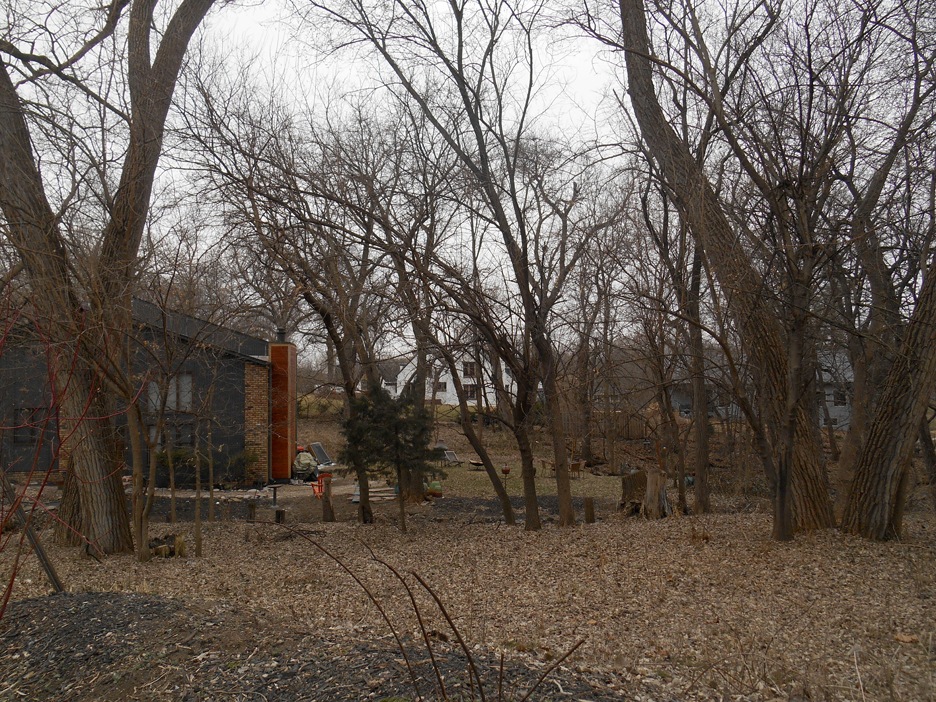
Back yard, eastern view of the property.
“The house had latches on the doors, instead of door knobs. During the night, these latches would rattle as if someone was moving them up and down. There were metal floor grates in parts of the house, and it sounded like someone was dragging chains across them at night. We had a cat, and one night, the cat stood up on the bed in a very agitated fashion and was hissing and spitting at something that was invisible moving across the room. Floor rugs would inexplicably be rolled up in rooms and furniture would be moved. There was a back bedroom over the garage and large parties would be heard coming from that room at night.” This is the same room that the reader had mentioned having “very bad feelings in.”
Another family member reported, “An uncle told a story about an apparition of a man in a tuxedo walking down the stairs and into the living room to adjust paintings on the wall. This was late at night.” There was a report of a local worker viewing the chandelier in the living room “hanging off to the side, like an invisible hand was holding it.” That being said, the reader confided, “Whatever it was that was in the house, was not malevolent.”
Side Note Clues and Detective Machinations
An additional morsel of information came from the reader who had been told that the house on 105th Avenue “was brought over in pieces from France.” This was certainly at odds with what I had uncovered during my original three-part investigation, but fellow detectives, I should like you to tuck this little tidbit away under your hats for the time being. From my earlier research into Hennig’s other two French-inspired homes, I had learned that the architect was said to have carved the woodwork himself and fashioned the wrought-iron details that gave his cottages so much of their storybook character. The notion of an entire French cottage arriving in Omaha in pieces was another matter altogether. I had found no evidence to support such a remarkable journey, but neither was I prepared to toss the story into the wastebasket. One never knows when an improbable little recollection may prove to be the missing piece of a much larger puzzle.
Isn’t this really too much? I didn’t know what to make of it. I began to wonder, what if the land is haunted? I had only found one funeral that took place in the home and no deaths, that I could find. What if there was an opening under the home that energy was seeping in from? But if the land was haunted, why were tuxes and parties going on? I wondered if there was a magnetic field on the plot of land, which brought back images or spirits of the past? I know from all that I unearthed there must have been many social gatherings in the home over the years.
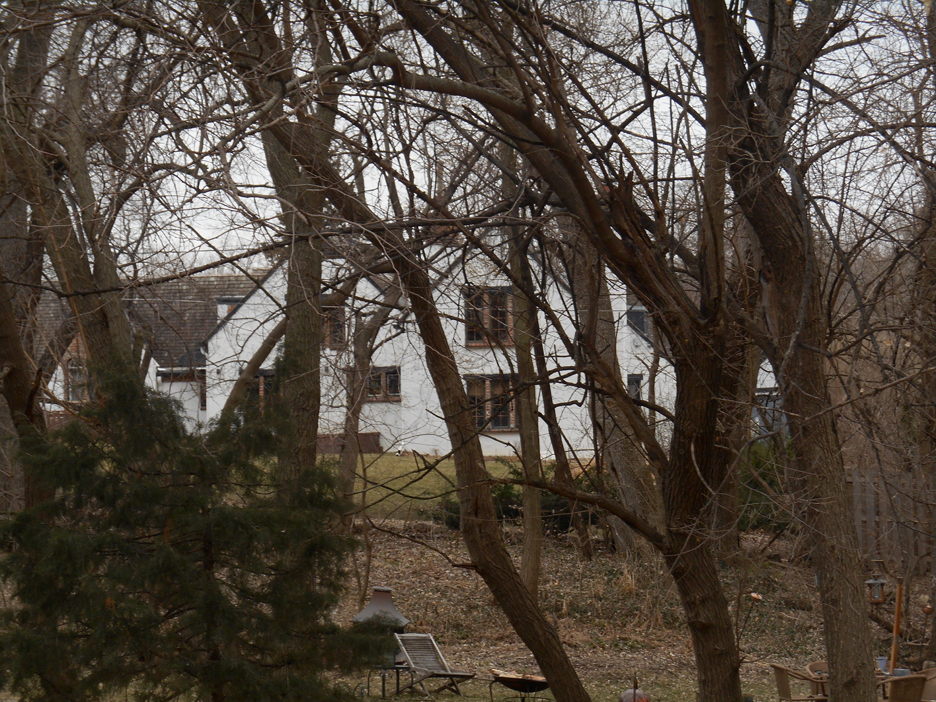
Clarification from the Past
Another past owner, willing to share experiences wrote, “These were not threatening experiences for me. It was almost as though someone or something was simply repeatedly trying to get my attention, in what might even be described as playful at times. The curiously muffled voices and noises in the guest room (which I recall was above the garage) sounded like someone was having a cocktail party — and a good one at that, with tinkling glass sounds — on more than one occasion. That was of a little more concern to me as you can imagine, as these were human socializing sounds to me, unlike the other noises and experiences. In any event, I spent little time in that room as it was away from the main part of the house. I still have fond memories of its special magic.”
Neighborhood Kids
I made a deliberate decision not to share what I had already learned with those who were writing in, for fear of contaminating their recollections or inadvertently leading their stories in a particular direction. I wanted to hear what each person remembered, quite independently of the others. Although everyone wished to remain anonymous, I did investigate and verify their identities, confirming that they had lived nearby, knew the cottage’s inhabitants, and had connections to the house consistent with my research. This could not verify their unusual experiences, of course, but it did establish their firsthand familiarity with the property. Among the most intriguing letters came from former neighborhood children and childhood friends of the families who had lived there, all grown up now, but still carrying vivid memories of that peculiar cottage.
One wrote, “All I can remember clearly is the chandelier swinging. But there always was a strong energy around. It definitely swung on its own. I’m not sure if I really understood the feeling I would get when there, but for sure an energy, nothing scary, just as if you weren’t alone.” Another recalled, “There was just a weird feeling there. We laughed about the moving light. Everyone knew but now I don’t know why we laughed. What was that? Why did it move?”
Fellow Sleuths, I found these recollections rather extraordinary. Here were adults looking back upon childhood experiences that had apparently seemed almost ordinary at the time. And what particularly interested this detective was that these witnesses had not been given the accounts of others before sharing their own. I could not say what had caused the chandelier to move, or what produced that curious sensation of another presence in the room. But I was becoming increasingly interested in the fact that so many people remembered something unusual about the very same house.
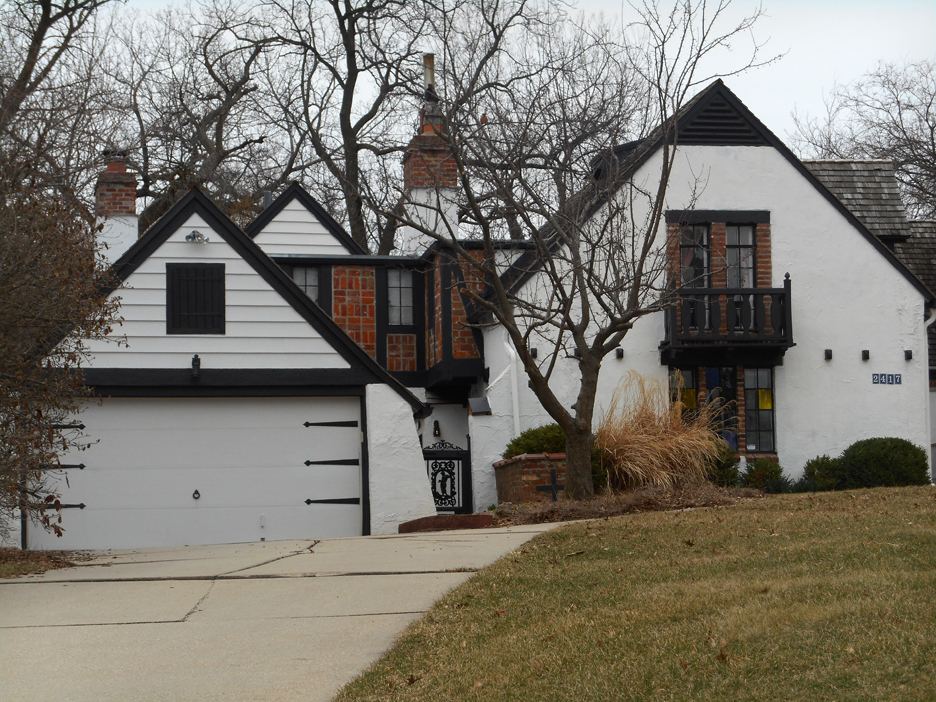
The Zaiga Moriarty Interview
Just over this last weekend I received an email from the wonderful Zaiga Jansons Moriarty, homeowner from the 1960s. To be clear, her name is Zaiga not Ziaga. Zaiga was not a My Omaha Obsession reader but very recently an acquaintance had informed her there was a whole investigation about her and her former house. Can you imagine being told that? Zaiga wanted to talk to me on the phone and was not afraid to go on the record with her account of the French Cottage. In about an hour-long interview I think my arm hairs stood on end about five times and I felt shudder-y. What follows are the essentials of the Moriarty family memories of the home. I did not tell her who had emailed me previously or what was said, as I wanted to see what Zaiga would reveal on her own. I was simply dying the whole time…
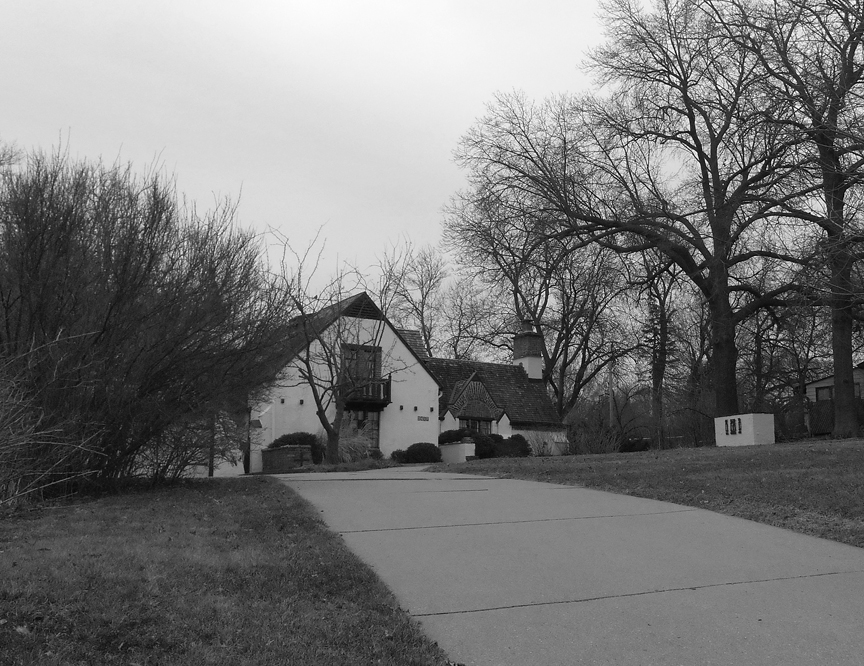
“We called it the French Farmhouse but I prefer your name for the home.” Of course, I loved her instantly. “When we moved in we knew that Hennig had designed our home. We knew the story of the pilot contracting with Hennig to design and replicate the French farmhouse, which the pilot had recovered in. We had been given information and thought the pilot had lived in the home. We were told it was his home. We bought the house from Mrs. Caldwell on a land contract. My husband had newly started his orthodontist business. We fell in love immediately with the home.”
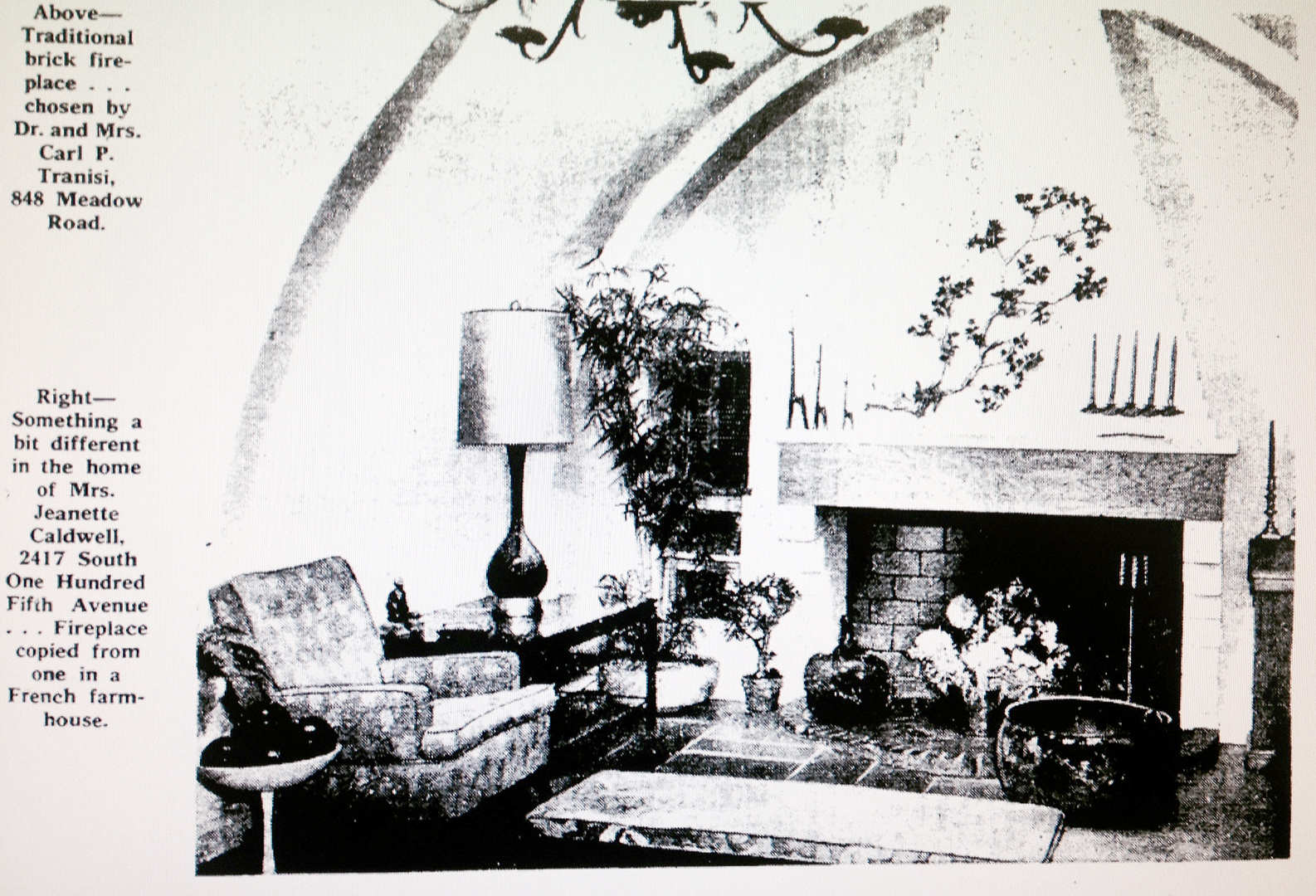
As it turns out, Mrs. Caldwell had well-camouflaged the “issues” of the home. It was beautiful on inspection. Zaiga did not realize the cottage had been for sale for so long until she read my investigation. “She had placed a tall plant in front of a large crack in the wall. There were rugs on the floor to cover what we came to believe was a troubled foundation.” The Moriartys discovered all of this “staging” when they actually moved in.

Tom Moriarty in the living room. Thanks to Zaiga Moriarty for lending me this photo from her collection.
The couple set about to “re-lay the marble tiles in the floor” as the tiles soon revealed themselves to be “jiggly.” “We did a lot of work. We re-tiled and poured so much concrete down between the cracks and under the tiles. We had the library re-laid by a professional company. We re-did the kitchen. I painted fleur de lis on the cupboards.”
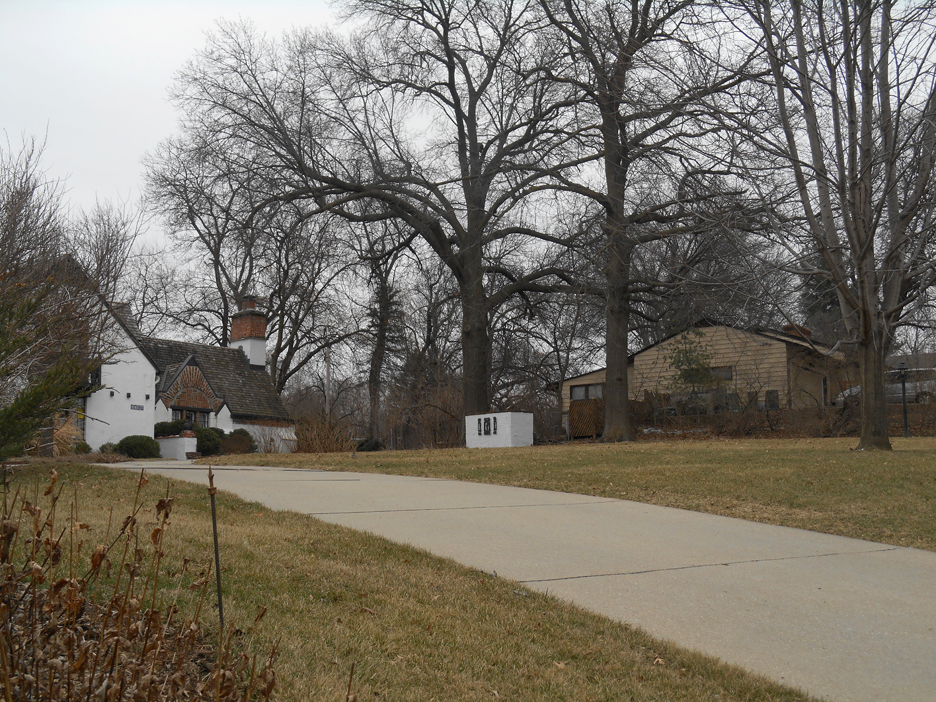
“We believed there were structural problems soon after”—a lack of a foundation, to put it bluntly. As the couple began to lift the marbled tiles they found “The foundation was not proper. The marble floor was in the dining room, kitchen, living room, library and hallway.” They began to pour concrete in the holes and around the tiles. The tiles would continue to break up again and “Become jiggly or loosen from the concrete even after we fixed it.”
“The furnace room was interesting—cave like but built into design so that you would not know what it was from the outside of the house. The house was very hot in the summer and very cold in the winter.”
The Moriarty Evidence
Then the conversation turned to the true lungs of the mystery.
“We think the home was haunted. My husband, Tom, believed that the ghost liked us because ‘He’ knew we were fixing up the house. We were told by the older neighbors ‘We understand there used to be a gardener here and he disappeared one night.’ Oh my word…. A gardener went missing? Zaiga stated that Tom, her husband, now deceased, believed that the ghost was a male and liked the Moriartys because they were trying to beautify and rehabilitate the home. “He” apparently liked their passion for the home. Was “He” the gardener? Or was “He” the fellow in the tuxedo?
She continued. “We were laying in bed and we could hear steps coming up the stairs. I said, ‘We need to lock the door.’ Tom questioned what good locking a door would do when there’s a ghost already in the home. The carpeted steps led from the main hallway up to the bedroom. The doors all had big bolts, massive bolts, no nails all tongue and groove but they also used keys. Zaiga remembers being very afraid that night.

The knocker that the Moriartys kept on the front door of the French cottage as added protection. Zaiga now has it at her new home and was kind enough to allow me to photograph it.
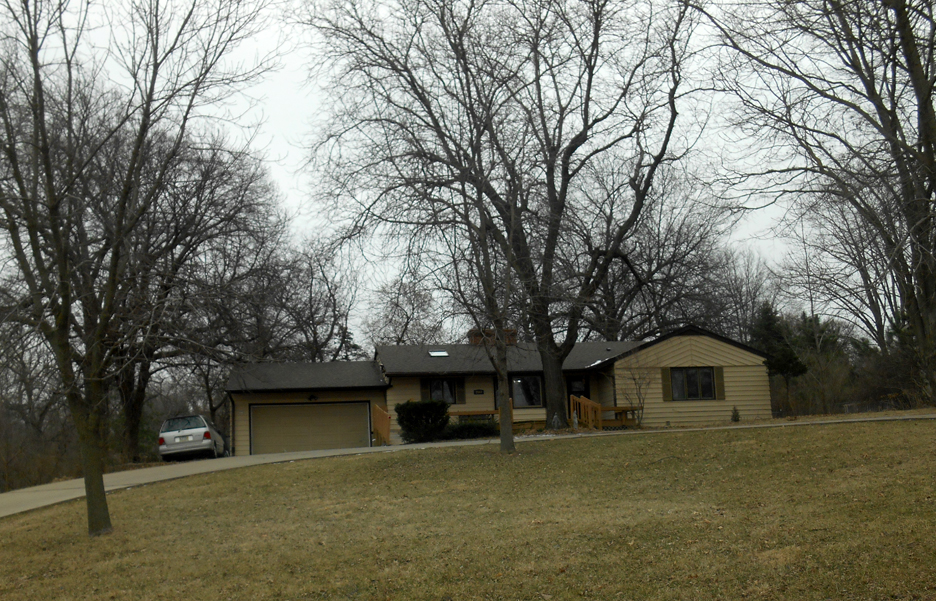
Ranch to the south at 2507 S 105th Ave.
The Couple Moved
Thomas and Zaiga sold the French home in April of 1971. They moved one door south to 2507 S. 105th Ave. Zaiga emphasized they only moved because of the growing family. The ranch next door provided them with more functional space for children.
Early on, the new owners of the French cottage, John and Asenath Webster came over and directly asked, “Is there something strange about the house? Is there anything strange going on in that house?” Zaiga could not remember how her and her husband answered that early inquiry. She remembered that in time, both couples exchanged their hauntings freely. Tom could feel the presence of “He” in the library and in the tiny bathroom off of the library. Tom strongly believed in “He.” “I feel it, ” Tom would say. “He is happy we are working on this house.” As the couple continued to refurbish the French Cottage, Tom would occasionally mention different “sensations” he had. Zaiga remembered him saying, with regard to the varying renovation ideas and home projects, “I thought on it and thought on it and maybe ‘He’ helped me?” Implying that the ghost might be helping make their domestic decisions. Zaiga and Tom were comfortable with this arrangement.
A Later Visitation
“After Tom and I had moved next door (to the ranch), we went on vacation. The Rockbrook Security Company at the time would stop by to check on homes in the neighborhood.” When the Moriartys got back into town, the security guard said he had been checking on their home. He said all of sudden one night when up at their house, “The lights on his car flashed and his clipboard and other items came flying out of the car. When he ran to the car, no one was there. He said he went back up the house and walked into our son’s room and his child’s bed had moved to the middle of the room.” Gulp….
Tom came to believe that the ghost visited them at their next-door home because “He wants us to know he’s still here.” Tom felt assured that “He was with me” while living at 2417 S. 105th Ave but Tom never, personally, felt the presence of “He” again. When the family again moved to yet another neighborhood, Tom would continue to tell friends and even their grandchildren about his ghost memories of the French Farmhouse. Zaiga firmly believed Tom did not have any more visits once they moved from the home.
Other Home Details
Zaiga remembered fondly “The dining room had a very low ceiling with incredible woodwork. The master bedroom was all-original. (She corrected my previous conjecture about the master bedroom vs. the addition.) There were these amazing built-in dressers, marked by owners to past.” Zaiga even remembered old cigarette burns in the woodwork. “We bought a large Allan Tubach painting, ‘Leonardo’ and hung it in the hallway by the stairs.” The large walls and woodwork apparently made for a beautiful environ for artwork, a case later made by owner Roger Foltz in an OWH interview.
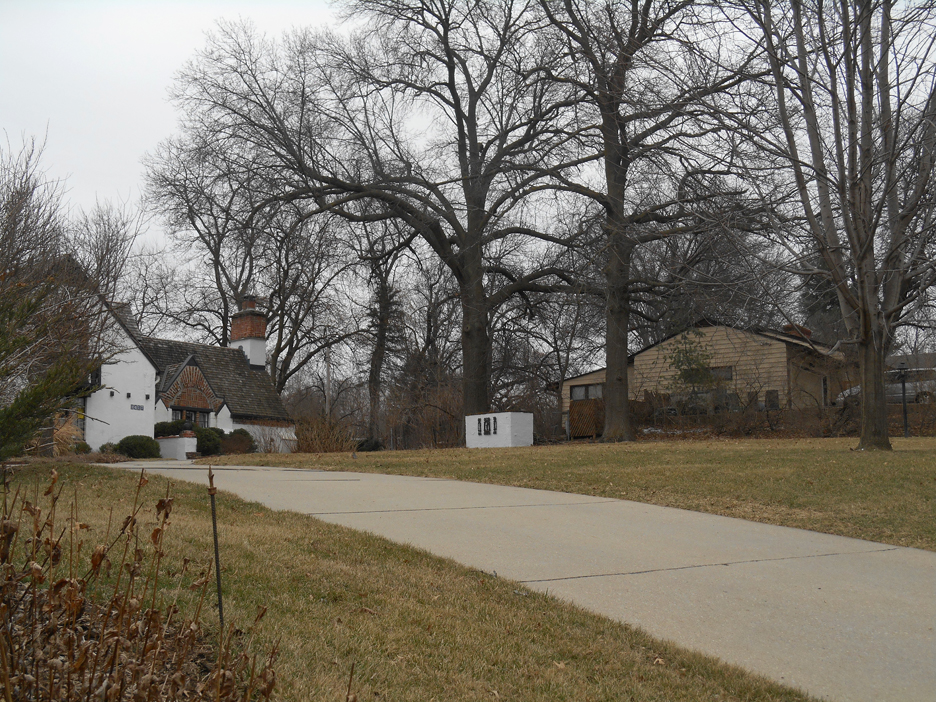
One can see how close the two homes are in this photo. The small wall by the French Cottage holds the black owl on closer inspection. Between the two homes is a taller white wall that looks like it covers something. Maybe trashcans, firewood or compost.
When they lived in the French cottage, Tom put an owl on the concrete stump near the entryway. Zaiga was happy to see from my photos that it was still there. She described a “Wall off to the south of the house, where something looked to have been broken off the wall. The couple asked a neighbor “What used to be on that wall?” A neighbor thought that what had been there previously had been a religious symbol, thought to be a Catholic icon or figure. The Moriartys wondered, in retrospect, if this sign was to ward off spirits or perceived negative energy.
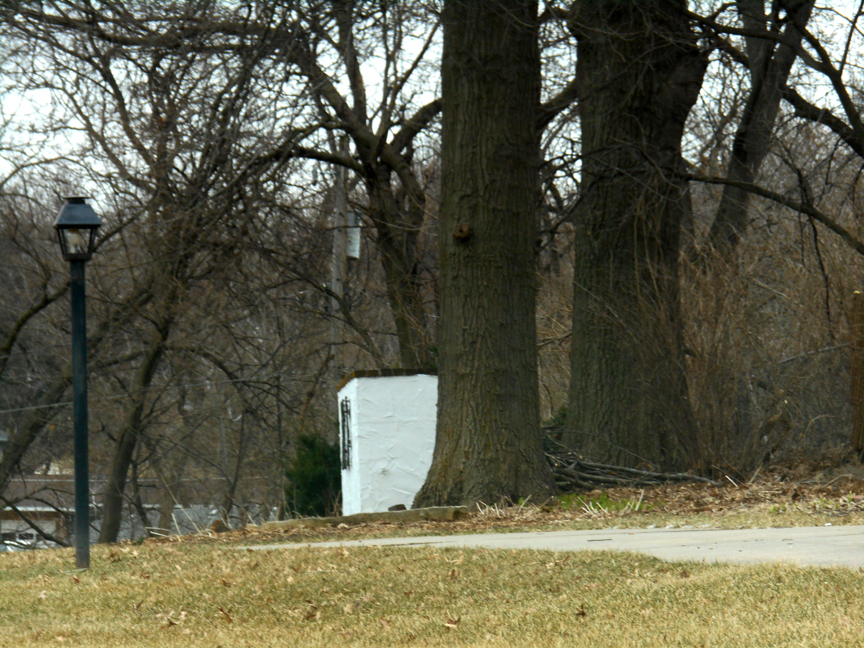
Was this the wall that the Catholic symbol was affixed to?
The couple had heard a rumor early in their ownership of the cottage that there had been a safe built somewhere into the home. Tom thought it had to be in the crawl space. “There was an area in the original master bedroom on the south side that we thought it could have been.” Zaiga reported, “One of the past owners had a cat that could move through the registers of the home amongst the crawl spaces.” She said they never found that safe.

Thanks to Zaiga Moriarty for lending me this photo from her collection.

Zaiga was so kind to share this photo of her and Tom. She wrote that it was taken several years before her died.
Zaiga’s Memories of the Websters
Zaiga also retained vivid memories of the Websters, who had moved into the French Fairytale Cottage after the Moriartys, and recalled several peculiar stories they had shared with her. On one occasion, “Asenath and John had been lying in bed and something white was going over their bed while their cat was hissing.” Then there was the recurring mystery of the dining room flowers. According to Zaiga, Asenath would place a fresh arrangement in a vase, only to return and discover the flowers scattered across the table. Apparently, this happened time and again. But perhaps the most tantalizing account concerned the built-in bed in the maid’s room. One evening, the Websters entertained friends, and a gentleman stayed overnight after the party. In the middle of the night, however, he abruptly departed, declaring that he would never set foot in the house again. What on earth had happened in that little room? Zaiga confessed, “I would sure like to know the details of what happened with that situation.” So would I. So would I.
After Thoughts and Further Digging
So I am sure we are all beside ourselves with our own neuroses and or complete joy. I, for one, cannot breathe properly as I type, even now. This is what I have uncovered since writing the first three articles on the incredible French Cottage. From my further investigations into Hennig: Reinholdt Frederick Hennig was regarded as a self-taught architect. He preferred European styles and studied books about old-country architecture but had no formal training, according to his wife, Ruth Madden Hennig. Is this the truth?
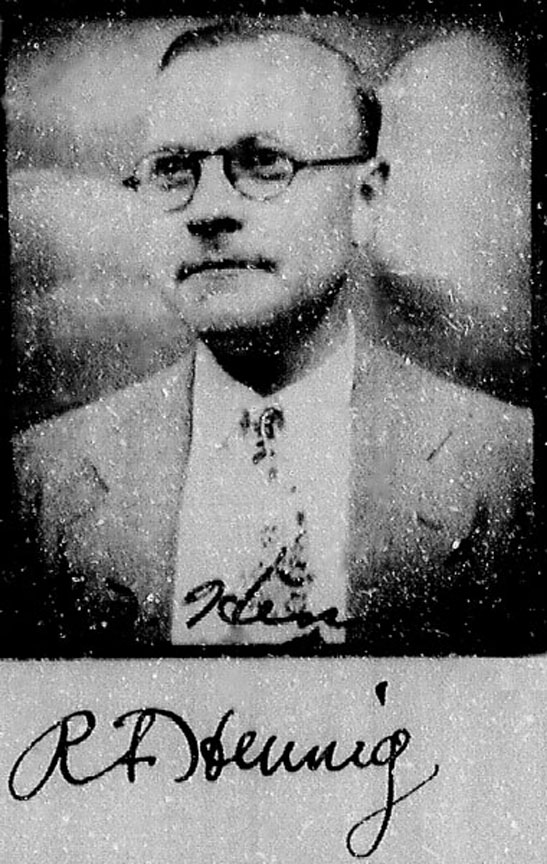
I did find an application of Reinholdt Frederick Hennig for Registration to Practice Professional Engineering and Architecture from the Nebraska State Board of Examiners for Professional Engineers and Architects from August 10, 1938. Eleven years after the first French Cottage was built. That is not to say that he wasn’t registered previously. If he was self taught and regarded an exploratory, inventive architect, it is plausible that he hadn’t yet learned how to build a stable foundation for a Nebraska home in 1927? That is one explanation.
But I have another…. what if the land is haunted and that is why there are such shifts in the home?
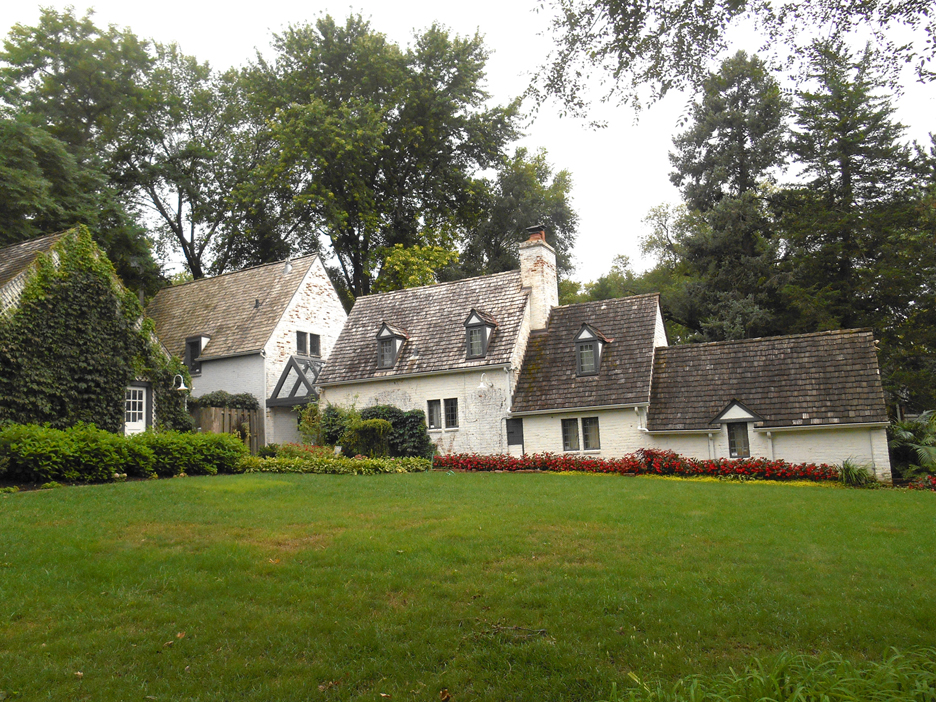
The first of the French Cottage series was built at 715 J. E. George Boulevard in 1927. I later found confirmation that this home was known to have an old ship’s decking with concrete beneath. I bring this up as proof that Hennig used architectural salvage and repurposed the materials to give his new homes a European feel. This contradicts stories I had read that Hennig fabricated his own materials for interiors. Could it be that his ironwork, wood beams, marble and other materials had had a previous life also, maybe from the other side of the pond? Could it be that the earlier homeowner’s rumored story of materials being shipped from France was true after all? If so, some would say that it is possible that these salvaged elements carried or continue to carry energy or memory.
A pursing of the collective lips and raising of the eyebrows will undoubtedly follow for some readers. I am keenly interested. In fact, I am obsessed. Is any of this real? Who was this Rockbrook Security Guard? Who was this man in the tuxedo and why were there parties going on in the middle of the night? And what of this gardener gone missing? It is evidently time to begin a search in full. A real investigation. Which Miss Cassette will now proceed to do…
This series now has another chapter. Please follow to: Is This a Hennig House?
I want to express my gratitude to all of the fans, homeowners and visitors to the enchanting French Cottage who wrote in. I recognize that you did not have to make the effort and could have kept your valuable, treasured memories to yourself. For those of you who wanted to tell me your story but did not want to be included in this article, I understand and hope I have won your trust. I do appreciate you all and I rally your love of the 2417 So. 105th Avenue cottage. It is a shining Omaha jewel. If you happen to know more clues about this property, we would all like to hear from you and for the record, Zaiga and I would like a tour.
I welcome your feedback and comments on this home, its history of incredible owners and the Rockbrook area. To enable comments, please click on the header title. If you would like to correspond with me privately, please do so at myomahaobsession@yahoo.com. But I assure you, everyone would love to read what you have to say and it makes the conversation more fun. You can keep up with my latest investigations by “following” myomahaobsession. You will get sent email updates every time I have written a new article. Also join My Omaha Obsession on Facebook. Thank you Omaha friends.
© Miss Cassette and myomahaobsession, 2017. Unauthorized use and/or duplication of this material without express and written permission from this site’s author and/or owner is strictly prohibited. Excerpts and links may be used, provided that full and clear credit is given to Miss Cassette and myomahaobsession with appropriate and specific direction to the original content.

Stunning article. Love your work.
Thank you so much, Rita. That is so kind of you to share. Nice to hear this today!
Zillow still has posted pictures inside and out of this home at https://www.zillow.com/homes/2417-South-105th-Avenue,-omaha,-ne_rb/
R. F. Hennig is my great uncle. I never met him because he died when I was a baby, but I remember Great Aunt Ruth as a sweet little old lady our family would take to family gatherings. I only recently have heard of his architectural career. Imagine my surprise when I googled his name and found this blog, which I found before when researching Omaha landmarks.
He is my favorite! Thank you for writing in. I have a whole file on him and hope to write more about him in the future.
Who was the “pilot” the house was built for? Could the man in the tuxedo have been that previous owner who was killed in a car crash?